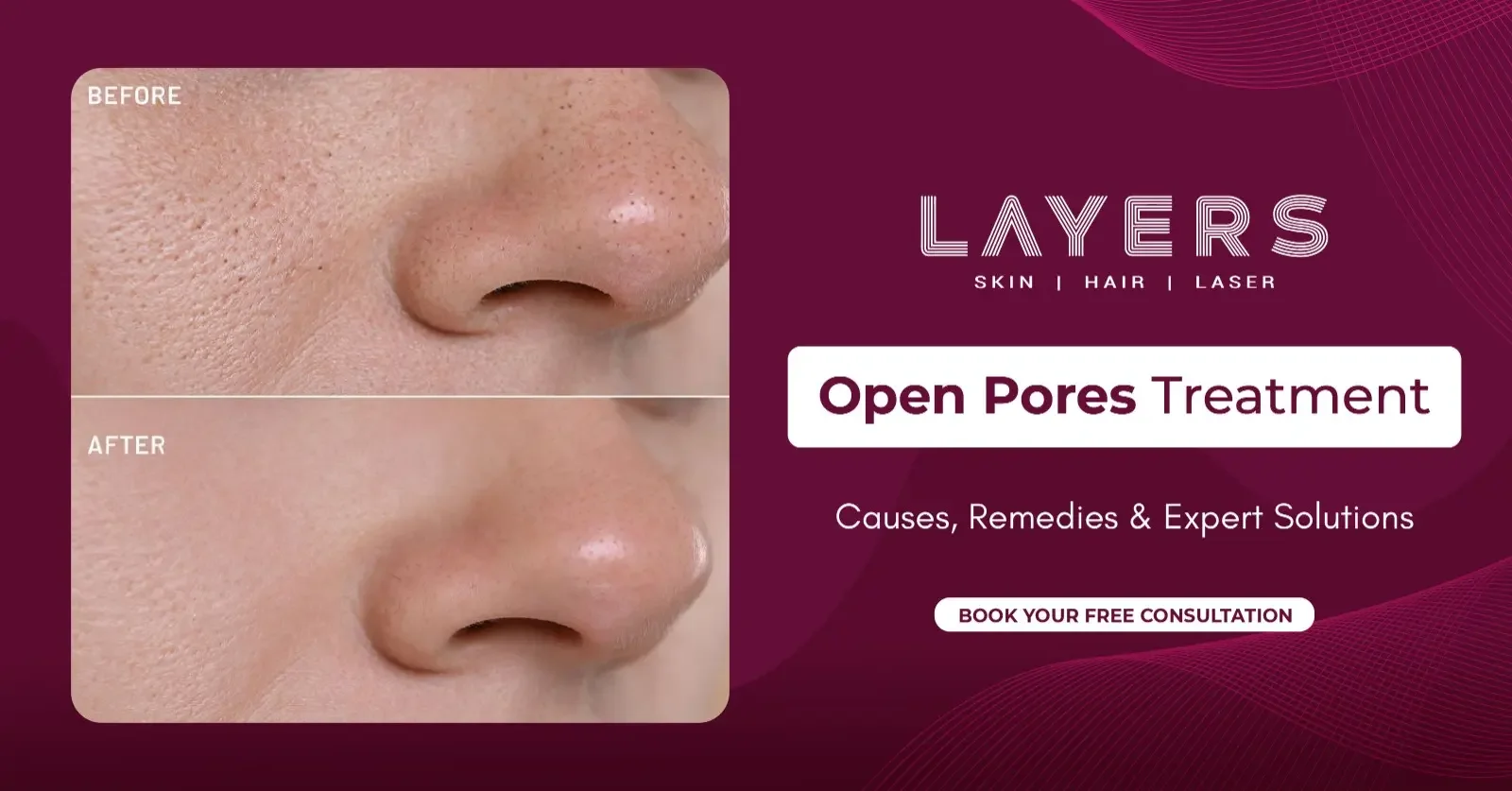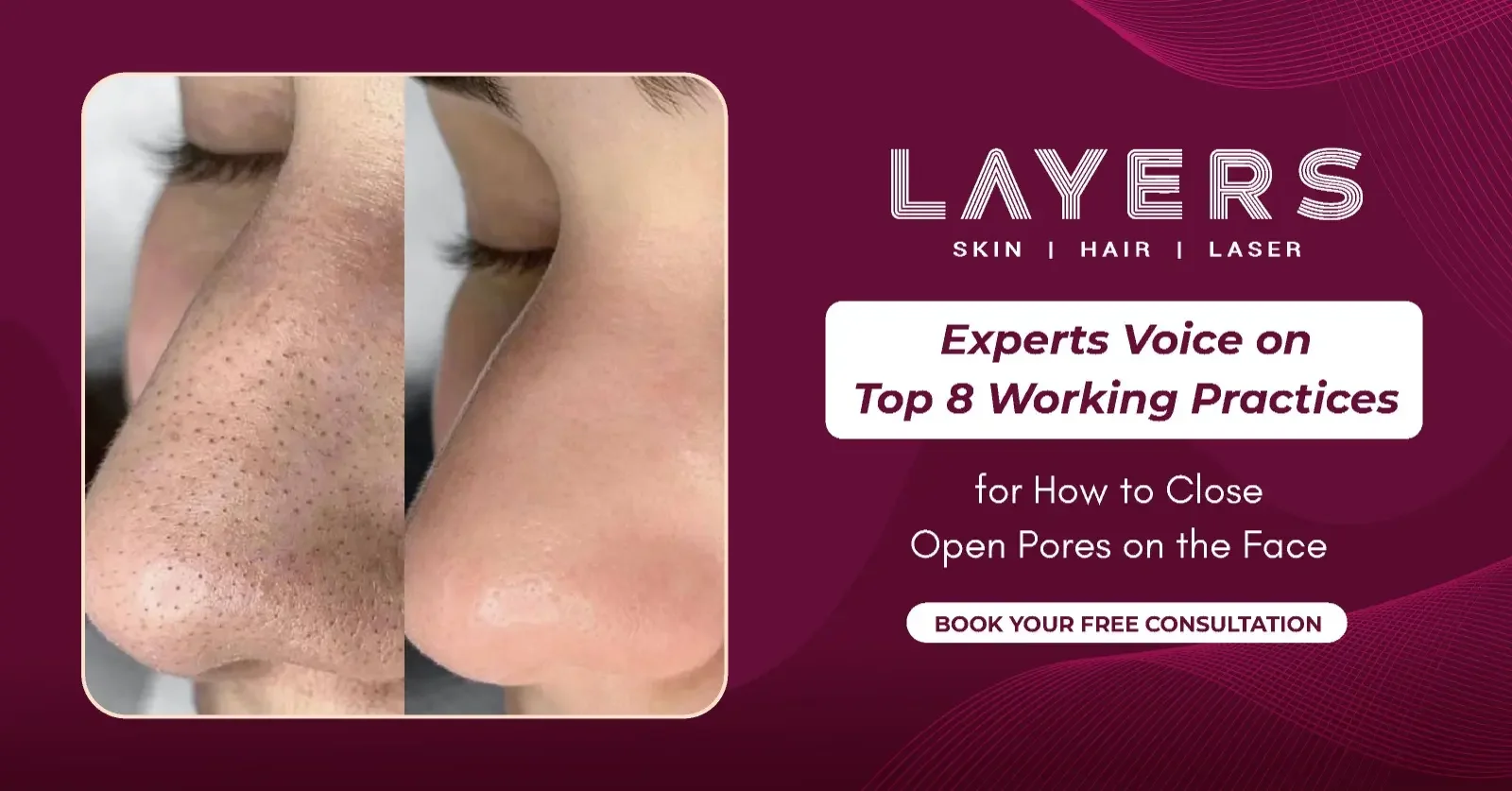
If you are searching for how to close open pores on face, the first thing to know is that pores cannot be permanently closed because they are natural openings connected to hair follicles and sebaceous glands. However, their appearance can be significantly reduced. The most effective approach combines consistent skincare, oil control, sun protection and dermatologist-guided treatments such as chemical peels, microneedling, MNRF and laser resurfacing when appropriate.
Enlarged pores are commonly noticed on the nose, cheeks, forehead and other areas with higher oil production. Genetics, excess sebum, acne, sun exposure, ageing and reduced skin elasticity can all make pores appear more prominent. This guide explains how to treat open pores safely at home, which skincare ingredients may help, and when professional treatment may offer better results.
NOTE:
How to close open pores on face? Pores cannot be permanently closed, but their appearance can be reduced with gentle cleansing, salicylic acid, niacinamide, suitable retinoids and daily sunscreen. For persistent enlarged pores, dermatologist-guided treatments such as chemical peels, microneedling, MNRF and laser resurfacing can improve skin texture and pore visibility.
What Are Open Pores and Why Do They Appear?
“Open pores” is a common term used to describe pores that look enlarged or more visible. Pores do not have muscles that allow them to literally open and close. Their apparent size is influenced by several factors, including:
- Genetics: Pore size and skin structure are strongly influenced by inherited characteristics.
- Excess oil production: Sebum can accumulate inside pores and make them look larger.
- Acne and congestion: Blackheads, whiteheads and repeated inflammation can increase pore visibility.
- Sun exposure: UV damage can affect collagen and elastin, reducing the skin’s structural support around pores.
- Ageing: Natural collagen loss and reduced skin elasticity can make pores appear more noticeable.
- Picking or squeezing: Repeatedly manipulating acne or clogged pores can cause inflammation and potentially worsen texture.
Bottom line: Enlarged pores are not simply a surface problem. Their appearance can be influenced by oil production, skin texture, collagen support and genetics.
How to Close Open Pores on Face: 8 Expert Skin Practices
1. Cleanse Without Over-Drying the Skin
Cleansing helps remove excess sebum, sunscreen, makeup and environmental impurities that can accumulate on the skin. For oily or combination skin, a gentle gel cleanser can be useful.
Double cleansing may be helpful in the evening when you wear makeup or water-resistant sunscreen, but it is not necessary for everyone. Over-cleansing or using harsh soaps can damage the skin barrier and increase dryness or irritation.
Choose a cleanser based on your skin type rather than trying to strip all oil from the skin.
2. Use Salicylic Acid for Oily and Congested Skin
Salicylic acid is a beta-hydroxy acid (BHA) that can penetrate oil and help exfoliate inside pores. It may be particularly useful for oily skin, blackheads and congestion.
Start with a suitable low-strength product and use it according to the product instructions. Applying too much exfoliating acid can cause irritation, which may make skin texture appear worse.
If you also use retinoids or other active ingredients, introduce them carefully rather than combining several strong products immediately.
3. Add Niacinamide to Your Skincare Routine
Niacinamide, also known as vitamin B3, is a versatile skincare ingredient that can support the skin barrier and help regulate excess oil. For people with oily or combination skin, a niacinamide serum may help improve the overall appearance and texture of the skin.
It does not physically “tighten” or permanently close pores. Instead, reducing excess oil and improving skin quality can make enlarged pores look less prominent.
4. Consider Retinoids for Long-Term Skin Improvement
Retinoids can increase skin cell turnover and support collagen production. They may therefore help improve uneven texture and the appearance of enlarged pores over time.
Over-the-counter retinol products and prescription retinoids differ in strength and suitability. Prescription treatments such as tretinoin should be used under appropriate medical guidance.
If you are new to retinoids, gradual introduction is generally preferable because dryness, redness and irritation can occur. Daily sunscreen is also important when using retinoid-based skincare.
5. Protect Your Skin From UV Damage
Daily sunscreen is one of the most important steps when learning how to reduce pores on face.
UV exposure contributes to collagen breakdown and premature skin ageing, which can make pores appear more visible. Apply a broad-spectrum sunscreen with at least SPF 30 every day, with SPF 50 often preferred for prolonged outdoor exposure.
Sun protection is especially important after professional exfoliation or resurfacing treatments because treated skin may be more sensitive to UV exposure.
6. Avoid Harsh Scrubs and Pore-Squeezing
Physical scrubs, pore strips and aggressive extraction may provide a temporary feeling of smoothness but can irritate the skin when overused.
Similarly, repeatedly squeezing blackheads or acne can increase inflammation and potentially contribute to post-inflammatory marks or scarring.
Instead, use gentle cleansing and appropriately selected chemical exfoliation. Professional extraction may be considered when clinically appropriate.
7. Try Clay Masks for Temporary Oil Control
Clay ingredients such as kaolin or bentonite can absorb excess surface oil. A clay mask may temporarily make oily skin look cleaner and pores less noticeable.
However, clay masks do not permanently reduce pore size. If your skin becomes tight, flaky or irritated after using one, reduce the frequency or discontinue it.
For persistent enlarged pores, a complete skincare routine is more useful than relying on masks alone.
8. Maintain a Consistent Skincare Routine
Pore appearance generally improves gradually rather than overnight. A practical routine for oily or combination skin may include:
Morning
- Gentle cleanser
- Niacinamide or another suitable serum
- Non-comedogenic moisturiser
- Broad-spectrum SPF 30–50 sunscreen
Evening
- Cleanser
- Salicylic acid or another dermatologist-recommended active on appropriate days
- Retinoid or retinol when suitable
- Moisturiser
Not every active ingredient should be used every day. Your routine should be adjusted according to your skin type, sensitivity and other concerns such as acne or pigmentation.
What Are the Best Dermatologist-Recommended Treatments for Enlarged Pores?
When home skincare does not provide enough improvement, dermatologists may recommend procedures based on the cause and severity of enlarged pores.
Chemical Peels
Chemical peels use controlled exfoliation to remove damaged surface cells and improve skin texture. Certain superficial peels can be useful for oily, congested or uneven skin.
The appropriate peel and concentration should be selected by a qualified professional. Stronger does not automatically mean better, particularly for sensitive or pigmentation-prone skin.
Microneedling
Microneedling creates controlled micro-injuries that stimulate the skin’s wound-healing response and collagen production. Increased collagen support can gradually improve skin texture and make enlarged pores appear less prominent.
Multiple sessions may be recommended depending on the individual’s skin condition and treatment goals.
MNRF
Microneedling radiofrequency (MNRF) combines microneedling with radiofrequency energy to stimulate deeper collagen remodeling. It may be considered when enlarged pores occur alongside acne scars, uneven texture or reduced skin firmness.
Treatment settings should be customised according to skin type and clinical indication.
Laser Skin Resurfacing
Fractional laser resurfacing can improve skin texture and stimulate collagen remodeling. It may be considered for more pronounced textural concerns or enlarged pores associated with sun damage and ageing.
Laser selection and energy settings are particularly important for Indian and other pigmentation-prone skin types. A dermatologist should assess the skin before treatment to minimise the risk of excessive inflammation or post-inflammatory pigmentation.
Which Treatment Is Best for Your Skin?
There is no single “best” treatment for everyone. The right option depends on whether your main concern is oiliness, congestion, acne scars, texture, ageing or collagen loss.
| Treatment | May Be Suitable For | Main Benefit | Typical Downtime |
| Chemical Peel | Oiliness, congestion and uneven texture | Exfoliation and smoother texture | Low to variable |
| Microneedling | Enlarged pores and mild texture concerns | Collagen stimulation | Low to moderate |
| MNRF | Pores, texture and acne scars | Deeper collagen remodeling | Low to moderate |
| Fractional Laser | Significant texture or sun-damage concerns | Resurfacing and collagen remodeling | Variable |
A dermatologist can determine whether one treatment or a combination approach is appropriate.
Can You Permanently Close Open Pores?
No, you cannot permanently close pores. Pores are normal anatomical structures, so treatment aims to make them appear smaller rather than eliminate them.
Results can be maintained through consistent sunscreen use, appropriate skincare, oil control and periodic professional treatments when recommended. Genetics also means that some people will naturally have more visible pores than others.
How Long Does It Take to See Results?
The timeline depends on the cause and treatment. Skincare ingredients may require several weeks of consistent use before noticeable changes in oiliness and texture appear. Professional treatments can improve skin texture progressively as collagen remodeling occurs.
It is better to evaluate results over a series of weeks or treatment sessions rather than expecting immediate permanent pore closure.
If enlarged pores are accompanied by active acne, scarring, excessive oiliness or sudden changes in skin texture, treating the underlying condition may be more important than focusing only on pore size.
What Is the Best Skincare Routine for Oily Skin With Large Pores?
For oily skin with enlarged pores, keep the routine simple and consistent:
- Cleanse gently twice daily.
- Use salicylic acid when appropriate for oil and congestion.
- Consider niacinamide for oil control and barrier support.
- Use retinoid or retinol-based skincare when suitable.
- Choose a lightweight, non-comedogenic moisturiser.
- Apply broad-spectrum SPF 30–50 every morning.
- Avoid excessive scrubbing and frequent pore squeezing.
- Introduce new active ingredients gradually.
If your skin becomes persistently red, dry, burning or irritated, reduce active ingredients and seek professional advice.
When Should You See a Dermatologist for Open Pores?
Consider consulting a dermatologist if:
- Enlarged pores remain prominent despite consistent skincare.
- You have persistent blackheads or acne.
- Enlarged pores are accompanied by acne scars.
- Your skin texture has changed significantly with ageing or sun exposure.
- Home treatments repeatedly cause irritation.
- You are considering chemical peels, MNRF or laser resurfacing.
A dermatologist can identify the main cause of visible pores and recommend treatment based on your skin type, pigmentation tendency and overall skin condition.
Frequently Asked Questions
How can I reduce the appearance of open pores on my face effectively?
You can reduce the appearance of enlarged pores with consistent cleansing, salicylic acid, niacinamide, suitable retinoids, daily sunscreen and professional treatments when needed. Pores cannot be permanently closed, but their visibility can be improved.
How can I reduce pore size on my face permanently?
Pores cannot be permanently closed or removed because they are normal skin structures. However, skincare and treatments such as chemical peels, microneedling, MNRF and fractional laser resurfacing can make them appear smaller and improve overall texture.
Are there any dermatologist-recommended treatments for open pores?
Yes. Depending on the cause, dermatologists may recommend chemical peels, microneedling, MNRF or fractional laser resurfacing. The appropriate treatment depends on skin type, pore visibility, acne, scarring, pigmentation and overall skin condition.
What are the best home remedies to minimize open pores on the nose and cheeks?
There is no home remedy that permanently closes pores. Gentle cleansing, appropriate salicylic acid, niacinamide, moisturisation and daily sunscreen are safer options than lemon juice, baking soda, harsh scrubs or aggressive extraction.
What is the best skincare routine for oily skin with large pores?
A simple routine includes a gentle cleanser, oil-control ingredients such as niacinamide or salicylic acid, a lightweight moisturiser and daily broad-spectrum sunscreen. A suitable retinoid may also be added when appropriate.
Can chemical peels reduce open pores?
Chemical peels can improve skin texture, remove accumulated dead skin cells and help reduce the appearance of enlarged pores. The peel type and strength should be selected by a qualified professional based on the individual’s skin.
Is laser treatment safe for enlarged pores?
Laser resurfacing can be an effective option for improving enlarged pores and skin texture when appropriately selected and performed by a qualified professional. Laser settings should be customised, particularly for pigmentation-prone skin.
Key Takeaways
- Pores cannot be permanently closed because they are normal skin structures.
- Genetics, excess sebum, acne, sun damage and ageing can make pores appear larger.
- Salicylic acid may help oily and congested skin.
- Niacinamide can support the skin barrier and help manage excess oil.
- Retinoids may improve skin turnover, texture and collagen support.
- Daily sunscreen helps protect collagen and prevent further sun-related skin damage.
- Chemical peels, microneedling, MNRF and laser resurfacing may improve pore appearance.
- The best treatment depends on your skin type and the underlying cause of enlarged pores.
- Avoid harsh scrubbing, excessive extraction and unproven DIY remedies.
Conclusion
Understanding how to close open pores on face starts with realistic expectations: pores cannot be permanently sealed or removed. However, their appearance can be significantly minimised by controlling excess oil, protecting collagen, improving skin texture and maintaining a consistent skincare routine.
For persistent enlarged pores, acne-related texture or visible skin ageing, dermatologist-guided treatments such as chemical peels, microneedling, MNRF and laser resurfacing may provide additional improvement. At Layers Clinics, treatment selection can be based on your individual skin type, concern and clinical assessment rather than using the same procedure for everyone.