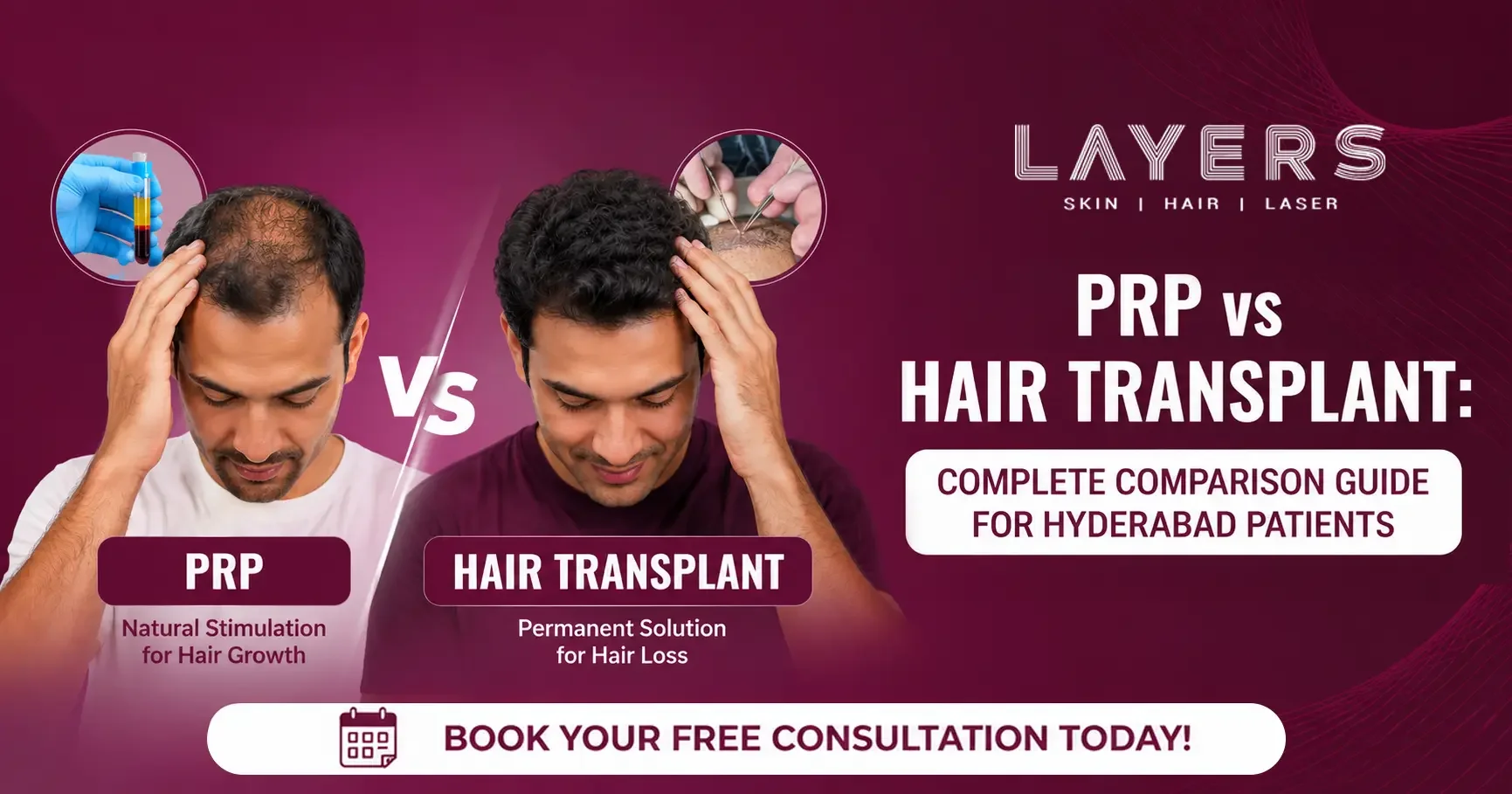
PRP and hair transplantation often appear in the same search, but they involve different procedures. Understanding the basic difference can help you ask better questions at a hair assessment.
What happens during PRP?
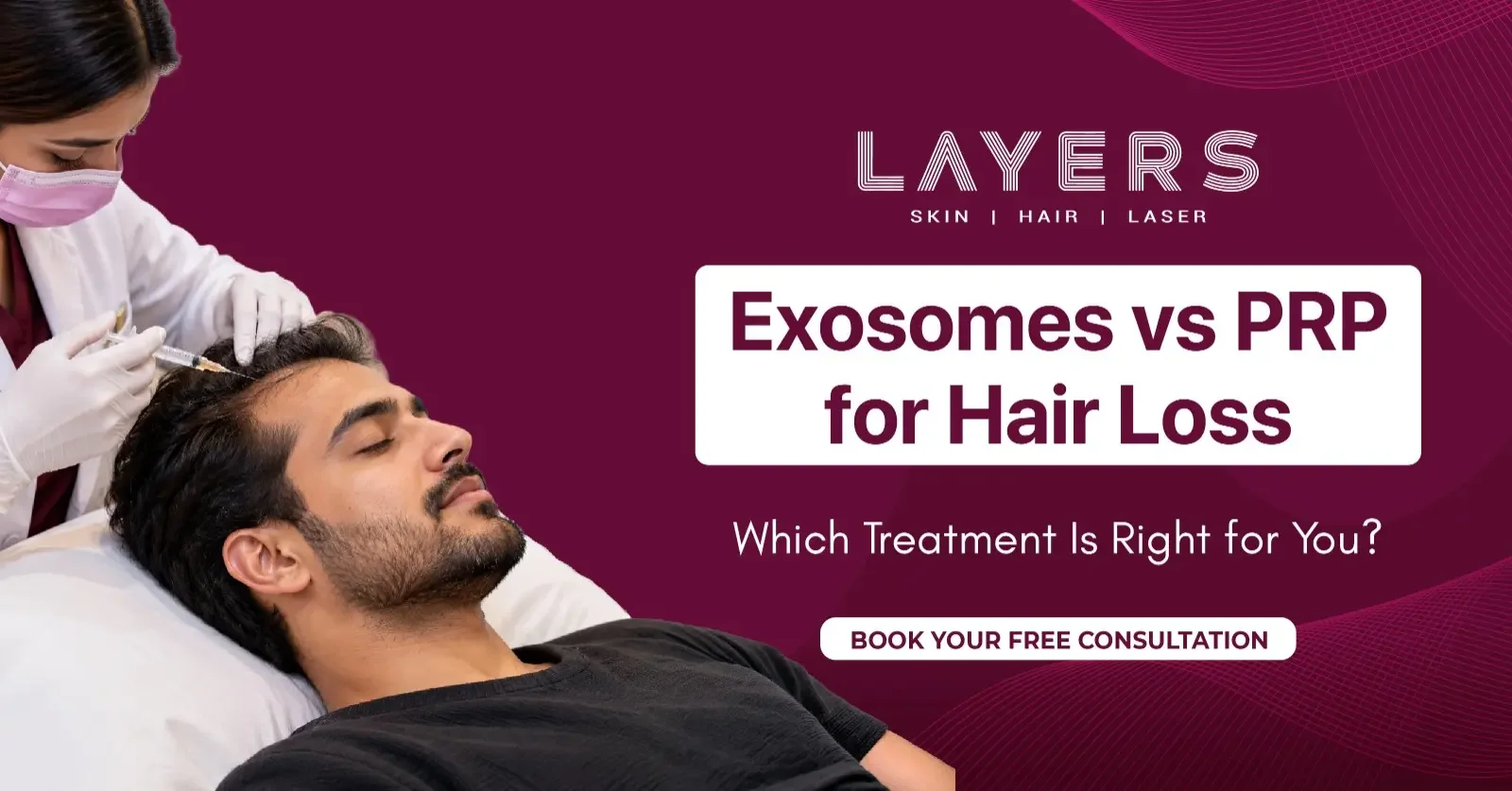
PRP stands for platelet-rich plasma. A blood sample is taken from you, processed to separate its components, and the prepared plasma is injected into selected scalp areas. It involves repeat treatment rather than moving hairs from one place to another. The American Academy of Dermatology describes PRP among the procedures used for hair loss.
On our PRP hair treatment page, you can explore the appointment steps and questions about suitability. Ask the clinician what they would be treating in your case and how progress would be checked.
What happens during a hair transplant?
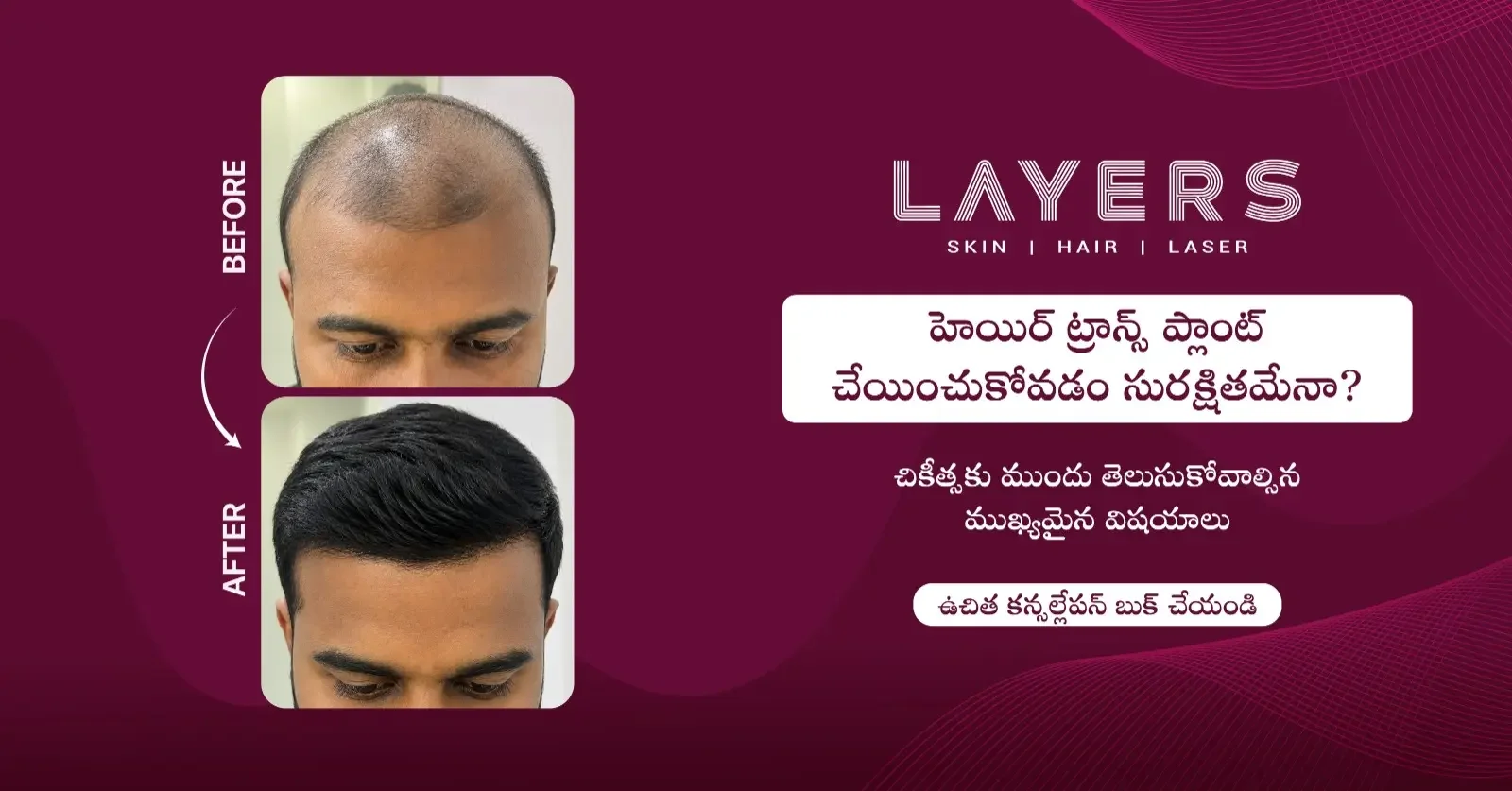
A hair transplant is surgery. The surgeon moves healthy hair follicles from a donor area to an area with thinning or missing hair. Whether it is suitable depends partly on the available donor hair and the scalp assessment. It does not create an unlimited supply of new hair.
The AAD’s explanation of hair transplantation highlights the importance of donor hair and realistic expectations. Our hair transplantation guide explains the techniques, planning and recovery questions in more detail.
Compare the plan, not just the name
Take these questions to your consultation:
- What is the cause of my hair loss?
- What change are we aiming for?
- Why are you suggesting this option for me?
- What follow-up, recovery or ongoing care would I need?
- How will we decide whether the plan is helping?
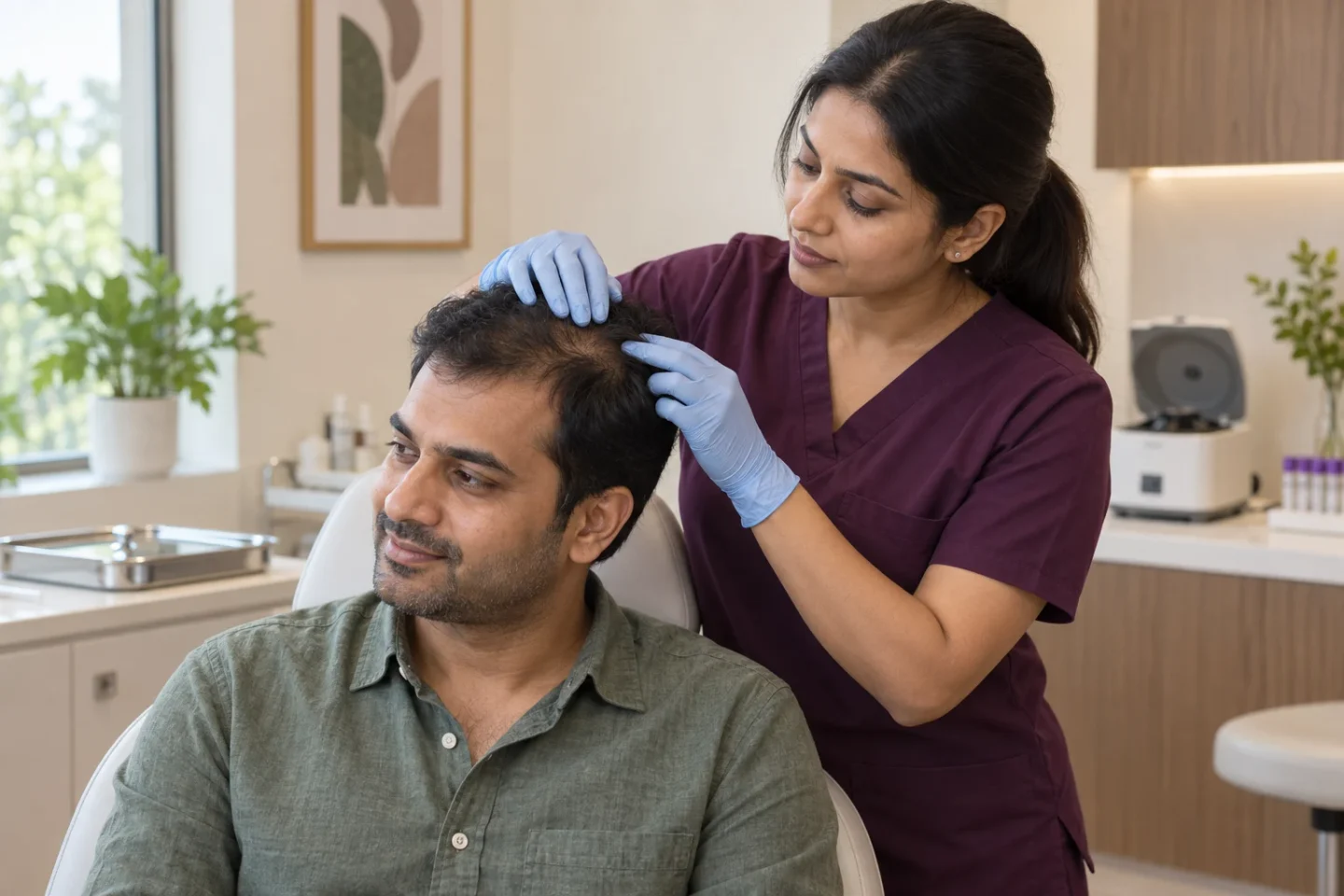
Start with an assessment
You do not need to arrive having chosen between the two. Bring your questions and tell the clinician about your priorities, including time for appointments and recovery. Explore our hair fall page to see how a concern can lead to different care options.