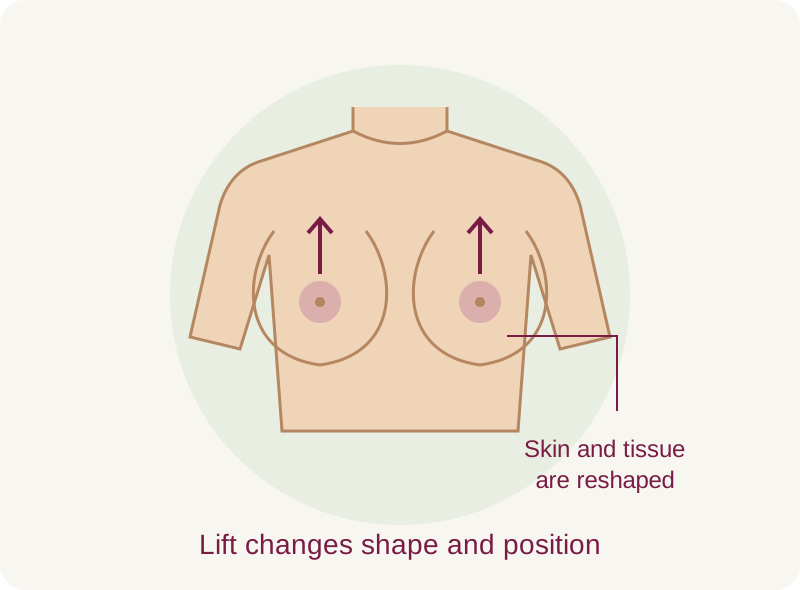
A different shape or position
A lift may be considered when the breast has stretched or the nipple sits lower. It reshapes your existing tissue.
Breast shape can change with time, pregnancy or weight changes. Explore what a lift can do, the scars it leaves and the recovery to consider.

A breast lift, also called mastopexy, removes excess skin and reshapes breast tissue. The nipple and surrounding areola are repositioned as part of the plan; an enlarged areola may also be reduced.
A lift mainly changes shape and position. It does not usually add substantial volume or make the breasts much smaller. Your surgeon will assess skin, tissue and nipple position before discussing an approach.
A lift may be considered when the breast has stretched or the nipple sits lower. It reshapes your existing tissue.
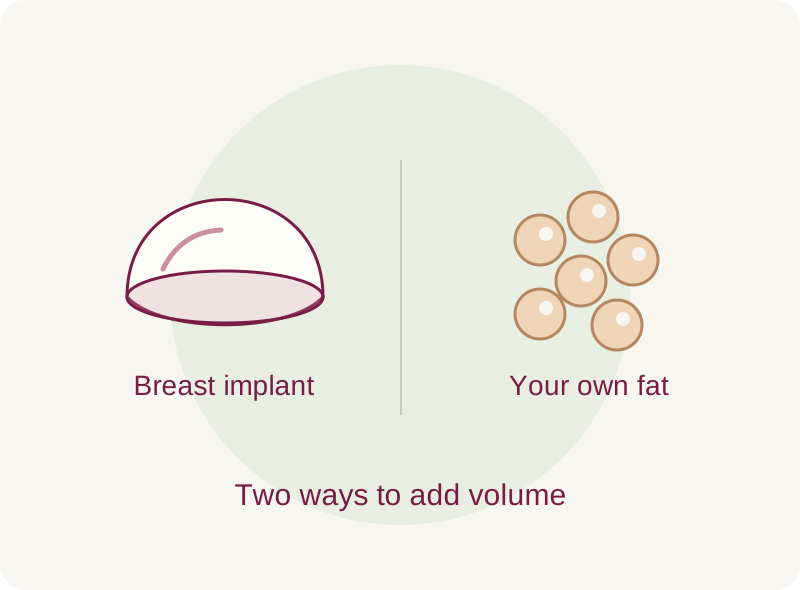
Augmentation adds volume. A lift and implant may be combined or staged, but an implant brings its own risks and long-term follow-up needs.
Explore breast augmentation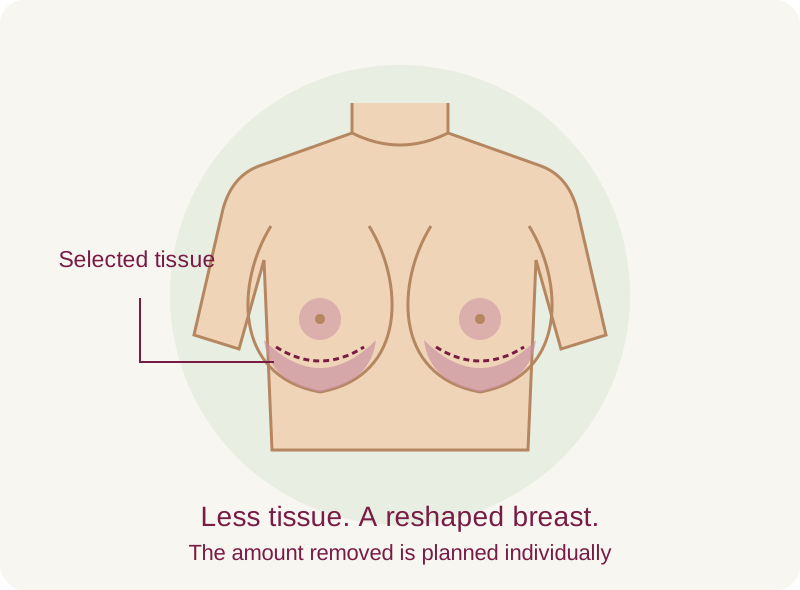
Reduction removes breast tissue as well as excess skin. If heaviness or size is your main concern, discuss reduction rather than a lift alone.
Explore breast reduction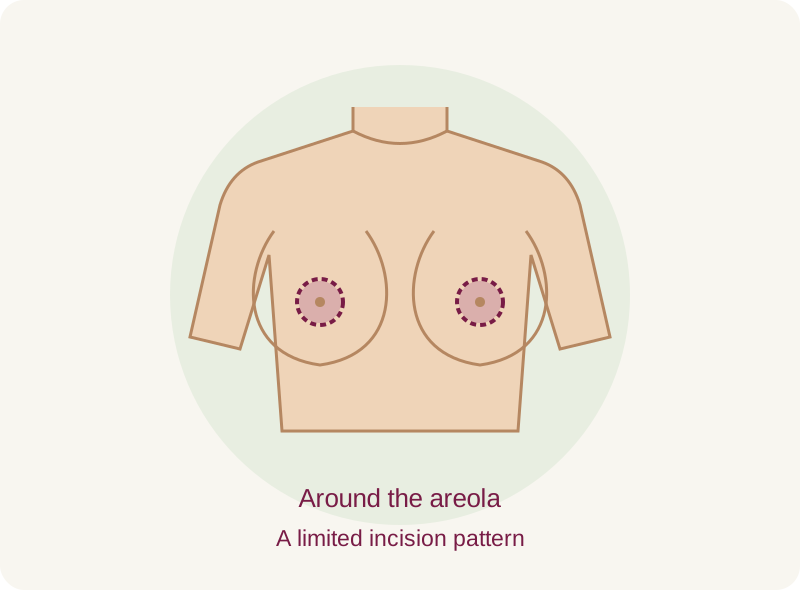
This limited pattern may suit selected smaller changes. It does not provide the amount of reshaping needed for every breast.
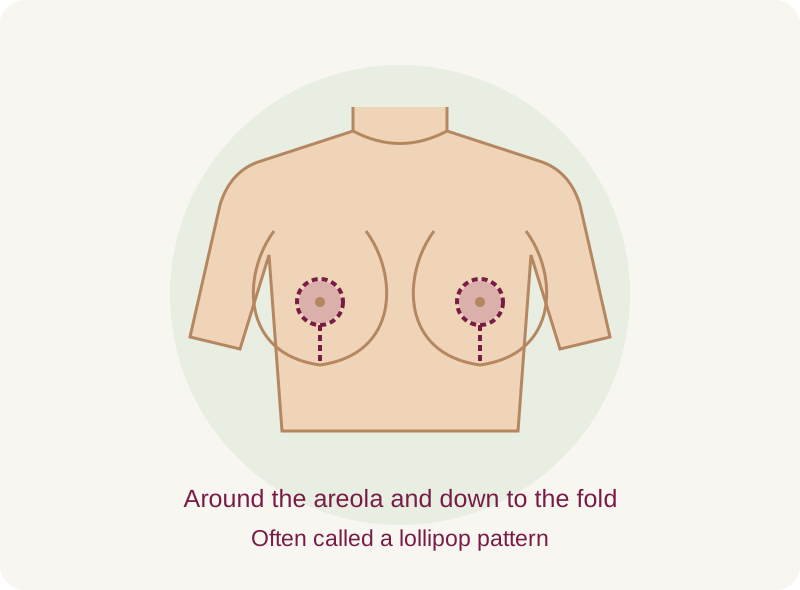
The incision goes around the areola and down to the fold. This is often called a lollipop pattern.
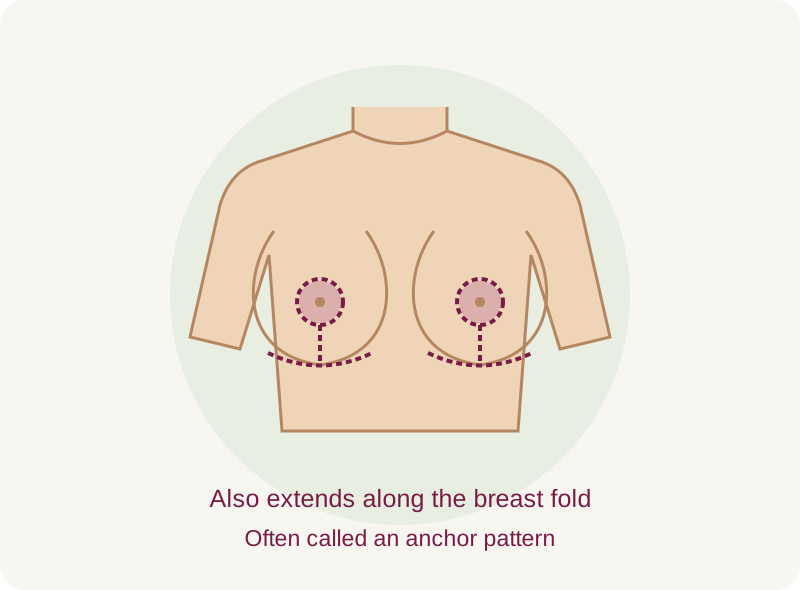
An additional line follows the breast fold. This allows a wider skin-removal and reshaping plan when needed.
These are example patterns. Skin quality, breast size and the amount of lift determine the incision; a smaller scar is not always the right fit.
Stretched skin, downward-pointing nipples or one breast sitting lower can be reasons to discuss a lift. An examination is more useful than choosing from a photograph.
Discuss smoking or nicotine, medicines, previous breast procedures and your medical history. A stable weight and realistic expectations help planning.
A lift leaves scars and may change sensation. Consider the likely improvement alongside recovery, future pregnancy plans and the possibility of further surgery.
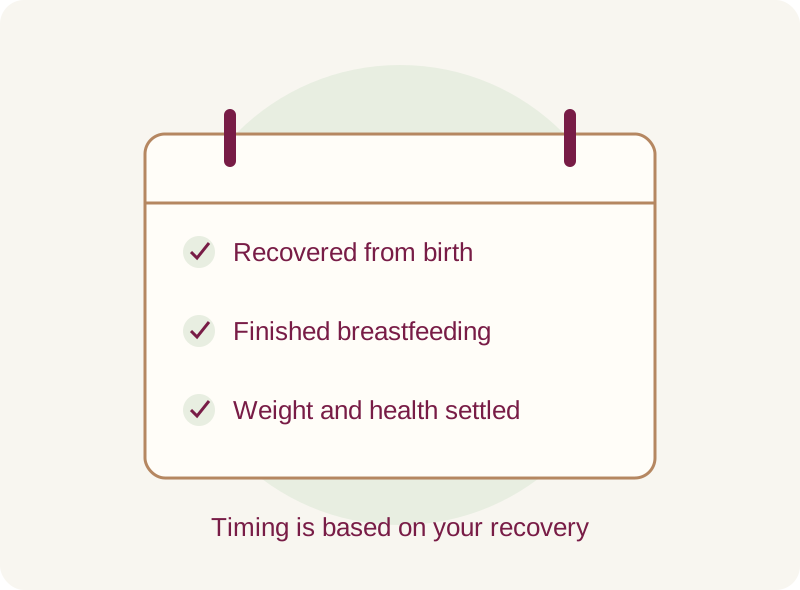
Breast size can continue to change after breastfeeding ends. Your surgeon will assess whether the tissues have settled enough to plan surgery.
A later pregnancy can stretch the skin again and change the result. It may be more useful to wait until childbearing is complete.
Breastfeeding may still be possible after a lift, but milk production can be affected. Discuss your priorities and the proposed technique beforehand.
The plastic surgeon examines the breasts and reviews your history. Breast imaging or other tests may be requested according to your age, history and findings.
Confirm the incision, anaesthetic, surgeon, facility and follow-up. Follow individual instructions for medicines, smoking, food and drink. Arrange transport and someone to stay with you initially.
Under the planned anaesthetic, the surgeon removes excess skin, reshapes tissue and repositions the nipple and areola. The exact method follows your anatomy.
Stitches support the reshaped tissue and close the skin. Dressings are applied; a temporary drain may be used.
Follow instructions for your dressings, any drains and the prescribed support bra. Ask when you can shower and what to do if the wound changes.
Attend the planned checks. The team will guide movement, work and exercise as the incisions heal.
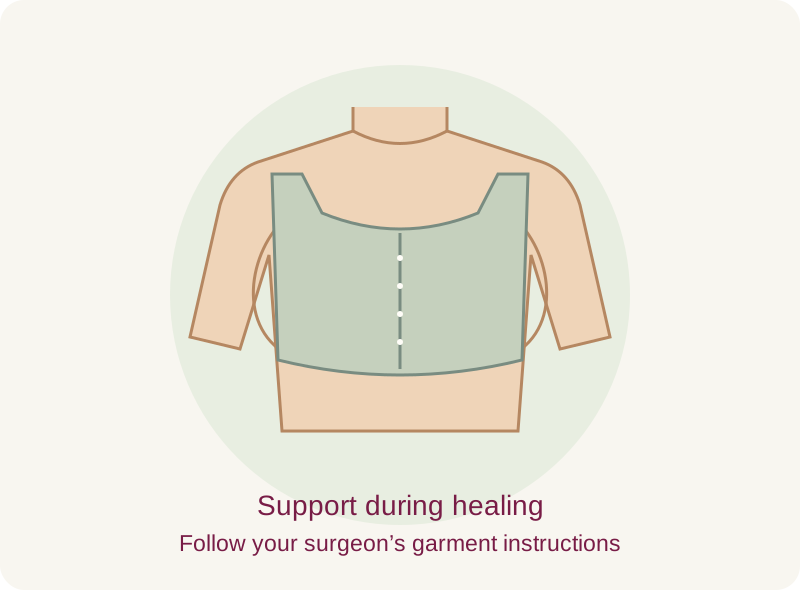
Bruising, swelling and tenderness are common early on. Take medicines as directed and follow wound-care instructions.
Get guidance on reaching, lifting, sleep position and exercise. Arrange help with children, heavy shopping and other tasks that pull on the chest.
Recovery takes weeks, with timing influenced by the lift and any combined procedure. Ask when your particular work and activities are appropriate rather than assuming one fixed schedule.
The fold can hide part of an incision, but lines around the areola or on the breast surface remain. The scar does not disappear.
Scars may soften and fade over time. Thick or widened scars can occur, especially if you have a history of difficult scarring.
Avoid friction or strain while healing. Use scar products only after the team confirms the skin is ready and explains what is appropriate.
Bleeding, infection, fluid collections, slow healing and loss of skin, fat or nipple-areola tissue are possible.
Asymmetry, contour irregularities and temporary or lasting nipple or breast numbness can occur. Scars or shape concerns may require revision.
Blood clots and heart, lung or anaesthetic complications are important risks. Adding an implant or another operation requires its own risk discussion.
You may see a change early, but swelling and tissue settling continue over the next few months. Assess the final shape with your surgeon after healing has progressed.
A lift does not stop ageing, gravity or weight-related changes. Stable weight helps maintain the result; a later pregnancy or major weight change may create new looseness.
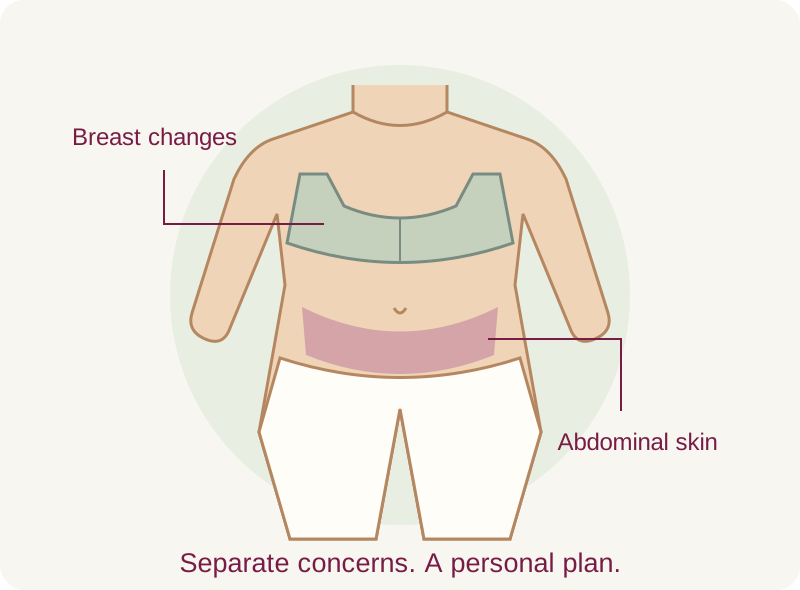
Explore an individual breast and abdominal plan, including timing and support during recovery.
Explore mommy makeover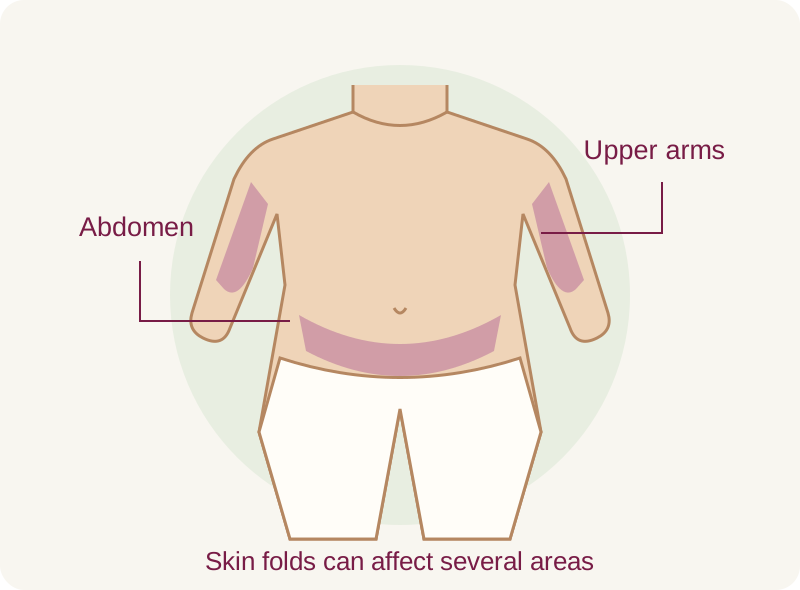
Compare loose-skin operations and consider nutrition, priorities and staged surgery.
Explore care after weight lossThese verified Google excerpts describe general consultations and care. They do not identify breast lift surgery or show its results.
“The doctors listened carefully to my concerns and explained the treatment in a clear and professional manner.”
Consultation experience; condition not specified.
“She explained the treatment clearly and made me feel comfortable throughout the consultation.”
Consultation experience; condition not specified.
“The doctor took the time to understand my skin concerns and explained the treatment plan clearly, without rushing.”
Consultation experience; condition not specified.
“Very patient ,humble and polite to answer every single query and build confidence.”
Consultation experience; condition not specified.
“The doctors explained everything clearly and made me feel comfortable and confident.”
Consultation experience; condition not specified.
“The doctor took the time to listen to my concerns patiently and explained the treatment options clearly.”
Consultation experience; condition not specified.
















A lift mainly changes shape and position. If added fullness is your goal, discuss augmentation separately; you do not automatically need an implant.
The incision must allow the necessary reshaping. Your surgeon will explain why an areola-only, vertical or anchor pattern fits the amount of loose skin.
In a typical lift, the nipple and areola are repositioned while remaining attached to supporting tissue and their blood supply. Ask your surgeon to explain the planned technique.
It may be possible, but milk production and sensation can be affected. Discuss future breastfeeding before deciding on surgery.
A lift may improve asymmetry, but natural differences can remain. Perfect symmetry cannot be guaranteed.
A support bra is commonly part of recovery. Follow the team’s advice about type, fit and how long to wear it.
The timing depends on healing and the activity. Walking and heavier exercise have different demands. Wait for clearance before activities that strain the chest.
The change can last for years, but breasts continue to age and respond to weight changes and pregnancy. Some people later choose another procedure.
Arrange an assessment of breast shape, the options available and the recovery you would need.
Prefer a call? +91 9000 572727