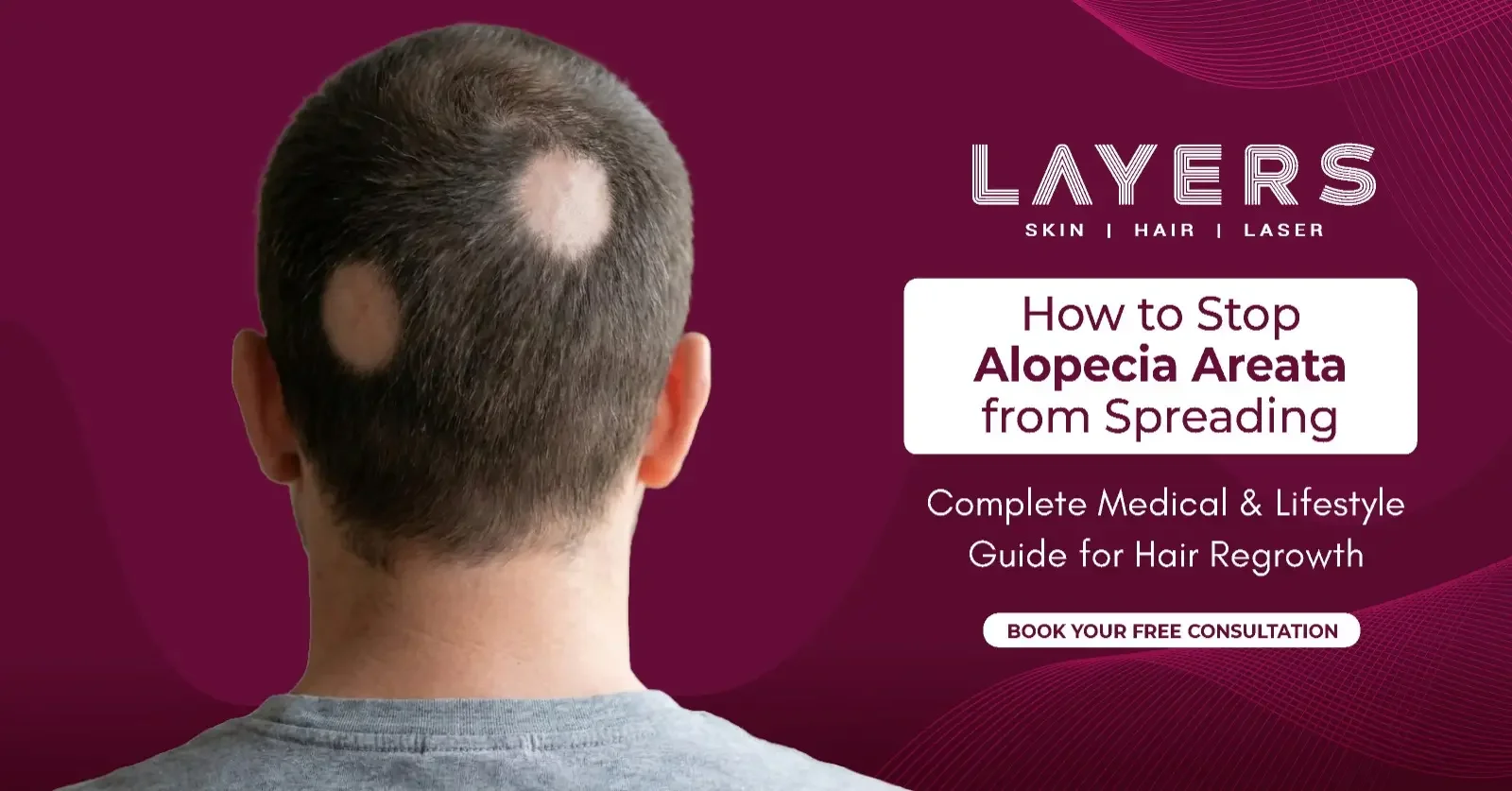
Alopecia areata is an autoimmune condition that causes sudden hair loss in round or oval patches on the scalp and other parts of the body. The most effective way to manage alopecia areata and reduce further hair loss is to obtain an early diagnosis from a dermatologist and follow an individualized treatment plan. Although no method can guarantee that alopecia areata will stop spreading, medical treatments can help control the condition and support hair regrowth in many people.
If you are experiencing patchy hair loss, noticing new bald spots, or searching for how to stop alopecia areata from spreading, understanding the underlying cause is an important first step. At Layers Clinics, dermatological assessment can help identify the type of hair loss and determine which treatment options may be appropriate for your scalp and hair restoration goals.
| Key Takeaway: Alopecia areata is an autoimmune condition that causes sudden, patchy hair loss. The most effective way to manage it is to seek an early dermatological assessment and follow a personalized treatment plan. Depending on the severity, treatment may include corticosteroids, topical immunotherapy, or other specialist-prescribed medicines. Gentle scalp care, balanced nutrition, and stress management can support overall well-being, but home remedies and supplements cannot reliably prevent the condition from spreading. Early diagnosis helps identify appropriate treatment options and improve the chances of hair regrowth. |
What Is Alopecia Areata?
Alopecia areata is an autoimmune disease in which the immune system mistakenly targets hair follicles, disrupting normal hair growth. It commonly causes smooth, round or oval bald patches without the typical scaling or scarring associated with some other scalp conditions.
The condition may affect one small area, several patches, or larger portions of the scalp. In some people, it also affects eyebrows, eyelashes, beard hair, or body hair. Nail changes, including small dents or roughness, may occasionally occur.
Alopecia areata is not contagious and does not result from poor personal hygiene. Hair follicles often remain capable of producing new hair, so regrowth is possible. However, the condition can be unpredictable: hair may regrow spontaneously, remain absent for a prolonged period, or fall out again.
It is also important to distinguish alopecia areata from other types of alopecia. Androgenetic alopecia causes patterned hair thinning, while traction alopecia is associated with repeated pulling on the hair. A dermatologist can help determine the correct diagnosis before treatment begins.
What Are the Symptoms of Alopecia Areata?
Recognizing the symptoms of alopecia areata can help you seek timely medical advice.
Common signs include:
- Sudden patchy hair loss: One or more smooth, round or oval bald areas may appear on the scalp.
- Expanding bald patches: Existing patches may become larger or new patches may develop.
- Hair loss in other areas: Eyebrows, eyelashes, beard hair, or body hair may be affected.
- Exclamation-mark hairs: Some affected hairs appear narrower near the scalp and wider toward the tip.
- Nail changes: Small pits, ridges, or surface irregularities may occur in some people.
- Repeated episodes: Hair may regrow in previously affected areas while new patches develop elsewhere.
Alopecia areata usually does not cause significant pain. Some people experience itching, tingling, or a burning sensation before hair loss appears. Scalp redness, heavy scaling, or painful lesions warrant medical assessment because they may suggest another condition.
What Causes Alopecia Areata?
The exact cause of alopecia areata is not fully understood. The condition develops when the immune system mistakenly attacks hair follicles, interfering with their normal growth cycle.
Several factors may be associated with its development or course:
1. Immune system activity: An abnormal immune response is the central mechanism behind alopecia areata.
2. Genetic susceptibility: A family history of alopecia areata or certain autoimmune conditions may increase susceptibility, although many affected people have no family history.
3. Other autoimmune conditions: Alopecia areata may occur alongside conditions such as autoimmune thyroid disease. A doctor may recommend further evaluation when symptoms or medical history indicate a need.
4. Stress and other life events: Some people report hair loss following significant stress. Stress may be associated with flare-ups, but it is not the sole established cause, and episodes can occur without an identifiable trigger.
5. Individual health factors: Medical history and associated conditions can influence the evaluation and management plan.
Alopecia areata is not caused simply by using the wrong shampoo, washing hair too frequently, or having an unbalanced lifestyle. Identifying the correct cause of hair loss is essential because different types of alopecia require different treatments.
How to Stop Alopecia Areata from Spreading: Medical Treatments
There is no single treatment that works for everyone with alopecia areata. The choice depends on the number and size of bald patches, how quickly hair loss is progressing, the areas affected, age, medical history, and previous treatment response.
1. Corticosteroid Treatment
Corticosteroids help reduce the immune-mediated inflammation involved in alopecia areata.
A dermatologist may recommend topical corticosteroids or injections into affected areas, particularly for limited patchy hair loss. Oral or other systemic corticosteroids may be considered in selected cases of extensive or rapidly progressing disease, with careful assessment of risks and benefits.
These medicines can help control disease activity and encourage regrowth in some patients. They require professional guidance because inappropriate or prolonged use can cause side effects.
2. Topical Immunotherapy
Topical immunotherapy involves applying a specialist-selected substance to the skin to create a controlled contact reaction that may alter the immune response affecting hair follicles.
It may be considered for extensive or persistent alopecia areata when other approaches are unsuitable or have not worked adequately. Treatment typically requires repeated clinical supervision, and results vary.
3. JAK Inhibitors and Other Specialist-Prescribed Medicines
Certain Janus kinase (JAK) inhibitors are approved for specific patients with severe alopecia areata in some countries. They target immune-signalling pathways involved in the disease.
These medicines are not suitable for everyone and may require screening, monitoring, and discussion of significant potential risks. Availability and approved indications depend on the medicine and local regulations. A dermatologist can determine whether this approach is appropriate.
4. Minoxidil for Hair Regrowth
Minoxidil is used to support hair growth in selected hair-loss conditions. A dermatologist may recommend it as an additional treatment for alopecia areata in certain cases.
It does not directly treat the underlying autoimmune activity, so it should not be considered a guaranteed way to stop new patches from forming. The formulation and suitability should be discussed with a healthcare professional.
5. PRP Therapy for Alopecia Areata
Platelet-rich plasma (PRP) uses a concentrated portion of a patient’s own blood that contains platelets and growth factors. PRP is discussed as a treatment for several hair-loss conditions, but evidence for alopecia areata is limited and less established than for some other applications.
It should not be presented as a proven method to stop alopecia areata from spreading or as a replacement for appropriate medical treatment. Discuss its potential benefits, limitations, and alternatives with a qualified dermatologist before considering it.
| Important: Do not start oral steroids, prescription immunomodulators, or other medical treatments without professional evaluation. The safest approach is a diagnosis-led treatment plan based on the type and severity of hair loss. |
How to Prevent Alopecia Areata from Spreading: Scalp Care and Lifestyle
People often search for natural ways to stop alopecia areata from spreading. While lifestyle measures can support general health and reduce avoidable hair damage, they cannot reliably prevent autoimmune flare-ups.
Follow a Gentle Hair Care Routine
- Use a mild shampoo suited to your scalp.
- Avoid tight hairstyles that place repeated tension on hair.
- Minimize excessive heat styling and harsh chemical treatments.
- Brush gently to prevent breakage around fragile hair.
- Protect exposed bald patches from excessive sun exposure with suitable sun protection or a hat.
These practices help protect the hair and scalp but do not treat the immune response responsible for alopecia areata.
Eat a Balanced, Nutrient-Rich Diet
Hair growth depends on adequate nutrition. Include protein-rich foods such as eggs, dairy products, beans, lentils, fish, or other suitable alternatives, alongside vegetables, fruits, nuts, and seeds.
Iron, vitamin D, zinc, and other nutrients are important for normal hair health. However, taking extra supplements will not necessarily improve alopecia areata when a deficiency is absent. A healthcare professional may recommend blood tests or supplements when clinically indicated.
Avoid high-dose biotin or other supplements without advice, as unnecessary supplementation can cause problems and some products can interfere with laboratory test results.
Manage Stress Without Blaming Yourself
Relaxation techniques, regular physical activity, adequate sleep, and psychological support may help manage stress and improve overall well-being.
Stress is not the sole cause of alopecia areata, and experiencing hair loss does not mean you have failed to manage stress properly. Seek support if the condition is affecting your confidence, mood, or daily life.
Avoid Unproven Home Remedies
Onion juice, essential oils, herbal mixtures, and other home remedies have not been established as reliable treatments for stopping alopecia areata. Some may irritate the scalp or trigger contact dermatitis.
Avoid applying irritating substances to bald patches, particularly when the skin is sensitive. Home care should complement—not replace—appropriate medical evaluation.
Can Alopecia Areata Be Reversed? Understanding Hair Regrowth
Hair regrowth is possible with alopecia areata, but the outcome varies from person to person. Some individuals experience spontaneous regrowth, while others require treatment or experience recurring episodes.
The likelihood of regrowth may depend on the extent and duration of hair loss, the pattern of the disease, and the response to treatment. Extensive scalp hair loss, eyebrow or eyelash involvement, and persistent disease may require more complex management.
There is no reliable universal timeline for recovery. Some people notice early regrowth within a few months, while others need longer treatment or may not respond as expected.
Regrowing hair may initially appear fine, white, or lighter than the surrounding hair before gradually changing in texture or colour. New patches can still develop even when existing areas begin to improve.
Take photographs periodically under similar lighting conditions to document changes. Attend follow-up appointments so your dermatologist can assess disease activity and adjust treatment when necessary.
When Should You See a Dermatologist for Alopecia Areata?
Arrange a dermatology consultation if you notice sudden bald patches, repeated episodes of patchy hair loss, or unexplained hair loss affecting the scalp or body.
Seek prompt assessment if:
- Bald patches are expanding rapidly or multiple new patches appear.
- Eyebrows, eyelashes, or beard hair begin to fall out.
- Hair loss is extensive or recurring.
- The scalp becomes painful, inflamed, scaly, or develops sores.
- You are unsure whether the problem is alopecia areata or another hair-loss condition.
- Hair loss is affecting your confidence or emotional well-being.
A dermatologist may examine the scalp, assess the pattern of hair loss, and use dermoscopy or other investigations when needed. Blood tests are not required for everyone; they are generally guided by symptoms, medical history, and clinical findings.
Early assessment can help avoid inappropriate self-treatment and identify suitable options before the condition progresses further.
Alopecia Areata Treatment in Hyderabad at Layers Clinics
If you are searching for alopecia areata treatment in Hyderabad, the first priority is an accurate diagnosis and an individualized management plan.
At Layers Clinics, a consultation can help assess your hair-loss pattern, discuss possible causes, and identify treatment options appropriate to your condition. Management should consider whether the hair loss is limited or extensive, how quickly it is progressing, and whether other symptoms or medical conditions require evaluation.
Your consultation may involve:
- Assessment of bald patches and the pattern of hair loss.
- Discussion of your medical history and previous treatments.
- Evaluation of suitable dermatologist-directed treatment options.
- Guidance on scalp care, nutrition, and realistic expectations.
- Follow-up planning to monitor changes and treatment response.
The best treatment for patchy hair loss depends on its cause. Alopecia areata requires a different approach from hereditary hair thinning or hair loss caused by nutritional deficiencies. A professional assessment helps ensure that the treatment addresses the condition actually responsible for your symptoms.
Book a consultation with Layers Clinics to discuss your hair loss and understand the available treatment options. Treatment recommendations should be based on your individual diagnosis, medical history, and clinical assessment.
Frequently Asked Questions About Alopecia Areata
1. How do I stop alopecia areata from spreading?
Consult a dermatologist promptly to confirm the diagnosis and discuss appropriate treatment. Depending on the severity, options may include corticosteroids, topical immunotherapy, or other specialist-prescribed medicines. No treatment guarantees that new patches will not develop.
2. Can alopecia areata be cured permanently?
There is no guaranteed permanent cure. Hair may regrow, sometimes completely, but the condition can recur. Treatment aims to control disease activity and support regrowth where possible.
3. What is the best treatment for alopecia areata?
The best treatment depends on the extent of hair loss, age, medical history, and disease activity. Corticosteroids are commonly used for limited patchy disease, while extensive or persistent cases may require specialist-directed alternatives.
4. Does alopecia areata spread from person to person?
No. Alopecia areata is an autoimmune condition and is not contagious. You cannot catch it through physical contact, sharing a comb, or being near someone who has it.
5. Can hair grow back after alopecia areata?
Yes. Hair can regrow spontaneously or following treatment, because follicles are often not permanently destroyed. However, regrowth is not guaranteed, and new patches may develop later.
6. Do vitamins help prevent alopecia areata?
Vitamins and minerals support normal hair health, but supplements do not reliably prevent alopecia areata from spreading. Correcting a confirmed deficiency may be helpful when one exists. Avoid unnecessary high-dose supplements.
7. Is PRP effective for alopecia areata?
Evidence supporting PRP for alopecia areata remains limited. It should not replace established medical management, and its suitability should be discussed with a dermatologist.
8. When should I seek treatment for patchy hair loss?
Seek assessment as soon as you notice unexplained bald patches, especially if they are expanding or affecting the eyebrows, eyelashes, or beard. Early evaluation helps establish the diagnosis and identify appropriate treatment options.
Conclusion: Take the Right Steps to Manage Alopecia Areata
Alopecia areata can cause sudden, distressing hair loss, but effective management options are available. The most important steps are to identify the condition accurately, seek timely dermatological advice, and follow a treatment plan suited to the severity of your hair loss.
Gentle scalp care, balanced nutrition, stress management, and regular follow-up can support overall well-being, but they cannot replace medical treatment when it is needed. Because the condition can be unpredictable, monitor changes and seek reassessment if new patches appear.
At Layers Clinics, a personalized consultation can help you understand the possible causes of patchy hair loss and explore appropriate treatment options. Book a consultation to take an informed, medically guided step toward managing alopecia areata and supporting hair regrowth.