Laser hair removal is now one of the most trusted long-term ways to get rid of unwanted hair and get smooth, hair-free skin. But many people want to know whether Is laser hair removal Permanent or Not? We at Layers Clinics are very clear, accurate, and open about this so that patients can make smart choices.
The most advanced technology is used in laser therapy, and it has been proven that it significantly reduces hair growth and keeps the skin smooth for a long period of time. However, it is important to know what it can and can’t do. It is crucial to establish reasonable expectations to ensure satisfaction throughout the procedure.
Key Takeaways
- Laser hair removal provides long-lasting hair reduction, but complete permanent hair removal is not guaranteed.
- Multiple sessions are generally needed because hair grows in different cycles.
- Regrowth may be finer and lighter, and maintenance sessions may be required.
- Laser selection and settings should be tailored to the individual’s skin tone, hair type and treatment area.
- A qualified medical professional can explain expected results, possible risks and the likely cost before treatment.
For people considering laser hair removal in Hyderabad, a personalised consultation can help determine a suitable treatment plan and realistic expectations.
How Laser Hair Removal Works in Real Life
Laser hair removal is a highly advanced medical procedure that targets the melanin (pigment) in hair follicles. The laser sends out a strong beam of light that the pigment absorbs. This makes heat that hurts the follicle. This damage makes it much harder for hair to grow back.
But hair grows in three stages: anagen (growth), catagen (transition), and telogen (resting). The laser works best during the anagen phase, which is why you need multiple sessions to achieve the best results.
Is Laser Hair Removal Permanent? The Honest Answer
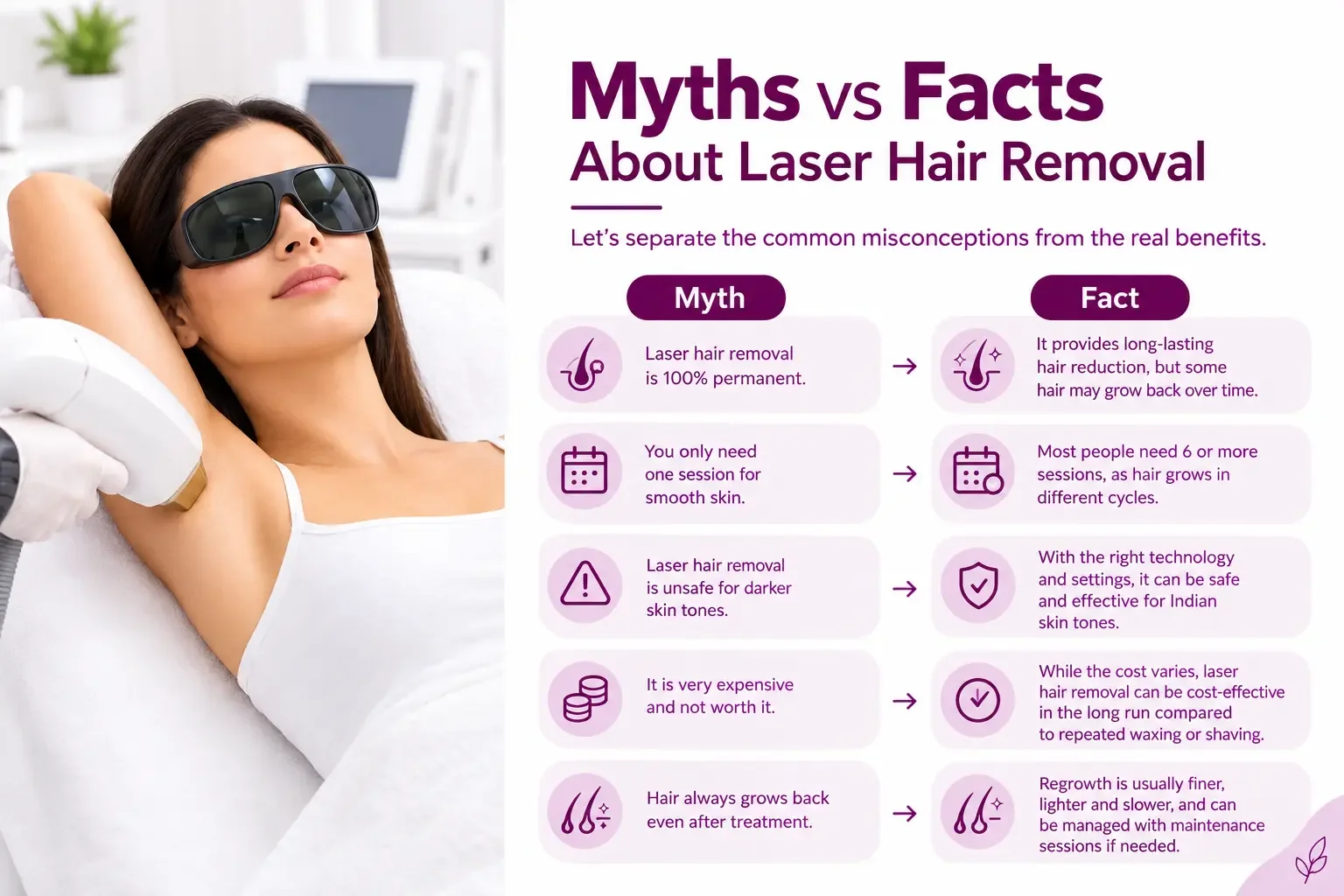
Most of the time, laser hair removal doesn’t permanently remove all the hair; it just makes it less noticeable. After finishing the suggested sessions:
- Hair growth slows down a lot
- New hair looks thinner and lighter.
- For long periods of time, many areas may have almost no hair at all.
Some follicles are permanently destroyed, but others may regrow over time due to hormonal changes or biological factors. So, it is better to call the treatment “permanent hair reduction” instead of “permanent hair removal.”
What “Permanent Hair Reduction” Really Means
Permanent hair reduction means that, after a full course of treatment, hair growth will slow significantly and remain that way for a long time. This includes:
- Hair density can drop by 80–90%.
- Long periods of time without noticeable hair growth
- Needs very little care
This means that laser hair removal is much better than temporary methods like shaving, waxing, or threading, which only provide temporary results.
Factors That Influence Results
Several important things affect how well and how long laser hair removal works:
1. The color of your hair and skin
Since this machine works on pigments, the optimal choice would be a person with fair skin but dark hair. However, due to recent advancements in technology, these procedures can be considered perfectly safe for different types of skin.
2. Hormonal Balance
Conditions like PCOS or thyroid imbalances that cause hormonal changes can lead to new hair growth, which can change the long-term results.
3. Treatment Area
Some areas, like the face, armpits, and bikini line, respond very well. Some sensitive areas may need extra care.
4. Number of Sessions
Most of the time, you need 6 to 8 sessions to get the best results. Not attending sessions or not completing treatment makes it less effective.
Compare Different Laser Technologies for Permanent Hair Reduction.
No single laser is best for everyone. The right one depends on your skin tone and hair type.
| Technology | Works best for | Things to know |
| Diode | Dark hair on light to medium-brown skin, including many Indian skin tones, with good cooling | Widely used and efficient; settings must be adjusted carefully for darker skin |
| Alexandrite | Lighter skin and finer hair | Fast and effective, but higher risk of pigment changes on darker skin |
| Nd:YAG | Medium to dark skin tones | Deeper wavelength is gentler on pigment; may be slightly less effective on fine hair and can feel more intense |
| IPL (not a true laser) | Mild reduction on light skin | Less consistent results and generally not the first choice for lasting reduction |
What to expect, step by step
- Consultation and patch test: The dermatologist checks skin tone, hair type and medical history.
- Preparation: Shave the area, avoid sun and tanning, and do not wax or pluck for several weeks before.
- Session: Pulses of laser light are applied with cooling. Most people describe it as a mild snapping sensation. Time depends on the area.
- Aftercare: Soothing gel, sunscreen, and no heat, hot showers or intense exercise for about 24 hours.
- Shedding: Treated hairs shed over 1–3 weeks. This is normal.
- Repeat sessions and maintenance: Continue the planned course, then top up as advised.
How Many Sessions Are Required?
A full laser hair removal treatment plan usually has:
- 6–8 main sessions that are 4–6 weeks apart
- After that, maintenance sessions once or twice a year.
Every session slows hair growth, prolonging the smoothness.
Does Hair Grow Back After Laser Treatment?
Yes, but there is a big difference. Any new growth is:
- Finer
- Sparser
- Less noticeable
In many cases, patients have permanent damage to their hair follicles, so the treated areas will not grow back. But because of natural biological processes, some dormant follicles may start to work again over time.
Who should avoid or delay laser hair removal?
- Recent tan or sunburn in the area
- Active skin infection, open wounds or a flare of skin disease in the area
- Pregnancy: many clinics choose to postpone as a precaution
- Certain medicines that make skin sensitive to light, which your doctor should review
- White, grey or very light hair, which does not respond well
consult an dermatologist
Benefits of Laser Hair Removal
There are many long-term benefits of laser hair removal:
- Targeting with precision without hurting the skin around it
- Less skin irritation and ingrown hairs
- Results that last longer than those from traditional methods
- Better skin tone and texture
- Affordable over time
People who want low-maintenance grooming prefer this solution because of these benefits.
Laser Hair Removal vs Other Hair Removal Methods
| Method | Duration | Effectiveness | Maintenance |
| Shaving | 1–3 days | Low | Frequent |
| Waxing | 2–4 weeks | Moderate | Regular |
| Threading | 2–3 weeks | Moderate | Regular |
| Laser Hair Removal | Months to years | High | Minimal |
Laser hair removal is the best long-term way to get rid of unwanted hair.
Pre and Post Treatment Care
Before Treatment
- Avoid sun exposure and tanning
- Don’t pluck or wax your hair
- Shave the area 24 hours before
After the Treatment
- Apply gels or creams that calm you down
- Stay away from heat and exercise for 24 hours
- Use sunscreen every day
Taking care of your skin properly will give you better results and keep it safe.
Who Should Think About Getting Laser Hair Removal?
Laser hair removal is great for people who:
- Don’t want to shave or wax as often
- Have ingrown hairs or irritated skin
- Look for long-term ways to reduce hair growth
- Want skin that is smoother and more even in colour
It works for both men and women and can be used on many parts of the body, such as the face, arms, legs, chest, and bikini line.
Is It Worth It? The Final Decision
There is no doubt that laser hair removal is one of the most advanced and effective methods for removing hair. It might not guarantee 100% permanent removal, but it does give results that last a long time and are very satisfying to see.
With the right sessions and care, people can have smooth, hair-free skin for years, making it a good use of both time and money.
Frequently Asked Questions
Q1. Is laser hair removal permanent, or does hair grow back over time?
Laser hair removal gives long-term reduction rather than a guarantee of permanent removal. Many hairs never return, but some dormant follicles can restart, usually thinner and lighter, especially after hormonal changes. Maintenance sessions once or twice a year help keep the area smooth.
Q2. Is laser hair removal truly permanent?
Not in the absolute sense. It is classed as permanent hair reduction: a lasting drop in the number of hairs that regrow after a full course. Hair that remains or returns is typically sparser and finer, so most people no longer need to shave or wax regularly.
Q3. Which laser hair removal clinics near me offer permanent results?
No clinic can honestly promise 100% permanent removal. Look for one that offers a dermatologist consultation, uses medically approved lasers suited to your skin tone, does a patch test, explains the number of sessions up front and is open about maintenance. Layers Clinics follows this approach: https://www.layersclinics.com/book-appointment/
Q4. How many laser hair removal sessions are needed for lasting results?
Most people need about 6–8 sessions. They are spaced roughly 4–8 weeks apart: closer together for the face, further apart for the body, because hair on different areas grows at different speeds. Maintenance sessions once or twice a year may follow.
Q5. Can laser hair removal permanently remove dark hair on Indian skin tones?
Laser hair removal can give long-term reduction of dark hair on Indian skin when the right laser and settings are used. Indian skin usually has more pigment, so the risk of burns or dark marks is higher with the wrong device. Longer-wavelength lasers such as Nd:YAG or a suitable diode with strong cooling are generally preferred, along with a patch test, sun avoidance and sunscreen. The darker and coarser the hair compared with the skin, the better it responds.
Q6. What factors determine the long-term effectiveness of laser hair removal?
The main factors are hair colour and thickness, skin tone, hormones, the body area, how many sessions you complete, the type of laser and how well sun exposure and plucking or waxing are avoided between sessions. Hormonal conditions such as PCOS can bring back new growth even after a good result.
Q7. Compare different laser technologies for permanent hair reduction.
No single laser is best for everyone. The right one depends on your skin tone and hair type.
Conclusion: The Truth You Can Trust
Laser hair removal is a long-term solution for hair loss that has been shown to work in clinical settings. It is not a quick fix. It reduces unwanted hair growth significantly, makes skin smoother, and eliminates the need to shave or wax all the time.
At Layers Clinics, we make sure each patient receives a treatment plan that is right for them, that their sessions are scheduled correctly, and that they have maintenance sessions to achieve the best results. If you want to get rid of unwanted hair safely, quickly, and effectively, laser hair removal remains one of the best options for long-lasting, smooth skin.
Last updated: October 9 2026