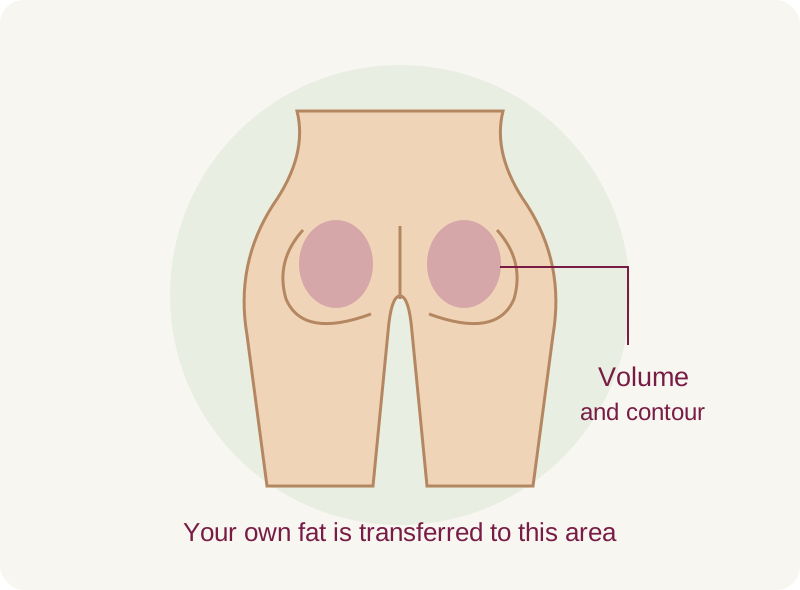
Fat transfer adds volume
Your own fat can add fullness in selected areas. The available donor fat, skin and anatomy limit the change that can be planned.
Explore how fat transfer can change buttock volume and contour, how it differs from a skin lift, and the surgical risks and recovery involved.

Buttock fat grafting takes fat from another body area with liposuction, prepares it and transfers it to the buttocks. It is also called gluteal fat grafting or a Brazilian butt lift, often shortened to BBL.
Despite the name, it mainly adds volume and changes contour. It does not remove a large fold of loose skin, build muscle or provide overall weight loss.
Your own fat can add fullness in selected areas. The available donor fat, skin and anatomy limit the change that can be planned.
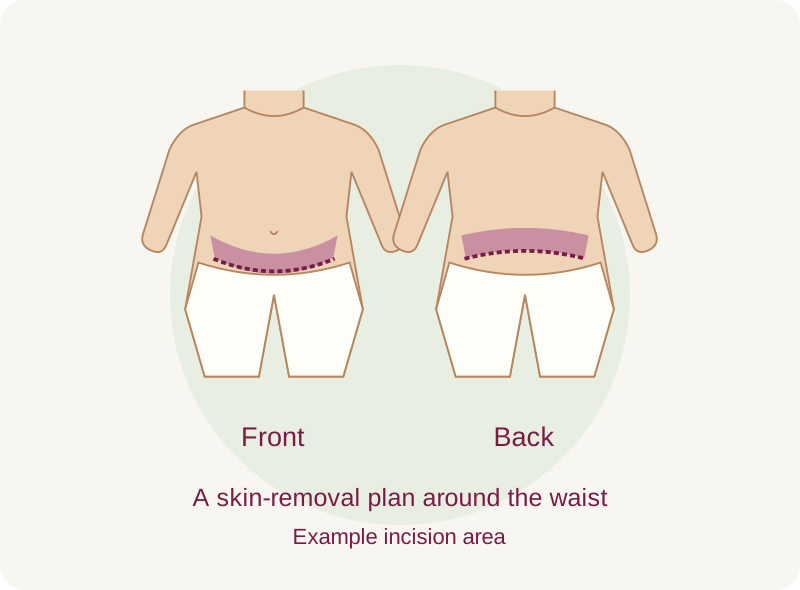
A buttock or lower-body lift addresses excess skin and tissue position. It leaves a different scar and may be more relevant after major weight loss.
Explore body lifts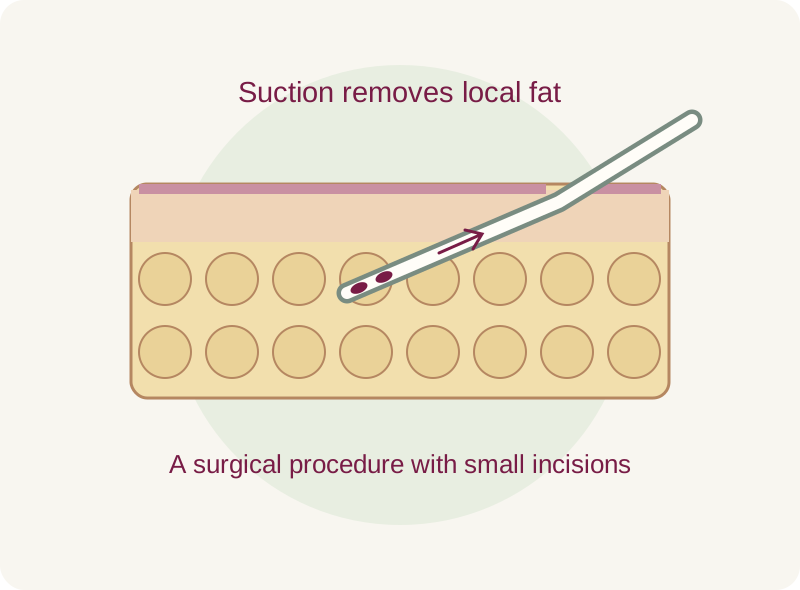
Liposuction reshapes the donor area by removing selected fat. On its own it does not add buttock volume.
Explore liposuctionButtock implants and synthetic filler injections are different procedures. Their materials and risks should not be confused with using your own fat.
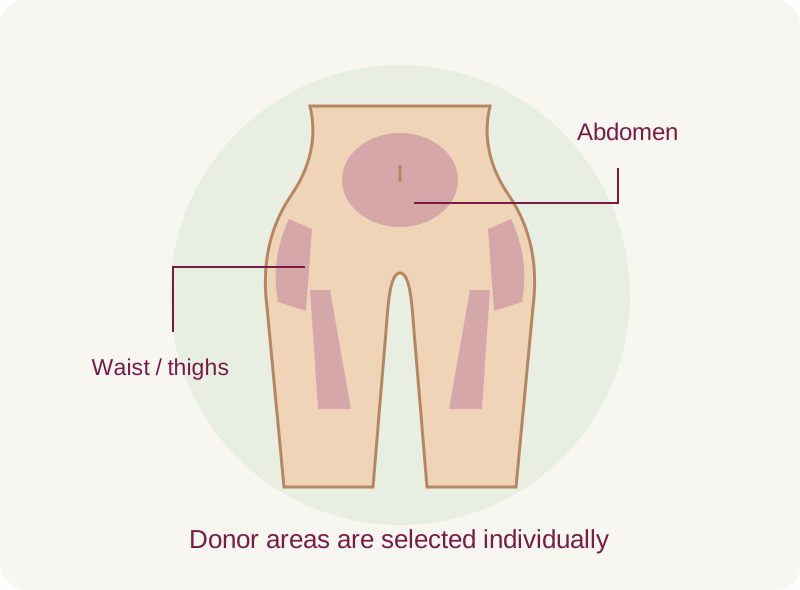
The abdomen, waist or thighs may provide donor fat. The surgeon assesses each area, its skin and the contour that would remain after collection.
A very lean person may not have enough fat for the desired change. Do not gain weight or pursue a larger transfer target without a medical discussion.
Not every collected fat cell is used or survives. There is no universal volume that suits everyone, and adding more is not automatically better.
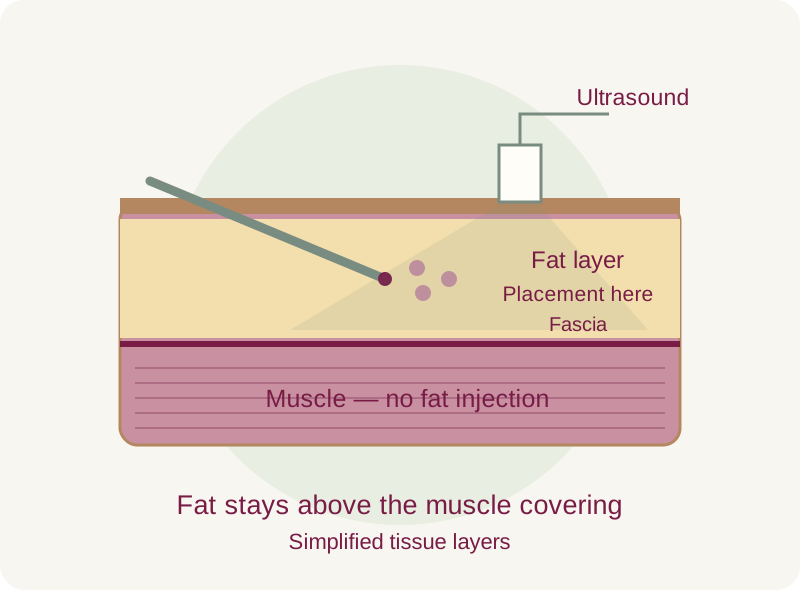
Specialist safety guidance supports placing fat only in the tissue beneath the skin and above the fascia that covers the buttock muscles. Real-time ultrasound helps the surgeon monitor the cannula tip during placement.
Fat entering large blood vessels can travel to the lungs and cause a fatal fat embolism. This is a particularly serious risk of gluteal fat grafting. Ultrasound and appropriate technique reduce risk but do not make the operation risk-free.
Confirm who will perform the fat transfer, their training, use of real-time ultrasound, the operating facility and who manages complications and follow-up. These details should be clear before consent.
Explain the change you want. Significant loose skin may need a lift, and an extreme size target may not be appropriate for your anatomy.
Review your medical history, medicines, nicotine use, weight stability and blood-clot risks. The whole operation includes the liposuction as well as the fat transfer.
Pressure restrictions affect sitting, sleep, work and travel. Arrange practical help and access to the surgical team before choosing a date.
The surgeon examines the donor and buttock areas, reviews your health and discusses the possible change and risks. Confirm the anaesthetic, facility, ultrasound and aftercare.
Follow individual instructions for medicines, nicotine, eating and drinking. Arrange transport, help at home and a plan for sitting and sleeping.
Liposuction removes fat from the agreed areas through small openings. The collected tissue is prepared for transfer.
Fat is placed in the subcutaneous layer above the muscle covering, with real-time ultrasound used to observe placement. The access points are closed or dressed as appropriate.
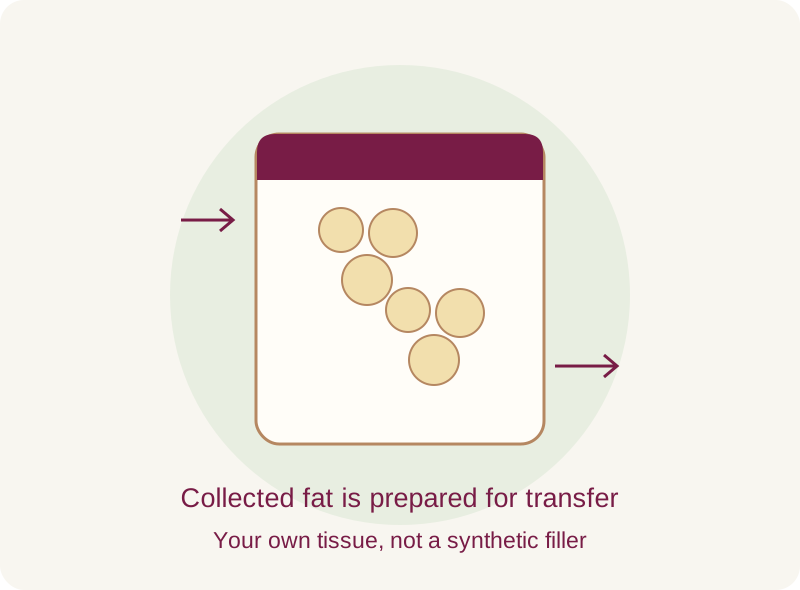
The team monitors you before discharge and explains dressings, medicines and any garment or drain care. Keep the contact details for problems.
Follow the surgeon’s instructions for sitting, sleep positions and gentle movement. Attend the planned reviews before increasing activity.
Prolonged sitting can affect newly transferred fat. You will need a specific plan for sitting and sleep, including how and when to use any support cushion.
Liposuction sites can be bruised, swollen and sore. Follow the garment and wound instructions for each area; do not improvise tight compression over the grafts.
Recovery takes weeks and depends on the extent of the operation. Desk work, driving, travel and exercise each need a plan. Ask before booking long journeys or returning to strenuous activity.
Fat entering blood vessels can block blood flow in the lungs and can be fatal. Blood clots, anaesthetic complications and heart or lung problems are also serious surgical risks.
Bleeding, infection, fluid collections, poor wound healing, skin damage and scars can occur in the donor or treated areas.
Some transferred fat may not survive. Fat necrosis, lumps, asymmetry, contour irregularities or a smaller change than expected can occur. Further surgery may be needed.
Early swelling is not the final result. Some fat is absorbed, and the contour changes as healing progresses over the following months. A precise retained volume or shape cannot be guaranteed.
Surviving fat responds to weight change. A stable weight supports the result, but ageing and skin changes continue. Any further treatment should wait for reassessment of healing and your goals.
These verified Google excerpts describe general consultations and care. They do not identify buttock fat grafting or show its surgical results.
“The doctors listened carefully to my concerns and explained the treatment in a clear and professional manner.”
Consultation experience; condition not specified.
“She explained the treatment clearly and made me feel comfortable throughout the consultation.”
Consultation experience; condition not specified.
“The doctor took the time to understand my skin concerns and explained the treatment plan clearly, without rushing.”
Consultation experience; condition not specified.
“Very patient ,humble and polite to answer every single query and build confidence.”
Consultation experience; condition not specified.
“The doctors explained everything clearly and made me feel comfortable and confident.”
Consultation experience; condition not specified.
“The doctor took the time to listen to my concerns patiently and explained the treatment options clearly.”
Consultation experience; condition not specified.
















No. BBL usually means fat transfer to add volume. A skin lift removes excess skin and changes tissue position.
No. Liposuction collects selected fat for transfer. It is a contour procedure and does not replace weight-management care.
Real-time ultrasound helps the surgeon see the cannula tip and confirm that fat placement stays above the muscle covering. It is a key element of specialist safety guidance, but does not remove all risk.
There is no single appropriate amount. Your anatomy, donor fat, tissue capacity and overall surgical risk guide the plan.
The desired change may not be possible with fat transfer. Discuss alternatives and their risks, including choosing not to have surgery.
No. Some fat is absorbed or does not survive. The retained amount varies and should be assessed after healing.
Follow the surgeon’s specific pressure restrictions and sitting plan. The timing varies; do not use someone else’s recovery schedule as your own.
Do not assume it will. Cellulite, skin folds and volume are different concerns. A separate skin or lift assessment may be needed.
Talk through your goals, the options and the surgical care involved.
Prefer a call? +91 9000 572727