
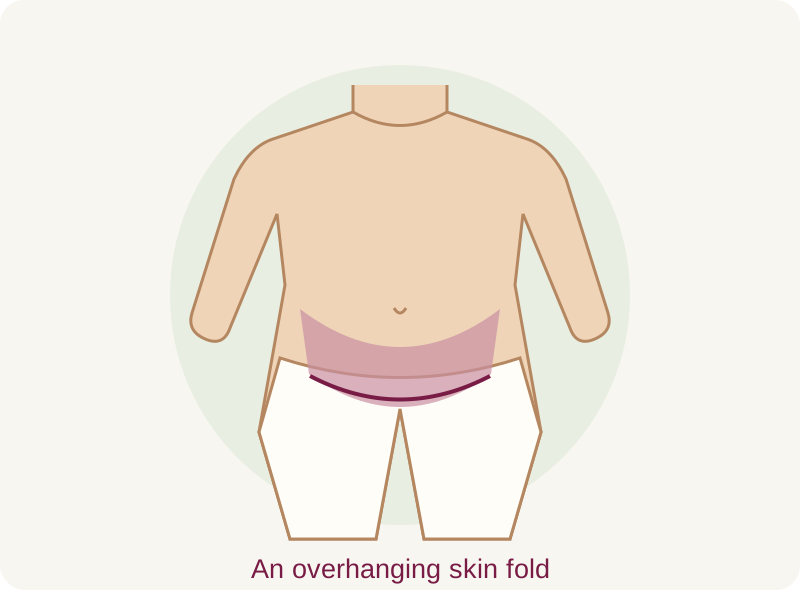
Abdomen
A tummy tuck addresses loose abdominal skin and may include abdominal-wall repair. Removing a hanging apron of skin alone is called panniculectomy.
Explore tummy tuckSkin folds can remain after a major change in weight. Understand which options fit the areas that concern you, and what surgery and healing would involve.

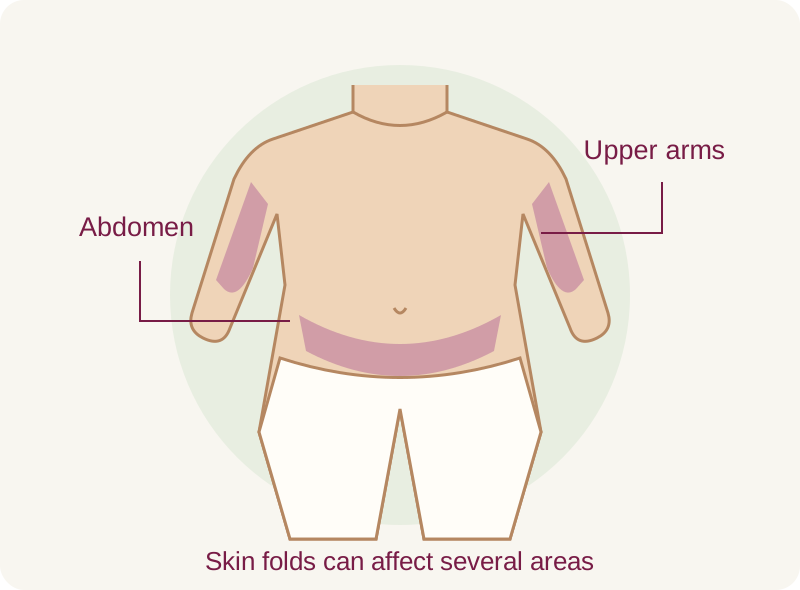
Skin that has stretched may not shrink fully when the body becomes smaller. Folds can affect the abdomen, arms, thighs and other areas, changing clothing fit or causing rubbing.
Body contouring after weight loss is a group of operations that remove excess skin and reshape selected areas. It is not another weight-loss treatment. The right plan depends on the skin pattern and your health.
A tummy tuck addresses loose abdominal skin and may include abdominal-wall repair. Removing a hanging apron of skin alone is called panniculectomy.
Explore tummy tuck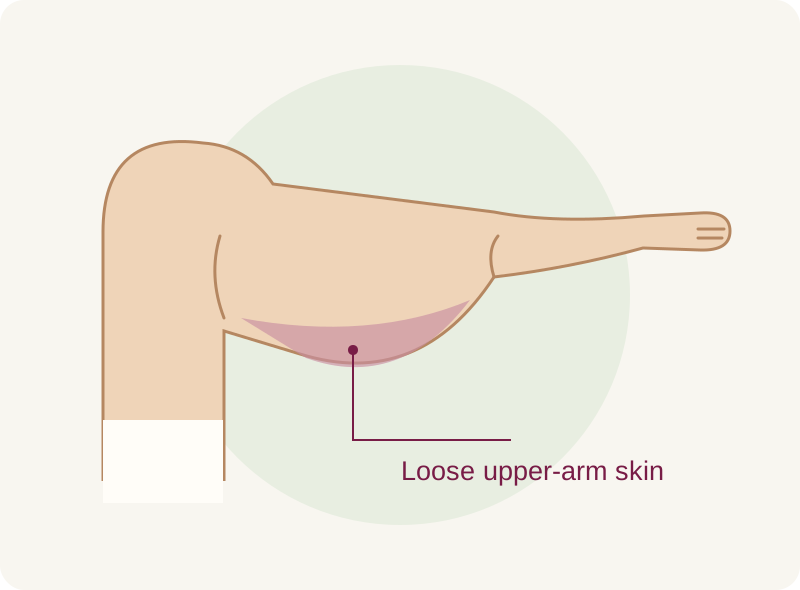
An arm lift removes excess upper-arm skin. The length and position of the scar depend on how far the looseness extends.
Explore arm lift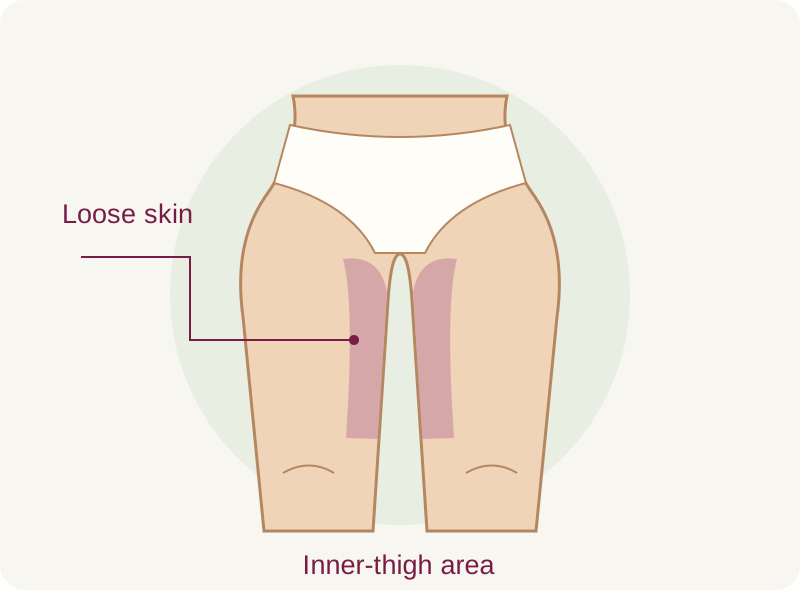
A thigh lift addresses selected inner or outer thigh folds. Groin-crease and longer incision plans serve different needs.
Explore thigh lift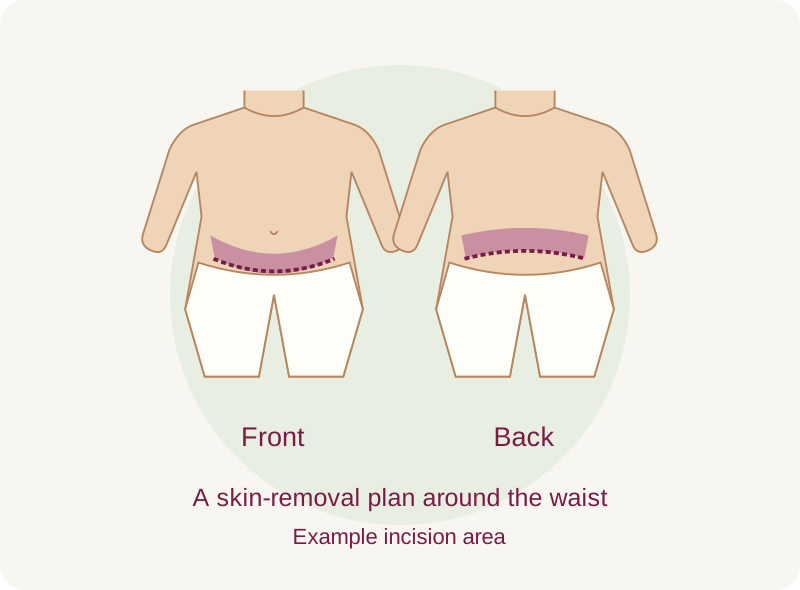
A lower-body lift, also called belt lipectomy, removes loose skin and fat around the waist. The incision extends around the body to address the abdomen and buttock area; the exact plan may also include the hips or outer thighs.
A tummy tuck focuses on the front of the abdomen. A lower-body lift covers a wider area and leaves a longer scar. It is also different from 360 liposuction, which describes fat removal around the torso rather than wraparound skin removal.
The illustration shows an example area, not a personal incision plan.
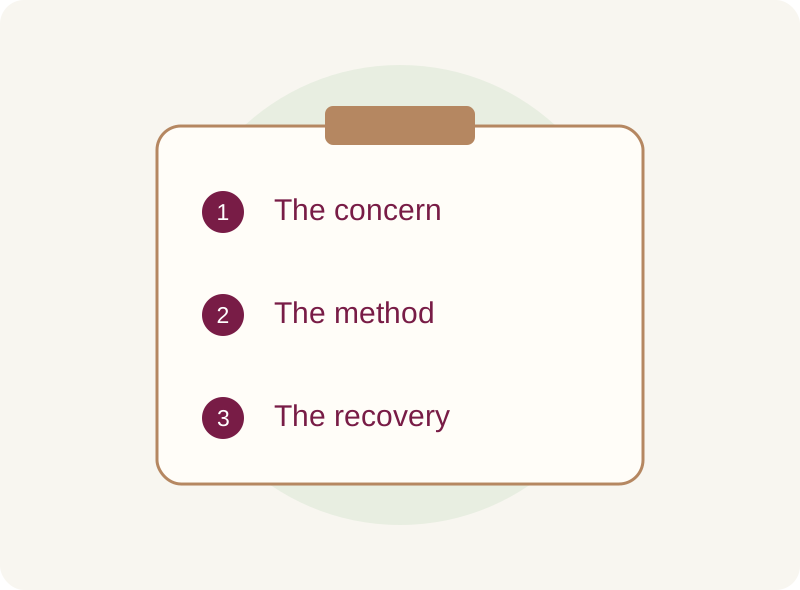
If you are still losing weight, the skin pattern may keep changing. Discuss a period of weight stability and any future weight or pregnancy plans.
The assessment includes smoking, diabetes, medicines, previous surgery and clotting history. Rashes or wounds in skin folds may need treatment before an operation.
Think about comfort, clothing and the specific change you want. Removing skin leaves permanent scars, and some looseness or unevenness may remain.
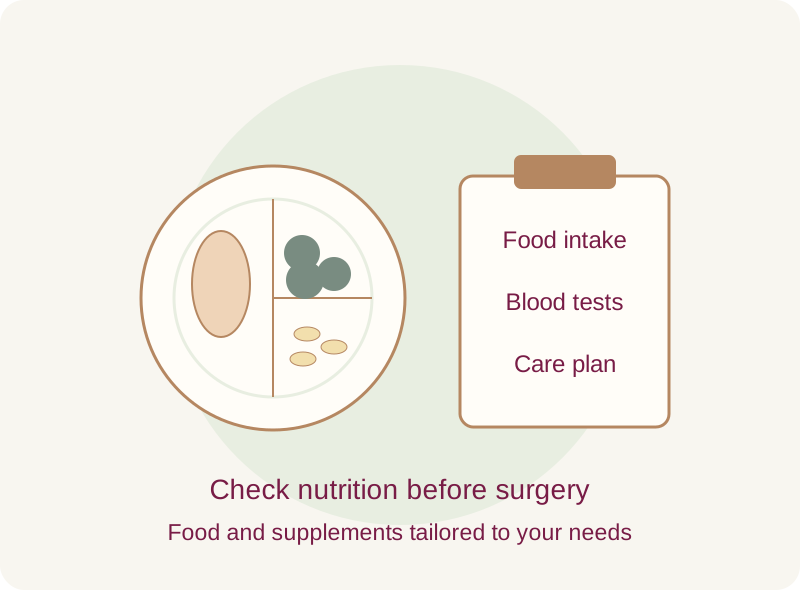
Tell the team about weight-loss surgery, medicines and changes in eating. These can affect food intake or nutrient absorption.
Low protein, vitamin or mineral levels can make healing harder. Your clinician may arrange blood tests and dietitian support before surgery.
Food and supplements should fit the findings. A general multivitamin may not correct a deficiency. Discuss prescribed medicines with the team rather than stopping them yourself.
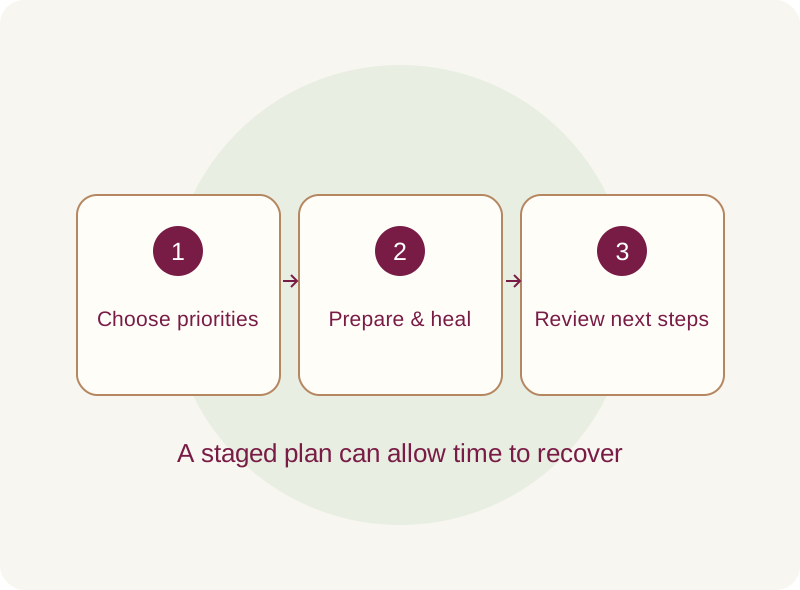
When several areas need care, the surgeon may suggest separate operations. Staging can allow time for healing and reassessment before deciding on another area. There is no single sequence for everyone.
Agree which concern matters most, the time each operation needs and the support available at home. Chest, breast, face or neck changes need their own assessment rather than being automatically added to a body-lift plan.
A plastic surgeon examines the skin and discusses options, scar positions and risks. Confirm the surgeon, surgical facility and aftercare arrangements.
Follow the requested health checks and nutrition plan. Your surgical and anaesthetic team will give instructions for medicines, food and drink. Arrange transport and help at home.
The operation uses the agreed anaesthetic and incision plan. Excess skin and selected fat are removed; tissue is reshaped as needed for that procedure.
The incisions are closed with support for the underlying tissue. Dressings and temporary drains may be used.
Get written advice for wound care, any drains or garments, medicines and follow-up appointments.
The team guides safe walking and limits on lifting, bending and exercise. A later operation is considered after reviewing your recovery and remaining priorities.
Dressings, drains and wound checks may be needed. Follow guidance on washing and positions that avoid pulling on the healing skin.
Gentle walking is usually encouraged to reduce clot risk. Strenuous exercise and lifting need to wait for clearance; complete bed rest is not the usual goal.
Recovery depends on the operations performed. Work, childcare and travel may need adjustment for several weeks. Ask for advice based on your own activities.
Bleeding, infection, fluid collections, skin loss and slow or separated wound healing can occur.
Scars may widen or remain raised. Numbness, uneven contours or remaining loose skin are possible; further treatment may be needed.
Blood clots and anaesthetic complications are serious surgical risks. Your health and the size of the operation affect the assessment.
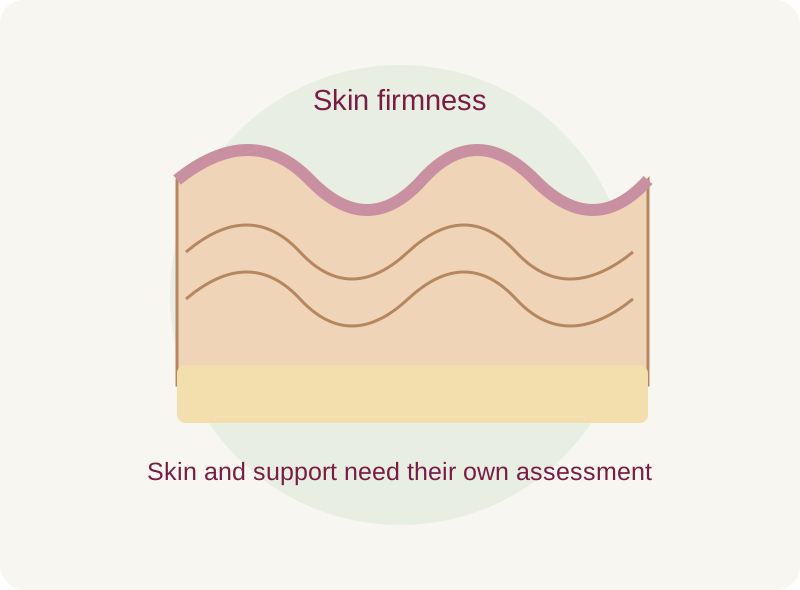
Skin removal may improve contour and make some folds easier to manage. Early swelling can hide the change, and scars continue to mature after the wounds close.
Surgery does not stop ageing or later weight changes. Keeping weight stable supports the result. Ask what improvement is realistic for each area, including the skin that will remain.
These verified Google excerpts describe general consultations and care. They do not identify body-lift surgery or show its results.
“The doctors listened carefully to my concerns and explained the treatment in a clear and professional manner.”
Consultation experience; condition not specified.
“She explained the treatment clearly and made me feel comfortable throughout the consultation.”
Consultation experience; condition not specified.
“The doctor took the time to understand my skin concerns and explained the treatment plan clearly, without rushing.”
Consultation experience; condition not specified.
“Very patient ,humble and polite to answer every single query and build confidence.”
Consultation experience; condition not specified.
“The doctors explained everything clearly and made me feel comfortable and confident.”
Consultation experience; condition not specified.
“The doctor took the time to listen to my concerns patiently and explained the treatment options clearly.”
Consultation experience; condition not specified.














Exercise helps strength and general health, but cannot remove substantial excess skin. Surgery and non-surgical skin-firming methods have different limits.
There is no single date that suits everyone. The team considers your weight trend, nutrition, health and any weight-loss treatment before recommending timing.
A tummy tuck focuses on the abdomen. A lower-body lift extends around the waist to address a wider skin pattern. An examination helps distinguish these needs.
Sometimes selected procedures are combined. A larger operation also means more recovery and risk. Your surgeon may recommend separate stages.
No. Scars usually change and may fade as they mature, but are permanent. Review their likely position and length before consenting to surgery.
Tell the surgical team which medicine you use and any nausea, reduced intake or other symptoms. They will coordinate nutrition and anaesthetic instructions with your prescriber.
Usually you will need transport and initial help after an operation. Discuss stairs, childcare, meals and everyday tasks when planning recovery.
Liposuction removes fat rather than a large skin fold. When skin cannot adapt, skin removal may be the more relevant option.
Discuss loose skin, surgical choices and the preparation you may need.
Prefer a call? +91 9000 572727