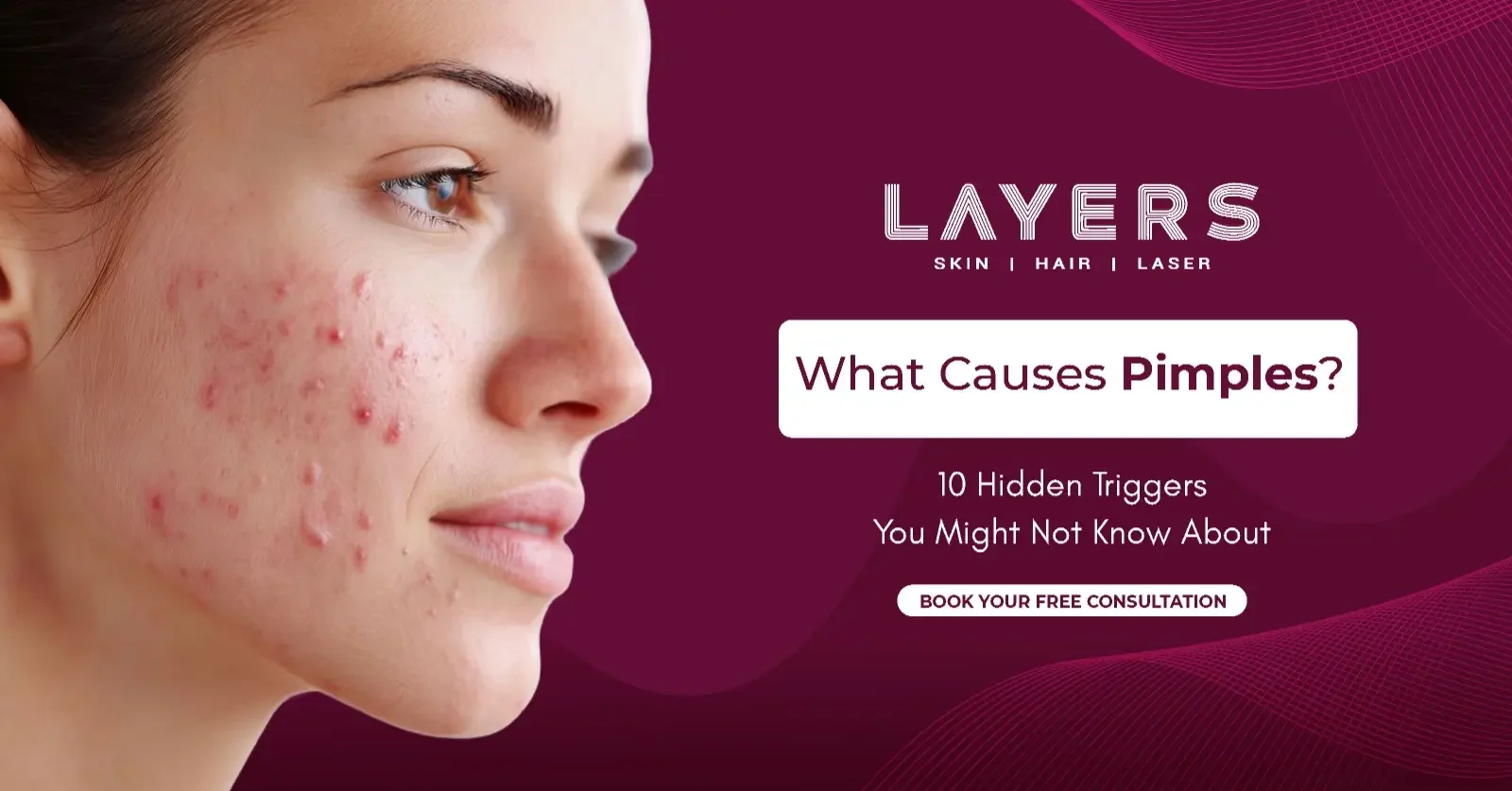
What causes pimples? Pimples develop when hair follicles become clogged with excess sebum (natural skin oil) and dead skin cells, leading to inflammation and the involvement of Cutibacterium acnes bacteria. Hormonal changes, genetics, stress, certain skincare products, and some medications can contribute to breakouts. Diet may also worsen acne in some people.
Pimples can appear on the forehead, cheeks, chin, jawline, and other parts of the body. Understanding what triggers your breakouts is the first step toward choosing the right skincare routine and treatment.
This guide from Layers Clinics explains the main causes of pimples on the face, whether diet and dry skin contribute to acne, how to prevent recurring breakouts, and when to consult a dermatologist.
| Key Takeaway: Pimples develop when excess oil and dead skin cells clog hair follicles, leading to inflammation. Hormonal changes, stress, certain skincare products, and dietary factors may trigger breakouts. A consistent skincare routine, non-comedogenic products, and dermatologist-recommended treatments can help manage acne and reduce recurrence. Consult a qualified dermatologist if pimples persist, become painful, or leave scars. |
What Are Pimples and Why Do They Appear on the Face?
Pimples are inflamed or clogged hair follicles that commonly develop as part of acne. They form when dead skin cells and sebum accumulate inside a follicle. Inflammation can then cause blackheads, whiteheads, red bumps, pus-filled pimples, or deeper painful lesions.
Acne is not simply a result of poor hygiene. It can affect people of different ages and skin types, including individuals who follow a consistent skincare routine.
The four main processes involved in acne are:
- Excess sebum production.
- Accumulation of dead skin cells inside hair follicles.
- Changes in the follicular environment involving Cutibacterium acnes.
- Inflammation that produces visible acne lesions.
Understanding these processes helps explain why repeatedly washing your face or applying random acne products may not resolve recurring pimples.
What Causes Pimples on the Face? 10 Common Triggers
1. Hormonal Changes and Fluctuations
Hormonal changes are among the most common reasons for pimples, particularly during puberty and adulthood. Androgens can stimulate the sebaceous glands to produce more oil, increasing the likelihood of clogged pores.
Hormonal acne may become more noticeable:
- During puberty.
- Before or during menstruation.
- During pregnancy or other periods of hormonal change.
- In some people with polycystic ovary syndrome (PCOS).
What can help? Maintain a gentle skincare routine and track recurring breakouts. Persistent acne accompanied by irregular periods or increased facial hair may warrant medical assessment for an underlying hormonal condition.
2. Excess Oil Production and Clogged Pores
Sebum helps protect the skin, but excess oil combined with dead skin cells can block hair follicles and contribute to pimples.
People with oily skin may notice more blackheads, whiteheads, and inflammatory breakouts. However, acne can also develop in people with normal or dry skin.
What can help? Choose a gentle cleanser and non-comedogenic moisturiser. Ingredients such as salicylic acid may help unclog pores when suitable for your skin. Avoid aggressive scrubbing, which can irritate the skin and worsen inflammation.
3. Diet and High-Glycemic Foods
Does diet play a role in acne breakouts? Research suggests that high-glycemic foods may worsen acne in some individuals. These foods can cause rapid increases in blood glucose and insulin, potentially influencing pathways involved in sebum production and inflammation.
Examples include:
- Sugary drinks and sweets.
- Refined carbohydrates such as white bread.
- Highly processed snacks.
- Foods made predominantly with refined flour.
Some studies have also associated cow’s milk consumption with acne, although the relationship is not consistent for everyone.
What can help? Choose a balanced diet containing vegetables, fruits, whole grains, legumes, and adequate protein. Observe whether particular foods consistently coincide with breakouts. Avoid restrictive diets unless medically advised; diet alone is not a guaranteed acne treatment.
4. Stress and Poor Sleep
Stress does not directly cause every pimple, but it may aggravate existing acne. Stress-related hormonal signalling can influence inflammation and oil production. Poor sleep may also affect skin health and make it harder to maintain consistent skincare habits.
You might notice breakouts becoming worse during examinations, demanding work periods, or other stressful situations.
What can help? Maintain a regular sleep schedule, exercise as appropriate, and practise relaxation techniques. These measures support general wellbeing but should complement, rather than replace, appropriate acne treatment.
5. Skincare Mistakes and Harsh Products
Using too many active ingredients or cleansing too aggressively can irritate the skin barrier. This irritation may make redness and inflammation more noticeable and reduce your tolerance for acne treatments.
Common mistakes include:
- Washing the face repeatedly throughout the day.
- Using harsh scrubs or abrasive cleansing brushes.
- Combining multiple exfoliating acids without guidance.
- Frequently switching acne products.
- Applying thick products that clog pores.
What can help? Keep your routine simple. Cleanse gently, moisturise, and use sunscreen. Introduce one new acne treatment at a time and follow its directions.
6. Comedogenic Makeup and Haircare Products
Some foundations, moisturisers, hair oils, pomades, and styling products may contribute to clogged pores in susceptible individuals.
Hairline and forehead breakouts can sometimes be associated with oily hair products that transfer onto the skin. Makeup residue may also contribute if products are not removed properly.
What can help? Look for products labelled non-comedogenic or formulated for acne-prone skin. Remove makeup before sleeping, clean makeup brushes regularly, and keep oily hair products away from the forehead.
These labels can be useful, although no product is guaranteed to suit every individual.
7. Bacteria and Inflammation Within Hair Follicles
Cutibacterium acnes naturally lives on human skin. It is not simply a harmful germ acquired from dirty surfaces. When a follicle becomes clogged, changes in its environment and the body’s inflammatory response can contribute to acne lesions.
Touching or picking pimples can increase irritation and raise the risk of post-inflammatory dark marks and acne scars.
What can help? Avoid squeezing pimples. Use appropriate acne treatments, and seek medical advice for persistent inflammatory lesions. Washing more frequently than necessary will not eliminate the underlying processes responsible for acne.
8. Environmental Conditions, Sweat, and Friction
Hot, humid conditions may increase sweating and make oily skin feel uncomfortable. Sweat itself does not automatically cause acne, but friction, occlusive equipment, and prolonged contact with sweaty clothing can contribute to acne-like breakouts in some situations.
Helmet straps, tight headwear, masks, and sports equipment may trigger acne mechanica, a type of breakout associated with pressure and friction.
What can help? Cleanse gently after heavy sweating, change out of damp clothing, and clean equipment that regularly contacts your skin. Choose breathable materials where practical and minimise repeated rubbing.
9. Certain Medications and Underlying Conditions
Some medicines can trigger acne-like eruptions or worsen existing acne. Examples may include corticosteroids, testosterone or other hormonal medicines, and certain other prescription drugs.
Sudden breakouts that look different from your usual acne may also require evaluation for other skin conditions. Not every red bump is acne; folliculitis and other inflammatory disorders can resemble pimples.
What can help? If acne begins after starting a medication, speak with the prescribing clinician. Do not stop prescribed medication without medical advice. A dermatologist can help determine whether the eruption is acne or another condition.
10. Dry Skin and a Damaged Skin Barrier
Can dry skin cause pimples? Dry skin does not necessarily cause acne, but irritation and an impaired skin barrier can make acne-prone skin more uncomfortable and harder to treat.
Overusing exfoliants, harsh cleansers, or drying acne products may cause tightness, flaking, burning, and redness. These symptoms can occur alongside acne, particularly when several active products are used together.
What can help? Use a gentle cleanser and a moisturiser suited to your skin type. Avoid deliberately drying out your skin to control oil. If your skin becomes persistently irritated, reassess your routine with a qualified dermatologist.
Why Do Pimples Appear on Different Parts of the Face?
The location of a pimple may offer clues, but it cannot reliably identify its cause on its own.
| Pimple location | Possible contributing factors |
| Forehead | Oily skincare or hair products, clogged pores, friction |
| Cheeks | Acne, makeup or skincare products, friction, and other skin conditions |
| Chin and jawline | Hormonal influences, especially when breakouts recur cyclically |
| Nose | Oil-rich pores and comedones |
| Hairline | Hair oils, styling products, and occlusive products |
Repeated breakouts in one area are worth discussing with a dermatologist, particularly if the lesions are painful, itchy, or leaving scars.
How to Prevent Pimples on the Face
Learning how to prevent pimples on the face starts with a consistent, skin-friendly routine. Results take time, and no single lifestyle change can prevent every breakout.
Follow a Simple Daily Skincare Routine
Morning
- Wash your face with a gentle cleanser.
- Apply a lightweight, non-comedogenic moisturiser.
- Use broad-spectrum sunscreen with SPF 30 or higher.
Evening
- Remove makeup and sunscreen.
- Cleanse gently without scrubbing.
- Apply a suitable acne treatment if needed.
- Moisturise to support the skin barrier.
Choose products according to your skin type and introduce active ingredients gradually.
Choose an Effective Cleanser for Oily, Pimple-Prone Skin
A suitable cleanser removes excess oil, sweat, and surface impurities without leaving your skin excessively dry.
Consider these options:
- Gentle, fragrance-free cleanser: Often suitable for sensitive or easily irritated skin.
- Salicylic acid cleanser: May help unclog pores and reduce blackheads and whiteheads.
- Non-comedogenic cleanser: A practical choice for people who are prone to clogged pores.
Avoid harsh soaps and aggressive exfoliation. If a cleanser causes persistent burning, redness, or peeling, discontinue it and seek advice if symptoms continue.
Avoid Picking Pimples
Picking, squeezing, or scratching acne lesions can increase inflammation and the risk of scarring and post-inflammatory hyperpigmentation. Allow pimples to heal and use suitable treatments instead.
Maintain Healthy Habits
- Eat a balanced diet and monitor any consistent food-related triggers.
- Sleep regularly and manage stress.
- Clean makeup brushes and frequently used skincare tools.
- Wash after heavy sweating without excessive scrubbing.
- Keep hair products away from acne-prone areas.
- Avoid adding several new skincare products at once.
How to Reduce Pimples: Dermatologist-Recommended Treatments
If you have frequent breakouts, selecting treatment according to the type and severity of acne is more effective than trying random products.
Common evidence-based treatment options include:
| Treatment | How it may help |
| Benzoyl peroxide | Reduces acne-associated bacteria and inflammatory lesions |
| Topical retinoids | Help prevent clogged pores and treat comedonal acne |
| Salicylic acid | Helps remove dead skin cells and unclog pores |
| Azelaic acid | May help with acne and post-acne dark marks |
| Prescription medication | May be appropriate for persistent, hormonal, or severe acne |
Not every treatment suits every skin type. Some products can cause irritation, and topical retinoids require particular caution during pregnancy or when planning pregnancy. Consult a healthcare professional for individual advice.
Professional Acne Treatment at Layers Clinics
A dermatologist can assess your skin, identify the type of acne, and recommend a treatment plan based on severity, previous treatment, skin sensitivity, and scarring risk.
Depending on the clinical assessment, options may include prescription medication, chemical peels, or selected procedures for suitable patients. Procedures are not necessary for every case of acne, and treatments for active acne differ from those used for established acne scars.
If pimples repeatedly return, are painful, or leave dark marks and scars, consider a consultation with a qualified dermatologist at Layers Clinics.
Explore the clinic’s acne scar treatment information to learn more about care for acne-related scarring.
When Should You See a Dermatologist for Pimples?
Consider professional evaluation if:
- Pimples keep returning despite a consistent skincare routine.
- You have deep, painful nodules or cyst-like lesions.
- Acne is leaving scars or persistent dark marks.
- Breakouts are sudden, severe, or accompanied by other unusual symptoms.
- Over-the-counter treatments cause significant irritation.
- Acne affects your confidence or quality of life.
Early assessment can help control inflammation, reduce the risk of scarring, and identify conditions that may resemble acne. Treatment results vary, and improvement often requires several weeks of consistent use.
Frequently Asked Questions About What Causes Pimples
1. What causes pimples on the face?
Pimples usually develop when excess sebum and dead skin cells clog hair follicles, leading to inflammation. Hormonal changes, genetics, certain skincare products, stress, and some medications can contribute to breakouts.
2. Why do I keep getting pimples even when I wash my face?
Acne is not caused simply by an unclean face. Hormonal influences, excess sebum, clogged pores, and inflammation can continue despite regular cleansing. Overwashing may also irritate your skin. A consistent routine and appropriate acne treatment may help.
3. Does dry skin cause pimples?
Dry skin does not automatically cause acne. However, a damaged or irritated skin barrier can make acne-prone skin more uncomfortable. Gentle cleansing and suitable moisturising can help maintain skin health.
4. Does diet cause acne breakouts?
Diet may influence acne in some people. Research suggests that high-glycemic foods and possibly certain dairy products can worsen breakouts in susceptible individuals. However, diet is only one potential factor, and individual triggers vary.
5. What causes pimples on the forehead and chin?
Forehead breakouts may be associated with clogged pores, oily hair products, and friction. Chin and jawline acne may be influenced by hormonal changes, particularly when breakouts recur around menstruation. Location alone cannot confirm the cause.
6. How can I reduce pimples quickly?
Avoid picking pimples, cleanse gently, and use an appropriate acne treatment. Benzoyl peroxide or salicylic acid may help selected types of acne, but results are not immediate. Painful or severe breakouts should be assessed by a dermatologist.
7. When do pimples go away?
A small pimple may settle within several days, while deeper inflammatory lesions can take weeks or longer to resolve. Persistent acne often needs consistent treatment. Picking lesions can prolong inflammation and increase the risk of scarring.
8. Where can I find dermatologist-recommended acne solutions?
Consult a qualified dermatologist who can assess your skin, determine the type and severity of acne, and recommend appropriate skincare, medication, or procedures. At Layers Clinics, a consultation can help you understand suitable options for your individual skin concerns.
Conclusion: Understand What Causes Pimples to Prevent Recurring Breakouts
Pimples develop through a combination of clogged pores, excess sebum, inflammation, and individual susceptibility. Hormonal changes, certain skincare products, stress, and dietary factors may contribute to breakouts, but the exact triggers differ from person to person.
A gentle skincare routine, non-comedogenic products, and avoiding pimple picking can help support clearer skin. If acne persists, becomes painful, or leaves scars, professional assessment can help identify the most appropriate treatment.
Layers Clinics offers personalised skin-care guidance and treatment options based on individual needs. Consult a qualified dermatologist to understand your acne triggers and develop a suitable plan for healthier-looking skin.