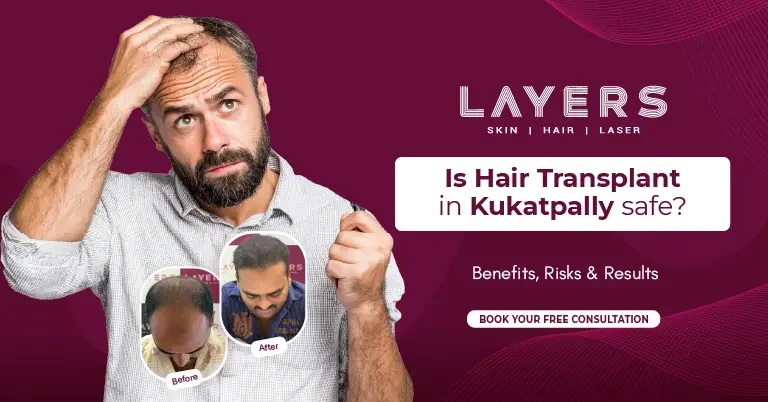
Hair loss can affect confidence, appearance and everyday life. If you are considering a hair transplant in Kukatpally, it is important to understand how the procedure works, which techniques may be suitable, what it costs and what recovery involves.
Hair transplantation is a surgical procedure that moves hair follicles from a donor area to areas affected by thinning or baldness. Techniques such as Follicular Unit Extraction (FUE), Follicular Unit Transplantation (FUT) and Direct Hair Implantation (DHI) may be considered depending on the patient’s needs. At Layers Clinics, a consultation can help assess hair loss, donor hair availability and appropriate treatment options.
| Quick answer: Is hair transplant in Kukatpally safe? Hair transplantation can be performed safely in suitable patients when qualified medical professionals use appropriate clinical standards and provide proper aftercare. However, no procedure is risk-free. Individual suitability, medical assessment, technique, clinical hygiene and follow-up care all matter. |
Is Hair Transplant Safe?
Hair transplantation is an established procedure, but its suitability and risks differ from person to person. Safety depends on more than the equipment or technique used. A proper assessment, suitable treatment plan, qualified professionals and clear aftercare instructions are important parts of the process.
Before proceeding, discuss your medical history, current medicines, scalp condition and expectations with your clinician. Ask who will perform the procedure, how risks are managed and what support is available during recovery.
A consultation should also establish whether transplantation is appropriate or whether medical treatment for the underlying cause of hair loss should be considered first.
What Are the Different Hair Transplant Techniques?
The right technique depends on the extent of hair loss, donor hair supply, treatment goals and clinical assessment. FUE, FUT and DHI are not interchangeable solutions, and no single method is best for every patient.
1. Follicular Unit Extraction (FUE)
FUE involves extracting individual follicular units from the donor area and transplanting them into areas requiring coverage. It does not require the linear incision used in FUT, although small dot-like scars may remain.
FUE may suit patients whose donor hair and treatment goals are compatible with individual follicle extraction. Recovery varies depending on the number of grafts, the procedure and personal healing.
2. Follicular Unit Transplantation (FUT)
FUT involves removing a strip of scalp from the donor area and separating it into individual follicular units for transplantation. It leaves a linear scar, which may be concealed by surrounding hair depending on the hairstyle and healing.
FUT may be appropriate for selected patients based on donor characteristics and the coverage required. Your clinician should explain the expected scar, recovery process and alternatives before recommending it.
3. Direct Hair Implantation (DHI) and Body Hair Transplant (BHT)
DHI is an implantation approach that uses a specialized implanter instrument to place follicles. It may be considered for selected cases where controlled placement is important. BHT involves evaluating hair follicles from suitable body areas when scalp donor hair is limited; candidacy and results vary.
Availability and suitability should be confirmed during consultation. Ask your clinician to explain why a particular approach is being recommended for your case.
FUE vs DHI: Which Is Better?
| Factor | FUE | DHI |
| Main approach | Individual follicles are extracted and implanted into prepared recipient sites | Individual follicles are extracted and implanted using a specialized implanter |
| Placement | Depends on the implantation method used | The implanter can provide controlled placement |
| Scarring | Small extraction marks may remain | Small extraction marks may remain |
| Best choice | Depends on donor hair and coverage goals | Depends on the case and the clinician’s assessment |
The decision should be based on suitability, the treatment plan and the clinician’s explanation—not just the name of the technique.
What Are the Benefits of Hair Transplant in Kukatpally?
For suitable patients, hair transplantation can offer several potential benefits:
- Long-lasting growth: Transplanted follicles can continue growing over the long term, although existing non-transplanted hair may keep thinning.
- Natural-looking coverage: Careful hairline design and graft placement can help the transplanted hair blend with surrounding hair.
- Personalized treatment: The plan can be tailored to the pattern of hair loss, donor supply and individual goals.
- Everyday hair care: After healing, transplanted hair is generally cared for much like other hair, following the clinician’s guidance.
Results are not identical for everyone. Density, hair characteristics, donor supply, healing and future hair loss all influence the final appearance.
What Are the Risks and Side Effects of Hair Transplant?
A hair transplant is a medical procedure, so it is important to understand potential side effects and complications before deciding.
Temporary effects may include redness, swelling, itching, scabbing, tenderness and shedding of transplanted hairs during the early growth cycle. Some patients may experience shock loss, which refers to temporary shedding of existing or transplanted hair. Healing experiences vary.
Potential complications can include infection, bleeding, scarring, poor growth, an uneven appearance or an outcome that does not meet expectations. Seek prompt medical advice if you experience worsening pain, spreading redness, fever, unusual discharge or other concerning symptoms after treatment.
What Factors Determine Hair Transplant Safety?
When comparing the best hair transplant clinics near Kukatpally, consider these factors:
- Medical qualifications: Ask about the qualifications and responsibilities of the professionals assessing and performing your procedure.
- Clinical hygiene: Understand the clinic’s infection-control and sterilization practices.
- Individual assessment: The treatment plan should reflect your scalp health, donor area and hair-loss pattern.
- Transparent consent: You should receive a clear explanation of the procedure, risks, alternatives and expected recovery.
- Aftercare and follow-up: Confirm whom to contact with concerns and how healing will be monitored.
Who Is a Good Candidate for Hair Transplant?
Potential candidates generally have sufficient donor hair, suitable health status and realistic expectations. Hair loss that is rapidly progressing, limited donor supply or certain medical conditions may require further evaluation before surgery. Age alone does not determine suitability; the pattern and progression of hair loss also matter.
What Results Can You Expect After a Hair Transplant?
Hair transplant results develop gradually rather than immediately. Transplanted hairs may shed during the first weeks, and new growth often becomes noticeable after a few months. More mature cosmetic results are commonly assessed around 9–12 months, although timing and outcomes vary.
The final appearance depends on donor hair quality, graft planning, scalp health, the procedure and aftercare. A transplant does not stop all future hair loss, so your clinician may discuss ways to manage existing hair over time.
Illustrative Hair Transplant Case Example
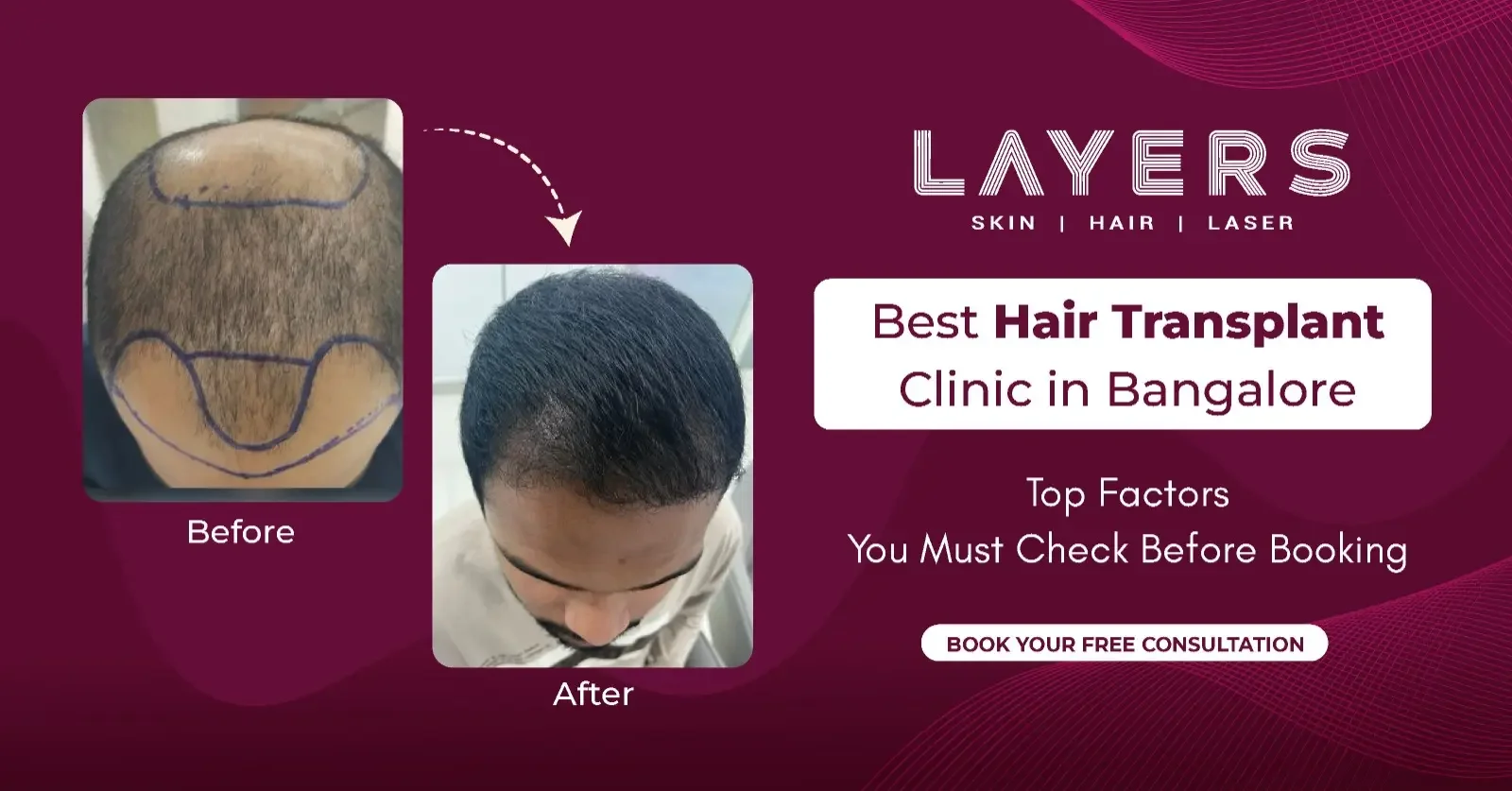
A patient profile shared in the supplied clinic content describes an adult with a receding hairline and crown thinning who underwent assessment for an FUE-based treatment plan. The plan focused on hairline design, donor-area evaluation and distribution of grafts.
The example describes early shedding, initial growth over the following months and gradual improvement in coverage. It is an illustration of a possible treatment journey, not a guarantee or independently verified prediction for every patient. Individual results can differ substantially.
How Much Does a Hair Transplant Cost in Kukatpally?
The cost of hair transplant in Kukatpally depends on the patient’s treatment requirements. An accurate estimate should follow a scalp and donor-area assessment rather than relying on a generic online price.
Common cost factors include:
- Graft count: The amount of coverage required and donor hair availability influence the proposed number of grafts.
- Technique: FUE, FUT and DHI involve different procedural steps and requirements.
- Case complexity: The pattern of hair loss, previous procedures and treatment goals can affect planning.
- Additional services: Consultation, medicines, aftercare and any separately recommended therapies may affect the total estimate.
If you are comparing clinics, request an itemized quote and ask what is included. Confirm whether follow-up visits, prescribed medicines and aftercare are covered. Avoid choosing a clinic on price alone; the proposed plan, medical expertise and clarity about risks are also important.
How to Choose the Best Hair Transplant Clinic in Kukatpally
Searching for the best hair transplant clinic in Kukatpally or top-rated hair transplant surgeons in Kukatpally is a useful starting point, but online ratings cannot establish whether a provider is right for your case.
Before booking, ask about the professional’s qualifications, the recommended technique, the estimated graft count, possible complications, expected recovery and long-term management of existing hair. You can also ask to see relevant before-and-after examples, while remembering that another patient’s outcome cannot guarantee yours.
At Layers Clinics, patients can enquire about hair restoration options and discuss an individualized plan. Confirm the clinic location, appointment availability and the professionals responsible for treatment directly with the clinic.
Frequently Asked Questions
Is a hair transplant in Kukatpally safe for everyone?
No procedure is suitable for everyone. A medical assessment should review hair-loss progression, donor hair, general health and expectations before treatment is recommended.
Are hair transplant results permanent?
Transplanted follicles can provide long-lasting growth, but surrounding non-transplanted hair may continue to thin. Long-term planning may therefore be important.
What are the common side effects after a hair transplant?
Temporary redness, swelling, itching, scabbing and shedding can occur. Complications are possible, so follow aftercare instructions and seek medical advice for concerning symptoms.
How many grafts are needed for a hair transplant?
The required number depends on the treatment area, desired coverage, donor hair density and individual characteristics. A clinician must assess these factors before estimating graft requirements.
How long does it take to see hair transplant results?
New growth often starts becoming noticeable after a few months, while more mature results are commonly assessed around 9–12 months. Individual timelines vary.
How much does a hair transplant cost in Kukatpally?
Cost depends on graft count, technique, case complexity and what services are included. Request a personalized assessment and itemized estimate from the clinic.
Key Takeaway: Make an Informed Decision
Hair transplantation can be an option for suitable people experiencing pattern hair loss, but safety and results depend on individualized planning, qualified medical care, realistic expectations and aftercare. Compare FUE, FUT and DHI based on your needs, and understand the full cost before making a decision.
If you are exploring a hair transplant in Kukatpally, book a consultation with Layers Clinics to enquire about assessment and treatment options.
| Medical disclaimer: This article is for educational purposes and is not a substitute for professional medical advice. Suitability, risks, recovery and results vary between individuals. |
Last Updated: October 2026