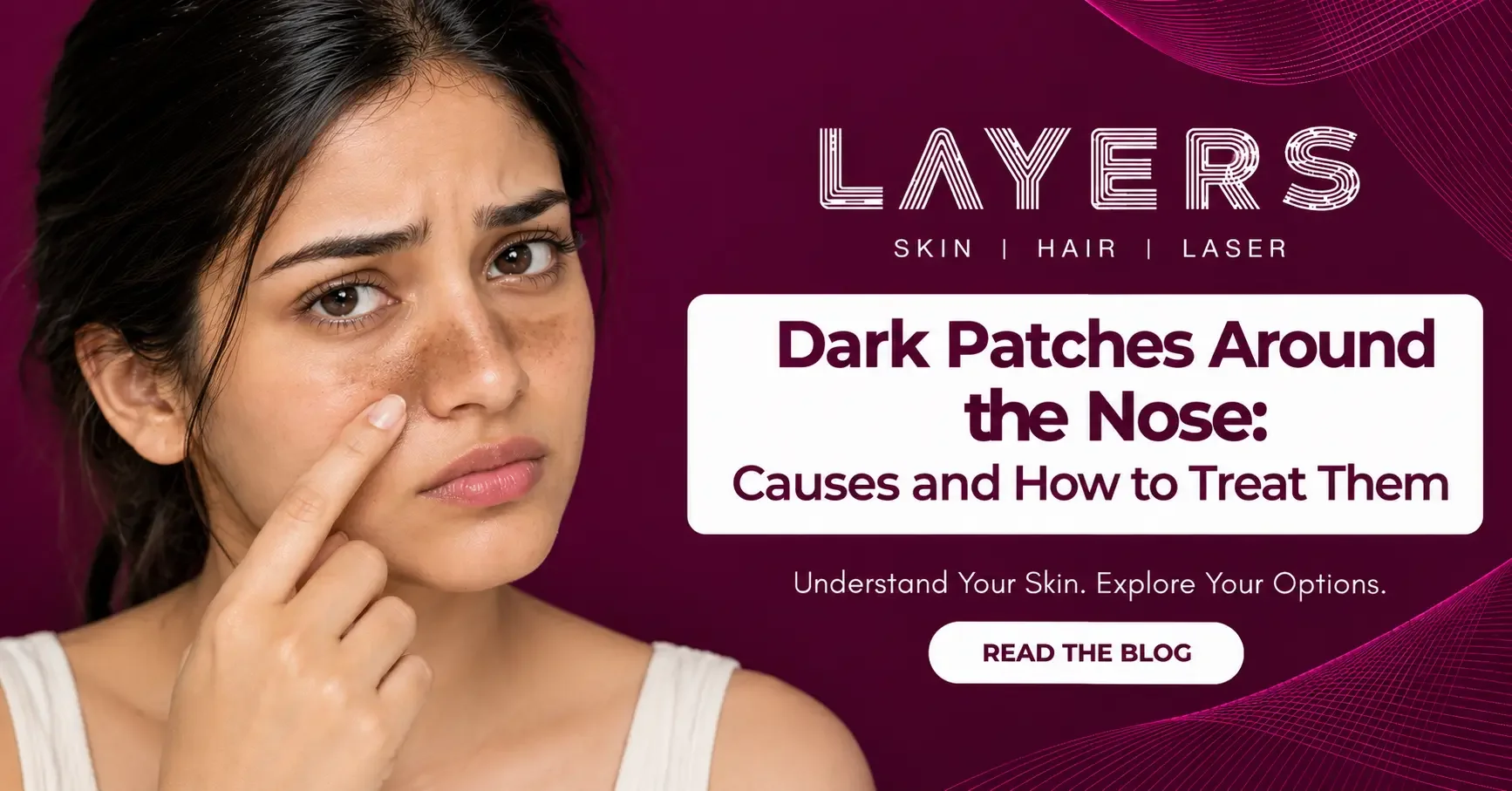
Dark patches around the nose can make your skin tone look uneven, especially when the discolouration appears along the sides of the nose, around the nostrils or in the crease where the nose meets the cheeks. These patches may develop gradually due to sun exposure, skin irritation, previous inflammation or conditions such as melasma.
If you have noticed darkness around your nose, understanding the underlying cause is the first step towards choosing the right skincare routine or treatment. While some cases improve with gentle skincare and sun protection, persistent pigmentation may require a dermatologist’s evaluation.
In this guide, we explain the common causes of dark patches around the nose, how to manage them safely, and when professional treatment may be helpful.
Key Takeaways
- Dark patches around the nose can result from sun exposure, hormonal changes, skin irritation, inflammation or conditions such as melasma.
- Hyperpigmentation on the nose may have different causes, so identifying the underlying trigger is important.
- Use a gentle cleanser, moisturiser and broad-spectrum SPF 30+ sunscreen daily to help prevent pigmentation from worsening.
- Avoid harsh scrubs, picking at the skin and irritating DIY remedies, which may worsen dark patches.
- Persistent or recurring dark pigmentation around the nose may benefit from a dermatologist’s assessment.
- Treatment options may include topical skincare products, chemical peels or other dermatologist-recommended procedures, depending on the cause and skin type.
- Consistent sun protection and a personalised skincare routine can help manage pigmentation over time.
What Are Dark Patches Around the Nose?
Dark patches around the nose refer to areas of skin that appear darker than the surrounding facial skin. They may look brown, greyish or darker than your natural skin tone, depending on your skin colour and the underlying cause.
This discolouration can occur on the sides of the nose, around the nostrils, across the bridge of the nose or in the creases beside the nose.
One possible explanation is hyperpigmentation, a condition in which excess melanin accumulates in certain areas of the skin. However, not every dark patch is caused by excess pigment. Irritation, inflammation, dryness and certain skin conditions can also change the appearance of this area.
Identifying the cause helps determine which skincare ingredients or treatments are appropriate.
What Causes Dark Patches Around the Nose?
Several factors can contribute to pigmentation around the nose. The pattern, texture and accompanying symptoms may help a dermatologist determine the likely cause.
1. Sun Exposure
Repeated exposure to ultraviolet (UV) radiation can stimulate melanin production and worsen existing pigmentation. Since the nose receives considerable sun exposure, it can develop uneven pigmentation over time.
If you spend extended periods outdoors without adequate sun protection, dark patches may become more noticeable.
What may help: Apply a broad-spectrum sunscreen with SPF 30 or higher every day and reapply as directed, particularly when spending time outdoors.
2. Post-Inflammatory Hyperpigmentation
Post-inflammatory hyperpigmentation (PIH) develops when the skin produces excess pigment following inflammation or injury.
Around the nose, possible triggers include irritated skin, acne, repeated rubbing, allergic reactions and harsh skincare products. The resulting marks may remain even after the original irritation has settled.
People with medium to deeper skin tones may be more susceptible to noticeable pigmentation after inflammation.
What may help: Address the original source of irritation and use gentle, fragrance-free skincare. Avoid scrubbing or repeatedly applying strong exfoliating products to the affected area.
3. Melasma
Melasma is a pigmentation condition that causes brown or grey-brown patches, commonly on sun-exposed areas of the face. It can affect the nose, cheeks, forehead and upper lip.
Hormonal changes, pregnancy and sun exposure can contribute to melasma. The patches may appear symmetrical and can become more prominent after sun exposure.
What may help: A dermatologist can assess whether the pigmentation is consistent with melasma and recommend an appropriate treatment plan, which may include sun protection and selected topical medications.
4. Irritation From Skincare Products
Using too many active ingredients or applying products that are unsuitable for your skin can cause irritation. Ingredients such as exfoliating acids and retinoids may lead to redness, dryness, stinging or peeling when used incorrectly.
If inflammation develops, it can leave behind darker marks, particularly in skin that is prone to post-inflammatory pigmentation.
What may help: Temporarily simplify your skincare routine if a product appears to be causing irritation. Avoid introducing several new products at once, and seek medical advice if symptoms persist.
5. Friction and Repeated Rubbing
Frequent rubbing of the nose, aggressive cleansing, repeated wiping or friction from tissues may irritate the skin. Continued irritation can contribute to discolouration in susceptible individuals.
What may help: Handle the area gently, avoid abrasive scrubs and use a mild cleanser. If rubbing is caused by an ongoing skin concern, address that problem rather than focusing only on the resulting pigmentation.
6. Seborrhoeic Dermatitis
Seborrhoeic dermatitis is an inflammatory skin condition that commonly affects oil-rich areas, including the creases beside the nose.
It may cause redness, flaking, itching and irritation. In some skin tones, inflammation can be accompanied by darker-looking areas or residual pigmentation.
What may help: Treatment depends on whether the discolouration is associated with an inflammatory skin condition. A dermatologist may recommend an appropriate medicated treatment rather than a conventional skin-brightening product.
7. Other Skin or Medical Conditions
Less commonly, darkening around the nose may occur alongside other skin or medical conditions. The appearance of the patches, their duration and any accompanying symptoms are important clues.
New, rapidly changing, persistent or unexplained pigmentation should not automatically be treated as a cosmetic concern. A medical assessment can help identify whether further investigation is needed.
How to Reduce Dark Patches Around the Nose
The most suitable approach depends on whether the problem is caused by excess pigmentation, ongoing inflammation or another skin condition. The following measures may help support healthier-looking skin.
1. Follow a Gentle Skincare Routine
Use a mild cleanser to remove dirt, oil and sunscreen without stripping the skin. Follow with a moisturiser suited to your skin type.
Avoid harsh cleansing brushes, abrasive scrubs and repeated exfoliation. These can damage the skin barrier and potentially worsen irritation-related pigmentation.
Consistency is generally more useful than frequently changing products in search of quick results.
2. Use Sunscreen Every Day
Sun protection is an important part of managing many forms of facial pigmentation. Choose a broad-spectrum sunscreen with SPF 30 or higher and apply it evenly to the nose and surrounding facial areas.
Reapply according to the product instructions, especially after sweating or prolonged outdoor exposure. If pigmentation is persistent, ask your dermatologist whether a tinted sunscreen containing iron oxides would be appropriate.
Sunscreen helps limit further darkening, although it may not be enough to clear established pigmentation on its own.
3. Consider Suitable Pigmentation-Focused Ingredients
Some skincare ingredients may help improve uneven skin tone when selected and used appropriately.
- Azelaic acid: May help manage certain types of pigmentation and acne-related marks.
- Vitamin C: An antioxidant that may support a more even-looking complexion.
- Niacinamide: May help support the skin barrier and improve the appearance of uneven tone.
- Retinoids: May be recommended for selected pigmentation concerns, but can cause irritation if unsuitable or used incorrectly.
Not every ingredient is appropriate for every skin condition. Introduce products carefully, follow their directions and consult a dermatologist if you have sensitive skin, persistent irritation or uncertain pigmentation.
Avoid using prescription-strength lightening creams without medical guidance.
4. Avoid Unverified Home Remedies
Lemon juice, baking soda, abrasive scrubs and other harsh home remedies may irritate facial skin. Irritation can worsen pigmentation rather than improve it.
Similarly, do not apply strong acids or combine multiple exfoliating products around the nostrils in an attempt to achieve faster results.
A safer approach is to identify the cause of the discolouration and choose products supported by appropriate dermatological advice.
Professional Treatments for Pigmentation Around the Nose
If dark patches persist despite appropriate skincare, a dermatologist may recommend treatment based on the diagnosis, your skin type and the depth of the pigmentation.
Dermatologist-Prescribed Topical Treatments
Depending on the cause, a dermatologist may recommend selected topical medications or prescription formulations to help reduce excess pigmentation or control an underlying inflammatory condition.
The choice of treatment, strength and duration should be individualised. Some ingredients can cause irritation or other side effects when used incorrectly.
Chemical Peels
Selected chemical peels may help improve certain forms of superficial pigmentation by promoting controlled exfoliation.
However, not all pigmentation responds in the same way. Peel strength and formulation must be chosen carefully, particularly for skin prone to post-inflammatory hyperpigmentation.
Laser-Based Pigmentation Treatments
Certain laser treatments may be considered for specific pigmentation concerns after a clinical assessment. Their suitability depends on the type and depth of pigment, the skin’s characteristics and the possibility of side effects.
Laser treatment is not suitable for every dark patch, and some conditions, including melasma, may recur. A dermatologist should determine whether a procedure is appropriate and explain its potential benefits, limitations and risks.
At Layers Clinics, patients can explore personalised options for pigmentation concerns following a professional skin assessment.
How Long Does It Take for Dark Patches Around the Nose to Fade?
The time required for pigmentation to improve varies according to its cause, depth, duration and response to treatment.
Mild discolouration may gradually improve after the source of irritation is removed and consistent sun protection is introduced. More persistent pigmentation may take several months or longer to respond to treatment.
If the underlying cause remains active, new dark patches may continue to develop. Melasma and some other pigmentation conditions can also recur, even after improvement.
Avoid products that promise to remove pigmentation overnight. A realistic treatment plan focuses on gradual improvement, protecting the skin barrier and reducing the risk of further darkening.
When Should You Consult a Dermatologist?
Consider consulting a dermatologist if:
- The dark patches persist or continue to spread.
- The affected area is itchy, painful, scaly or repeatedly inflamed.
- The pigmentation develops suddenly or changes in appearance.
- Over-the-counter products cause burning, redness or peeling.
- You are unsure whether the discolouration is pigmentation or another skin condition.
- Your current skincare routine has not improved the concern.
A dermatologist can examine the affected area, review your skincare products and medical history, and recommend further evaluation or treatment when necessary.
How to Prevent Dark Patches Around the Nose
Although not every cause of pigmentation can be prevented, a consistent skincare routine may help reduce some contributing factors.
- Apply broad-spectrum sunscreen daily.
- Cleanse gently and moisturise regularly.
- Avoid picking, rubbing or scrubbing the affected area.
- Introduce active skincare ingredients gradually.
- Discontinue products that repeatedly cause irritation and seek advice if symptoms persist.
- Follow appropriate treatment for any underlying inflammatory skin condition.
- Attend a dermatology consultation if the pigmentation is persistent or unexplained.
The aim is to minimise irritation, protect the skin from further sun-related darkening and address the cause rather than treating the visible patch alone.
Frequently Asked Questions About Dark Patches Around the Nose
1. Why is the skin around my nose darker than the rest of my face?
Possible causes include sun exposure, post-inflammatory hyperpigmentation, melasma, friction and irritation from skincare products. In some cases, an inflammatory skin condition may be responsible. The exact cause depends on the appearance and associated symptoms.
2. How can I remove dark patches around my nose naturally?
Gentle cleansing, moisturising, daily sunscreen and avoiding friction may help prevent further irritation and darkening. However, home remedies cannot reliably treat every cause of pigmentation. Avoid lemon juice, baking soda and abrasive scrubs.
3. Which skincare ingredient is best for pigmentation around the nose?
There is no single best ingredient for everyone. Azelaic acid, vitamin C and niacinamide may help with selected pigmentation concerns, while other conditions may require different treatments. The right choice depends on your skin type and the underlying cause.
4. Can sunscreen help reduce darkness around the nose?
Yes. Sunscreen helps prevent UV exposure from worsening many forms of pigmentation. Consistent use may support improvement over time when combined with appropriate treatment, but it may not eliminate existing dark patches by itself.
5. Are dark patches around the nose permanent?
Not necessarily. Some forms of pigmentation gradually fade when the underlying trigger is addressed. Other conditions may persist or recur and require ongoing management. A dermatologist can help establish realistic expectations.
6. Can chemical peels or laser treatments remove nose pigmentation?
Certain chemical peels and laser procedures may help with selected pigmentation concerns. Their suitability depends on the diagnosis and individual skin characteristics. These treatments can also cause irritation or worsen pigmentation if chosen or performed inappropriately.
7. When should I seek professional treatment for nose pigmentation?
Seek a dermatology assessment if the patches persist, spread, repeatedly return or are accompanied by itching, scaling or other symptoms. Sudden or unusual skin changes should also be evaluated rather than treated with cosmetic products alone.
8.What Causes Dark Pigmentation Around the Nose?
Use this section to explain sun exposure, post-inflammatory hyperpigmentation, irritation, friction and other possible causes.
9. What causes hyperpigmentation on the nose?
Hyperpigmentation on the nose may develop due to UV exposure, previous inflammation, irritation from skincare products or conditions such as melasma. Persistent or unexplained pigmentation should be assessed by a dermatologist to determine the cause and appropriate treatment.
Get Personalised Advice for Uneven Skin Tone at Layers Clinics
Dark patches around the nose can develop for several reasons, and the right solution starts with identifying the cause. A consistent skincare routine and daily sun protection can help, while persistent pigmentation may benefit from a dermatologist-guided treatment plan.
At Layers Clinics, a professional skin assessment can help you understand your pigmentation concerns and explore suitable skincare or clinical treatment options based on your individual needs.
Book a consultation with Layers Clinics to discuss your skin concerns and explore a personalised approach to pigmentation management.