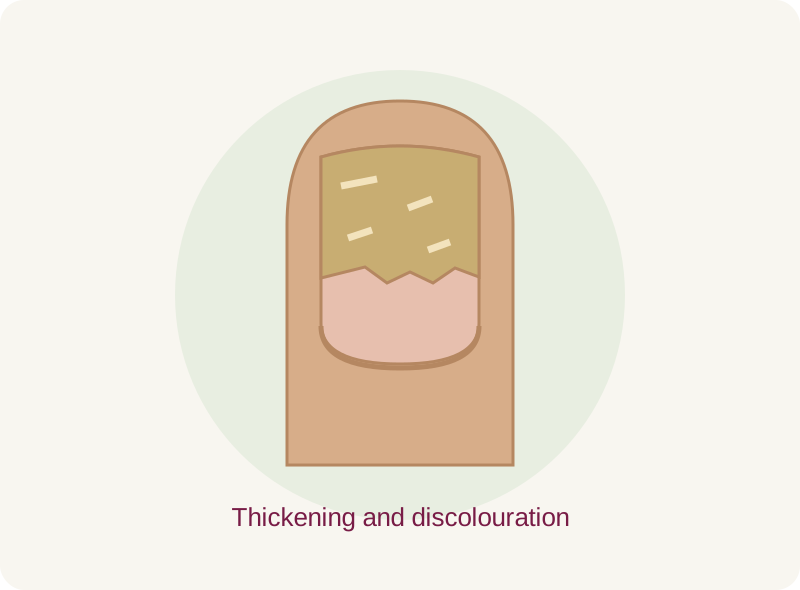
Thick or discoloured nails
Fungus is one possible cause, but injury or psoriasis may look similar. A sample can help confirm infection before a long course of medicine.
Explore fungal infectionsA nail can change because of everyday damage, infection or a skin condition. Get the cause checked before choosing a treatment.
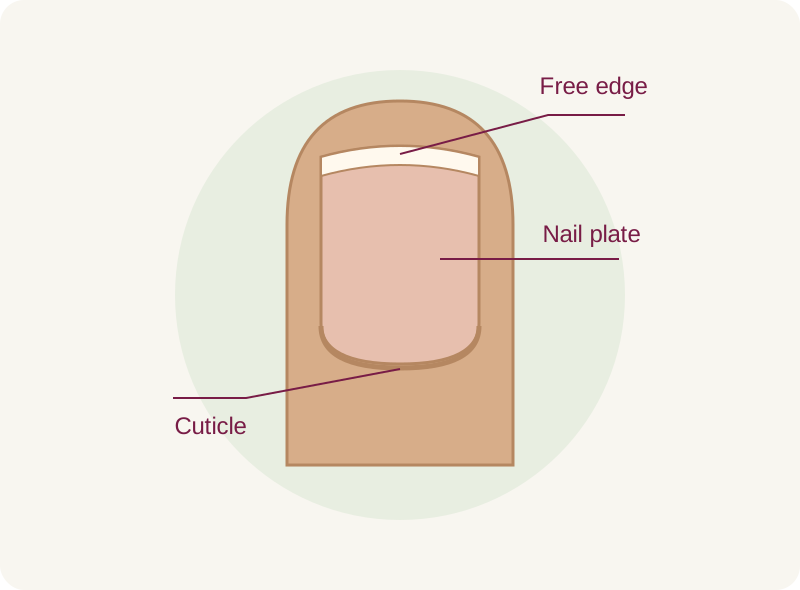
Nail disorders include changes in colour, thickness, shape or attachment, as well as problems with the skin around a nail. They can affect fingernails, toenails or both.
Not every damaged or yellow nail has a fungal infection. Repeated wet work, injury, nail products, psoriasis and other health conditions can affect nails too. The pattern and your history help guide the diagnosis.
Fungus is one possible cause, but injury or psoriasis may look similar. A sample can help confirm infection before a long course of medicine.
Explore fungal infections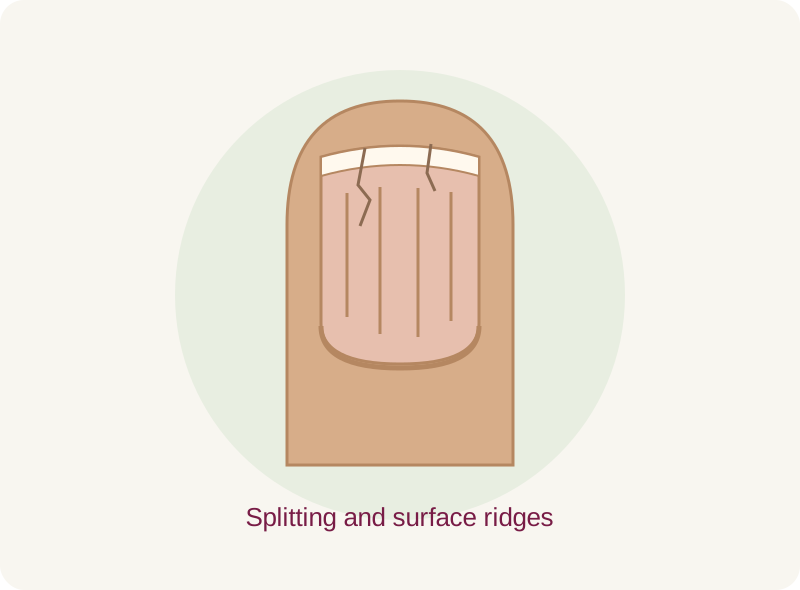
Frequent water exposure, chemicals, ageing or repeated trauma can contribute. New deep grooves or unexplained changes need an assessment.
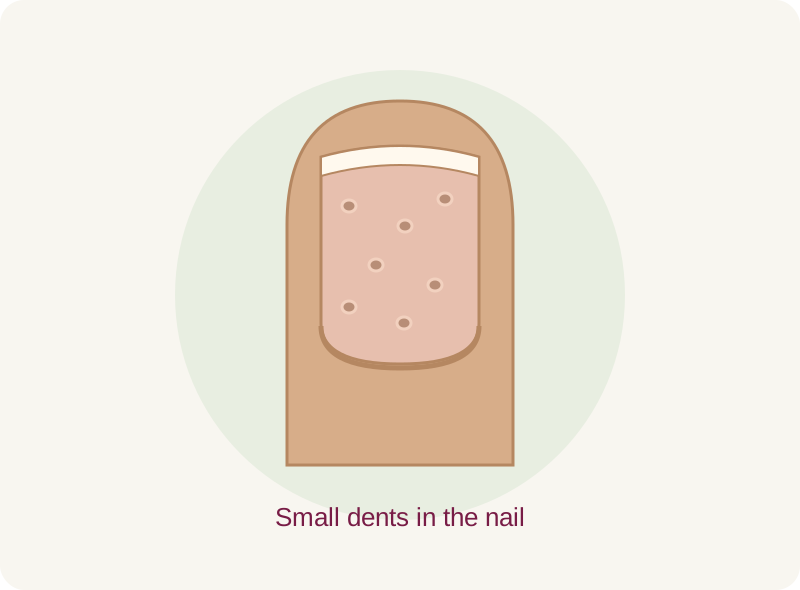
Pitting can occur with psoriasis and some other conditions. Mention skin patches, hair changes, or joint pain and stiffness.
Understand psoriasis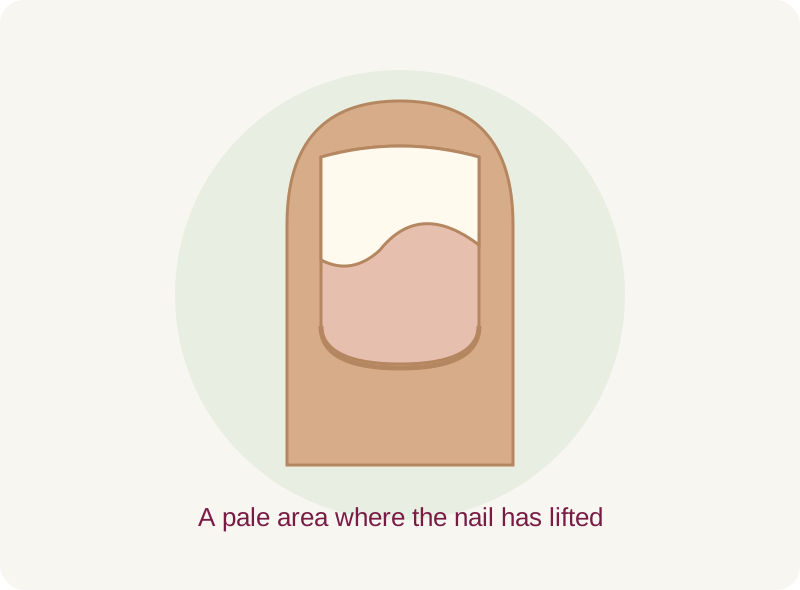
Injury, infection and psoriasis can cause lifting. Do not dig underneath or glue the loose area back down; get advice on protecting it.
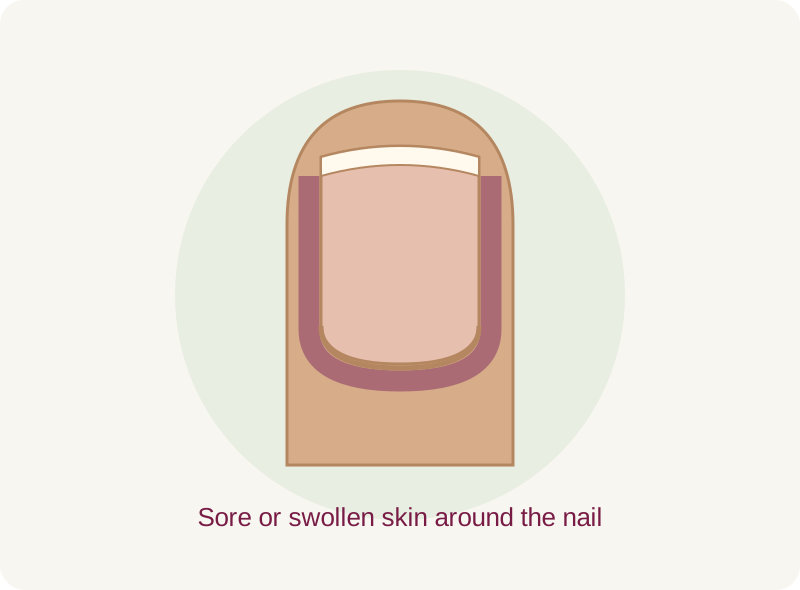
An irritated nail fold may relate to wet work, picking, an ingrown nail or infection. Pain, warmth and pus need prompt attention.
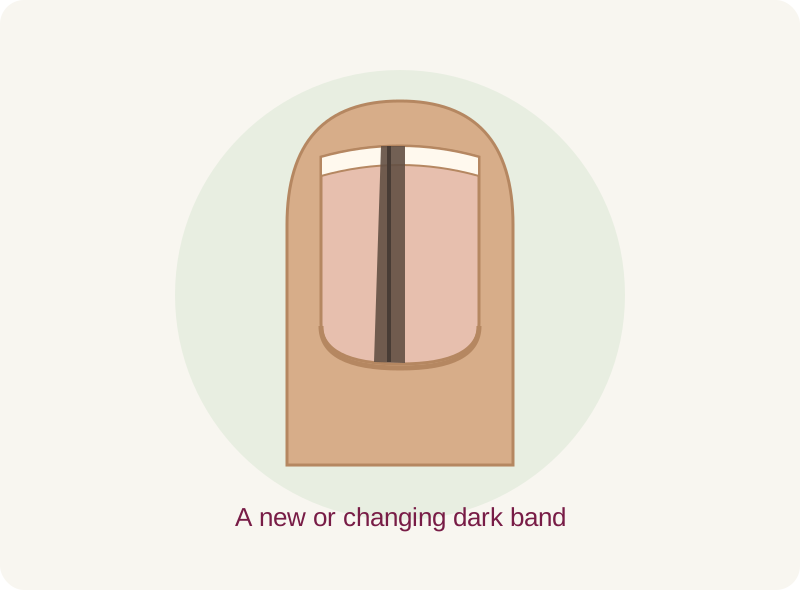
Many pigment bands are benign, but a new or changing band needs a dermatologist’s examination. It should not be hidden with a cosmetic treatment.
When to get it checked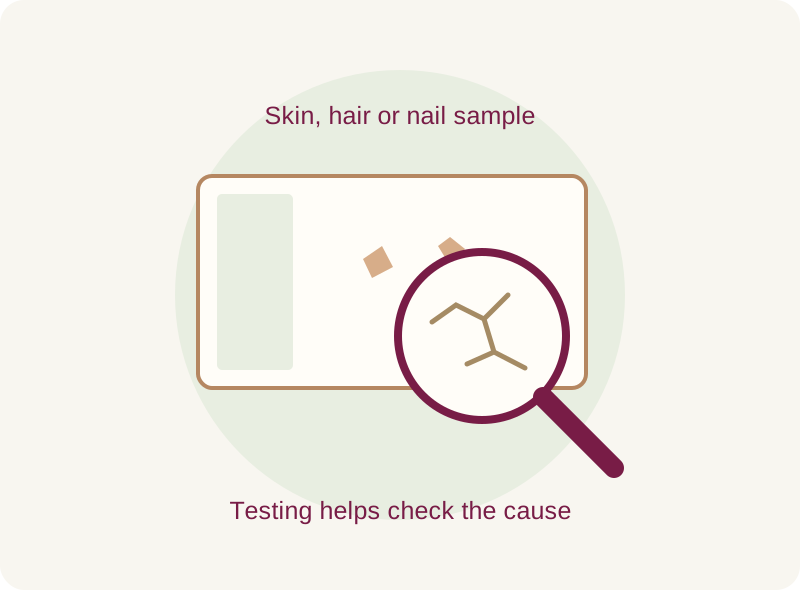
The dermatologist may examine your skin and scalp too. Explain when the change started, which nails are affected, and any injury, manicure or new product use.
A nail clipping or sample from beneath the nail can check for fungus. A suspicious pigment band or growth may need specialist examination and sometimes a biopsy.
Bring a medicine list and mention psoriasis, diabetes, circulation problems, pregnancy or breastfeeding. Blood tests depend on the findings or planned medicine; they are not needed for every nail change.
Selected infections may need a nail-specific topical medicine or an oral antifungal. Ordinary antifungal skin cream does not reliably treat infection inside a nail. Oral treatment needs checks for interactions and possible monitoring.
Explore fungal careTopical treatment, selected injections or wider psoriasis treatment may be considered. The number of nails affected, discomfort and any skin or joint symptoms help shape the plan.
Explore psoriasis careReducing repeated water exposure, product irritation and trauma may help. Moisturising and practical changes at work or home can be part of care; supplements are not a substitute for finding the cause.
An ingrown nail, infection or persistent inflammation may need specific medicine, drainage or a nail procedure. The clinician will explain what is appropriate and arrange referral when needed.
Explain pain, colour changes, lifting and everyday activities that affect the nail. If possible, attend with polish removed so the surface is visible.
The clinician may recommend a clipping, scraping or further examination. Ask what the test checks and how you will receive the result.
Agree what to use, where to apply it and how long to continue. A procedure is not a routine step for every nail problem.
Mention other medicines and health conditions. Ask about side effects, monitoring, footwear, work and nail-product use.
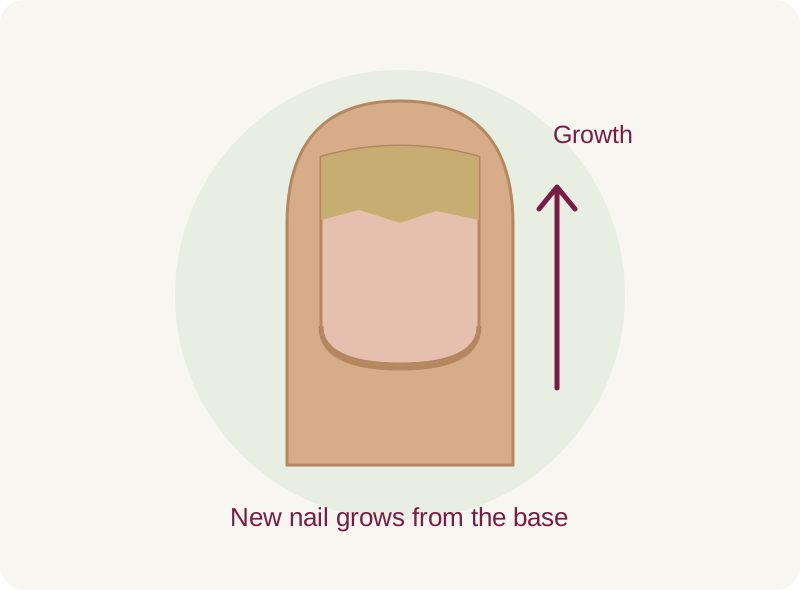
Treatment can work before the damaged nail looks normal. Review changes at the base, discomfort and whether the problem is spreading.
Report new pain, colour changes or side effects. Persistent symptoms may need another test, a revised diagnosis or a different treatment.
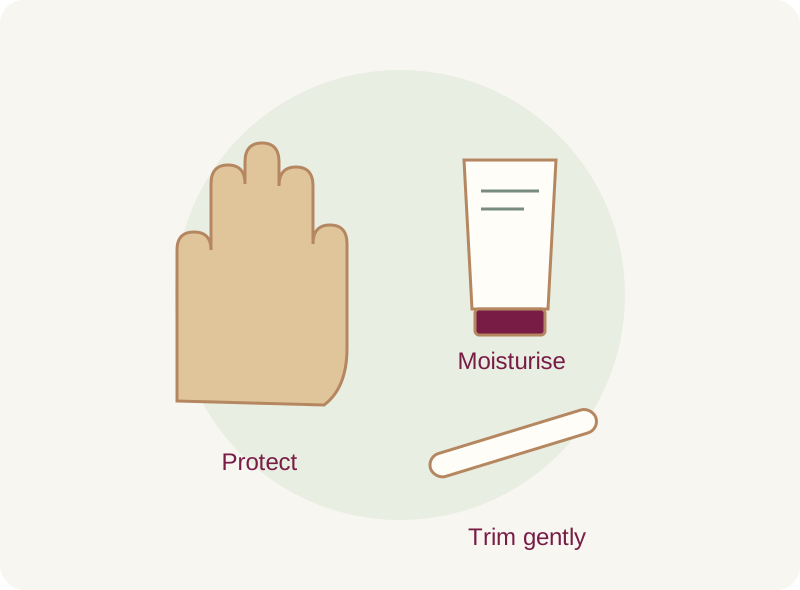
Use suitable protective gloves for cleaning and wet tasks, and dry your hands afterwards. Apply a moisturiser to nails and surrounding skin if tolerated.
Keep nails manageable, avoid cutting cuticles or digging with sharp tools, and cut toenails straight across. Get help if a nail is too thick or painful to trim safely.
Avoid footwear that squeezes the toes. Treat athlete’s foot as advised, keep tools clean and do not share nail clippers when infection is suspected.
Nails grow slowly. Fingernails usually replace themselves faster than toenails, and a damaged toenail can take many months to grow out. The treatment course and the time until a nail looks different are not always the same.
The goal may be healthier growth, less pain or control of infection and inflammation. Some nail damage can persist. Agree how to check progress instead of repeatedly switching products.
These original Google excerpts describe general consultations and care. They do not identify nail treatment or its outcomes.
“The doctors listened carefully to my concerns and explained the treatment in a clear and professional manner.”
Consultation experience; condition not specified.
“She explained the treatment clearly and made me feel comfortable throughout the consultation.”
Consultation experience; condition not specified.
“The doctor took the time to understand my skin concerns and explained the treatment plan clearly, without rushing.”
Consultation experience; condition not specified.
“Very patient ,humble and polite to answer every single query and build confidence.”
Consultation experience; condition not specified.
“The doctors explained everything clearly and made me feel comfortable and confident.”
Consultation experience; condition not specified.
“The doctor took the time to listen to my concerns patiently and explained the treatment options clearly.”
Consultation experience; condition not specified.
















No. Staining, injury, psoriasis and other conditions can change nail colour. Examination and, when useful, a sample help identify the cause.
Yes. Pitting, lifting and thickening can occur with nail psoriasis, sometimes without obvious skin patches. Mention joint pain or stiffness too.
No. Pigment bands have several causes, but a new or changing band should be examined promptly. Do not rely on a photograph or cover it up instead of getting it checked.
A product designed for skin may not reach fungus in the nail. Confirm the diagnosis and ask which nail-specific treatment is appropriate.
Not usually for every nail problem. A procedure may be considered for selected painful, ingrown or damaged nails. The reason, alternatives and healing plan should be explained first.
Do not assume nail changes mean a deficiency. Discuss your diet, medicines and supplements with the clinician; testing or supplementation should address a specific need.
Ask first if a nail is lifting, painful or infected. Products and removal methods can irritate or damage nails, and coatings can hide changes that need monitoring.
That depends on the cause, the nail and its growth rate. Improvement is often measured in months, especially for toenails, and a perfect cosmetic result cannot be promised.
Talk about the changes you have noticed and practical care for your everyday routine.
Prefer a call? +91 9000 572727