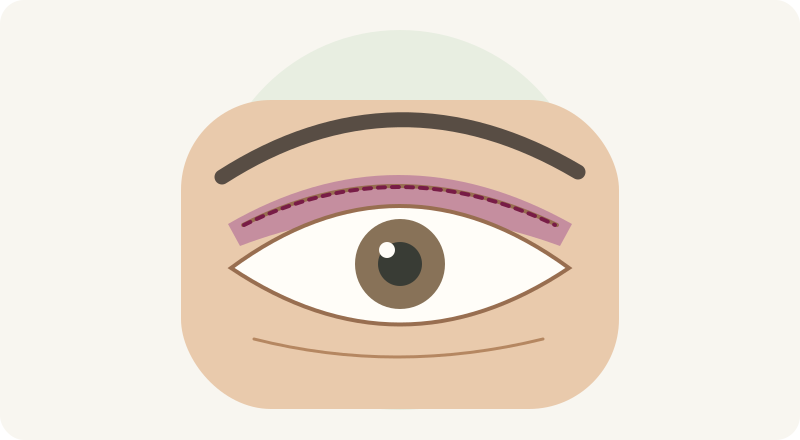
Upper eyelids
An incision in the natural crease allows selected excess skin and tissue to be addressed. The plan must leave enough skin for comfortable eye closure.
Loose eyelid skin or under-eye bags can have different causes. Explore what blepharoplasty can change and how to plan care around your eye health.
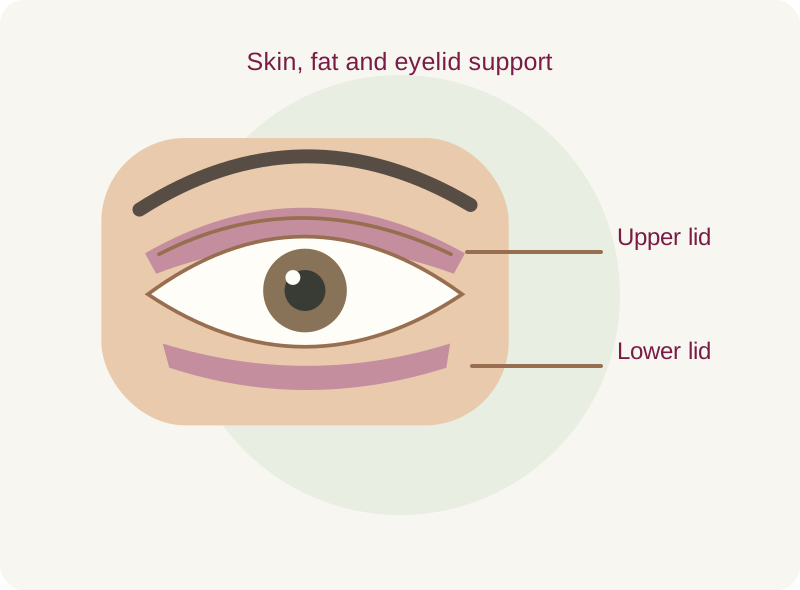
Blepharoplasty is surgery to remove excess eyelid skin and, where appropriate, remove or reposition fat. It can involve the upper lids, lower lids or both. The amount of tissue changed must preserve eyelid support and eye closure.
Upper-lid skin that hangs into the field of view may affect sight. Lower-lid surgery often focuses on bags and loose skin. An examination helps separate these concerns from problems that need a different treatment.
An incision in the natural crease allows selected excess skin and tissue to be addressed. The plan must leave enough skin for comfortable eye closure.
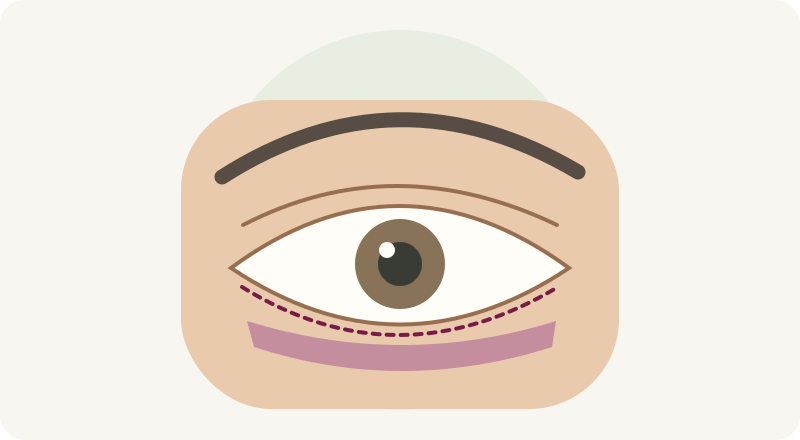
Fat bulges, loose skin and lid support are assessed together. Fat may be repositioned or reduced, with skin treatment or support added only when needed.
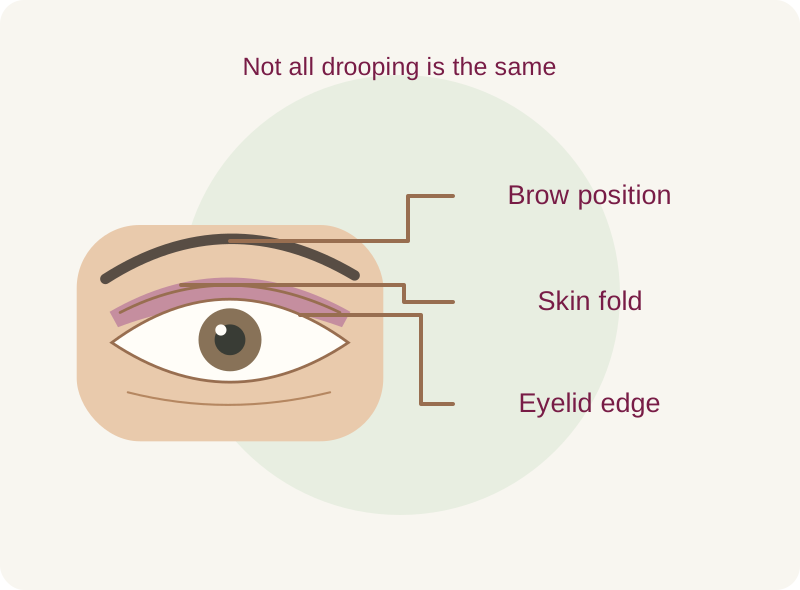
A low eyebrow can push skin towards the upper lid. Eyelid ptosis is different: the lid edge itself sits too low because its lifting mechanism is affected. Removing skin alone does not correct every cause of a heavy-looking eye.
The surgeon assesses brow position, eyelid movement and skin excess together. A brow procedure or ptosis repair may be discussed separately, or alongside blepharoplasty.
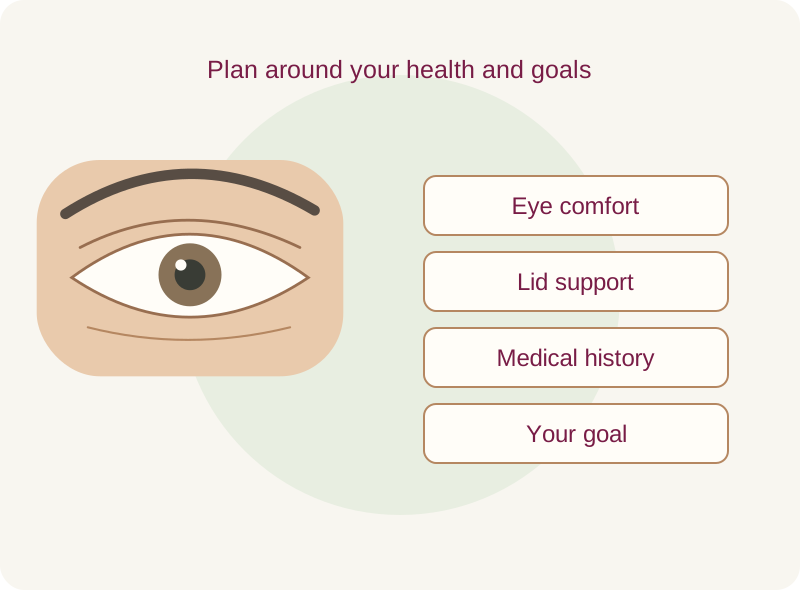
Explain whether you notice overhanging skin, puffiness, visual obstruction or a low lid edge. A photograph alone cannot establish the right operation.
Tell the team about dryness, glaucoma, thyroid eye problems, eye surgery, contact lenses and current drops. Eye examination or specialist input may be needed.
Share medicines, supplements, nicotine use, diabetes, bleeding problems and any history of difficult healing. Preparation should be agreed with the treating team.
Surgery can improve selected excess skin or bags. It does not stop ageing or automatically remove dark circles, every wrinkle or natural asymmetry.
An external incision can allow the surgeon to address loose skin as well as the underlying tissues. Its position and the lid’s support are part of planning.
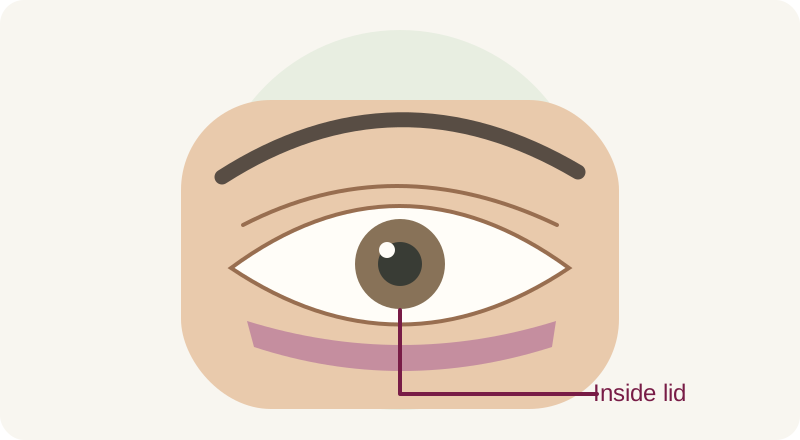
A transconjunctival approach reaches fat from inside the lid. It does not remove external skin through that incision; any separate skin treatment needs its own assessment.
The clinician checks the lids, brow and eye surface. Tear or visual-field testing may be considered, especially when dryness or obstruction is a concern.
Confirm the operating surgeon, facility, anaesthesia and follow-up. Follow individual medicine and fasting instructions, without stopping prescriptions yourself. Arrange transport and early help at home.
Local anaesthesia with or without sedation, or general anaesthesia, may be used. The surgeon follows the agreed upper or lower incision plan.
Selected skin or fat is removed or repositioned, and support may be adjusted. The incisions are closed with the planned method. More tissue removal is not necessarily better.
Use prescribed drops or ointment and any compresses as instructed. Ask how to clean the area and when stitches need attention.
The team reviews healing, lid position and eye comfort. Keep your urgent contact details available and report unexpected symptoms promptly.
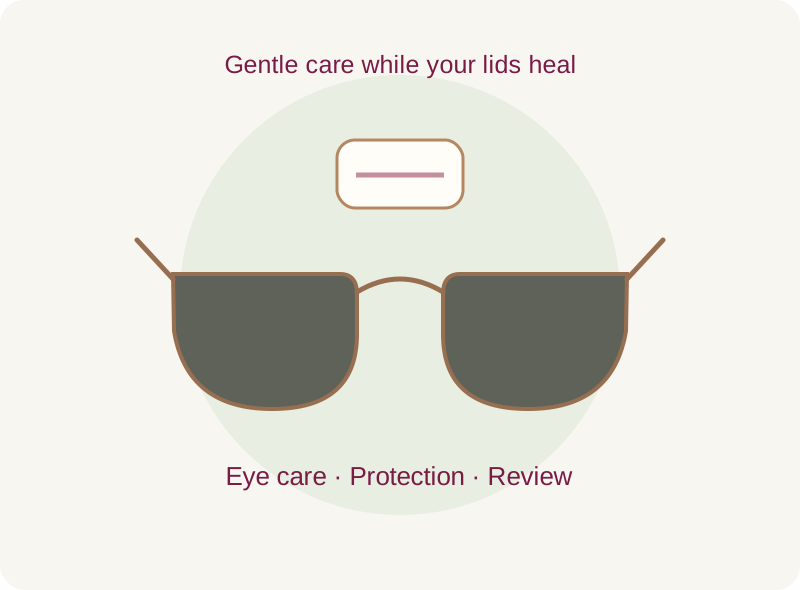
Bruising, swelling, irritation or watery eyes can occur. Ointment may temporarily blur vision. Follow the care plan and avoid rubbing the eyes.
Use sun and wind protection as advised. Ask when makeup, contact lenses, swimming and exercise can restart; each places different demands on the area.
Bruising and swelling often improve over about two weeks, but some changes take longer. Plan work, driving and social events around your recovery rather than a guaranteed date.
Dryness, irritation, difficulty closing the eyes or a lower lid pulling away from the eye can occur. Existing dry eye needs particular attention.
Bleeding, infection, visible scars, asymmetry or an unwanted contour may occur. Further surgery is sometimes needed.
Eye-muscle injury, double vision and, rarely, loss of vision are possible. Anaesthetic and general surgical risks also need individual assessment.
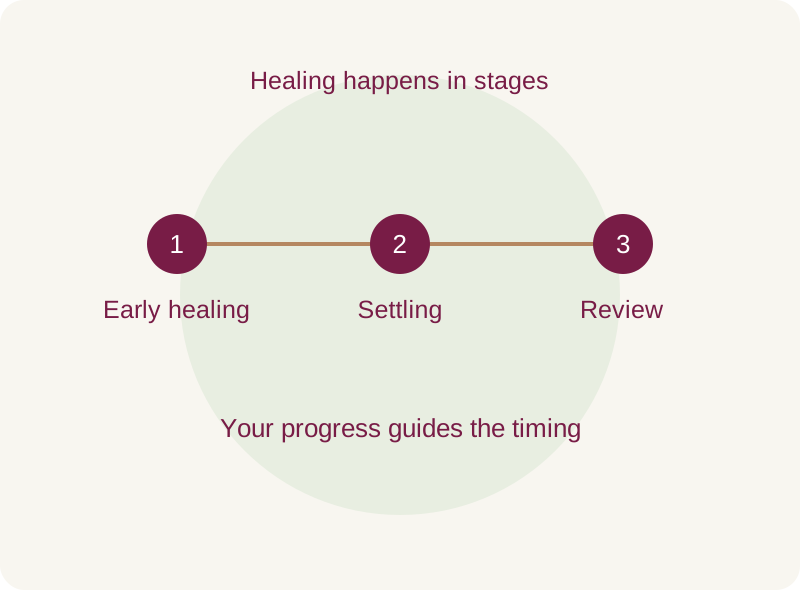
As swelling reduces, the eyelid shape becomes easier to assess. Incision lines may soften over months, although scars remain. Keep reviews so eye comfort and function are checked alongside appearance.
Results can last for years, but ageing continues and some laxity may return. The operation does not change every cause of under-eye darkness or treat the whole face.
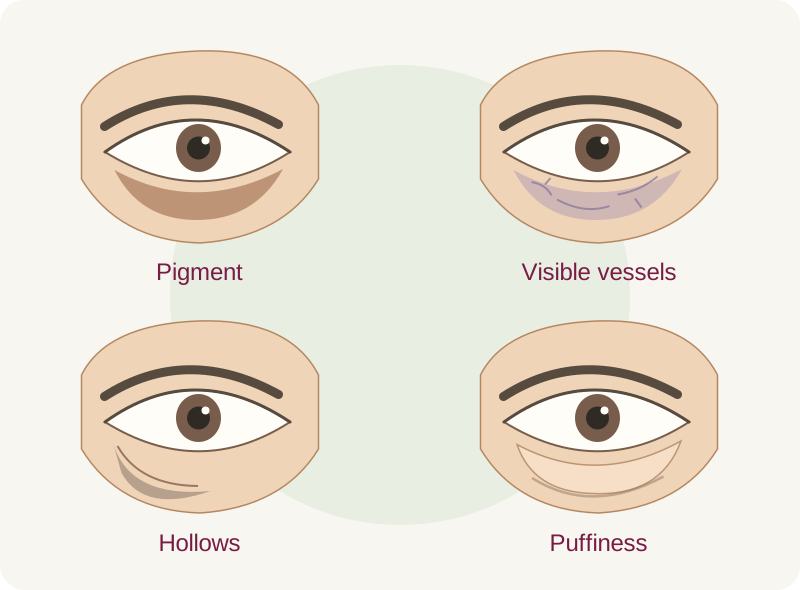
Colour, shadows and hollowing can contribute to dark circles. Explore the causes before assuming eyelid surgery is needed.
Explore dark circles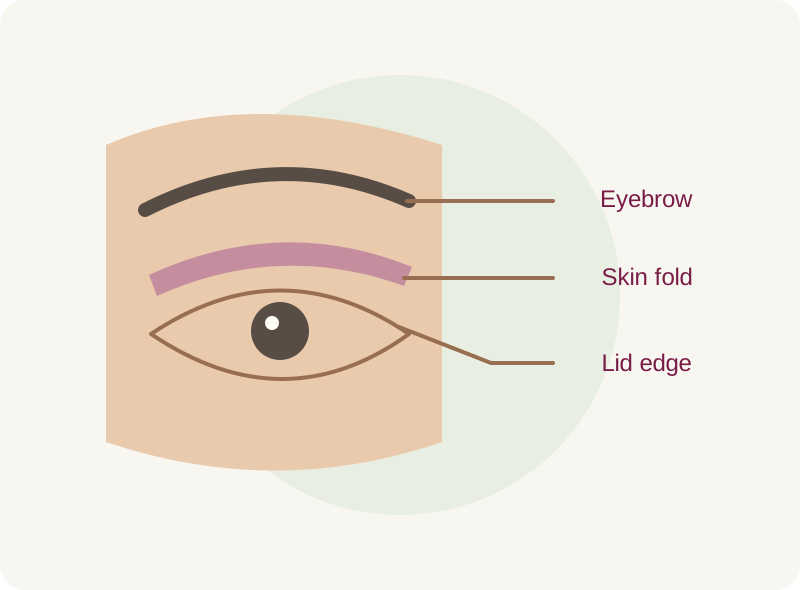
Low brows can contribute to upper-eye heaviness. Learn how brow surgery differs from removing excess eyelid skin.
Explore brow liftThese original Google excerpts describe general consultations and care at Layers. They do not identify eyelid surgery outcomes.
“The doctors listened carefully to my concerns and explained the treatment in a clear and professional manner.”
Consultation experience; condition not specified.
“She explained the treatment clearly and made me feel comfortable throughout the consultation.”
Consultation experience; condition not specified.
“The doctor took the time to understand my skin concerns and explained the treatment plan clearly, without rushing.”
Consultation experience; condition not specified.
“Very patient ,humble and polite to answer every single query and build confidence.”
Consultation experience; condition not specified.
“The doctors explained everything clearly and made me feel comfortable and confident.”
Consultation experience; condition not specified.
“The doctor took the time to listen to my concerns patiently and explained the treatment options clearly.”
Consultation experience; condition not specified.
















It depends on whether the concern is upper skin, lower bags, support or another cause. The lids can be assessed separately; treating both is not automatically necessary.
Not always. Pigmentation, visible vessels, shadows and hollowing are different from excess eyelid skin. The cause of the darkness needs assessment.
No. A brow lift addresses brow position. Blepharoplasty addresses selected eyelid tissues. A low brow may contribute to overhanging skin, so the examination includes both areas.
This may be eyelid ptosis and needs a different assessment. A ptosis repair may be considered separately or in combination with excess-skin surgery.
Dry eye can influence suitability and aftercare. Tell the surgeon about your symptoms and treatment; further eye assessment or postponement may be appropriate.
Upper incisions usually follow the crease. Lower access may be below the lashes or inside the lid. External scars may fade with healing but do not disappear completely.
Wait until your vision and comfort meet the team’s requirements and any anaesthetic restrictions have passed. Contact lenses should restart only when the clinician says the lids are ready.
Improvement can be long lasting, but the skin and supporting tissues continue to age. Some people develop new looseness or later consider another procedure.
Arrange an assessment of eyelid skin, eye comfort and the options that may suit your concern.
Prefer a call? +91 9000 572727