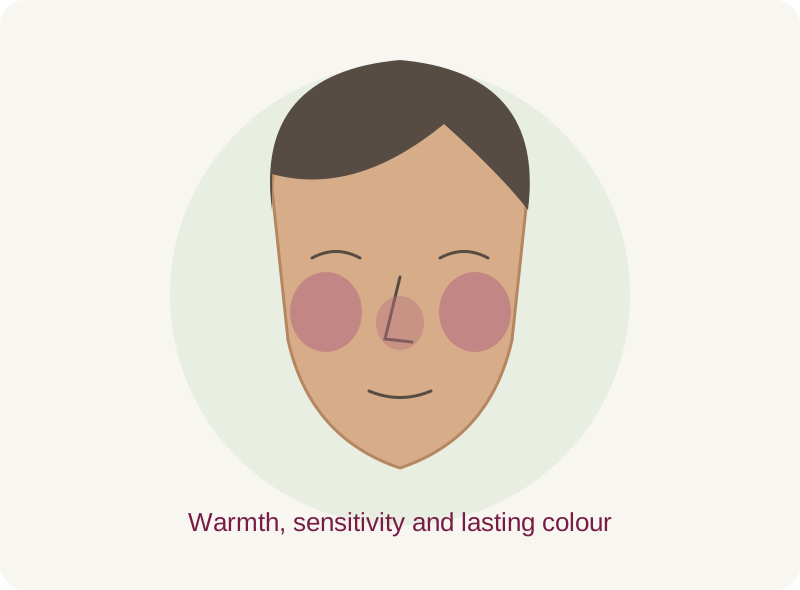
Warmth and colour changes
Flushing may come and go or become more persistent. Colour may look red, pink, violet or brown, and products can sting.
Facial warmth, stinging or recurring bumps? Learn about rosacea and get a plan for your skin and symptoms.

Rosacea is a long-term condition that mainly affects the face and can also affect the eyes. Symptoms may flare and settle, with flushing, lasting colour changes, sensitivity or acne-like bumps.
It can occur in any skin tone. On brown or black skin, redness may be harder to see; warmth, burning and changes in texture can be important clues. It is not caused by dirty skin and is not contagious.
Flushing may come and go or become more persistent. Colour may look red, pink, violet or brown, and products can sting.
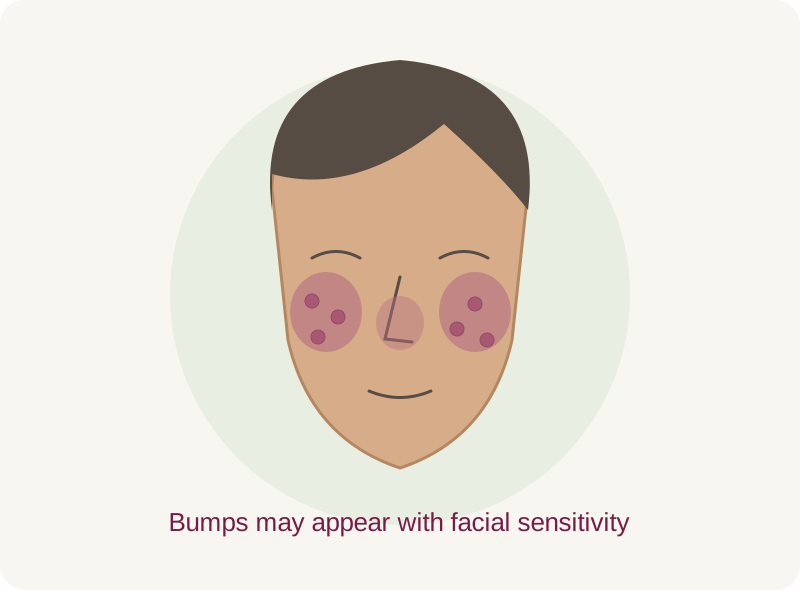
Acne-like bumps and small visible vessels may occur. Some people develop thickened skin, particularly around the nose.
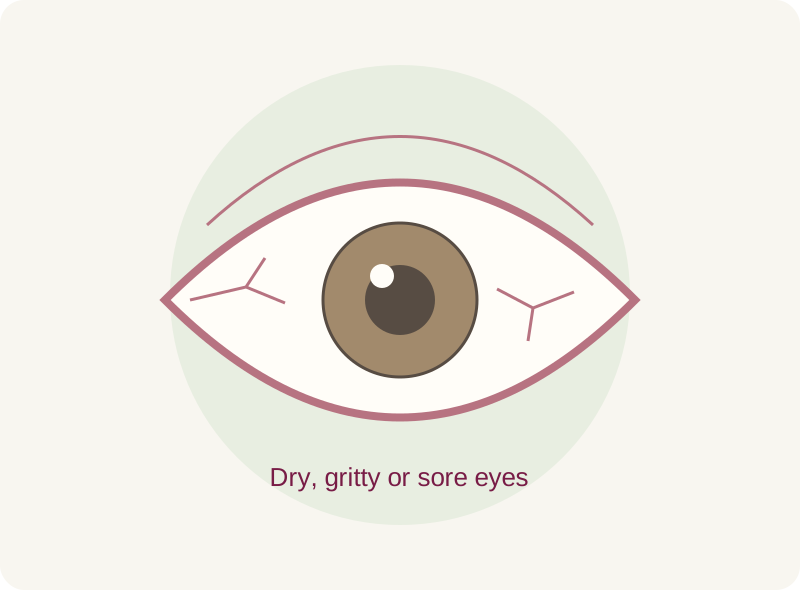
Eyes may feel gritty, dry or sore, with irritated eyelids. Eye problems can occur even when skin symptoms are mild.
Read the eye advice
For inflammatory bumps, options may include azelaic acid, ivermectin or metronidazole. Other medicines target persistent colour. The choice depends on your symptoms and tolerance.
A dermatologist may prescribe an oral medicine such as doxycycline for selected cases. Dose, duration and review are individual; do not use leftover antibiotics.
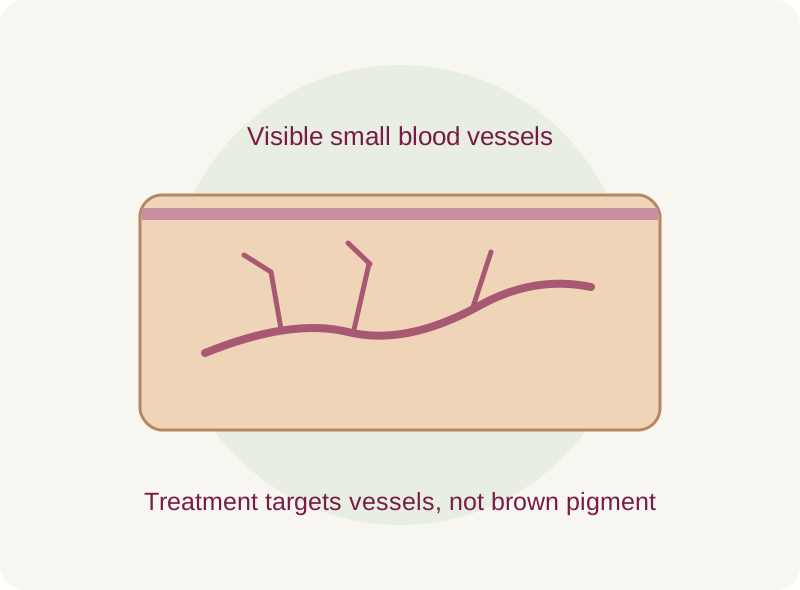
Selected laser or light treatments may reduce visible vessels or lasting colour. These need appropriate expertise and a skin-tone assessment; they are different from routine pigment laser toning.
Understand IPL photofacialsThe clinician may recommend specific eyelid care, suitable eye treatment or referral to an ophthalmologist. Do not apply facial medicines to your eyes.
When to seek urgent careNo single treatment addresses every feature. Ask which symptom each part of the plan targets and what follow-up it needs.
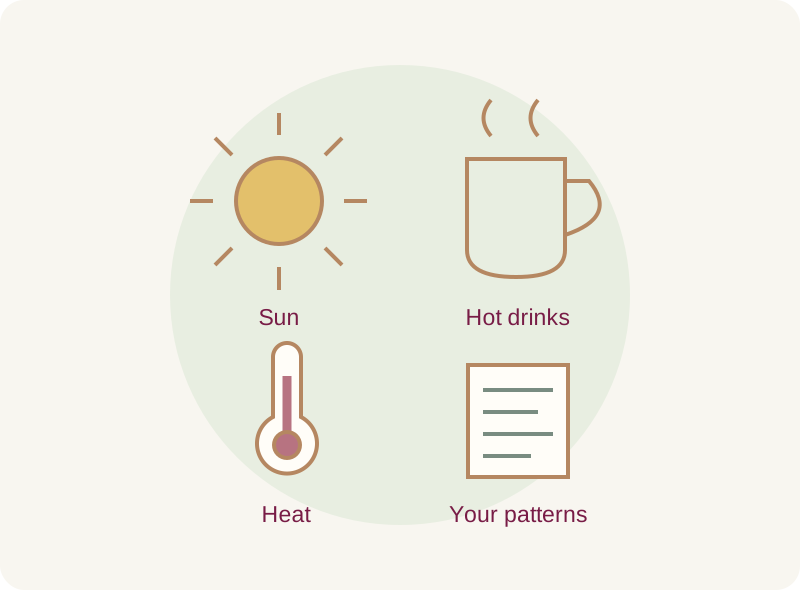
Sunlight, heat, hot drinks, spicy food, alcohol, stress or an irritating product can trigger symptoms. Your triggers may differ from someone else’s.
Note the flare, what happened beforehand and the products used. Photographs can help when symptoms have settled before your appointment.
Try cooler drinks, shade or a cooler setting for exercise if these help your pattern. Avoid broad food restrictions without a clear reason; you do not need to stop being active.
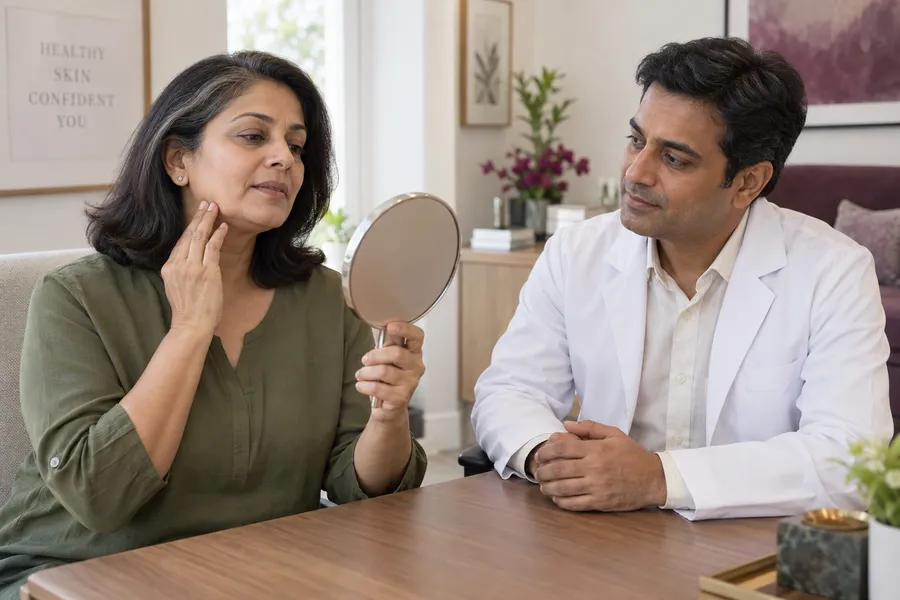
Explain warmth, stinging, bumps and any eye symptoms. The dermatologist examines the skin and considers other causes of a facial rash.
Mention medicines, steroid creams, allergies, pregnancy or breastfeeding, previous procedures and what you have tried.
Agree a cleanser, moisturiser, sun protection and any prescribed medicines. Ask how to apply each product and what irritation to report.
Persistent vessels, skin thickening or eye problems may need a separate approach. Confirm referral or procedure details rather than booking a generic facial package.
Discuss changes in burning, flushing and bumps, not only how the skin looks in photographs. Report side effects before adding more products.
Ask what to continue between flares and what to do if symptoms return. Keep eye symptoms part of the review.
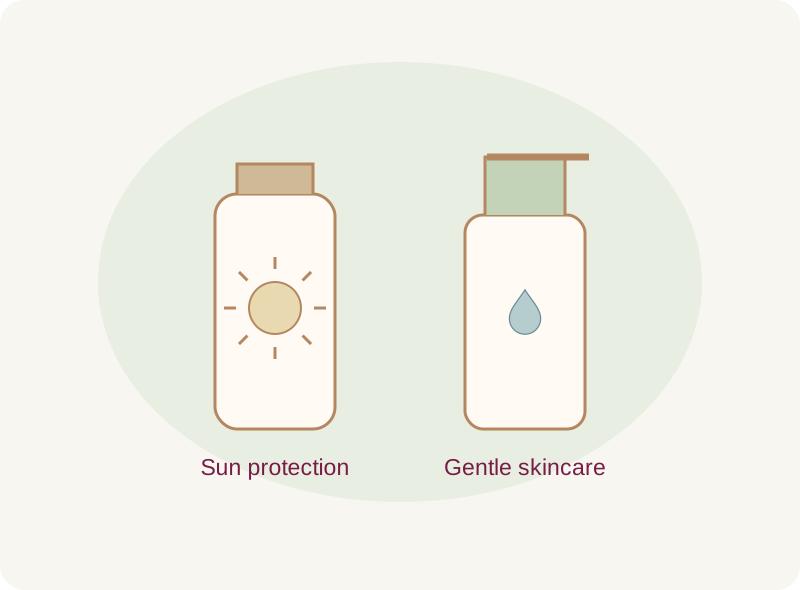
Use lukewarm water and a gentle cleanser. Avoid scrubbing, exfoliating brushes, harsh toners and products that burn or sting.
Fragrance-free products for sensitive skin are a useful starting point. Introduce new products carefully and ask for help if even a simple routine irritates.
Use broad-spectrum SPF 30 or higher with shade and a hat. A fragrance-free mineral sunscreen may be easier to tolerate; choose one that suits your skin.
The assessment should consider subtle colour changes and the risk of darker or lighter patches after a procedure. Experience treating your skin tone matters.
Facial steroid use can worsen rosacea-like symptoms. Tell the clinician what you use and get a plan for changes; do not experiment with strong peels or leftover creams.
These need a separate assessment. A simple anti-redness product may not address established tissue changes.
Rosacea treatment controls symptoms rather than providing a permanent cure. Bumps, visible vessels and flushing can respond differently, and improvement is often gradual.
Follow-up helps find a routine you can maintain. If symptoms affect your confidence or daily life, tell the clinician so this is part of the care plan too.
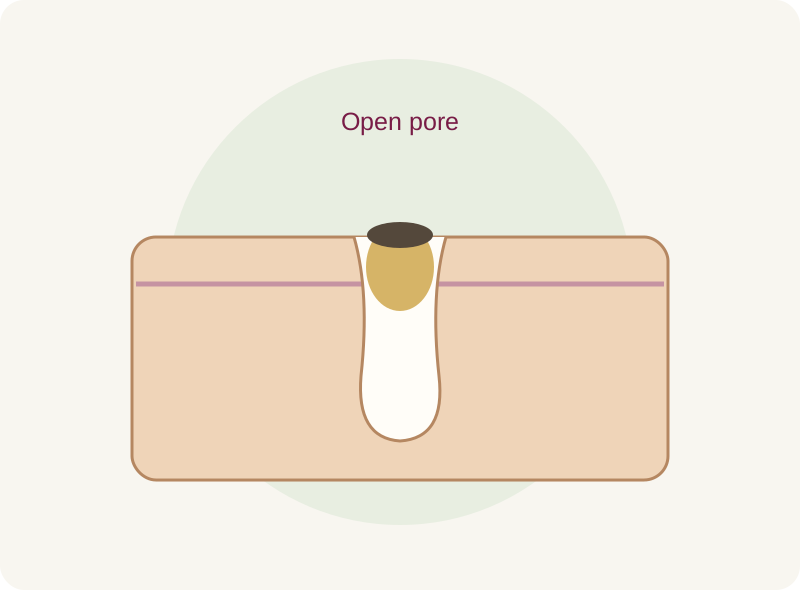
Blackheads, whiteheads and deeper spots can suggest acne. Acne and rosacea can also coexist.
Understand acne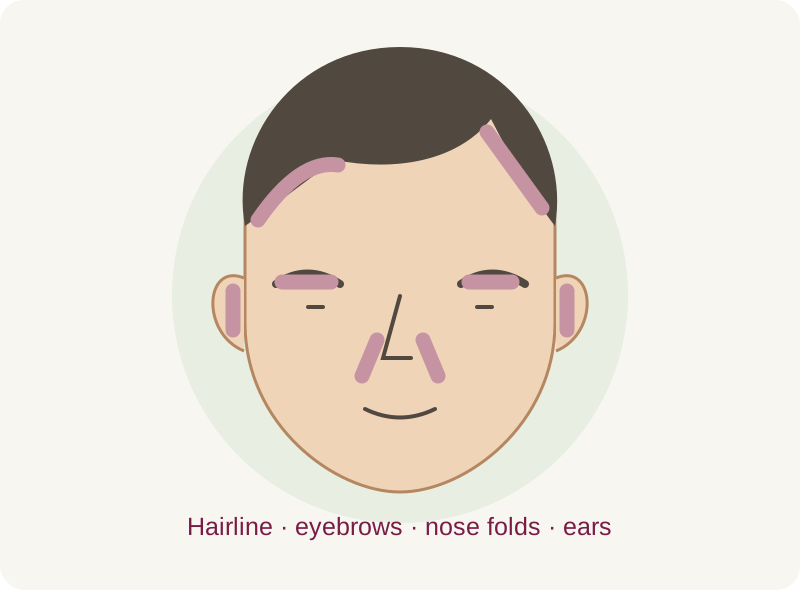
A flaky rash around the nose, eyebrows or scalp may have a different cause. The treatment plan should follow the diagnosis.
Explore seborrhoeic dermatitisThese original Google excerpts describe general consultations and care. They do not identify rosacea treatment or its outcomes.
“The doctors listened carefully to my concerns and explained the treatment in a clear and professional manner.”
Consultation experience; condition not specified.
“She explained the treatment clearly and made me feel comfortable throughout the consultation.”
Consultation experience; condition not specified.
“The doctor took the time to understand my skin concerns and explained the treatment plan clearly, without rushing.”
Consultation experience; condition not specified.
“Very patient ,humble and polite to answer every single query and build confidence.”
Consultation experience; condition not specified.
“The doctors explained everything clearly and made me feel comfortable and confident.”
Consultation experience; condition not specified.
“The doctor took the time to listen to my concerns patiently and explained the treatment options clearly.”
Consultation experience; condition not specified.


No. They can look similar, and both may be present. An examination helps separate rosacea bumps and sensitivity from blocked pores and other acne features.
Yes. Redness can be less obvious, so warmth, stinging, swelling or changes in colour and texture are useful clues.
No, and it is not contagious. Repeated washing or scrubbing can make sensitive skin more uncomfortable.
Yes, sometimes even when skin symptoms are mild. Eye pain, blurred vision, light sensitivity, redness or grittiness needs urgent medical assessment.
Identify your own triggers rather than assuming every listed trigger applies. Small changes in food temperature, exercise conditions or heat exposure may help.
No. Vessel-focused treatments differ from pigment laser toning, and no laser cures every feature of rosacea. Discuss the target, device, skin-tone risks and maintenance.
The response varies with the symptom and treatment. Medicines may need weeks to months to assess, while ongoing trigger and skincare management often continues longer.
Check with the dermatologist first. Exfoliation, heat and irritating products may worsen a flare. Calming active symptoms may be the priority.
Get advice on facial sensitivity, recurring flares and a routine you can follow.
Prefer a call? +91 9000 572727