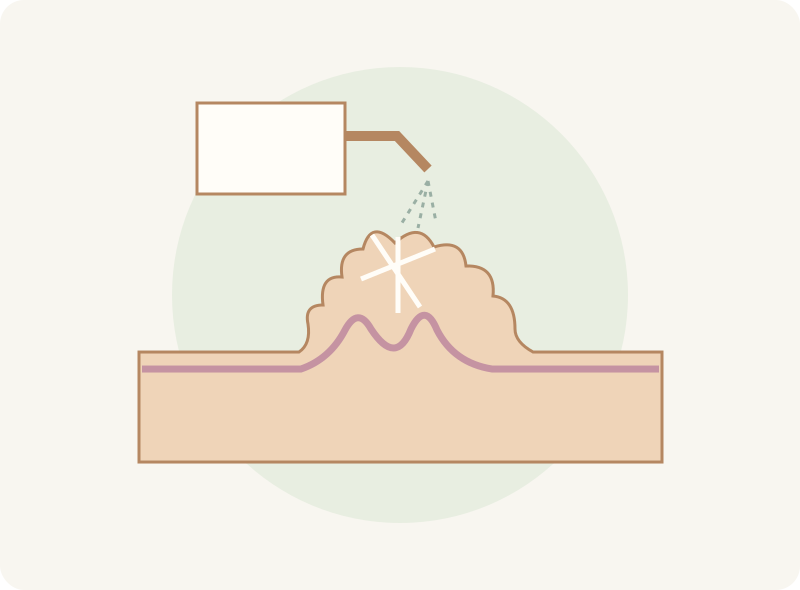
Cryotherapy
Liquid nitrogen freezes the wart. It can sting and may cause a blister or crust afterwards. Repeated treatments are common.
A wart that hurts, spreads or keeps catching can be frustrating. Start with a confirmed diagnosis, then compare treatment options and the care each one needs.
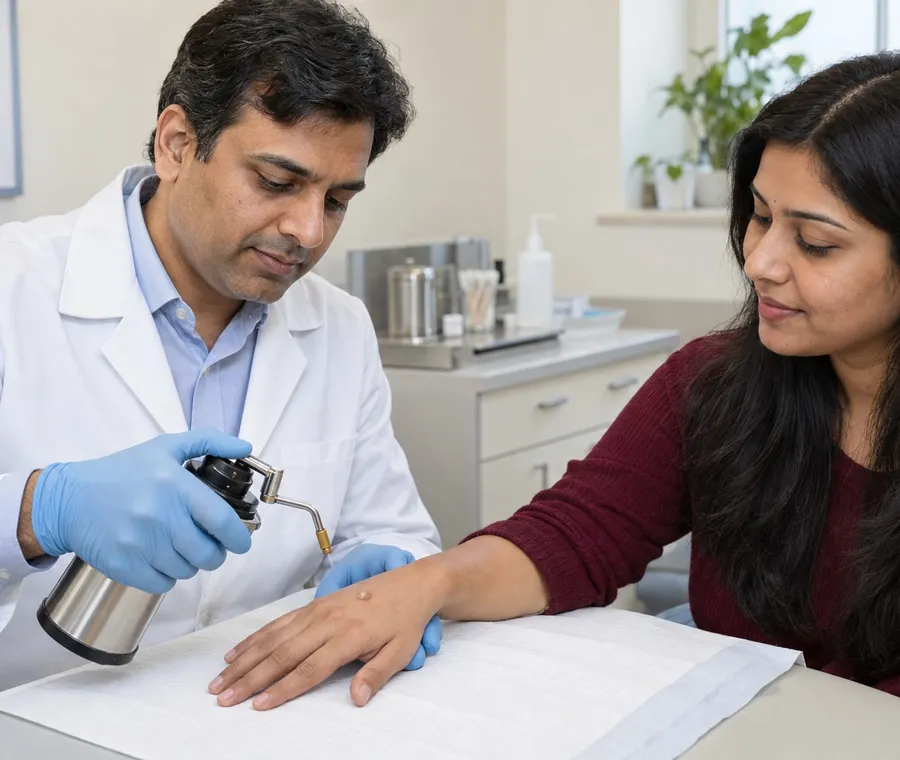
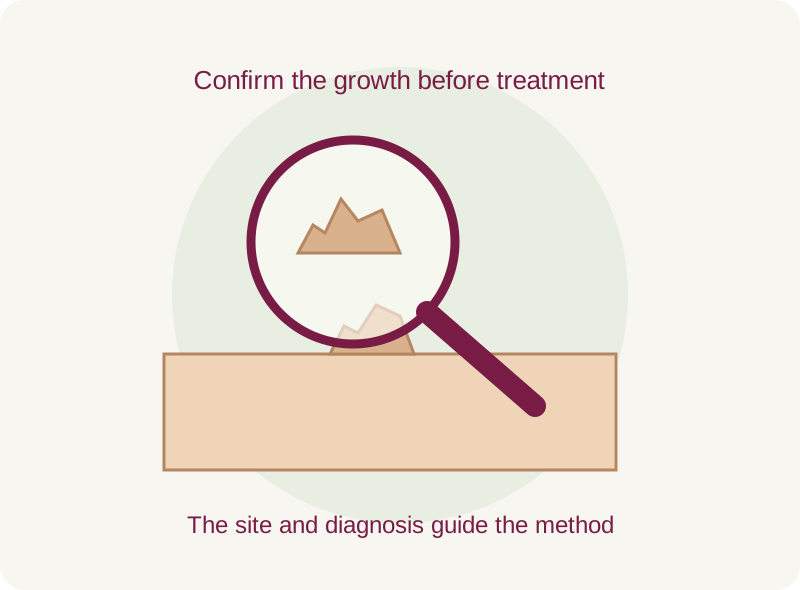
Wart treatment removes or breaks down skin affected by HPV. The method depends on the location, size, number of warts and what has already been tried.
Freezing, topical medicines and selected removal procedures work in different ways. More than one visit may be needed, and removing a visible wart does not guarantee it will never return.
Liquid nitrogen freezes the wart. It can sting and may cause a blister or crust afterwards. Repeated treatments are common.
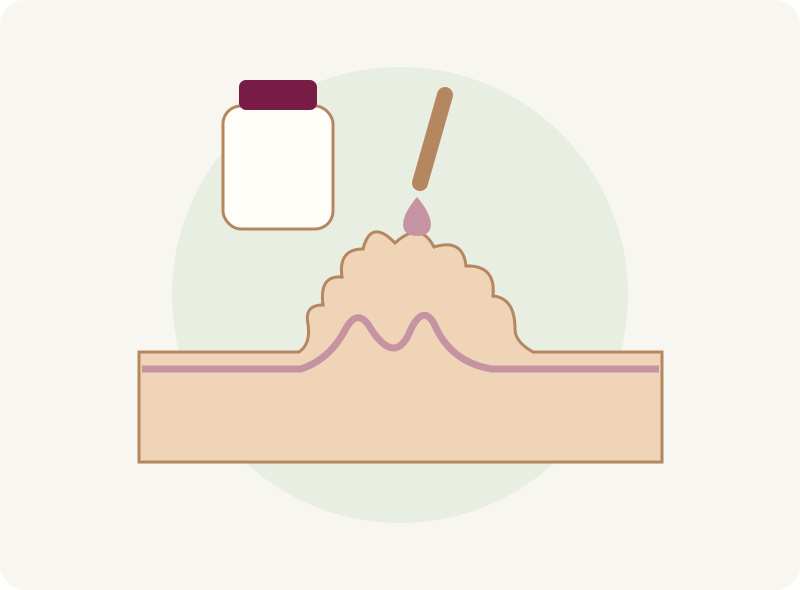
A wart medicine, such as salicylic acid for suitable areas, gradually removes affected surface layers. Stronger chemical treatments need clinician guidance.
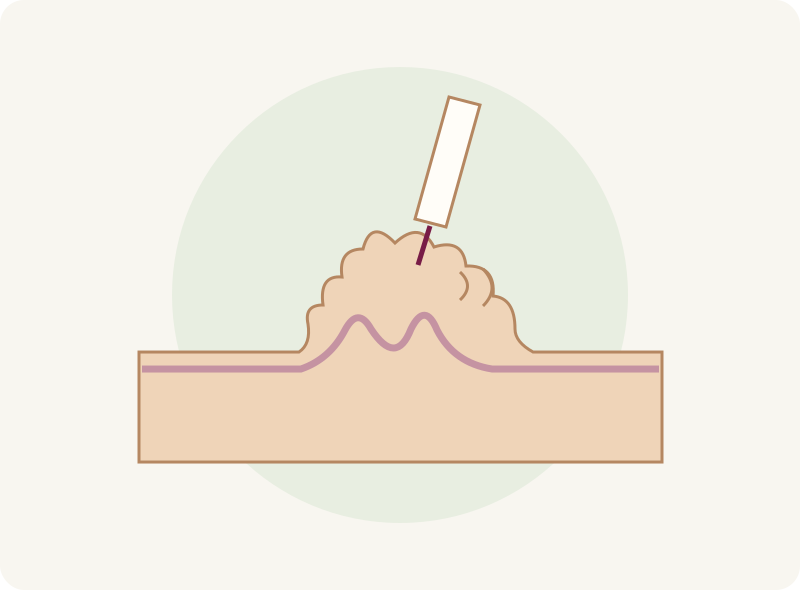
Heat-based methods can remove selected wart tissue, sometimes with curettage. Numbing and wound care may be needed; a scar or pigment change is possible.
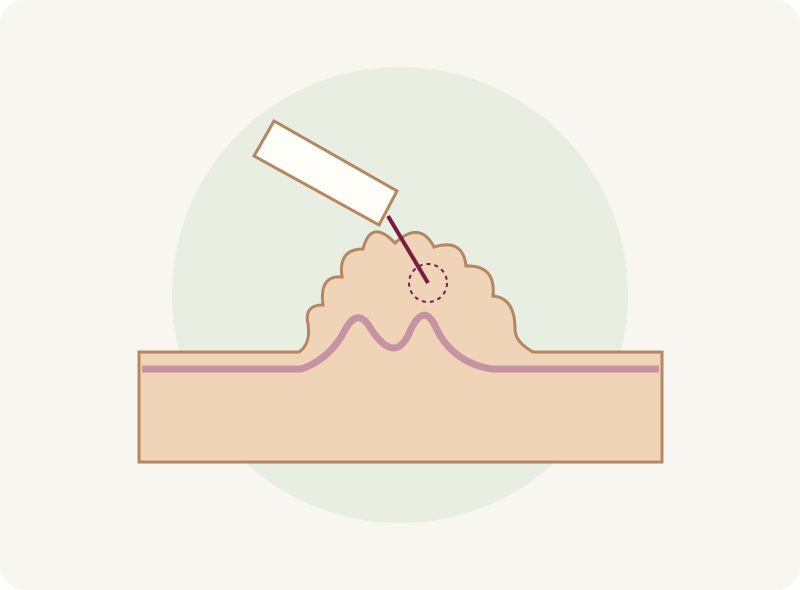
A laser may be considered for selected or difficult warts. The laser type determines how tissue is treated, protection needed and the recovery plan.
The clinician will explain the recommended method and its availability at your clinic. A combination is considered only when there is a reason for it.
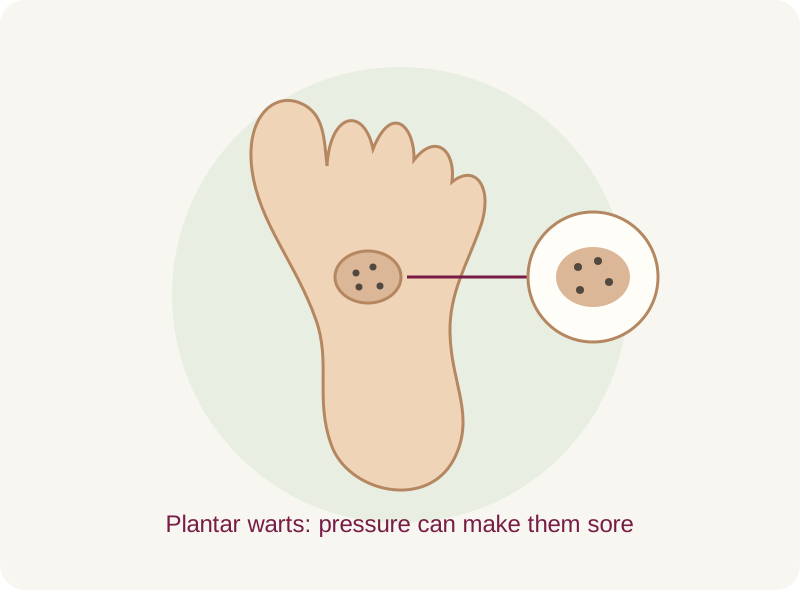
Other growths, corns and calluses can look similar. A changing or bleeding lesion may need closer assessment or a sample before removal.
The face, nail folds and weight-bearing sole require different planning. Treatment near a nail can affect nail growth; foot soreness may affect walking.
Tell the clinician about diabetes, poor circulation, reduced sensation, immune problems, medicines and any tendency to scar or develop dark marks.
Bring the names of any wart products or procedures you have tried. Tell the team if the area is irritated or broken.
Ask about pain relief, wound care, expected visits and time away from activities that rub the area.
The clinician prepares the area and uses protection appropriate to the method. Local anaesthetic may be used for some procedures; freezing does not always need it.
Tell the clinician about pain or discomfort. Treatment intensity and duration depend on the method and lesion.
You will receive instructions for cleaning, any dressing and medicines. Do not pick a crust or puncture a blister without advice.
Healing and residual wart tissue help determine whether another treatment is needed.
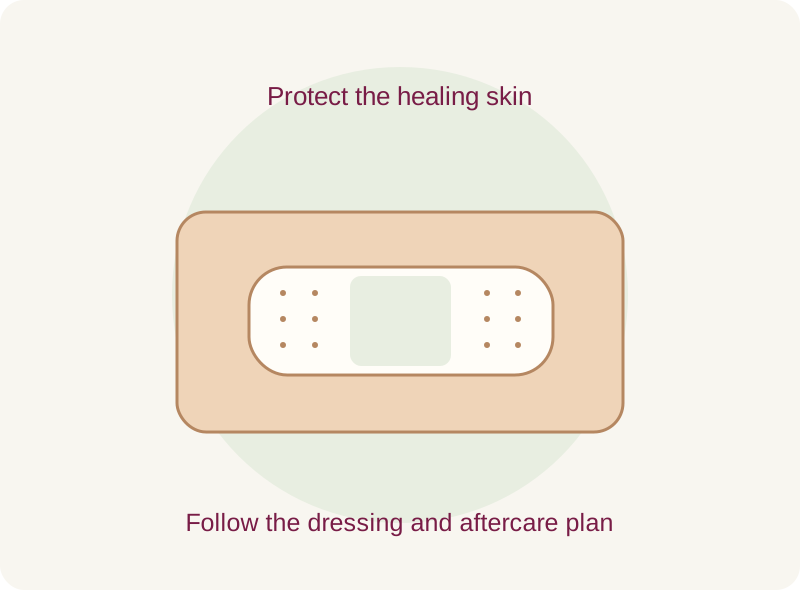
Tenderness, swelling, a blister, crust or small wound can occur, depending on the method. Recovery may take days to weeks, and soles or lower legs may need more time.
Skin can become lighter or darker, sometimes permanently. Scarring, infection and delayed healing are possible; risk depends on the site and treatment.
Increasing pain, spreading warmth or swelling, pus, fever or unexpected bleeding need prompt medical advice.
Thicker, multiple or persistent warts may take several treatments. Your response helps decide whether to repeat or change the method.
Avoid picking or shaving over affected skin and do not share personal tools. Your clinician can advise how to protect the area during work or sport.
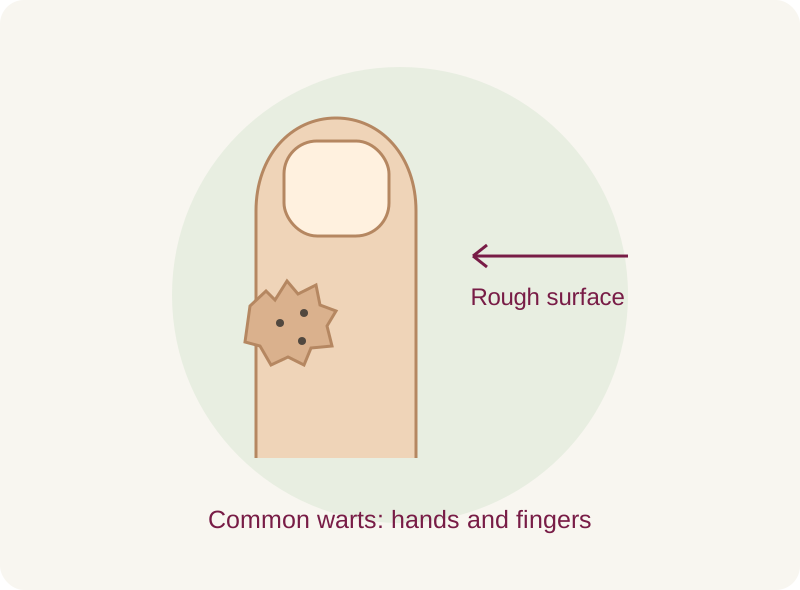
Understand how warts develop, the different patterns and why they can recur.
Explore viral wartsVerified Google review excerpts about consultations and explanations at Layers. The condition is not specified; these are not wart-removal results.
“The doctors listened carefully to my concerns and explained the treatment in a clear and professional manner.”
Consultation experience; condition not specified.
“She explained the treatment clearly and made me feel comfortable throughout the consultation.”
Consultation experience; condition not specified.
“The doctor took the time to understand my skin concerns and explained the treatment plan clearly, without rushing.”
Consultation experience; condition not specified.
“Very patient ,humble and polite to answer every single query and build confidence.”
Consultation experience; condition not specified.
“The doctors explained everything clearly and made me feel comfortable and confident.”
Consultation experience; condition not specified.
“The doctor took the time to listen to my concerns patiently and explained the treatment options clearly.”
Consultation experience; condition not specified.
















There is no best method for every wart. Location, thickness, previous treatment, your health and the likely healing needs all matter.
Freezing can sting, and other procedures may need local anaesthetic. Ask what discomfort to expect during treatment and afterwards.
A mark or scar is possible. Pigment changes can be more noticeable on darker skin. The clinician should discuss the risk for the specific area and method.
Yes. Visible tissue can be removed while infected cells remain. Repeat treatment or another approach may be needed.
It depends on the method, size and position. Pressure may be uncomfortable, so discuss footwear, work and sport before treatment.
Do not puncture it unless your clinician advises you to. Ask for help if it is very painful, large or difficult to protect.
Home products are not the same as clinic cryotherapy and are not suitable for every site or person. Have uncertain lesions or higher-risk skin assessed first.
No. Genital lesions need a separate assessment and site-specific treatment. Do not use ordinary hand or foot wart products there.
Ask about the treatment, healing and follow-up before deciding on your next step.
Prefer a call? +91 9000 572727