Loose or folding skin
Skin may not shrink fully after weight loss. Exercise supports strength, but cannot remove a large fold of excess skin.
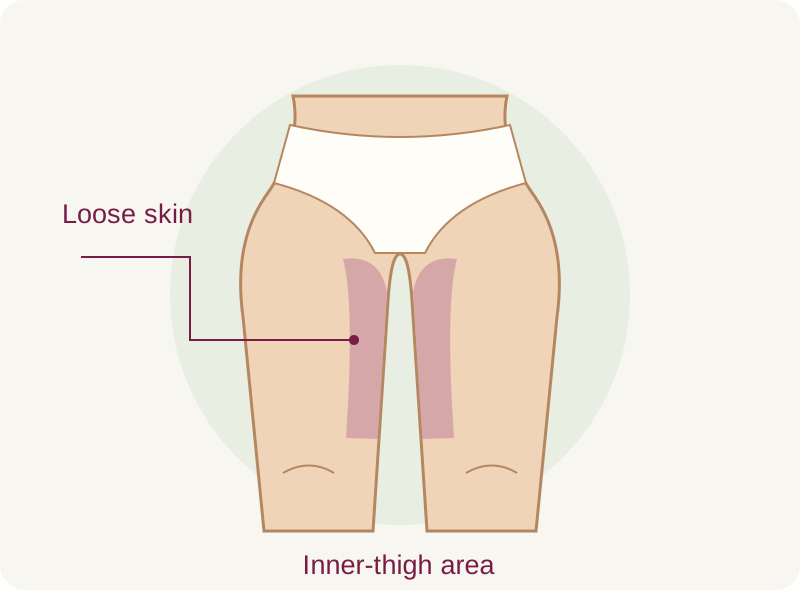
Loose thigh skin may remain after weight loss or change with age. Explore the surgical options, their scars and what recovery involves.

A thigh lift, or thighplasty, removes excess skin and some fat to change the contour of the thighs. The operation is planned around where the skin is loose and how far it extends.
Reducing a fold may improve its shape and, for some people, rubbing caused by excess skin. It is not a weight-loss operation or a way to guarantee a particular thigh size.
Skin may not shrink fully after weight loss. Exercise supports strength, but cannot remove a large fold of excess skin.
If the skin can adapt, liposuction alone may be discussed. It removes fat rather than an excess skin fold.
Explore liposuction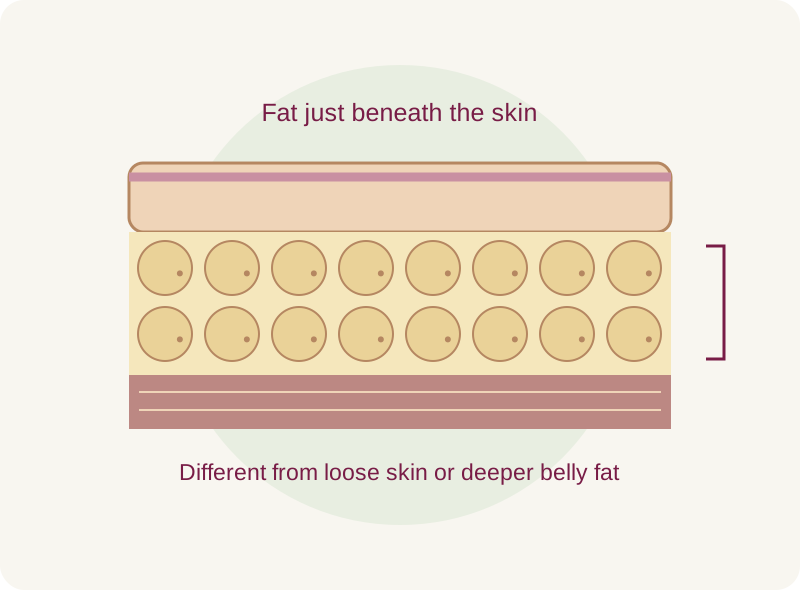
The surgeon may consider both skin removal and fat reduction. Each part of the plan should have a clear purpose.
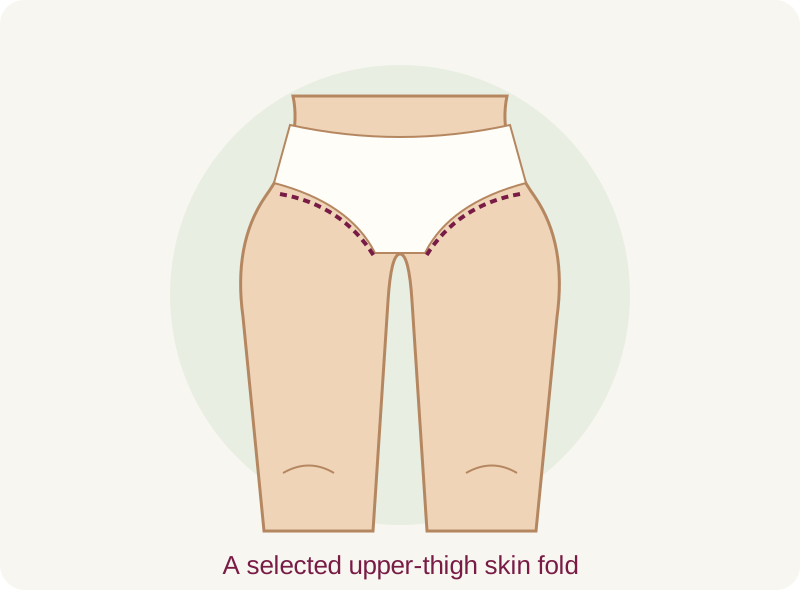
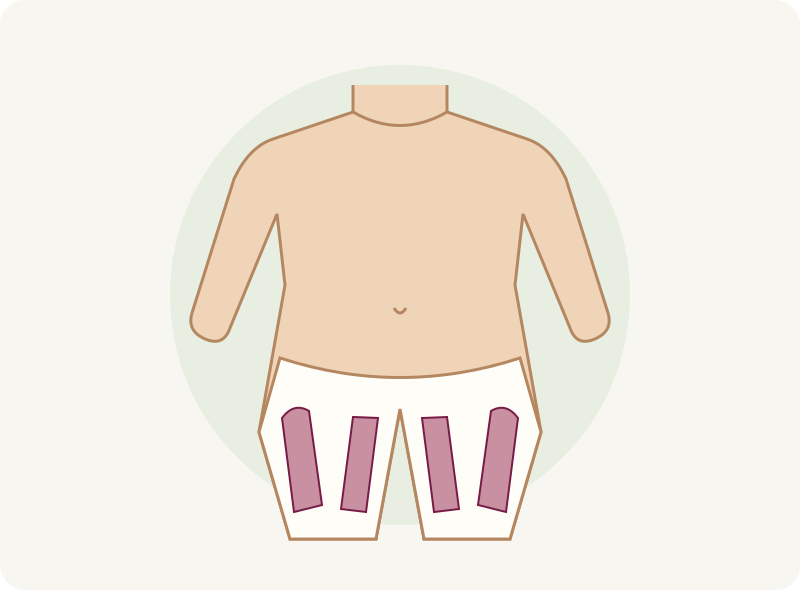
Selected looseness high on the inner thigh may allow an incision mainly near the groin crease. It will not address every fold further down the leg.
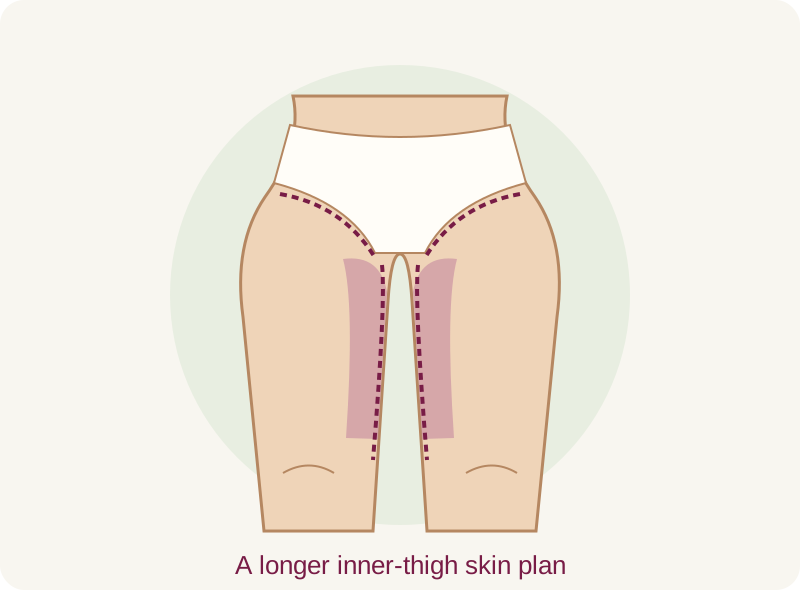
When loose skin extends down the thigh, a longer incision along the inner leg may be needed. This trades more skin removal for a more visible scar.
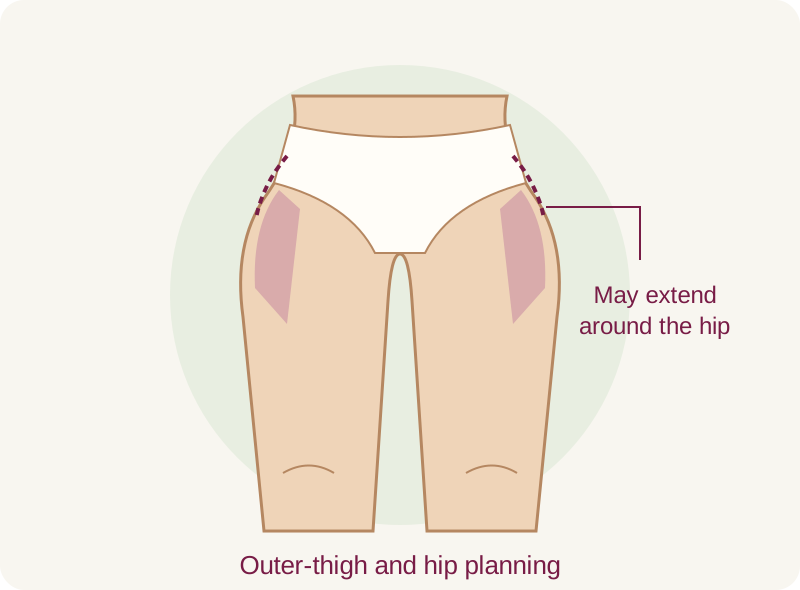
Outer-thigh or hip looseness needs a different plan. The incision may continue around the hip and back, sometimes as part of wider body-lift surgery.
The drawings show example areas and scar positions. The surgeon will explain the pattern that fits your skin and anatomy.
A groin-crease scar and a longer vertical scar cover different concerns. Ask where the line will sit when standing, sitting and moving.
Some lines may sit under clothing, while others remain visible in shorts or swimwear. Scar-free lifting is not realistic.
Scars can soften and fade over time, but do not disappear. Tell the surgeon about any past thick, raised or slow-healing scars.
Significant weight changes can affect the contour. If further weight loss is planned, discuss whether surgery should wait.
Discuss diabetes, smoking, nutrition, medicines, previous operations and any history of blood clots or leg swelling. Existing skin irritation may need care first.
Consider work, stairs, childcare, travel and exercise. Recovery can affect everyday movement, and you may need support at home.
The plastic surgeon checks the skin pattern, fat, symmetry and health factors. Confirm the operation, scar, alternatives, surgeon and surgical facility.
Follow instructions for tests, smoking, medicines, food and drink. Arrange transport and help after discharge. Do not stop prescribed medicines without advice.
Anaesthesia is arranged for the operation. The surgeon removes excess tissue through the agreed incision and may add liposuction if it is part of the plan.
Deep stitches support the tissue before the skin is closed. Dressings and temporary drains may be used.
Ask about washing, dressings, any drains, medicines and a support garment if prescribed. Confirm who to call with concerns.
The team will guide walking and activity while protecting the incisions from strain and rubbing. Attend the arranged follow-up checks.
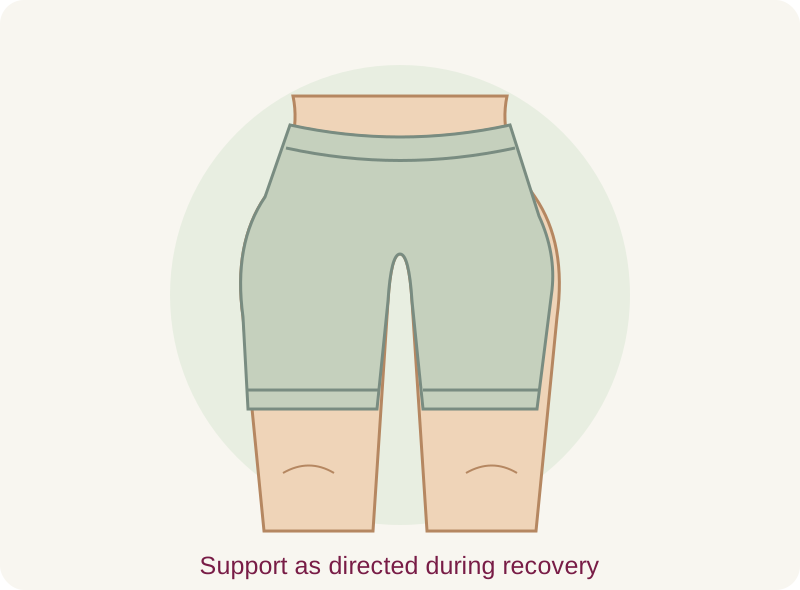
Bruising, swelling and tenderness are expected early on. Follow instructions for dressings, drains and any prescribed support garment.
Avoid forceful stretching, friction and strenuous exercise while healing. Ask for specific guidance on walking, sitting, stairs and lifting; do not assume complete bed rest is required.
Recovery takes weeks. Your work, incision pattern and healing determine the pace. Arrange help and avoid committing to a fixed return date before assessment.
Wounds can separate or heal slowly. Bleeding, infection, fluid collections and loss of skin or fatty tissue are possible.
Asymmetry, noticeable scars, numbness, persistent pain or recurrent looseness can occur. Some concerns may need further treatment or revision.
Deep vein thrombosis and heart, lung or anaesthesia complications are important surgical risks. Your health and the total operation affect the assessment.
Some shape change may be visible early, but bruising and swelling can hide the result. Review the contour over the following months rather than judging the first few days.
Weight stability helps maintain the change. Ageing and later weight changes can still affect skin firmness; surgery does not stop these changes.
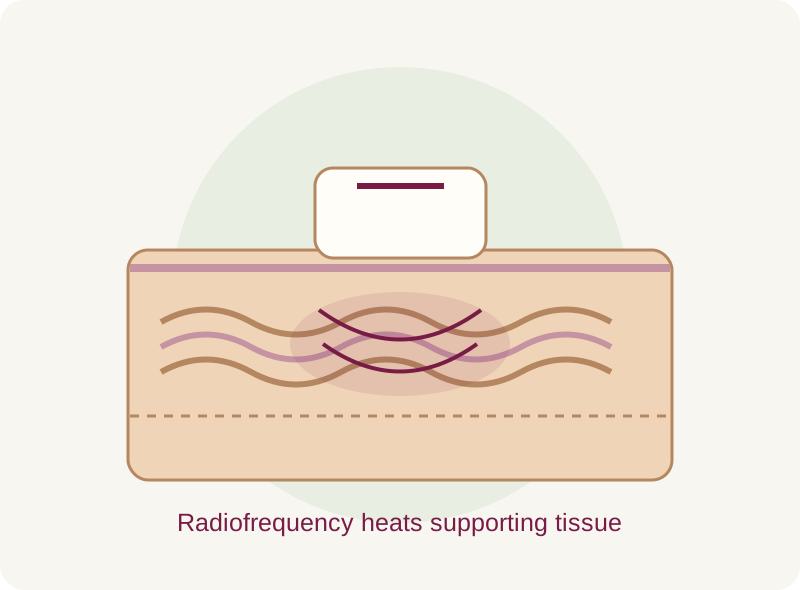
Some skin-firming treatments may help mild laxity. They cannot remove a substantial skin fold.
Understand skin laxity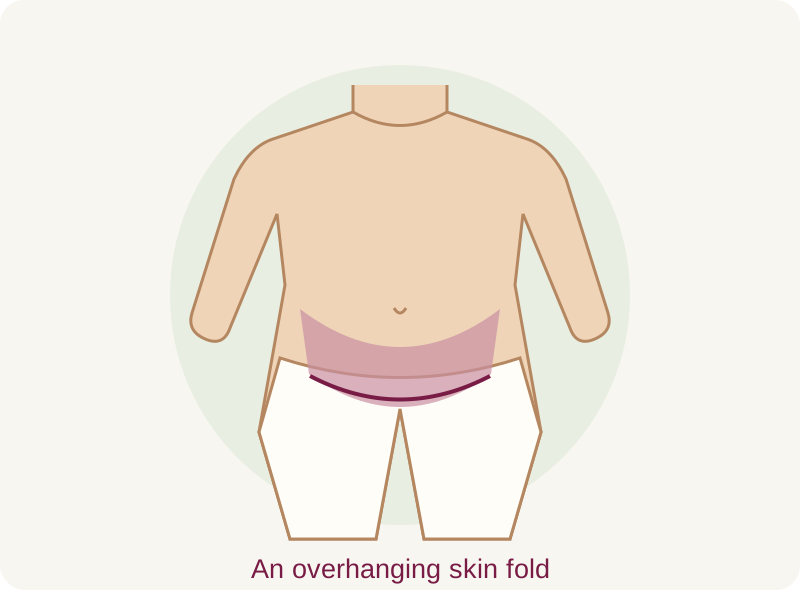
If several areas concern you, discuss priorities and whether procedures should be staged.
Explore body contouringThese verified Google excerpts describe general consultations and care. They do not identify thigh lift surgery or show its results.
“The doctors listened carefully to my concerns and explained the treatment in a clear and professional manner.”
Consultation experience; condition not specified.
“She explained the treatment clearly and made me feel comfortable throughout the consultation.”
Consultation experience; condition not specified.
“The doctor took the time to understand my skin concerns and explained the treatment plan clearly, without rushing.”
Consultation experience; condition not specified.
“Very patient ,humble and polite to answer every single query and build confidence.”
Consultation experience; condition not specified.
“The doctors explained everything clearly and made me feel comfortable and confident.”
Consultation experience; condition not specified.
“The doctor took the time to listen to my concerns patiently and explained the treatment options clearly.”
Consultation experience; condition not specified.
















No. Liposuction removes selected fat. A thigh lift removes excess skin and may also include fat reduction. Skin quality helps determine which approach fits.
Only if that limited approach can address the skin pattern. A fold that extends further down the leg may need a longer incision.
Do not expect either to disappear. Marks within the removed skin go with that skin, but others remain. Cellulite and surface texture need their own assessment.
Removing an excess fold may help some people, but rubbing can have several causes. Tell the clinician about irritation, rashes or pain so these are assessed separately.
The incision, wound healing and activity involved determine the timing. Plan for several weeks of recovery and follow the surgeon’s clearance for more demanding activity.
They may be part of the plan. Ask how to care for drains and which garment to use, if any. The instructions depend on your operation.
Sometimes, but combining operations adds to the recovery and medical risk. Your surgeon may recommend separate stages.
The removed skin does not return, but ageing and weight changes can create new looseness. A stable weight supports the result without guaranteeing a permanent shape.
Arrange an assessment of the loose skin, surgical choices and recovery you need to plan.
Prefer a call? +91 9000 572727