Intralesional Steroid Treatment. Targeted care for a defined lesion.
Learn about clinician-delivered steroid injections for selected skin lesions. Contact the team to confirm whether an appropriate specialist and this service are available at your chosen clinic.
Talk to Specialist
Personal assessment. Clear expectations.
Your treatment, explained visually.
100K
Satisfied patients
23+
Branches / clinics
100+
Medical experts
13+
Years of experience
THE IDEA, EXPLAINED SIMPLY
What is intralesional steroid treatment? See the bigger picture.
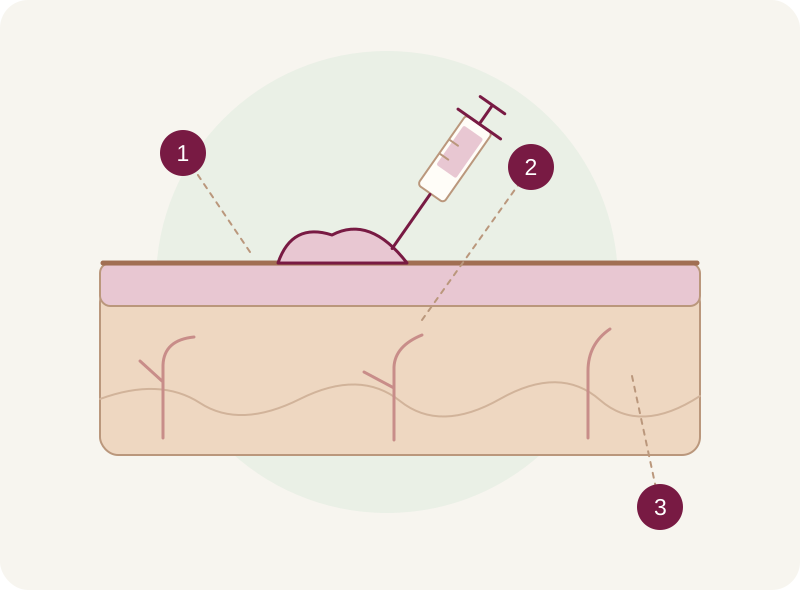
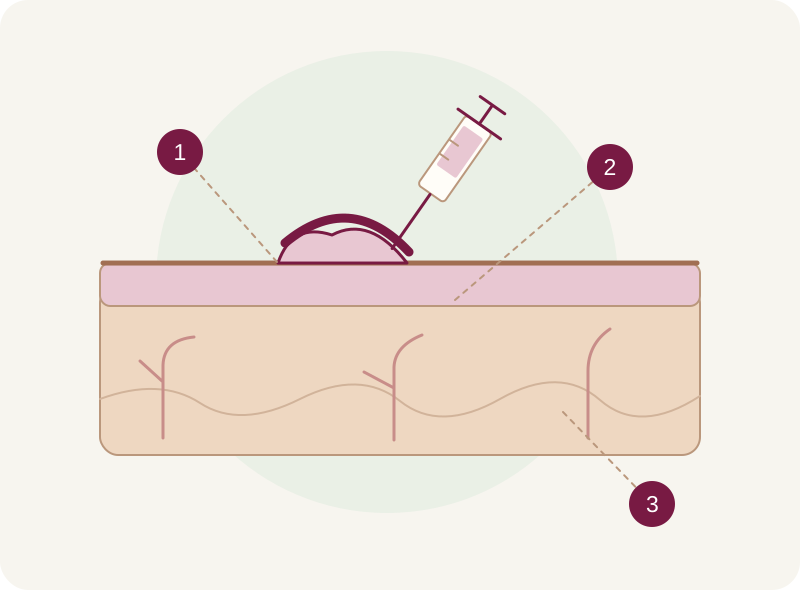
Intralesional steroid treatment places corticosteroid into a specific area of skin to reduce local inflammation or thickening. It may be considered for selected raised scars or inflammatory conditions. The diagnosis, injection site and risk of skin thinning guide the decision.
1
A defined target
Treatment is directed at an assessed lesion, not used as a general skin-brightening injection.
2
Local medicine delivery
The clinician chooses the medicine and amount for the condition and skin thickness.
3
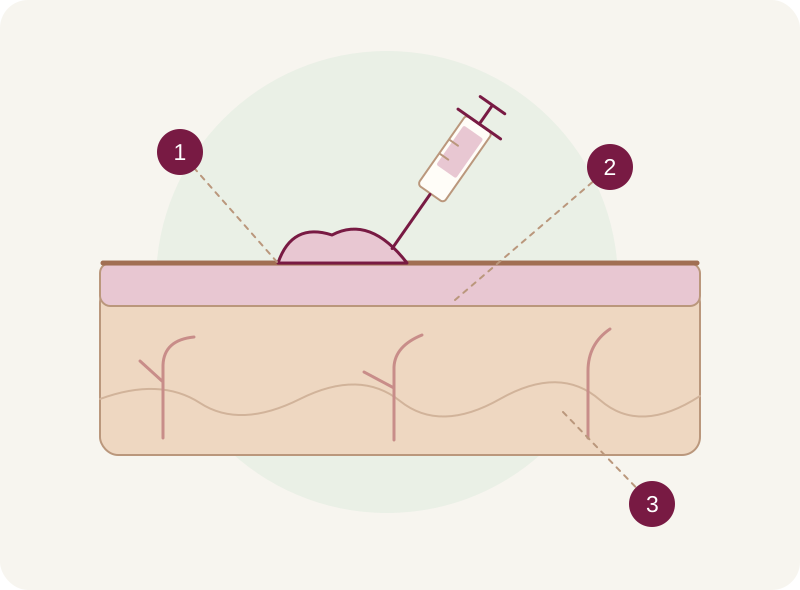
Response and side effects
Follow-up checks both improvement and unwanted thinning, dimpling or pigment change.
A simplified guide to the procedure. The diagram shows areas and structures, not a predicted result.
UNDERSTAND YOUR TREATMENT OPTIONS
Your options, explained. See how they work.
Understand the main care approaches. Your diagnosis, the areas affected and your priorities guide which options are relevant.
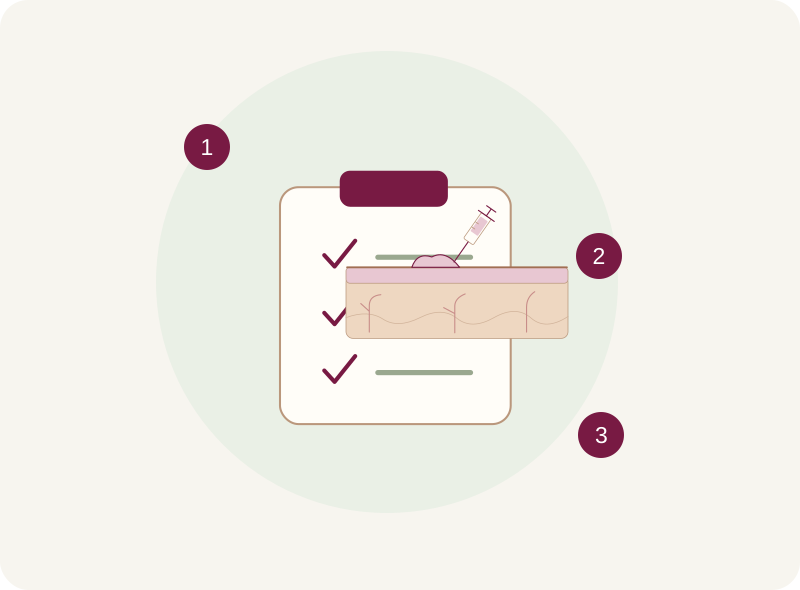
Scar assessment01
1Assess scar activity
2Discuss local treatment
3Monitor thickness
Raised scars
Selected keloid or hypertrophic scar care
An intralesional steroid may be considered for an appropriately diagnosed raised scar.
What to discuss
Flattening, itch and discomfort are reviewed over time. Treatment may need more than one visit and the scar may recur.
Diagnosis-led care02
1Confirm the condition
2Choose the target
3Review response
Localised conditions
Selected inflammatory skin conditions
Some localised conditions, including selected alopecia areata lesions, may be considered after specialist assessment.
What to discuss
This is not a general injection for all hair loss or every rash. Your diagnosis determines whether it has a role.
Follow-up03
1Review benefit
2Check skin texture
3Continue or change
Review and combination
A monitored course within a wider plan
A course may be combined with other appropriate care, with each further treatment based on examination.
What to discuss
New dents, thin skin or colour change should be reported. The next injection is not automatic.
These illustrations explain care concepts. They are not patient photographs or promised outcomes. Your clinician confirms suitability, the exact method and local availability.
OUR PROCEDURE
Your care plan.
STEP 01
Assessment & preparation
Confirm the indication
Assess the lesion and previous treatment before considering an injection.
Review suitability and consent
Discuss infection, allergies, medicines and the risks of local skin changes.
STEP 02
Your care plan
Treat the selected area
The clinician administers the selected medicine into the assessed lesion using an appropriate technique.
STEP 03
Aftercare & follow-up
Check effect and tolerance
Review symptoms, thickness and possible skin thinning before deciding on further care.
Watch the local skin
Brief soreness, bruising or bleeding may occur. Infection, pigment changes and skin or fat thinning are possible; some changes can persist. Report dimpling, worsening pain or signs of infection.
YOUR STARTING POINT MATTERS
Start with an assessment. A plan that fits your skin.
IS IT FOR ME?
The right treatment starts with you.
A consultation looks at the diagnosis, your health and what you want to change. These points help shape the discussion.
A condition with a clear indication
A raised scar or specific inflammatory diagnosis may be suitable after examination.
A suitable injection site
Active infection and skin thickness affect whether injection is appropriate.
Capacity for follow-up
A review is needed to judge response and avoid continuing through unwanted skin changes.
When another first step may help
Topical care, scar therapy or another treatment may be preferred. Intralesional steroid is not suitable for every lesion and should not be chosen without diagnosis.
What good care can support. With realistic expectations.
Focus on the changes that matter to your comfort, confidence and daily routine.
A local treatment approach
Medicine can be directed at a specific assessed lesion.
Condition-specific goals
For selected lesions, the aim may be less inflammation, thickness, itch or discomfort.
Review before repeating
Further treatment depends on both benefit and the condition of the skin.
Response varies. Benefits depend on the diagnosis, selected approach and individual skin response.
LET’S TALK IT THROUGH
Let’s understand
Discuss the diagnosis first. Contact the team to confirm whether an appropriate specialist and intralesional steroid treatment are available at your chosen clinic.
General education to help you prepare for a consultation. Illustrations are simplified explanations, not patient results. Your clinician will advise on individual care.
Discuss the diagnosis first. Contact the team to confirm whether an appropriate specialist and intralesional steroid treatment are available at your chosen clinic.