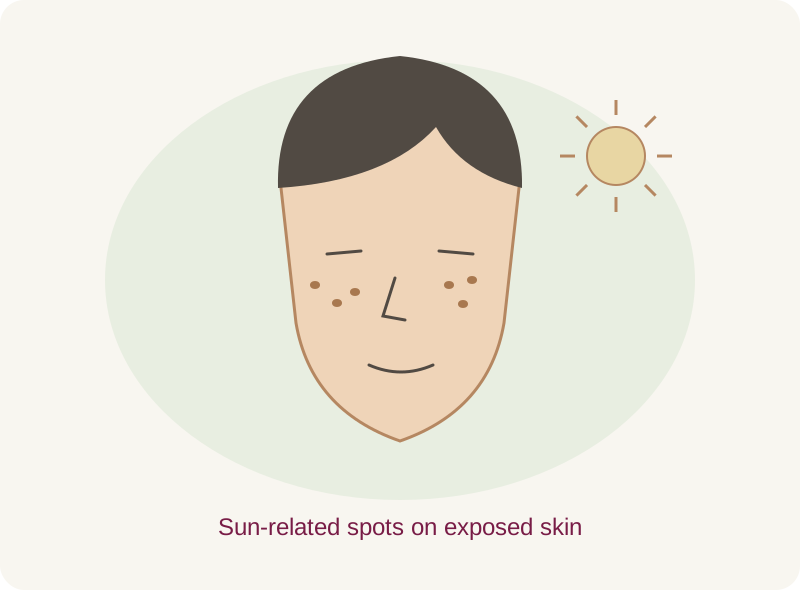
Selected brown spots
Some sun-related spots may respond to selected light treatment. A new, changing or suspicious mark must be diagnosed before cosmetic treatment.
Understand pigmentationBrown spots, redness and visible vessels can need different care. Learn where an IPL photofacial may fit and what to check before treatment.
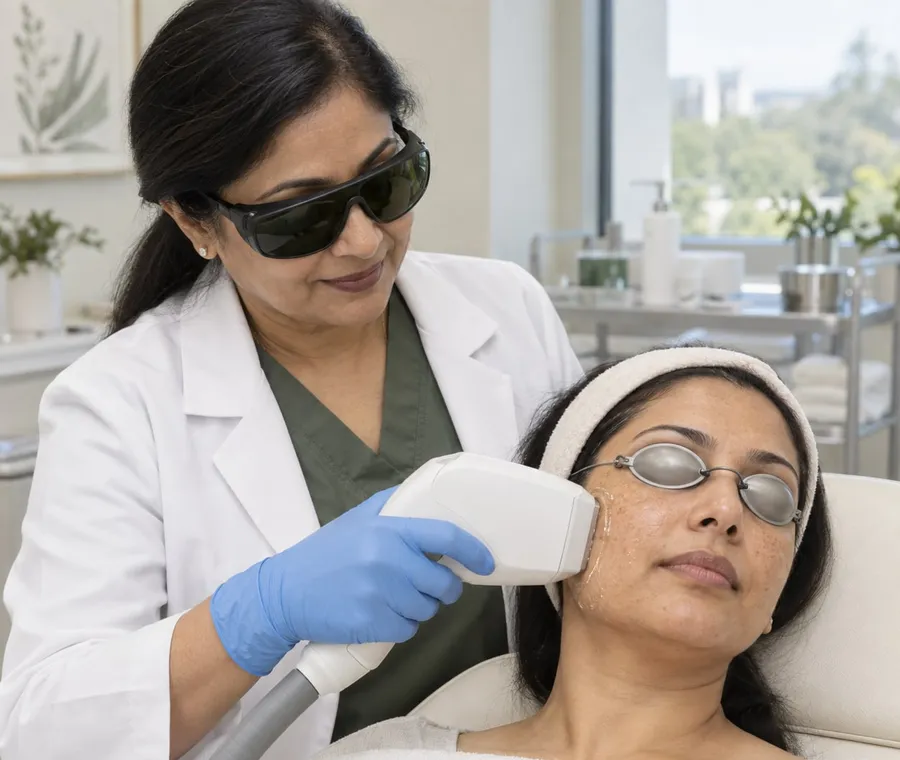
Photofacial commonly refers to intense pulsed light, or IPL, used for selected colour and vessel concerns. The name is also used loosely, so confirm the actual device and treatment being offered.
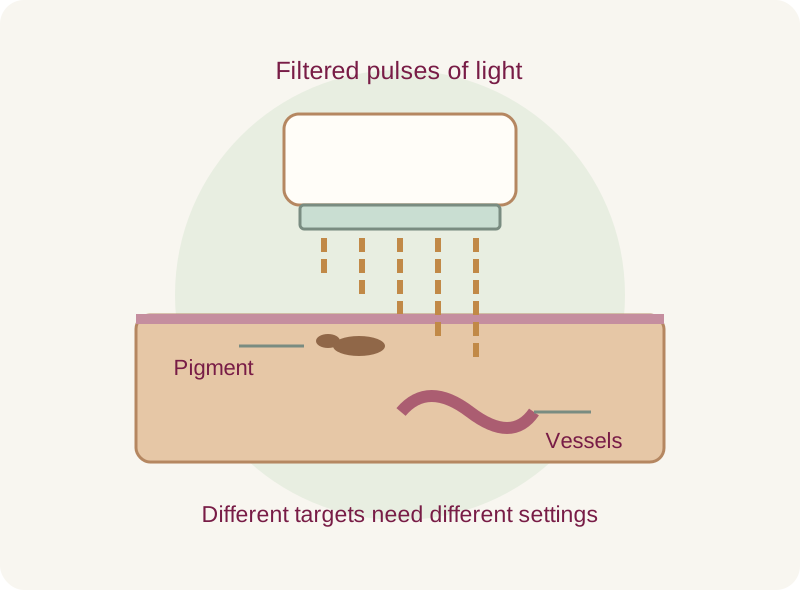
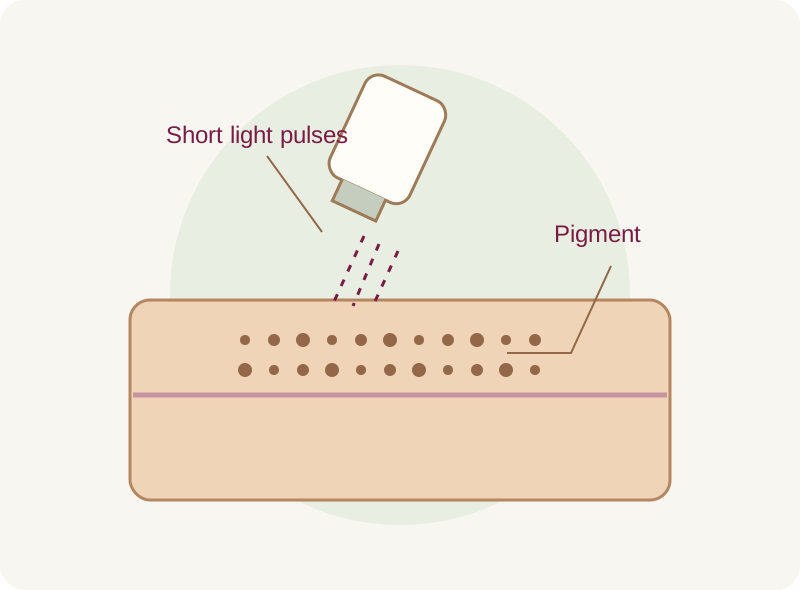
IPL sends filtered pulses containing a range of wavelengths. Pigment or blood vessels absorb the energy and heat up. The target and your skin tone guide device selection and settings.
Some sun-related spots may respond to selected light treatment. A new, changing or suspicious mark must be diagnosed before cosmetic treatment.
Understand pigmentation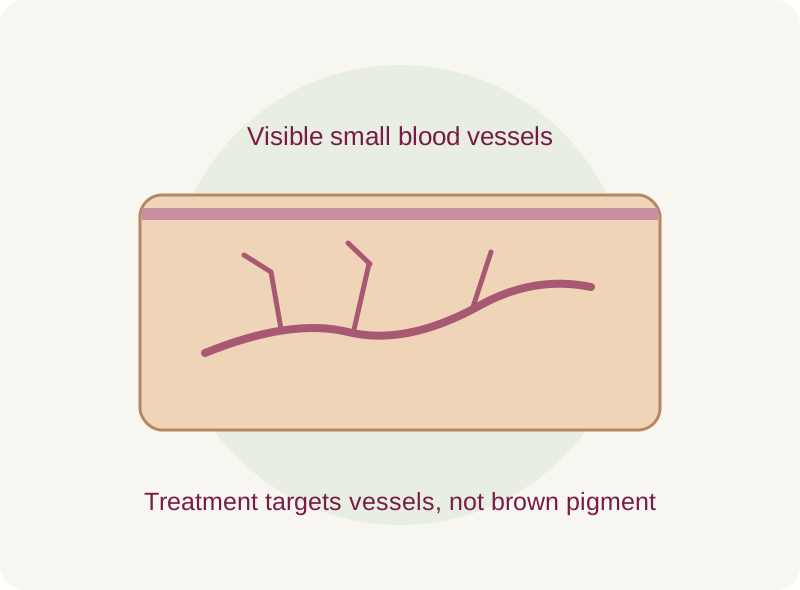
IPL or a vessel-targeting laser may help selected visible vessels or rosacea-related colour. Ongoing skin care and other rosacea treatment may still be needed.
Explore rosacea care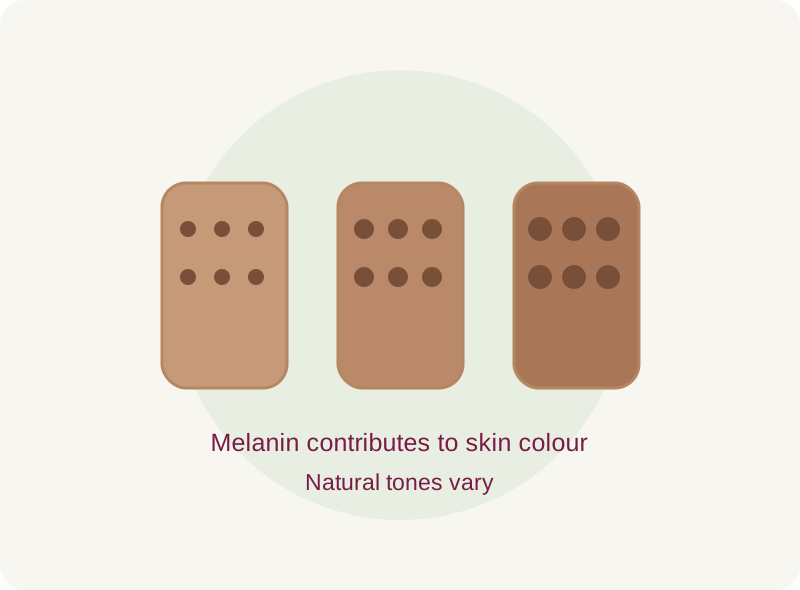
A mix of spots and redness needs careful assessment. IPL is not a universal treatment for every brown patch or a way to change natural skin colour.
Understand skin tone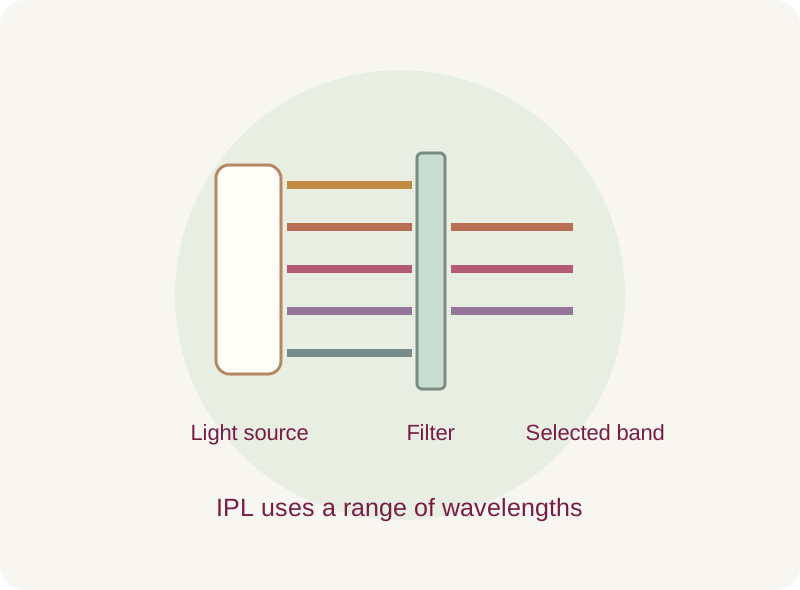
A laser typically delivers a specific wavelength. IPL uses a filtered range of wavelengths, so it is a light treatment rather than a laser. Different devices can suit different targets.
IPL is also different from a low-intensity LED facial. A comfortable-sounding name does not tell you the energy, effect or risk. Ask which device is planned and why it is suited to your skin.
Normal skin pigment can also absorb light. Burns and dark or pale patches are concerns, so an experienced clinician may recommend different settings, another device or postponement.
These conditions can worsen with heat or irritation. Do not assume that treating brown sun spots and treating melasma are the same decision.
Mention medicines, light-sensitive conditions, infection, cold sores, irritated skin and recent procedures. Discuss pregnancy or breastfeeding before an elective treatment.
Do not use cosmetic light treatment to remove a spot before it is assessed. Diagnosis comes before choosing the device.
The clinician identifies the concern, checks tanning, medicines and earlier reactions, and explains alternatives and likely recovery.
Discuss preparation and whether a test area is appropriate. A test area does not remove all risk or guarantee the final result.
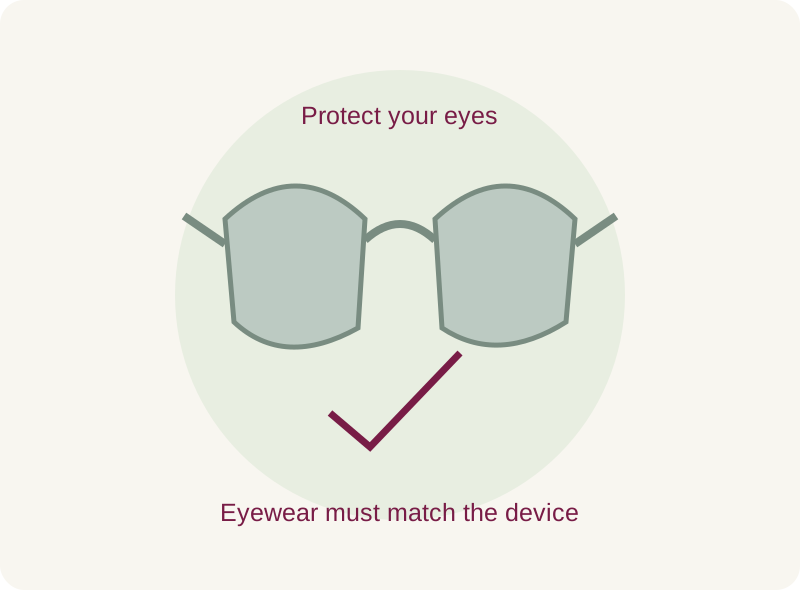
Appropriate eyewear is used for the patient and practitioner. Coupling gel and contact cooling may be used according to the device.
The handpiece is placed against the skin and pulses are delivered with suitable settings. You may feel a snap or heat; report strong pain immediately.
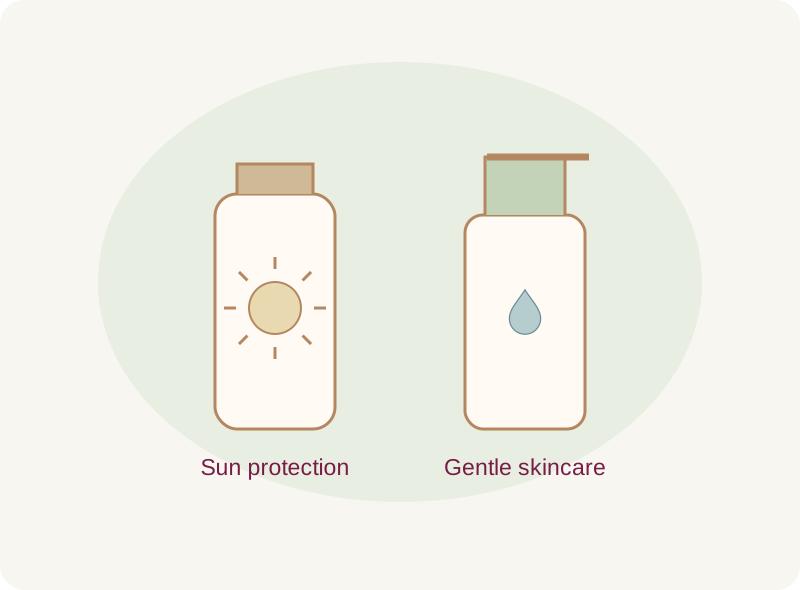
Confirm gentle cleansing, moisturising, sun protection and when to restart makeup, exercise and active skincare.
Review after the skin has settled. Further sessions depend on the target and response, not a one-size-fits-all course.
Redness, tenderness or swelling can occur. Some treated pigment spots darken temporarily before fading or shedding. Do not pick them.
Avoid tanning and use the recommended sun protection. Do not add scrubs or strong active products while the skin is irritated.
Blisters, increasing pain, persistent colour change, discharge or marked swelling need assessment. Eye pain or changes in vision need urgent medical care.
Selected spots or vessels can become less noticeable, but response varies. New sun-related marks or vessels can develop, and rosacea may need ongoing care. IPL does not stop ageing or permanently cure every cause of redness.
Possible risks include burns, blisters, bruising, unwanted hair reduction, pigment changes and scarring. The useful outcome should be weighed against those risks, especially where the skin marks easily.
A separate laser approach for selected pigment concerns. It is not the same device as IPL.
Explore laser toning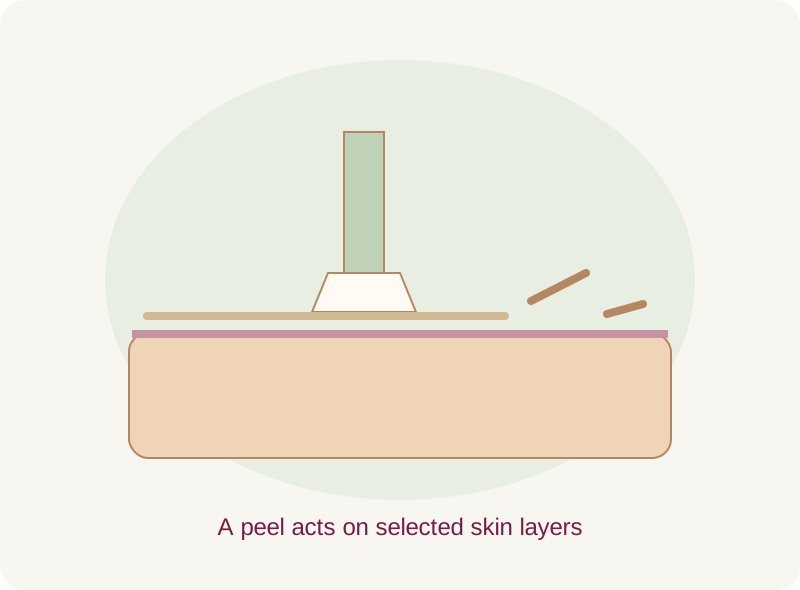
Exfoliating preparations have different mechanisms and recovery needs from light treatment.
Explore chemical peels
Skin care, trigger management and medicines can matter alongside any procedure.
Explore rosacea careOriginal tone and pigmentation before-and-after cases from Layers Clinics. Individual results vary.
Showing all 6 photographs
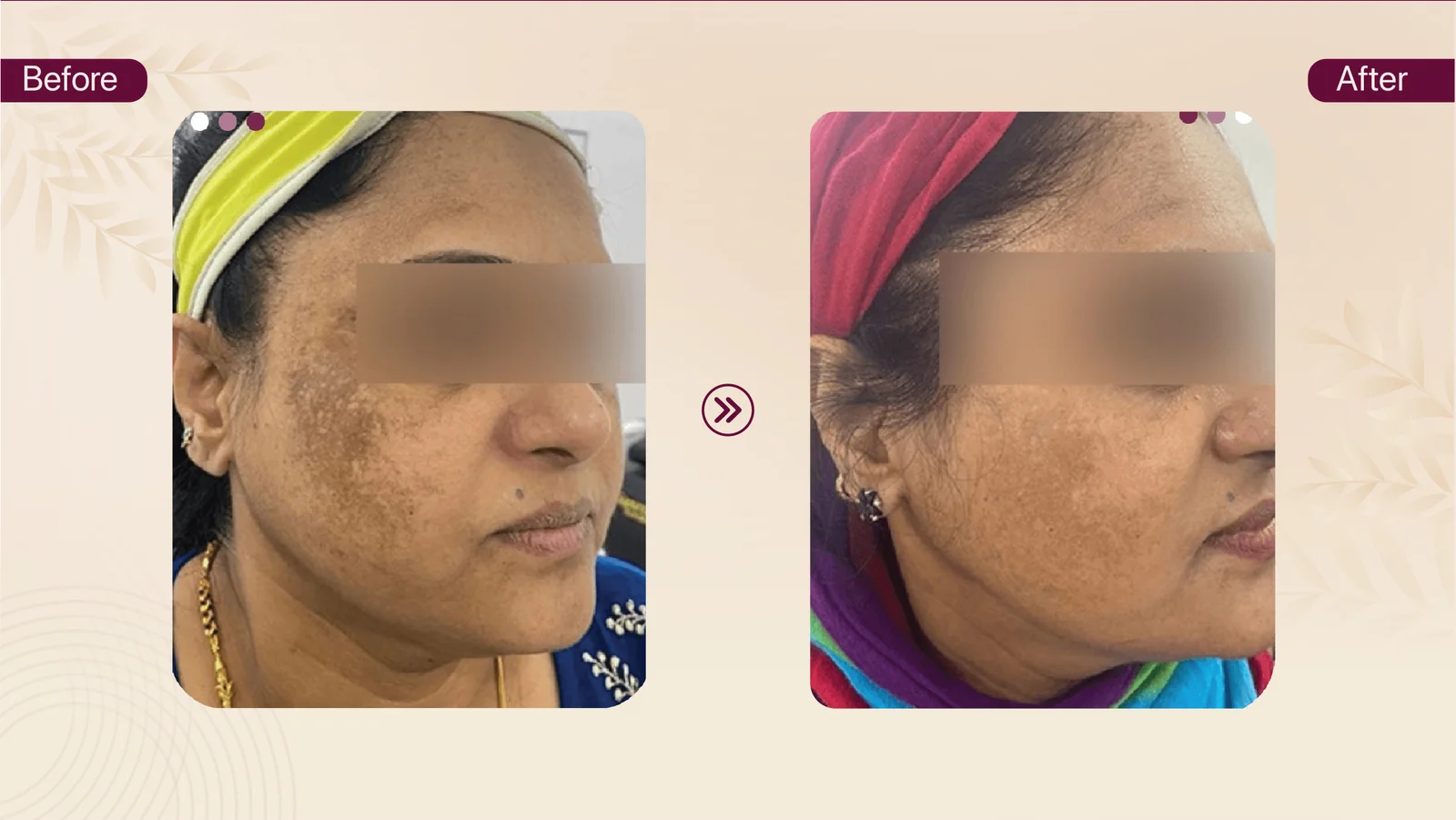
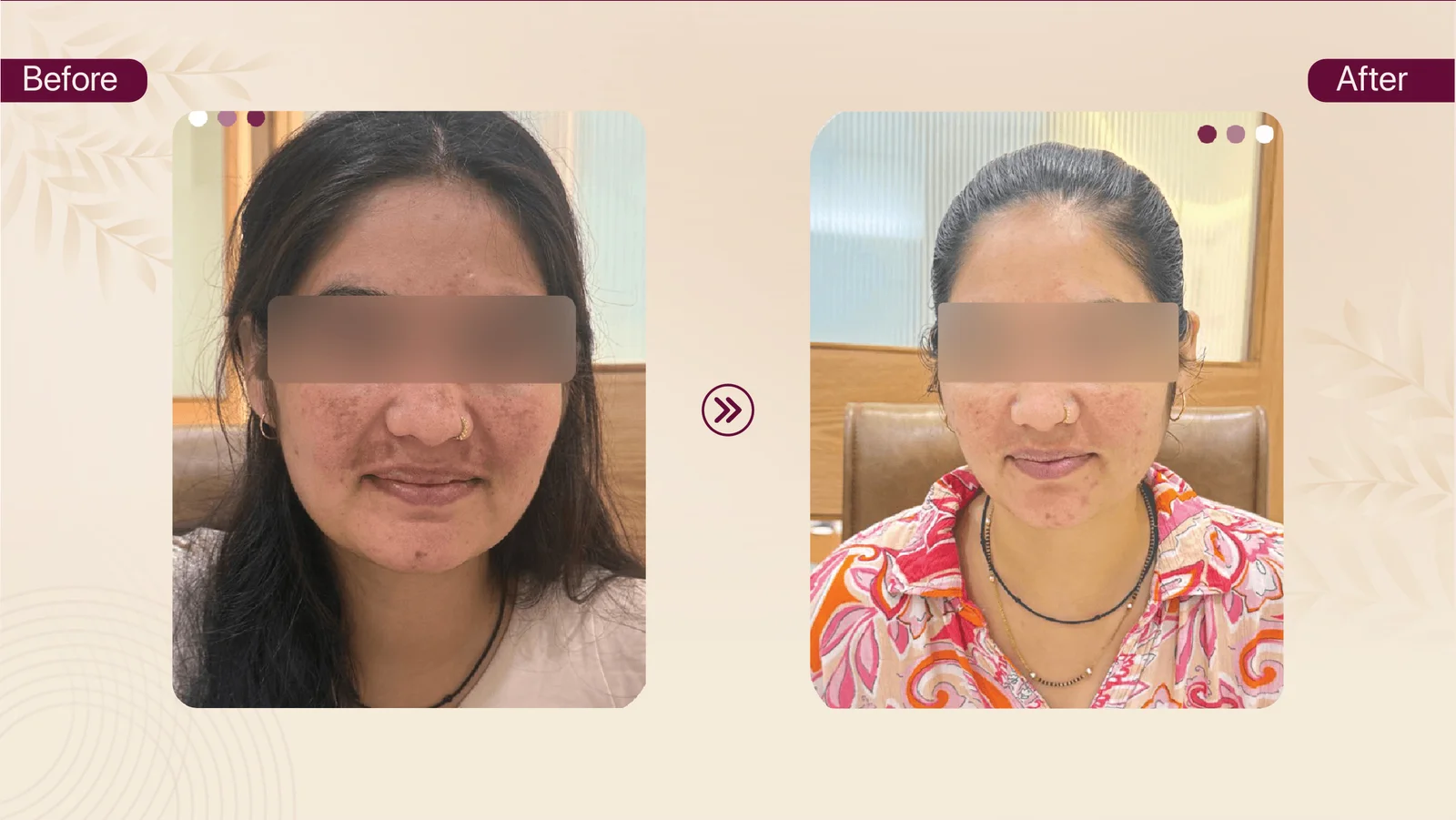
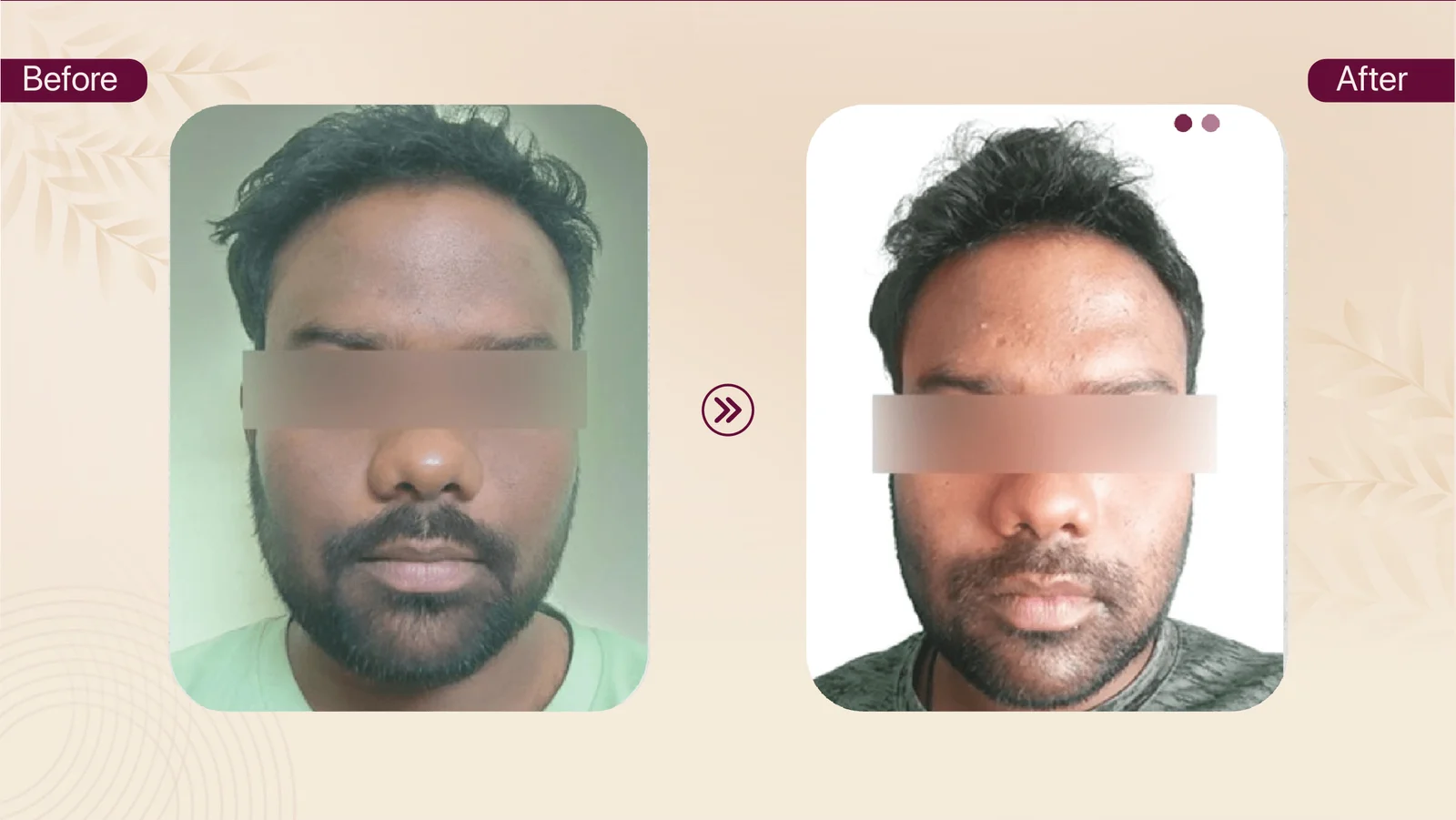
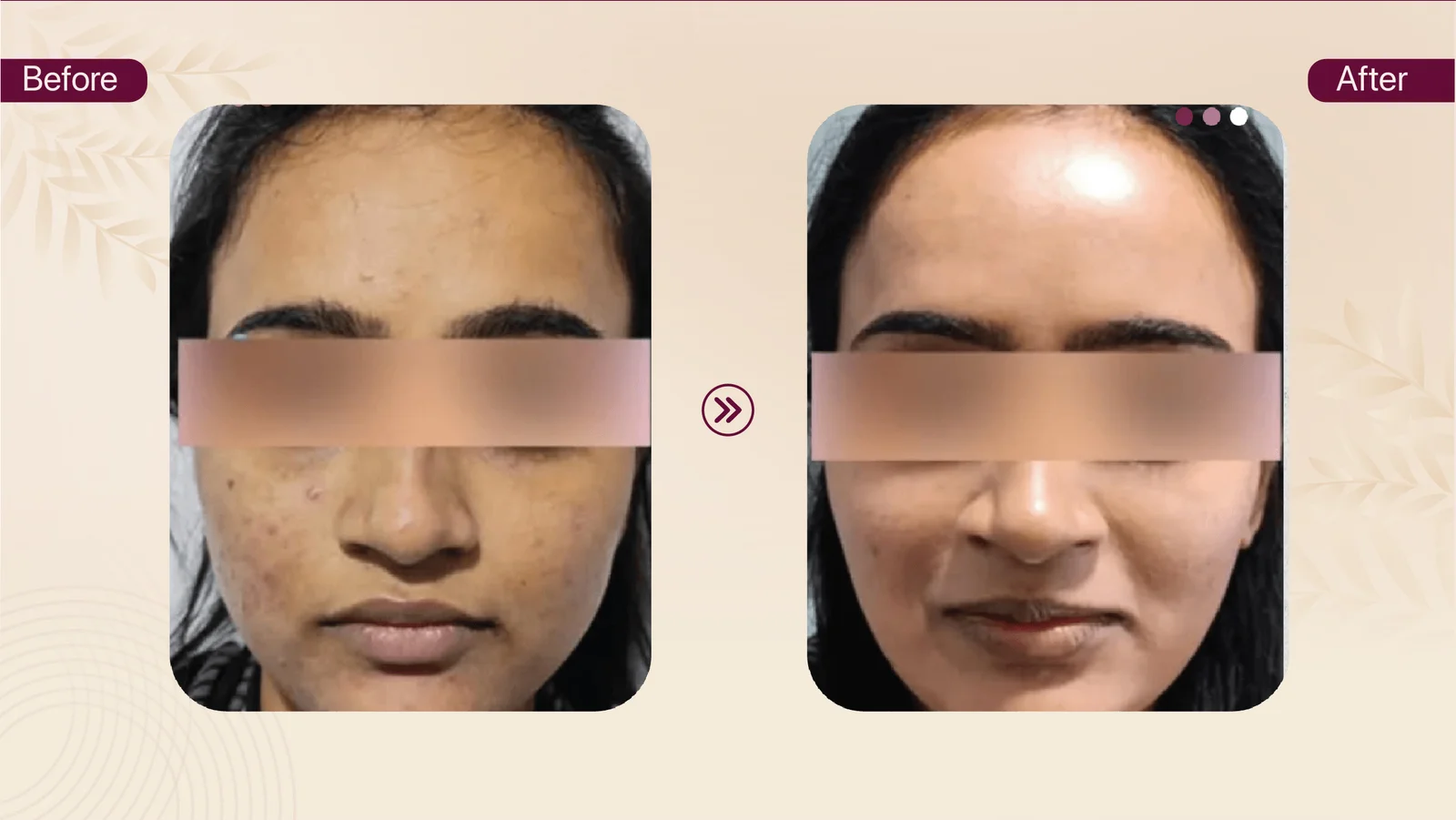
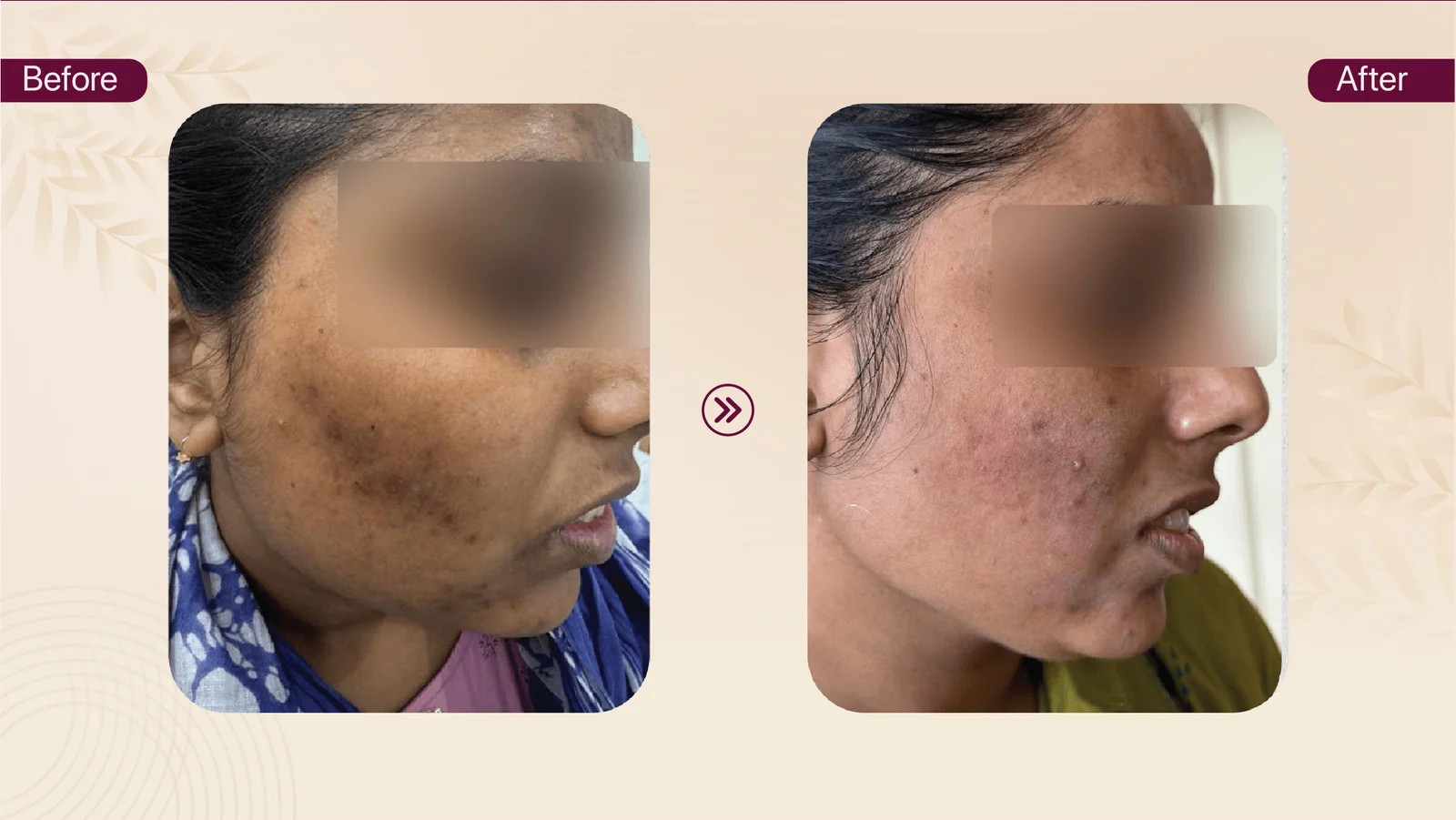
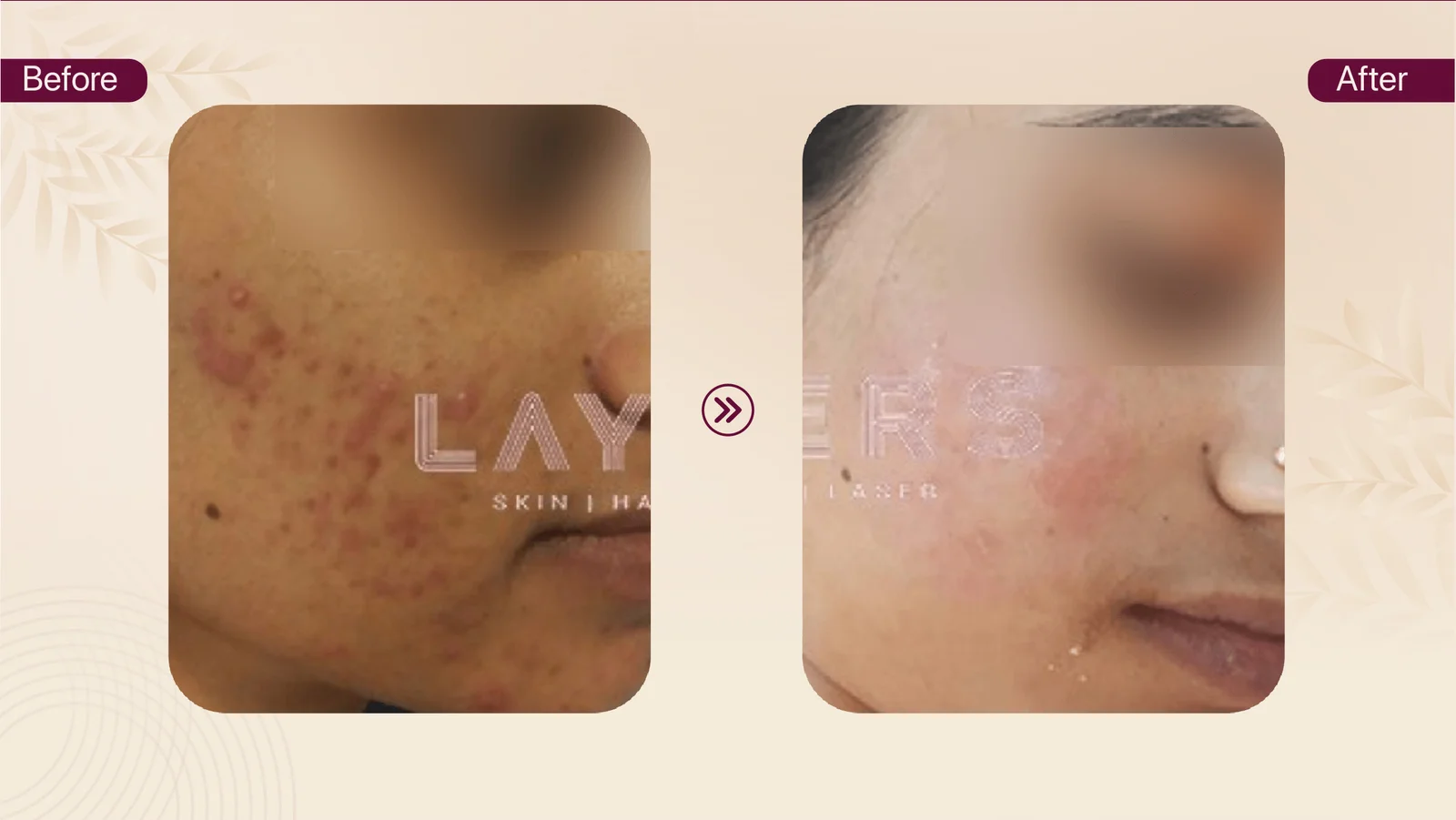
Individual results vary. These photographs show specific cases, not guaranteed outcomes. Original image quality, lighting and angles may differ. Your doctor can explain what may be possible for you.
Original Google excerpts about pigmentation care at Layers. They include other methods and do not identify IPL photofacial treatment.
“I have been taking Q-switch laser treatment for my pigmentation cure. And it is working good. I have started getting results.”
“I took Q-switch laser and HydraFacial sessions, and I can already see improvement.”
Combined Q-switch and Hydrafacial care.
“Had a peel in layers for my pigmentation. Results are really satisfactory”
“I recently visited kakinada layers. so I consult about pigmentation it's very good I got very good results thank you layars”
“Visited here for my pigmentation problem, I found quit good results in 3 sessions hope for more better results”



No. IPL delivers a filtered range of wavelengths, while a laser typically uses a specific wavelength. Both need suitable training and eye protection.
The term is sometimes used broadly. Confirm the device, purpose and procedure instead of assuming the name describes the technology.
Melasma is prone to recurrence and can worsen with heat or irritation. It needs a separate assessment; IPL for sun spots is not automatically appropriate.
The target, natural skin pigment, recent tanning and device all matter. Another treatment may offer a more suitable balance of benefit and risk.
No. Visible vessels, persistent colour, breakouts and eye symptoms need different care. A facial cosmetic procedure does not replace assessment for painful or irritated eyes.
No. A home device intended for hair removal is not a substitute for a clinical photofacial. Do not use it to treat unexplained spots or near the eyes.
The number and spacing depend on the concern, device and response. Agree on a review rather than a guaranteed course length.
Tell the clinic about all recent sun exposure and tanning. Treatment may need to wait because extra skin pigment can absorb more energy and increase risk.
Ask about IPL, alternatives and the care that fits your skin tone and concern.
Prefer a call? +91 9000 572727