
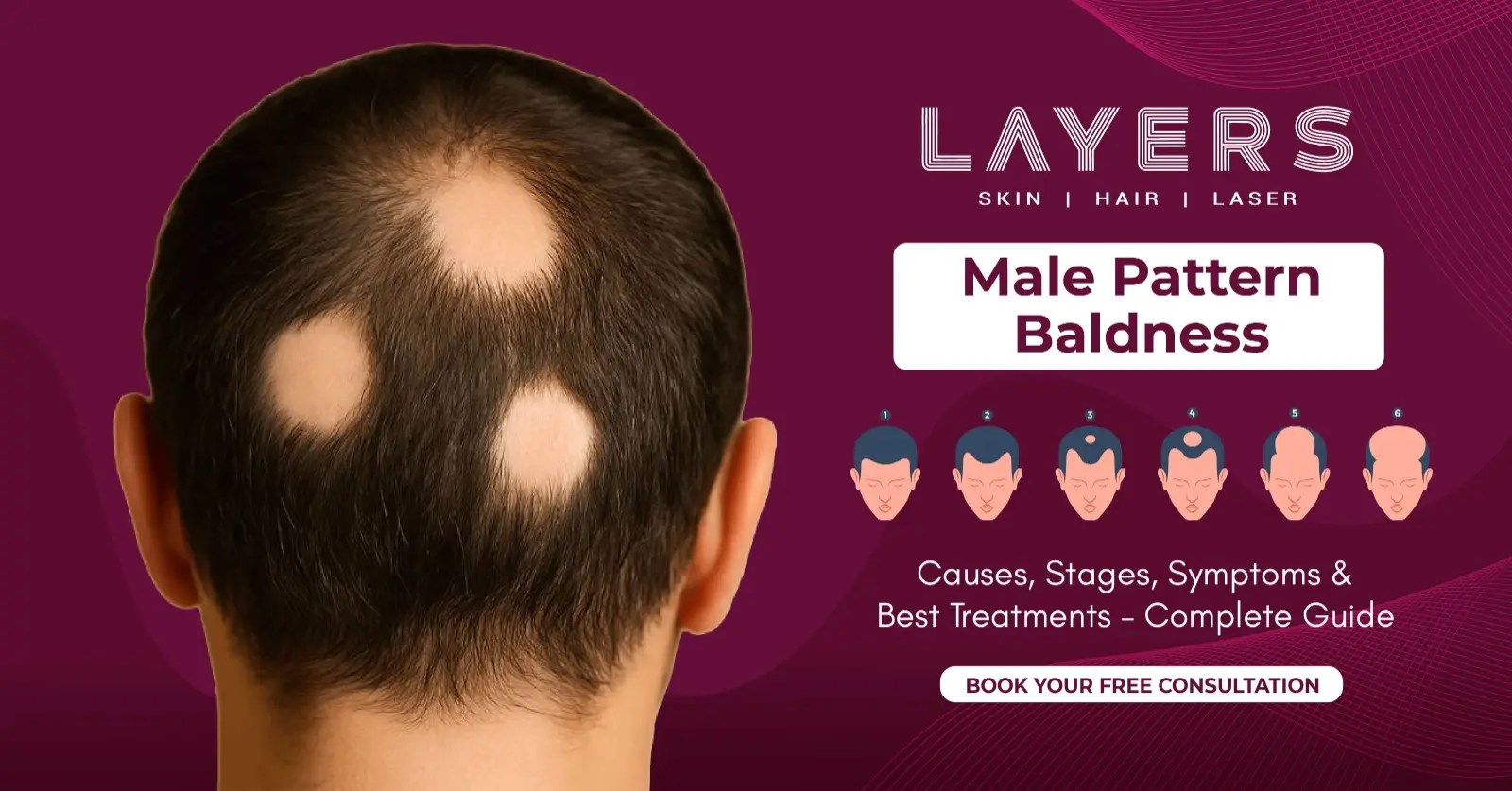
Noticing more hair on your pillow, a receding hairline, or a thinning crown? You’re not alone, male pattern baldness (androgenetic alopecia) affects a majority of men at some point in their lives, and it’s the most common cause of hair loss worldwide. The good news: with the right diagnosis and timely treatment, progression can be slowed, stabilized, or in many cases, reversed.
This guide covers everything you need to know from causes and the Norwood stages to the most effective hair loss treatment for men, including PRP therapy and FUE hair transplant.
Understanding Male Pattern Baldness (Androgenetic Alopecia)
Male pattern baldness is a progressive, genetically influenced condition driven by hormonal sensitivity that gradually reduces hair density, thickness, and scalp coverage over time.
It doesn’t happen overnight. It typically starts subtly mild recession at the temples, thinning at the crown, or reduced hair volume. Over time, hair follicles undergo miniaturization, producing thinner, shorter strands until visible growth significantly declines. Without timely intervention, it continues to advance in a fairly predictable pattern.
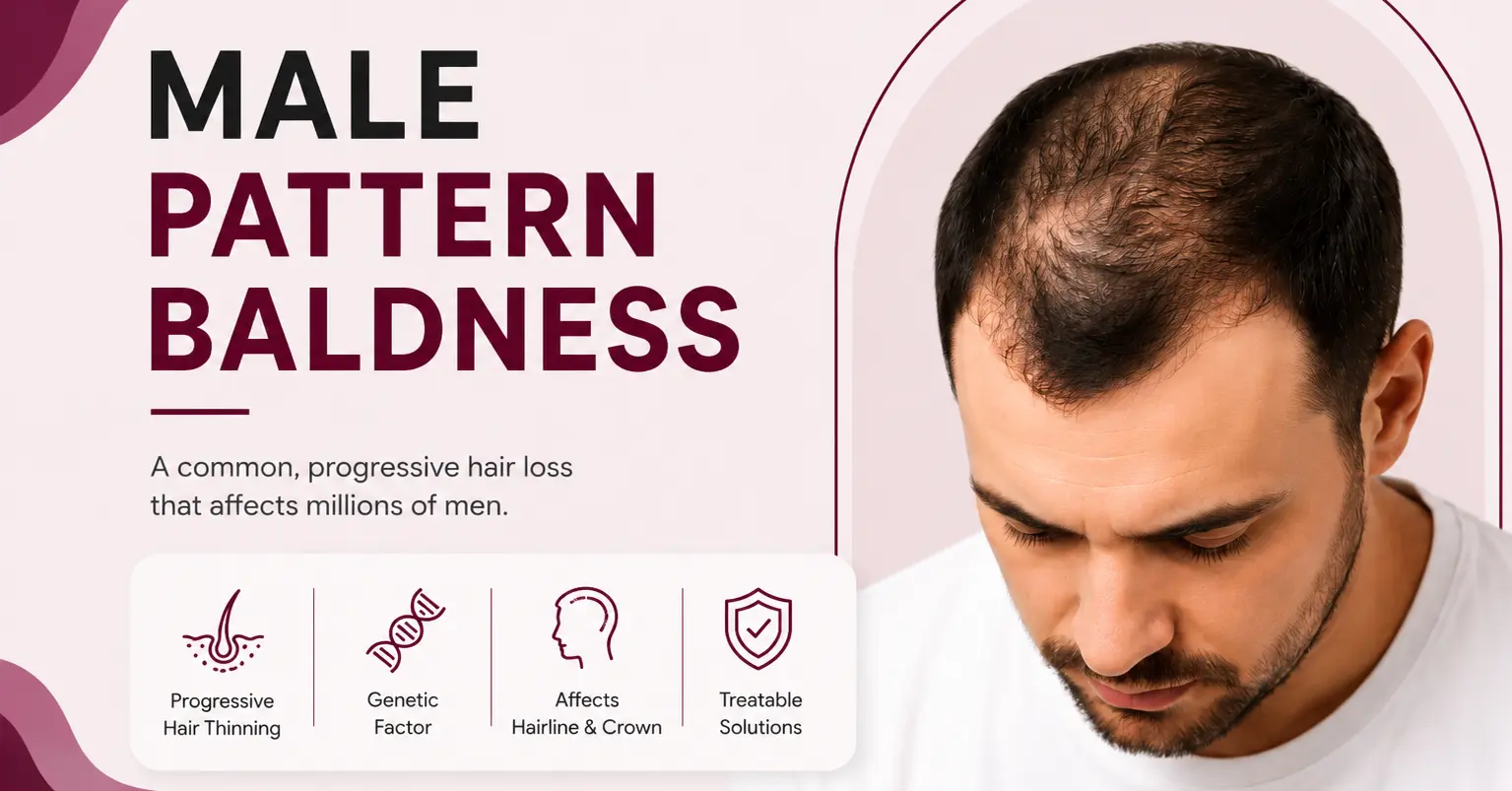
What Causes Male Pattern Baldness?
The root cause of male pattern baldness is genetic sensitivity to DHT (dihydrotestosterone), a hormone derived from testosterone.
Genetic Predisposition Genetics determine how hair follicles respond to hormonal activity. If close family members experienced hair loss, your likelihood increases substantially the genetic influence often follows an X-chromosome inheritance pattern, though multiple genes contribute to overall risk.
DHT and Follicle Miniaturization DHT binds to androgen receptors in scalp follicles, particularly in the frontal and crown regions, leading to:
- A shortened anagen (growth) phase
- A prolonged telogen (resting) phase
- Shrinking follicle size and reduced hair shaft diameter
- Gradual decline in visible hair production
Follicles don’t die immediately they become progressively weaker and smaller with each growth cycle.
Age-Related Hormonal Changes Cumulative DHT exposure accelerates follicular miniaturization with age. Hair density naturally declines over time, but genetic baldness significantly intensifies this process.
Contributing Lifestyle Factors While not primary causes, these can accelerate progression:
- Chronic stress
- Smoking
- Poor nutritional intake
- Inflammatory scalp conditions
- Metabolic disorders such as hypertension or diabetes
Is It Normal Hair Fall or Male Pattern Baldness?
Losing 50–100 hairs a day is normal. Male pattern baldness is different it’s a patterned, progressive loss concentrated at the temples and crown, not a uniform shedding across the scalp. If you notice a receding hairline, a widening bald spot, or hair that’s growing back visibly thinner over months, it’s likely androgenetic alopecia rather than temporary shedding from stress, illness, or nutritional deficiency and it’s worth a professional diagnosis to confirm.
Male Pattern Baldness Symptoms
Early Symptoms
- Receding hairline forming an “M” shape
- Mild thinning at the temples
- Slight crown visibility under bright light
- Increased hair shedding while washing
Moderate Symptoms
- Noticeable crown thinning
- Wider frontal recession
- Hair appearing finer and more brittle
- Reduced overall density
Advanced Symptoms
- Merging of frontal and crown bald areas
- Prominent scalp exposure
- Only a horseshoe-shaped fringe remaining
Some individuals also experience mild scalp sensitivity or irritation.
Male Pattern Baldness Stages – The Norwood Scale
The Norwood-Hamilton Scale classifies progression into seven stages:
| Stage | Description |
|---|---|
| Stage 1 | No significant hair loss |
| Stage 2 | Mild recession at the temples |
| Stage 3 | Deeper temple recession forming a distinct “M” shape |
| Stage 4 | Visible crown thinning begins |
| Stage 5 | Frontal and crown areas enlarge but remain separated |
| Stage 6 | Bald areas merge |
| Stage 7 | Extensive loss with only lateral and occipital hair remaining |
Optimal treatment outcomes typically occur during Stages 2–3, when follicles are weakened but not yet fully inactive.
Types of Male Pattern Baldness
- Classic Norwood Pattern – Frontal recession combined with crown thinning
- Diffuse Thinning – Uniform thinning across the scalp without distinct bald spots
- Vertex Balding – Predominantly crown-centered hair loss
- Frontal Dominant Recession – Hairline loss with minimal crown involvement
Accurate diagnosis of your specific pattern determines the most effective treatment strategy.
How Is Male Pattern Baldness Diagnosed?
A hair specialist typically diagnoses male pattern baldness through:
- Scalp examination to assess hairline recession, crown thinning, and overall density
- Norwood stage classification to determine progression
- Trichoscopy (digital scalp analysis) to examine follicle miniaturization up close
- Pull test to evaluate active shedding
- Blood tests in select cases, to rule out thyroid or nutritional causes of hair loss
A precise diagnosis ensures your treatment plan matches your actual stage and cause of hair loss, rather than a generic, one-size-fits-all approach.
How to Prevent and Stop Male Pattern Baldness
While genetic predisposition can’t be changed, progression can be significantly slowed and in early stages, partially reversed through timely intervention.
Topical Minoxidil Enhances blood circulation to follicles, extends the growth phase, and improves density with consistent twice-daily application.
Oral Finasteride Reduces DHT levels by up to 60% by inhibiting the 5-alpha reductase enzyme, slowing miniaturization with high stabilization rates.
Dutasteride A more potent DHT blocker offering higher regrowth potential, used under medical supervision.
Nutritional Optimization Adequate intake of biotin, iron, zinc, protein, and vitamin D supports follicle strength and overall hair health.
Lifestyle Modification Managing stress, improving sleep quality, quitting smoking, and maintaining scalp hygiene all contribute to long-term hair preservation.
Combination therapy, medical plus lifestyle consistently shows higher effectiveness in early-stage cases than any single approach alone.
Male Pattern Baldness Treatment Options
When medical therapy alone isn’t enough to restore visible density, advanced clinical treatments deliver measurable improvement.
Platelet-Rich Plasma (PRP) Therapy PRP uses concentrated growth factors derived from your own blood to nourish follicles. Benefits include enhanced follicle nourishment, increased vascular supply, improved thickness, and reduced shedding — particularly effective in early to moderate stages.
FUE Hair Transplant – Permanent Restoration Follicular Unit Extraction (FUE) offers a permanent solution by redistributing DHT-resistant follicles from the donor zone to thinning areas, with precision implantation and natural hairline design. Transplanted follicles remain resistant to DHT and continue growing for life. Learn more about FUE vs FUT hair transplant.
FUT Hair Transplant Follicular Unit Transplantation (FUT) involves strip harvesting for larger graft requirements and may be recommended for more advanced Norwood stages.
| Treatment | Best For | Results Timeline |
|---|---|---|
| Minoxidil/Finasteride | Stages 1–3, prevention | 3–6 months |
| PRP Therapy | Early-moderate thinning | 3–6 months |
| FUE/FUT Transplant | Stage 3+ with visible balding | Permanent, visible in 8–12 months |
Cost of Male Pattern Baldness Treatment
Treatment cost varies significantly depending on the approach:
- Medical therapy (minoxidil, finasteride) is the most affordable, ongoing monthly investment
- PRP therapy is priced per session, with a recommended course of multiple sessions for visible results
- FUE/FUT hair transplant cost depends on the number of grafts required, donor area quality, and extent of baldness
At Layers Clinics, pricing is transparent and provided only after a personalized consultation and scalp assessment since accurate cost estimates depend entirely on your specific stage and treatment goals.
Male Pattern Baldness in Females
Women experience a related condition known as female pattern hair loss (FPHL), characterized by central widening of the part line and diffuse thinning rather than frontal recession. Hormonal fluctuations, menopause, and genetic sensitivity all contribute. Treatment typically includes topical minoxidil and hormonal modulation therapy.
Can Male Pattern Baldness Be Reversed?
Complete reversal in advanced stages is unlikely through medication alone. However:
- Early intervention can regrow hair in 40–60% of cases
- Stabilization occurs in up to 90% of cases with combination therapy
- Hair transplantation provides permanent cosmetic restoration regardless of stage
Prompt action significantly improves your odds of successful outcomes.
Long-Term Hair Maintenance Strategy
Sustained results require ongoing care, not a one-time fix:
- Routine scalp evaluation
- Continued medication adherence
- Periodic PRP sessions, if indicated
- Balanced nutrition
- Hormonal monitoring where relevant
When Should You Consult a Doctor or Hair Specialist?
Many men wait too long before seeking medical advice, early consultation dramatically improves treatment success. Consult a specialist if you notice:
- Receding hairline gradually moving backward or forming an “M” shape
- Crown thinning with a visible bald spot developing at the top of the scalp
- Increased hair shedding — excessive strands during washing, combing, or on your pillow
- Reduced hair thickness, with hair appearing finer, weaker, or losing volume
- Strong family history of early baldness
- Sudden acceleration in hair loss, which may need immediate assessment to rule out other causes
Early consultation allows doctors to stabilize follicle miniaturization, prevent permanent follicle shrinkage, recommend appropriate therapy, and determine whether a transplant is necessary. Delaying consultation reduces the treatment options available to you.
Why Choose Layers Clinics for Male Pattern Baldness Treatment
Choosing the right clinic is just as important as choosing the right treatment. At Layers Clinics, we deliver evidence-based, personalized hair restoration solutions matched to your exact stage of hair loss.
- Advanced Diagnosis – Comprehensive scalp analysis with Norwood stage assessment
- Customized Treatment Plans – Based on hair loss stage, follicle strength, donor area quality, and hormonal sensitivity
- Expertise in FUE Hair Transplant – Natural hairline design, high graft survival, even density, minimal scarring
- Non-Surgical Solutions – PRP therapy, DHT management, and medical-grade treatments for early-stage control
- Ethical & Transparent Approach – Surgery recommended only when truly necessary
- Long-Term Follow-Up Care – Structured monitoring to maintain results and prevent further loss
Our goal is simple: natural density, permanent outcomes, and restored confidence.
Frequently Asked Questions
What is male pattern baldness?
Male pattern baldness, also called androgenetic alopecia, is a common form of progressive hair loss caused mainly by genetic sensitivity to DHT. It typically begins with a receding hairline, temple thinning, or crown thinning and can gradually progress if left untreated.
What are the early signs of male pattern baldness?
Early signs include a receding hairline, an increasing M-shaped hairline, thinning at the temples, reduced hair density, or greater visibility of the scalp around the crown. Gradual thinning over months or years is more typical of male pattern baldness than sudden shedding.
Can male pattern baldness be stopped or slowed?
Yes. Early diagnosis and medically supervised treatment can help slow or stabilize male pattern baldness. Depending on the individual’s condition, treatment may include topical or oral medications, PRP therapy, lifestyle and nutritional measures, or hair transplantation when appropriate.
At what age does male pattern baldness start?
Male pattern baldness can begin after puberty and may become noticeable during the late teens, 20s, or 30s. The age of onset and rate of progression vary considerably because genetics, hormonal sensitivity, and other factors differ between individuals.
Is male pattern baldness reversible without a hair transplant?
Early-stage male pattern baldness may be partially improved or stabilized with appropriate medical treatment. However, advanced areas with significant follicle loss generally cannot be fully restored with medication alone. A hair transplant may be considered when permanent cosmetic restoration is appropriate.
Is FUE hair transplant permanent for male pattern baldness?
FUE can provide long-lasting and generally permanent restoration of transplanted hair follicles because donor follicles are selected from areas that are relatively resistant to DHT. However, existing non-transplanted hair can continue to thin, so ongoing medical management may still be recommended.
How long does PRP take to show results for hair loss?
PRP results are gradual and vary between individuals. Some people may notice reduced shedding or improved hair quality within a few months, while visible improvement commonly requires approximately 3–6 months and a treatment course recommended according to the individual’s scalp and hair condition.
When should I see a hair specialist for male pattern baldness?
You should consider a professional evaluation if you notice progressive hairline recession, crown thinning, increasing shedding, reduced hair density, or a strong family history of early hair loss. Early assessment can help identify the cause and provide more treatment options.
Key Takeaway
Male pattern baldness (androgenetic alopecia) is a progressive form of hair loss caused mainly by genetic sensitivity to DHT, often leading to a receding hairline, crown thinning, and gradual follicle miniaturization. Early diagnosis and treatment can help slow progression and preserve existing hair. Depending on the stage, treatment may include minoxidil, finasteride or other medically supervised therapies, PRP, or FUE hair transplantation for permanent restoration of suitable areas.
Conclusion
Male pattern baldness is a progressive condition rooted in genetic and hormonal factors but it’s not something you have to simply accept. Early recognition and medically supervised intervention dramatically improve stabilization and regrowth outcomes. Modern treatments, including DHT suppression, PRP therapy, and advanced FUE hair transplantation, provide effective solutions at every stage.
Permanent restoration is achievable with structured clinical management and timely action, the sooner you consult a specialist, the more options you’ll have.
