
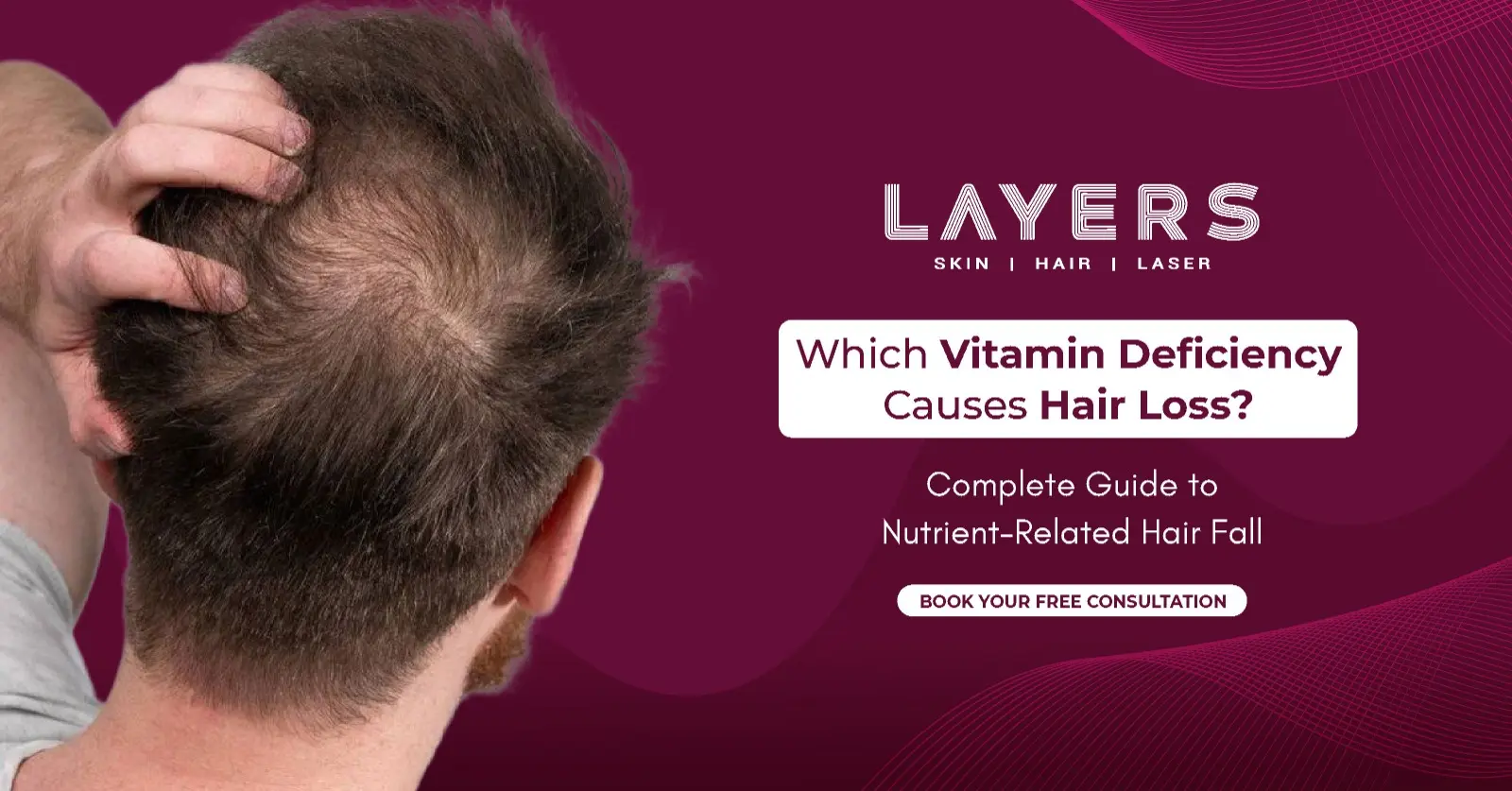
Hair loss can have many causes, including genetics, hormonal changes, illness, stress, scalp conditions, and nutritional deficiencies. Among the nutrients associated with hair health, vitamin D, vitamin B12, folate, and biotin may be relevant when a person has a confirmed deficiency. Minerals such as iron and zinc can also be important for normal hair growth. Many patients often ask, “Which Vitamin Deficiency Causes Hair Loss?”
Short answer: Vitamin D, vitamin B12, folate, and biotin deficiencies may be associated with hair loss, but nutritional deficiency is only one possible cause. Iron deficiency is also an important consideration, particularly in people with diffuse hair shedding. The appropriate approach is to identify the underlying cause rather than taking supplements without testing.
At Layers Clinics, dermatologists can assess persistent hair loss and determine whether nutritional, hormonal, genetic, scalp-related, or other factors may be contributing.
Which Vitamin Deficiency Causes Hair Loss?
Hair follicles require adequate nutrition because they are highly active tissues. When the body lacks certain essential nutrients, normal hair growth may be affected.
| Nutrient | Type | Possible Connection With Hair Loss | Common Food Sources |
|---|---|---|---|
| Vitamin D | Vitamin | Low levels have been associated with some hair-loss conditions | Fatty fish, fortified foods, egg yolk |
| Vitamin B12 | Vitamin | Deficiency can affect normal cell and blood-cell function and may coexist with hair shedding | Meat, fish, eggs, dairy, fortified foods |
| Biotin (B7) | Vitamin | Deficiency can cause hair thinning, although true deficiency is uncommon | Eggs, nuts, seeds, legumes |
| Folate (B9) | Vitamin | Deficiency affects cell division and may contribute to hair changes | Leafy greens, beans, citrus fruits |
| Iron | Mineral | Iron deficiency is associated with diffuse hair shedding in some people | Meat, lentils, beans, leafy greens |
| Zinc | Mineral | Deficiency can affect normal hair and skin function | Meat, dairy, seeds, legumes |
A nutrient deficiency should ideally be confirmed through appropriate clinical assessment and testing rather than assumed from hair loss alone.
Can Vitamin Deficiency Really Cause Hair Loss?
Yes, certain nutritional deficiencies can contribute to hair loss, but they are not the cause of every case.
Nutritional deficiency may interfere with normal hair follicle activity and the hair-growth cycle. However, common conditions such as androgenetic alopecia, telogen effluvium, thyroid disorders, hormonal changes, and scalp diseases can also cause hair loss.
This is why identifying the actual cause is more important than simply taking a hair supplement.
Vitamin D Deficiency and Hair Loss
Vitamin D plays an important role in several biological processes, including those involved in skin and hair follicle function. Low vitamin D levels have been reported in association with certain hair-loss disorders.
Possible signs of vitamin D deficiency can include:
- Fatigue
- Muscle or bone-related symptoms
- Low vitamin D on blood testing
- Hair shedding in some individuals
Vitamin D can be obtained from sunlight exposure, dietary sources, and fortified foods. Supplementation should be based on individual requirements and medical advice.
Biotin Deficiency and Hair Fall
Biotin, or vitamin B7, contributes to normal metabolism and keratin-related processes. However, true biotin deficiency is uncommon, and taking high-dose biotin does not automatically improve hair growth when a person is not deficient.
Biotin-rich foods include:
- Eggs
- Nuts and seeds
- Legumes
- Whole grains
People experiencing unexplained hair loss should not assume that biotin deficiency is the cause.
Vitamin B12 Deficiency and Hair Thinning
Vitamin B12 is important for red blood-cell formation and normal neurological function. A confirmed B12 deficiency can affect overall health and may be considered when evaluating unexplained hair changes.
B12 is naturally found mainly in:
- Meat
- Fish
- Eggs
- Milk and dairy products
People following vegetarian or vegan diets may need particular attention to adequate B12 intake because reliable dietary sources are more limited.
Folate Deficiency and Hair Loss
Folate, or vitamin B9, is required for DNA synthesis and normal cell division. Because hair follicles contain rapidly dividing cells, adequate folate is important for normal tissue function.
Food sources include:
- Leafy green vegetables
- Beans and lentils
- Citrus fruits
- Fortified grains
A confirmed deficiency should be treated according to medical advice.
Iron Deficiency and Hair Loss
Iron is a mineral, not a vitamin, but it deserves special attention when investigating hair loss.
Iron deficiency can occur with or without anemia and may be associated with diffuse hair shedding in some people. The risk can be higher in people with heavy menstrual bleeding, certain dietary patterns, pregnancy, or conditions that affect iron absorption.
Iron-rich foods include:
- Meat
- Lentils
- Beans
- Leafy green vegetables
- Seeds
Iron supplements should not be taken routinely without appropriate assessment because excess iron can also be harmful.
What About Vitamin A and Vitamin E?
Vitamin A and vitamin E are important nutrients, but more is not necessarily better.
Vitamin A supports normal skin and tissue function, while vitamin E acts as an antioxidant. Both deficiency and excessive intake of certain nutrients can create health problems.
In particular, excessive vitamin A intake has been associated with hair loss. Therefore, taking high-dose supplements without medical advice is not recommended.
Zinc and Hair Loss
Zinc is another important mineral rather than a vitamin. It contributes to normal cell growth, tissue repair, and other biological processes.
Zinc deficiency can affect hair and skin health, but supplementation should generally be considered when deficiency or inadequate intake is suspected or confirmed.
Food sources include:
- Meat
- Dairy
- Seeds
- Nuts
- Legumes
How Do You Know if Hair Loss Is Caused by a Nutritional Deficiency?
Hair loss alone cannot reliably tell you which nutrient is deficient.
A dermatologist may consider:
- Pattern and duration of hair loss
- Recent illness or major stress
- Diet and nutritional history
- Menstrual or pregnancy history where relevant
- Medications
- Family history
- Scalp examination
- Appropriate blood tests
The tests required depend on the individual’s symptoms and clinical history. A doctor may consider tests for nutrients such as iron status, vitamin B12, folate, or vitamin D when clinically appropriate.
Best Diet for Healthy Hair
There is no single food that prevents all types of hair loss. A balanced diet should provide adequate:
- Protein for hair structure
- Iron for normal physiological functions
- Zinc for cell growth and tissue maintenance
- Vitamin D
- Vitamin B12
- Folate
- Healthy fats
- A variety of fruits and vegetables
Protein-rich foods such as eggs, dairy, fish, legumes, and other appropriate sources can be included as part of a balanced diet.
Supplements vs Food Sources: Which Is Better?
Food should generally be the first source of nutrients when possible.
Supplements can be useful when a deficiency, increased requirement, restricted diet, or absorption problem has been identified. However, taking multiple high-dose supplements without medical advice may be unnecessary and can sometimes cause harm.
For example, excessive intake of certain nutrients, including vitamin A, can contribute to health problems and hair shedding.
When Should You See a Dermatologist for Hair Loss?
Consider professional evaluation if you experience:
- Sudden or excessive shedding
- Rapidly progressing thinning
- Visible scalp widening
- Patchy hair loss
- Receding hairline
- Scalp itching, scaling, or inflammation
- Hair loss that continues for several months
- Hair loss despite improving your diet
Hair loss can have multiple causes, so treating a suspected vitamin deficiency without investigating other possibilities may delay appropriate treatment.
Frequently Asked Questions
Which vitamin deficiency causes the most hair loss?
There is no single vitamin deficiency that causes the most hair loss in everyone. Vitamin D, B12, folate, and biotin deficiencies may be relevant in selected patients, while iron deficiency is also an important nutritional factor to evaluate in some cases.
Can vitamin D deficiency cause hair loss?
Low vitamin D levels have been associated with some hair-loss conditions. However, an association does not mean that vitamin D deficiency is responsible for every case of hair loss. Testing and clinical assessment can help determine whether it is relevant.
Does B12 deficiency cause hair thinning?
A confirmed vitamin B12 deficiency can affect normal cell and blood-cell function and may be considered when evaluating unexplained hair changes. Treating an actual deficiency is important for overall health.
Does biotin stop hair loss?
Biotin can help correct hair changes caused by true biotin deficiency. However, true deficiency is uncommon, and high-dose biotin supplementation is not proven to improve hair growth in people who are not deficient.
Can iron deficiency cause hair loss?
Yes. Iron deficiency may be associated with diffuse hair shedding in some people. A dermatologist or physician can determine whether iron testing is appropriate based on your symptoms and medical history.
Should I take vitamins for hair loss?
Not automatically. Hair loss has many possible causes, and taking supplements without identifying a deficiency may not solve the problem. A healthcare professional can recommend testing and supplementation when appropriate.
What blood tests are done for hair loss?
There is no single blood-test panel suitable for everyone. Depending on the clinical situation, a doctor may consider tests related to iron status, vitamin B12, folate, vitamin D, thyroid function, or other factors.
How long does hair take to recover after correcting a deficiency?
Hair growth is a gradual process. Even after a nutritional deficiency is corrected, visible improvement may take time because hair follicles need to progress through their normal growth cycle. The timeline varies depending on the cause and severity of hair loss.
Key Takeaway
Vitamin deficiency can contribute to hair loss, but it is only one possible cause. Vitamin D, B12, folate, and biotin may be relevant when deficient, while iron and zinc are important minerals that may also affect hair health.
The best approach is to identify the underlying cause through a proper dermatological assessment rather than relying on supplements alone. If your hair loss is persistent, sudden, patchy, or worsening, consult a dermatologist for an appropriate evaluation.
At Layers Clinics, dermatologists can assess hair and scalp concerns and recommend an individualized treatment approach based on the underlying cause.
