

Loss of hair does not normally begin with panic, it begins with doubt.
You can see some additional strands on your pillow. Your hair is a little thinner, as you tie it. Perhaps your head is a little more exposed than before, in the sunshine. It is so minor it can go unnoticed, yet so annoying as to be a nuisance.
Here the majority of the people stop–but do not take action.
They do not want professional assistance and test things. New shampoos, oils, supplements,–Hope something. But weeks melt into months, and the issue insidiously advances.
By the time they think of visiting a dermatologist for hair loss, the situation has already progressed too far to the first stage of the problem, when it is easier and quicker to treat.
At Layers Clinics the most common error patients make is highlighted by the dermatologists as this delay. Hair loss is not a cosmetic issue, it is also a clinical indicator which must be addressed in time.
Understanding Hair Loss: It’s a Signal, Not the Problem
Among the most significant changes of thought is the following:
It is not a problem of the loss of hair but of a symptom. A dermatologist for hair loss is interested in finding out the reason, rather than the amount of your hair loss.
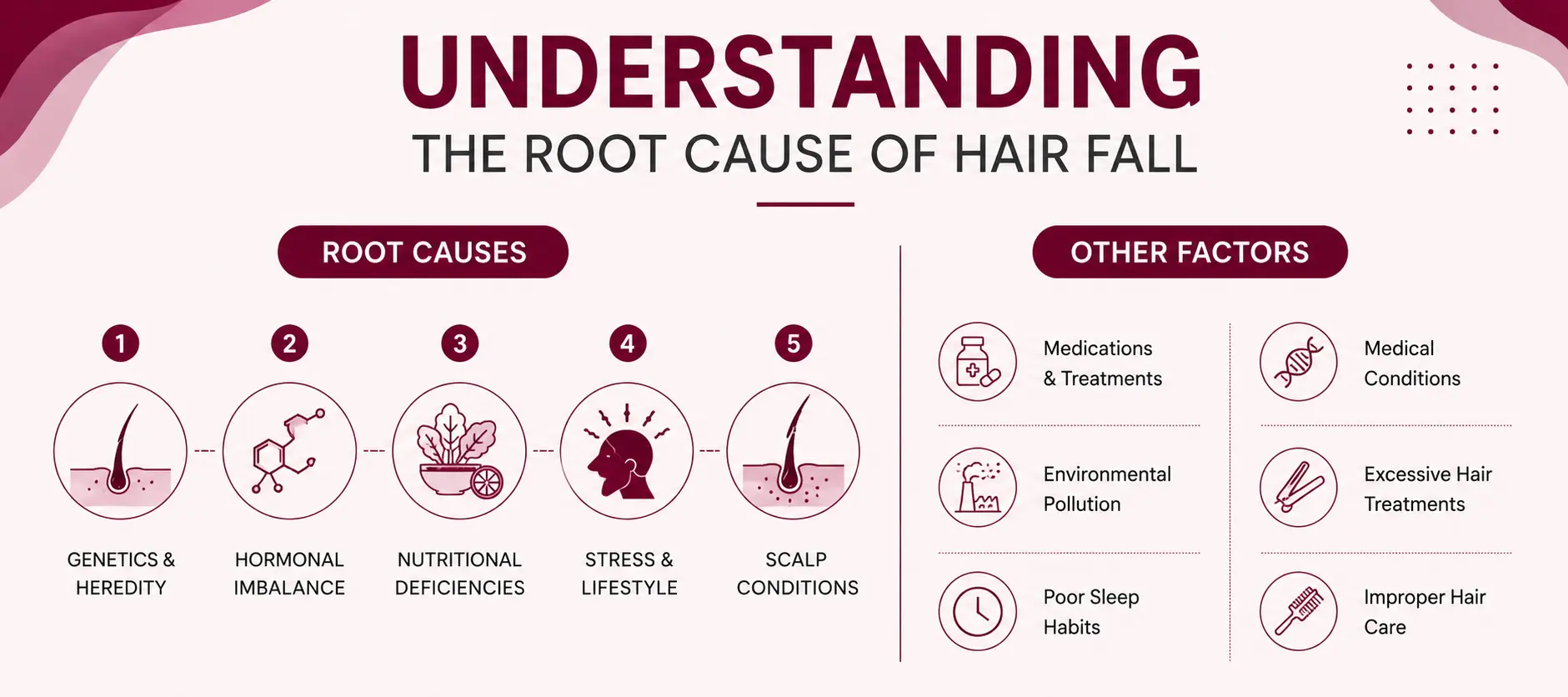
The consultations at Layers Clinics are aimed at discovering the underlying triggers that include:
- Hormonal (thyroid, PCOS) problems.
- Malnutrition (iron, vitamin D, B12 deficiencies)
- Prolonged stress or post illness recovery.
- Genetic predisposition
- Scalp ailments such as dandruff, inflammation or infection.
The best products will not have long-lasting results in the absence of efforts to do something about these causes.
The 6–8 Week Rule: When Waiting Becomes Risky
The loss of hair may be temporary–but not permanent.
A basic standard of dermatologists:
You need to see a dermatologist in case your hair fall persists after 6 -8 weeks.
There are cycles of hair follicles. When this cycle is too long, the follicles grow weaker, shrink and no longer produce healthy hair.
The patients are usually attended to by specialists after a few months and by this time, the condition is in need of an intensive treatment as compared to before. The time-span that one can act within can be very different.
Early Signs You Shouldn’t Ignore
Loss of hair does not always manifest itself in a dramatic manner. The most significant indications are sometimes so minor and can be ignored.
- Gradual Loss of Volume
Overall, your hair is a little thinner, although shedding does not appear to be excessive. - Increased Scalp Visibility
An enlarged partition or scalp under light means that it is thinning early. - Sudden Increase in Hair Fall
In case she sheds spikes following stress, sickness, or other lifestyle modifications, it can be a sign of telogen effluvium. - Changes in Scalp Health
Scalp imbalance may manifest itself in itching, flaking, redness, or sensitivity and should be taken care of by a doctor. - Family History of Hair Loss
In case pattern baldness is a family history, hair loss can be slowed down by early enlistment of the services of a dermatologist.
Dermatologists underline that such early signs can be identified to treat them more effectively and more quickly.
Why Seeing a Dermatologist for Hair Loss Matters
Without the knowledge of the reason, it can be frustrating to have tried several products.
A hair loss dermatologist adds order and organization to the procedure. it normally involves:
Diagnosis
Comprehensive scalp and hair pattern analyses.
Root Cause Evaluation
Hormonal tests and blood to determine internal triggers.
Personalized Treatment Plan
Personalized treatment, according to your condition- not prescriptions.
This is a focused strategy, which eradicates guesswork, and enhances treatment outcomes.
Common Causes of Hair Loss Identified by Dermatologists
There are various causes of hair loss and it is important to determine the specific cause of the loss.
Genetic Hair Loss
This is also referred to as androgenetic alopecia and is characterized by progressive thinning, which needs long term treatment.
Stress-Induced Hair Loss
Hair follicles may enter a resting period due to physical or emotional stress and excessive shedding may happen.
Nutritional Deficiencies
Hair follicles are weakened due to low concentration of iron, protein or vitamin essentials.
Hormonal Imbalances
Such disorders as PCOS or thyroid disorders interfere with the natural process of hair growth.
Scalp Disorders
Hair can be directly affected by dandruff, fungal infections and inflammation.
In the case of Layers Clinics, dermatologists aim at discovering these causes and subsequently prescribing a treatment.
Advanced Treatment Options in 2026
The treatment of hair loss has greatly changed. Modern-day dermatologists provide evidence-based and advanced solutions.
Medical Treatments
Topical and oral drugs to help control hair loss and help it grow.
PRP (Platelet-Rich Plasma) Therapy
A non-surgical procedure, activating your own plasma, to stimulate hair follicles.
Scalp Treatments
Enhance scalp condition, decrease inflammation and aid in hair development.
Lifestyle & Nutritional Guidance
Since internal health is important towards recovery of hair.
Treatments at Layers Clinics are usually used to approach the problem in the long term by combining the intervention to both the cause and the symptoms.
The Cost of Delaying Treatment
There is no hair loss, it develops.
- Hair loss at an early age, the prompt treatment is easier, and more likely to be reversed.
- Severe loss of hair (advanced), long-term treatment, poor growth.
This is the reason why dermatologists would always advise early check up rather than when the baldness or the drastic thinning is apparent.
A Smarter Way to Approach Hair Loss
Rather than becoming emotional and trying numerous products, be organized:
- Consider hair loss as a medical problem and not cosmetic.
- Concentrate on the cause of the problem.
- Early consult professional advice.
Hair loss should not be a final measure to see a dermatologist– it is the best start to a hair loss recovery.
Frequently Asked Questions
When should I see a dermatologist for hair loss?
A dermatologist should be consulted in case of hair fall exceeding 6-8 weeks, abrupt and resulting in visible thinning.
Can hair loss be reversed with treatment?
Yes, there are numerous forms of hair loss that can be reversed in case of early detection and treatment by a dermatologist.
What treatments do dermatologists offer for hair loss?
The cause determines the type of treatment which could be medications, PRP therapy, scalp treatments, and nutritional support.
Conclusion: Why Early Consultation at Layers Clinics Matters
There is no need to guess about hair loss, clarity is required.
At Layers Clinics, the dermatologists are interested in identifying the underlying cause and developing individualized therapy that will provide lasting outcomes. Their philosophy is a combination of medical knowledge, modern therapies, and lifestyle advice to deal with hair loss holistically.
When your hair loss has persisted over several weeks, become noticeable or isn’t responding to simple care, then it is time to take action.
Early consultation with a dermatologist on hair loss can go a long way in ensuring that you recover and avoid long term damages.
Since in the case of hair, early is not only good but necessary.
