
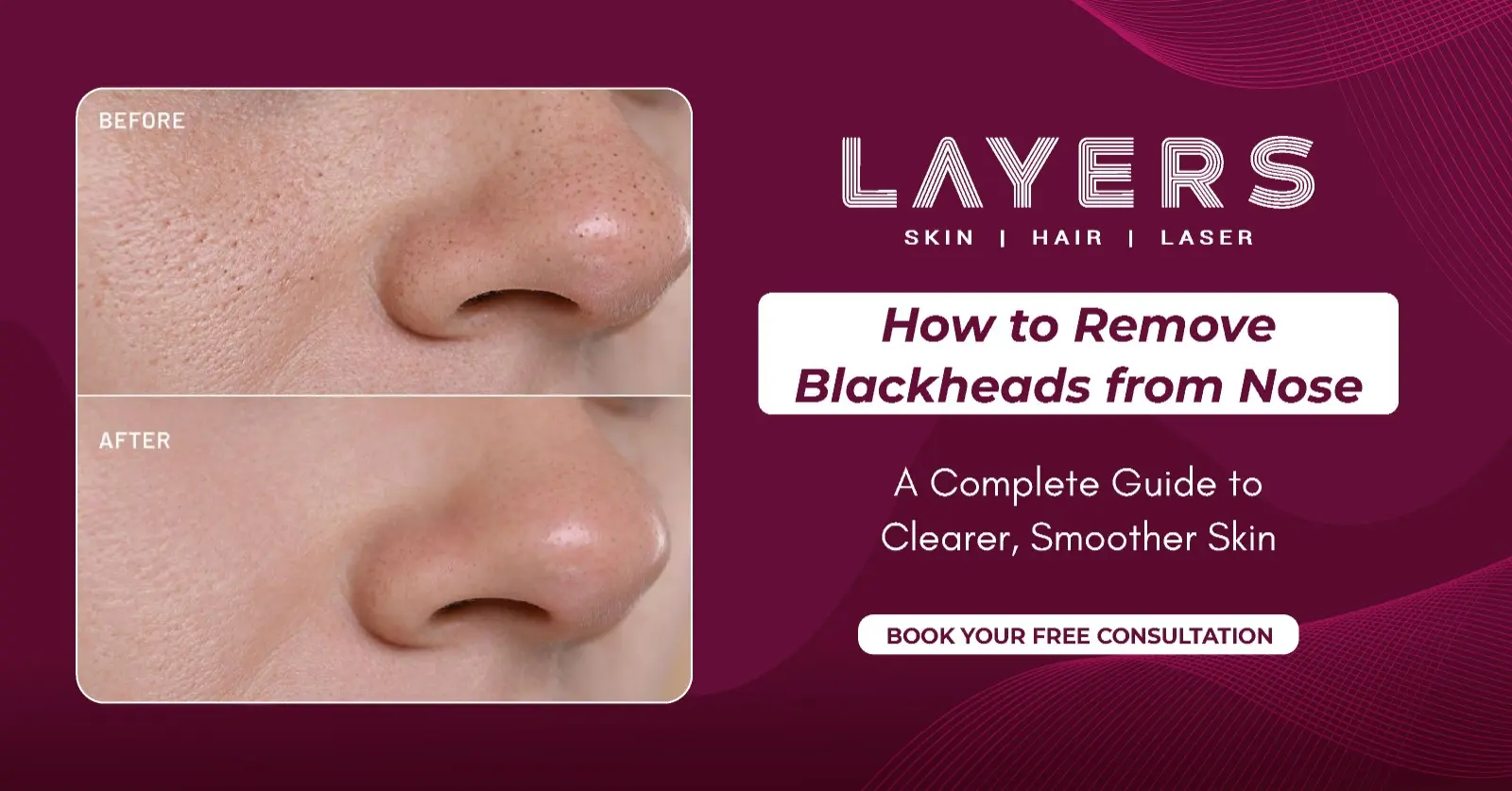
The most effective way to remove blackheads from the nose is to control excess oil, prevent pore blockage, and use proven ingredients such as salicylic acid or dermatologist-recommended retinoids. For stubborn blackheads, professional extraction, chemical peels, or other dermatologist-guided treatments may provide faster improvement.
This guide is for people dealing with blackheads, clogged pores, oily skin, or recurring congestion around the nose and explains How to Remove Blackheads from Nose, what causes them, what you can safely try at home, what to avoid, and when professional treatment may help.
Key Takeaway
Blackheads are clogged pores, not dirt trapped inside the skin. Consistent pore-cleansing skincare can help control them, but blackheads may return when excess oil and dead skin continue to build up.
What Are Blackheads and Why Do They Appear on the Nose?
Blackheads are a type of open comedone. They develop when a hair follicle becomes blocked with sebum and dead skin cells. When the material inside the open pore comes into contact with air, it oxidizes and appears dark.
The nose is particularly prone to blackheads because it forms part of the T-zone, where sebaceous glands can produce more oil.
Common factors include:
- Excess sebum production
- Dead skin-cell buildup
- Clogged pores
- Hormonal changes
- Certain skincare or cosmetic products
- Naturally oily skin
- Inconsistent exfoliation
Blackheads are not caused simply by poor hygiene, so aggressively scrubbing the nose is not the solution.
How to Remove Blackheads from Nose at Home?
You can help reduce nose blackheads at home by using a gentle cleanser, salicylic acid, appropriate moisturization, and dermatologist-recommended retinoids while avoiding squeezing and harsh scrubbing.
Salicylic Acid Cleansers
Salicylic acid is a beta-hydroxy acid (BHA) that dissolves oil and penetrates deep into pores to free the debris responsible for the clog. A gentle cleanser with salicylic acid composition twice a day is one of the most effective tips for removing blackheads from the nose without any professional guidance. Though it doesn’t produce overnight miracles, consistent use over time can reduce blackhead formation.
Clay Masks
If you’re seeking an answer on how to remove blackheads from nose, go for something simple and natural, such as clay masks. Clay-based masks made with kaolin or bentonite are the best options. Apply them once or twice a week, and they will keep your nose area clean and less congested. These are the deep detox options for your skin, but not a permanent cure, though.
Retinoids
Retinol-rich products accelerate cell turnover, meaning they make dead skin cells shed faster and are less likely to accumulate inside pores. Most of the retinol serums are solid options for mild blackheads. At the same time, a dermatologist recommended that retinoids work faster and are potent enough. But continuous guidance will keep the dermatologist active with this use.
What Should You Avoid When Removing Nose Blackheads?
Avoid squeezing, picking, or aggressively scrubbing blackheads because these methods can irritate the skin and potentially cause inflammation or skin damage.
Be particularly cautious with:
Pore Strips
Pore strips can temporarily remove material from the surface of pores, but they do not address the factors responsible for recurring blackheads.
Manual Squeezing
Squeezing with fingernails can cause irritation and may damage surrounding skin. Professional extraction is safer when extraction is actually appropriate.
Harsh Scrubs
Strong physical scrubbing does not necessarily remove the underlying clog and can irritate the skin.
DIY Acid Treatments
Using concentrated acids or unregulated home treatments can cause burns, irritation, or pigmentation. Professional chemical peels should be performed or recommended by appropriately qualified professionals.
What Professional Treatments Can Help Remove Stubborn Blackheads?
Professional treatment may be appropriate when blackheads are persistent, widespread, or not improving with a consistent home skincare routine.
A dermatologist can examine your skin and determine whether the problem is actually blackheads, sebaceous filaments, acne, or another type of pore congestion.
Professional Extraction
- An expert dermatologist is involved, where a sterile comedone extractor removes blackheads in a controlled environment, with even pressure applied.
- Professional extraction is hygienic, precise, and causes negligible damage.
- Provides rapid visible improvement and is a first step in a broader treatment plan
Chemical Peels
- Use acids like glycolic acid or salicylic acid. They dissolve the outermost layer of the skin.
- It’s a deep exfoliation that unclogs pores, smoothens texture, and reveals fresher skin underneath.
- Chemical peels are an exceptional two-sided formula to eliminate them.
- Superficial peels need less downtime and can be repeated every few weeks for cumulative improvement.
Explore how to remove blackheads from nose, and this is the first possible treatment you can go for.
Microdermabrasion
- When topical products don’t show their impact, microdermabrasion is the optimal option
- Researching how to remove blackheads from nose leads you to microdermabrasion, which uses a specialized instrument to gently abrade the skin’s surface, remove dead cells, and unclog pores
- Effective for stubborn blackheads that never respond to topical products
- Stimulates cell renewal and makes the skin brighter and more refined
HydraFacial
- Increasingly popular treatment for the skin prone to blackheads
- Combines cleansing, exfoliation, extraction, and hydration in a single session using vortex suction technology
- The extraction phase is painless and highly effective at eliminating impurities from a deeper level
- A wise choice for people exploring how to remove blackheads from nose without any discomfort
Laser and LED Light Therapy
- Another best option for recurring blackheads associated with excess oil production
- Laser and LED treatments target the sebaceous glands directly, reducing oil production and shrinking pore size over time
- Works beneath the surface by addressing the root cause in priority
Other Dermatologist-Guided Treatments
If recurring blackheads are associated with oily or acne-prone skin, a dermatologist may recommend a broader treatment plan rather than focusing only on removing individual blackheads.
Blackheads vs Sebaceous Filaments: Are They the Same?
No. Blackheads and sebaceous filaments are different, although they can look similar on the nose.
Blackheads are clogged open comedones containing accumulated sebum and dead skin cells.
Sebaceous filaments are normal structures associated with hair follicles and help move sebum toward the skin surface. They are especially visible around the nose and may become more noticeable in oily skin.
Trying to completely remove sebaceous filaments is generally unrealistic because they naturally refill.
If you are unsure which one you have, a dermatologist can identify the condition during a skin examination.
When Should You See a Dermatologist?
Consider professional advice if blackheads are persistent, keep returning despite consistent skincare, occur alongside acne, or are causing significant skin irritation.
A dermatologist can assess:
- Skin type
- Oil production
- Pore congestion
- Acne
- Sebaceous filaments
- Existing skincare products
- Possible irritation or sensitivity
This helps ensure that treatment addresses the underlying skin concern rather than repeatedly removing surface congestion.
How Layers Clinics Can Help With Blackheads
At Layers Clinics, treatment for clogged pores and blackheads can begin with a professional skin assessment.
Depending on the individual’s skin condition, a dermatologist may consider options such as:
- Professional extraction
- Chemical peels
- HydraFacial
- Microdermabrasion
- Acne and oil-control treatments
- Other dermatologist-recommended procedures
The appropriate treatment depends on the individual’s skin type, severity of congestion, sensitivity, and other skin concerns.
The goal is not simply to remove visible blackheads temporarily but to develop a skincare and treatment approach that helps reduce recurring congestion.
How Long Does It Take to Reduce Blackheads?
Blackheads usually require consistent treatment rather than a one-time solution.
| Approach | Typical purpose |
|---|---|
| Salicylic acid | Helps reduce pore congestion |
| Retinoid | Helps prevent clogged pores |
| Clay mask | Helps temporarily control excess oil |
| Professional extraction | Provides immediate removal of selected blackheads |
| Chemical peel | Helps exfoliate and improve congestion |
| HydraFacial | Cleansing, exfoliation, extraction, and hydration |
Results vary depending on the severity of congestion, skin type, treatment consistency, and underlying causes.
Frequently Asked Questions
What is the fastest way to remove blackheads from the nose?
Professional extraction can provide rapid visible removal of individual blackheads, while treatments such as chemical peels or HydraFacial may help improve broader congestion. A dermatologist can determine which option is appropriate for your skin.
Can blackheads be removed permanently?
Blackheads can be controlled effectively, but they may recur because oil production and pore blockage continue naturally. Consistent skincare and appropriate professional treatment can help reduce their frequency.
Is salicylic acid good for blackheads?
Yes. Salicylic acid can help loosen oil and dead skin inside clogged pores and is commonly used for blackhead-prone skin. It should be introduced according to product instructions and your skin’s tolerance.
Which treatment is best for stubborn blackheads?
There is no single best treatment for everyone. Professional extraction, chemical peels, HydraFacial, or other dermatologist-guided treatments may be considered depending on the type and severity of congestion.
Why do blackheads keep coming back on my nose?
Blackheads can recur because the skin continues to produce sebum and dead skin cells that can accumulate inside pores. Hormonal changes, oily skin, certain products, and inconsistent skincare can also contribute.
Are blackheads caused by dirty skin?
No. Blackheads are not simply dirt trapped inside the skin. They form when sebum and dead skin cells clog an open hair follicle and undergo oxidation.
Final Thoughts
If you are searching for how to remove blackheads from your nose, start with a consistent, gentle skincare routine rather than squeezing or aggressively scrubbing the skin.
Salicylic acid and dermatologist-recommended retinoids can help control clogged pores, while professional extraction, chemical peels, HydraFacial, or other treatments may be considered for persistent concerns.
If your blackheads keep returning or you are unsure whether they are actually blackheads or sebaceous filaments, a dermatologist can evaluate your skin and recommend an appropriate treatment plan.
Last Updated: August 2026
