
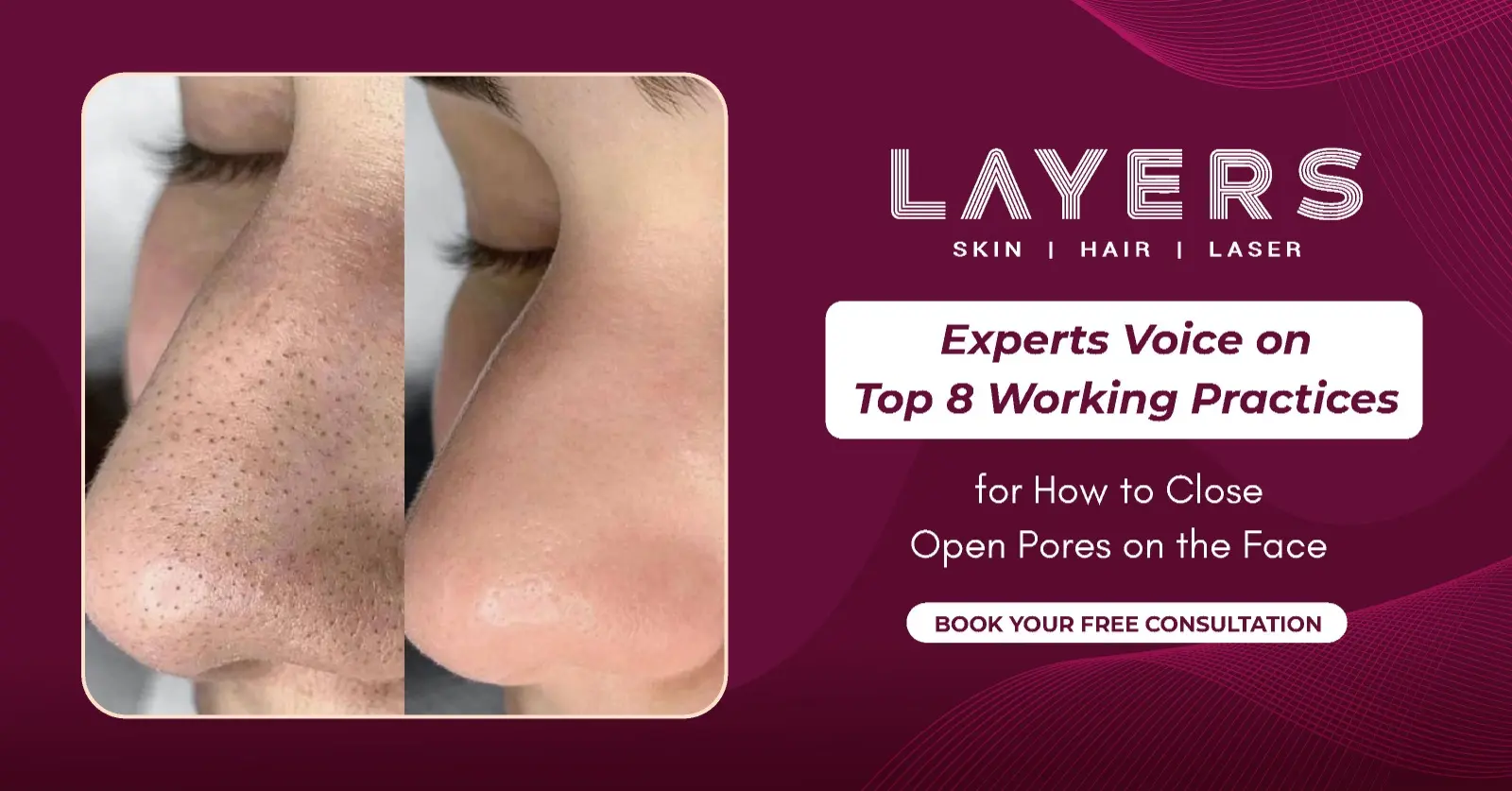
If you’re wondering how to close open pores on face, the most effective approach is combining a consistent skincare routine with clinical treatments like chemical peels, microneedling, and laser resurfacing. While pores cannot be permanently closed, their appearance can be significantly reduced by controlling oil, boosting collagen, and improving skin texture.
What Are Open Pores and Why Do They Appear?
Open pores are tiny openings on the skin that release oil and sweat. They appear larger due to:
- Excess oil production (sebaceous activity)
- Sun damage breaking down collagen
- Aging and reduced skin elasticity
- Genetics (most dominant factor)
- Picking or squeezing acne
Bottom line: Enlarged pores are a structural issue, not just a surface problem.
Top 8 Expert Practices on How to Close Open Pores on Face
Practice 1: Double Cleansing for Deep Pore Clarity
Oil attracts oil. So begin with an oil-based cleanser. It dissolves sebum, sunscreen, and makeup packed inside the pores. Follow with a watery gel or foam cleanser to eliminate any residual impurities. This two-step method is fundamentally necessary if you want to start by learning how to close open pores on face, because a clean pore is small. We recommend the double-cleansing method every evening without skipping it. The morning routine needs a gentle cleanser, as overnight residues are lower than those on skin exposed to pollution and product layering.
Practice 2: Regular Chemical Exfoliation
Physical scrubs can tear the skin at the micro level and worsen pore appearance over time. Use the chemical exfoliants as a superior alternative. Existing BHAs, like salicylic acid, are oil-soluble, meaning they penetrate the pore and exfoliate from the inner levels. AHAs like glycolic acid resurface the skin around the pore opening and smooth texture by reflecting light on a more even surface. When applied 2-3 times a week, chemical exfoliation is a proven approach to closing open pores on the face. Use lower concentrations initially and increase the concentrations gradually to avoid irritation that could halt your progress.
Practice 3: Niacinamide Serums
Niacinamide or Vitamin B3 is great at regulating sebum production and strengthening the skin barrier. It tightens the pores. Many clinical studies have shown that a 5% niacinamide serum, when applied twice a day, can reduce pore size in 4 weeks. It is gentle for daily use and works well when paired with every active ingredient used for your face – retinoids, vitamin C, and more. It’s an indispensable option in the quest for how to close open pores on face. We ensure niacinamide is among the most highly recommended ingredients for all skin types.
Practice 4: Retinoid Therapy
Retinoids bring all the power to accelerate cell turnover, prevent dead skin from building up in pores from the inside, and stimulate collagen production around pore walls. Products containing retinoids might work for mild cases, but prescription-strength tretinoin delivers rapid, more accurate results for stubborn pores. The dermatologists at Layers Clinics often recommend retinoids as a long-term strategy if you’re concerned with how to close open pores on face because their effects compound over time. Once you introduce retinoids by starting with 2 nights a week, ensure you apply them with sunscreen usage in the morning.
Practice 5: Clay and Charcoal Masks
A clay mask a week removes impurities from the surface and absorbs excess oil, temporarily tightening pore walls and improving the complexion with a smooth tone. Bentonite, kaolin, and activated charcoal are widely chosen ones. Though the pore-minimizing effect is temporary after a single application, consistent use of all the above-recommended products results in significant improvements in texture. It contributes to healthy skin by addressing the concern of how to close open pores on face.
Practice 6: Professional Chemical Peels
Clinically backed chemical peels at Layers Clinics deliver deeper, more promising results than ever. We recommend medium-depth peels using trichloroacetic acid or Jessner’s solution for damaged surface layers. Collagen remodeling and skin tightening around each pore are possible ways in this process. With 6-4 peels per month, there are remarkable improvements in pore size, thereby improving overall skin quality. Professional peeling treatments rank among the most effective clinical solutions for closing open pores on the face, especially for people with UV-damaged or aging skin.
Practice 7: Microneedling and Collagen Induction Therapy
Microneedling uses controlled micro-injuries to trigger the body’s natural wound-healing response. Collagen boosts, and elastin is produced in the targeted area. The skin around the pores becomes firmer with new collagen, and the pore openings gradually shrink, making them smaller. Layers Clinics performs microneedling as an art, ensuring our medical-grade services, delivered under sterile conditions, deliver an everlasting impact. Clubbed with topical growth factors or hyaluronic acid post-treatment, microneedling makes its enlightening entry as a powerful modality for closing open pores on the face.
Practice 8: Laser Skin Resurfacing
Fractional laser treatments target the deeper layers of skin and stimulate intense collagen renewal. It physically tightens the pores from under the surface. Fractional CO2 and erbium lasers are the gold standard for pore reduction. The recovery time varies from a few days to a week, depending on the laser intensity, but the results are long-lasting. Our experts get the hands-on advanced laser platforms, each one tailored for patients’ skin type and concern. Laser resurfacing does its commendable job of closing open pores on the face.
What Are the Best Professional Treatments for Open Pores?
1. Chemical Peels for Pore Minimization
Chemical peels exfoliate dead skin cells and unclog pores, making them appear smaller. Regular sessions improve skin texture and promote collagen production, making them one of the most effective solutions for how to close open pores on face.
2. Microneedling for Collagen Boost
Microneedling stimulates collagen and elastin production, tightening the skin around pores. Over time, this reduces pore visibility and improves firmness, making it a powerful option for long-term results.
3. Laser Skin Resurfacing
Laser treatments work on deeper layers of skin to shrink pores and enhance skin texture. This is ideal for individuals with enlarged pores caused by aging or sun damage.
Which Treatment Is Best for Your Skin?
| Treatment | Best For | Downtime | Main Benefit |
|---|
| Chemical Peel | Oiliness & clogged pores | Low | Exfoliation |
| Microneedling | Texture & mild pore enlargement | Low | Collagen stimulation |
| MNRF | Pores, texture & acne scars | Low–moderate | Collagen remodeling |
| Laser Resurfacing | Significant texture concerns | Moderate | Deeper resurfacing |
What Is the Best Daily Skincare Routine for Open Pores?
To effectively manage how to close open pores on face, follow this simple routine:
- Cleanse twice daily to remove oil and dirt
- Use salicylic acid or glycolic acid 2–3 times weekly
- Apply niacinamide serum daily
- Use sunscreen (SPF 50+) to prevent collagen breakdown
- Avoid touching or picking skin
A disciplined routine combined with clinical treatments ensures visible and lasting improvement.
How Long Does It Take to See Results?
At dermatology clinics, patients undergoing microneedling + chemical peels typically see:
- 30–50% pore reduction in 4–6 sessions
- Improved skin texture within 3–4 weeks
This demonstrates that combination therapy delivers faster and measurable results compared to standalone treatments.
Frequently Asked Questions
Can open pores be permanently closed?
No, open pores cannot be permanently closed, but their appearance can be significantly reduced with proper skincare and treatments like chemical peels, retinoids, and laser therapy.
What is the best treatment to close open pores on the face?
The best treatments for how to close open pores on face include chemical peels, microneedling, laser resurfacing, and niacinamide-based skincare for long-term pore tightening.
Are chemical peels effective for open pores?
Yes, chemical peels are highly effective for open pores as they exfoliate dead skin, unclog pores, and stimulate collagen production for smoother skin.
What causes large pores on the face?
Large pores are mainly caused by genetics, excess oil production, sun damage, aging, and loss of collagen, which reduces skin elasticity.
Is laser treatment safe for open pores?
Yes, laser treatments are safe when performed by dermatologists and are one of the most effective ways to tighten pores and improve skin texture.
Key Takeaways
- Open pores are caused by oil production, genetics, and collagen loss
- You cannot permanently close pores, but you can minimize them
- Niacinamide, retinoids, and exfoliation are essential for daily care
- Clinical treatments provide faster and long-lasting results
Conclusion
Understanding how to close open pores on face requires a combination of science-backed skincare and professional treatments. While permanent closure isn’t possible, consistent care and advanced dermatology solutions can deliver smoother, refined skin.
