
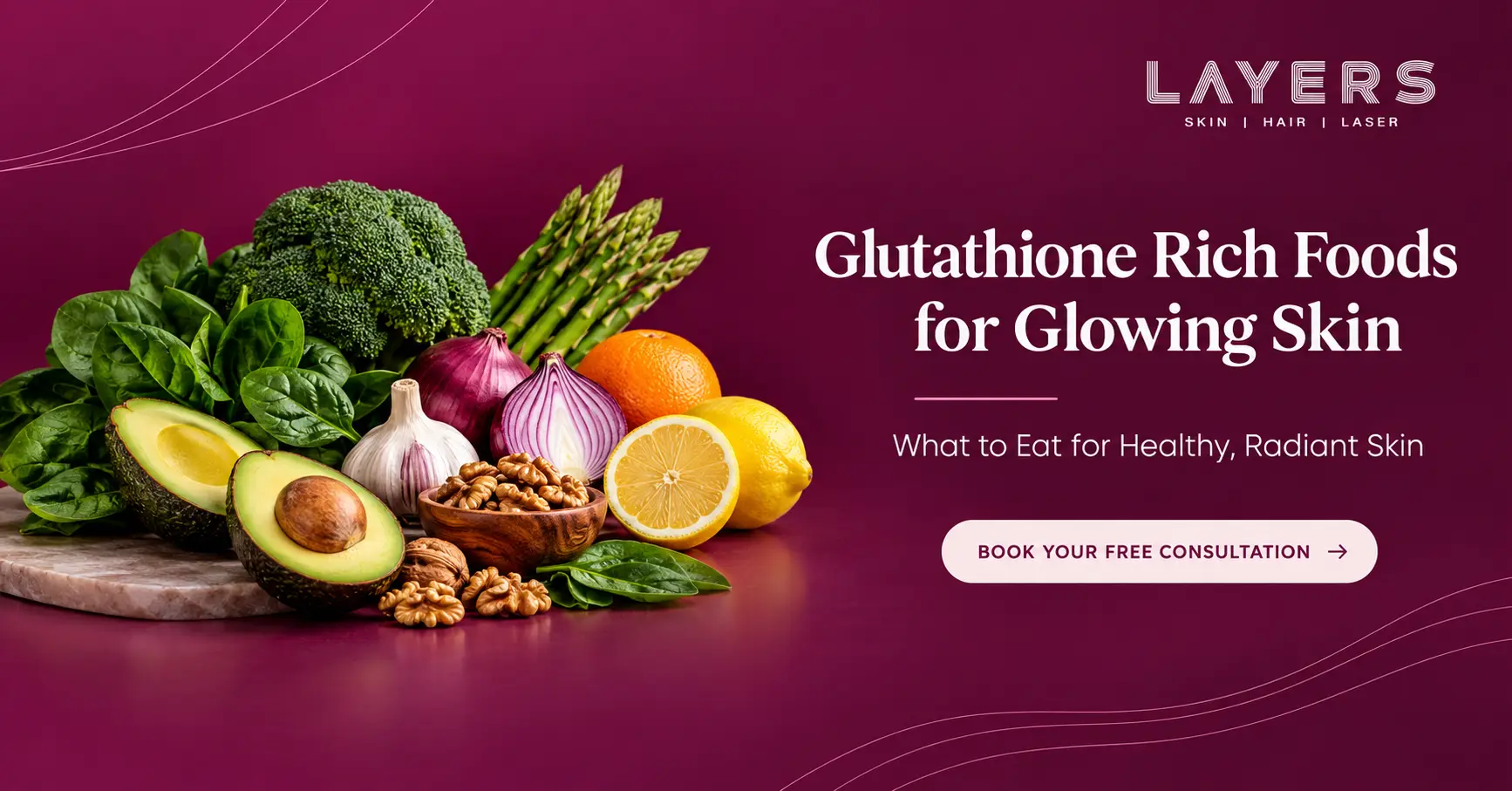
If you’ve been searching for foods that contain glutathione or wondering how to get that lit-from-within glow everyone talks about, you’ve probably noticed the internet is full of extreme claims. The truth sits somewhere quieter: your skin’s appearance is shaped by a mix of genetics, sleep, hydration, sun protection, and yes what’s on your plate.
Glutathione is one of the most talked-about antioxidants in skincare circles right now, and for good reason. It plays a real role in how your body manages oxidative stress, which in turn affects how healthy and even-toned your skin looks over time. This guide breaks down the best glutathione rich foods for glowing skin, the science behind them, and how to build a realistic diet chart for glowing skin without falling for skin-whitening myths.
What Is Glutathione, Exactly?
Glutathione is a naturally occurring antioxidant your body makes from three amino acids cysteine, glutamic acid, and glycine. It’s present in almost every cell and works quietly in the background, helping neutralize the free radicals that build up from pollution, sun exposure, stress, and normal metabolism.
Your body produces glutathione on its own, but certain antioxidant rich foods for skin health can support this natural production. Since oxidative stress can accelerate visible skin aging think dullness, fine lines, and uneven tone keeping this internal antioxidant system well-fed with the right nutrients matters more than people realize.
Can Glutathione Actually Help With Glowing Skin?
Here’s where it’s important to separate marketing from medicine. Glutathione is frequently linked to skin brightness and pigmentation, but eating glutathione rich foods for skin whitening is not the same as guaranteeing a lighter complexion.
What a nutrient-dense diet can do is support normal skin function better hydration retention, improved resilience against environmental damage, and a more even, healthy-looking tone over time. No single ingredient, however “miraculous” it sounds online, will dramatically change your natural skin colour. If your goal is genuinely healthy skin diet habits rather than a quick fix, think in terms of overall eating patterns, not one hero food.
The Best Glutathione Rich Foods for Glowing Skin
These are the foods that contain glutathione or support your body’s antioxidant pathways worth rotating through your weekly meals rather than eating in isolation.
1. Spinach
A nutrient-dense leafy green loaded with vitamins, minerals, and plant compounds. Add it to salads, dals, smoothies, or stir-fries. It’s one of the easiest natural skin brightening foods to slip into an Indian kitchen.
2. Avocado
Rich in healthy fats, fibre, and skin-supportive nutrients. Toss it into toast, wraps, or grain bowls for an easy nutrient boost.
3. Broccoli
A cruciferous vegetable packed with beneficial plant compounds. Steam, roast, or stir-fry it, and pair it with other colourful vegetables for a well-rounded diet for glowing skin.
4. Asparagus
Contains fibre and several micronutrients that contribute to a varied antioxidant intake. Works well as a side dish or mixed into vegetable curries.
5. Other Leafy Greens
Rotate beyond spinach with amaranth leaves, moringa leaves, fenugreek leaves, kale, and lettuce. Indian dals, curries, and soups make it simple to include a wide range of greens.
6. Garlic
Contains sulphur compounds that support the body’s detox and antioxidant processes. A staple flavour booster for dal, sabzi, chutneys, and stir-fries.
7. Tomatoes
A good source of vitamin C and lycopene, both linked to skin-supportive antioxidant activity. Easy to add to salads, curries, and everyday meals.
8. Oranges and Other Citrus Fruits
Among the most popular vitamin C foods for skin brightening oranges, sweet lime, grapefruit, and lemon all count. Vitamin C plays a direct role in collagen formation, which affects skin firmness and texture.
9. Papaya
Offers vitamin C, carotenoids, and fibre. A simple addition to your breakfast or fruit bowl, and one of the more affordable best fruits for skin glow in Indian markets.
10. Strawberries and Other Berries
Blueberries, raspberries, and blackberries all bring vitamin C and antioxidant plant compounds. Add fresh or frozen berries to yoghurt, oats, or smoothies.
11. Walnuts
A convenient source of healthy fats, protein, and micronutrients just watch portion size since nuts are calorie-dense.
12. Almonds
Provide vitamin E, healthy fats, and protein. A small handful works well in oatmeal, yoghurt, or homemade trail mix.
13. Legumes and Pulses
Moong dal, masoor dal, toor dal, chana, rajma, and chickpeas all supply plant protein and amino acids your body needs for its own glutathione production a genuinely useful category if you’re researching how to increase glutathione naturally through diet.
14. Eggs
A convenient, high-quality protein source with several supporting micronutrients for those who eat animal foods.
15. Fish, Chicken, and Other Protein Sources
Adequate protein from fish, chicken, dairy, lentils, beans, or soy supports tissue repair and, indirectly, your skin’s ability to renew itself.
Foods That Support the Body’s Own Glutathione Production
Rather than fixating only on foods that naturally contain glutathione, it helps to think in three nutrient categories:
Sulphur-containing foods: Garlic, onions, broccoli, cauliflower, cabbage, and Brussels sprouts.
Vitamin C-rich foods: Guava, oranges, amla, kiwi, papaya, strawberries, bell peppers, and tomatoes some of the most searched skin brightening foods list items for a reason.
Protein-rich foods: Eggs, fish, chicken, milk, yoghurt, paneer, dal, beans, chickpeas, soy products, nuts, and seeds since glutathione itself is built from amino acids.
A Simple Indian Diet Chart for Glowing Skin
You don’t need imported superfoods to build Indian foods for glowing skin into your day. Here’s a realistic example:
Breakfast: Vegetable upma or eggs with whole-grain toast.
Lunch: Dal, brown rice or roti, a leafy vegetable sabzi, salad, and yoghurt.
Snack: Guava, orange, papaya, or a small handful of nuts.
Dinner: Vegetable curry with roti, plus a protein source dal, paneer, eggs, fish, or chicken.
Hydration: Water through the day, adjusted to your activity and climate.
The goal here is variety, not volume. Eating a huge quantity of one “glutathione food” won’t outperform a balanced, colourful plate.
Glutathione Rich Foods vs. Glutathione Supplements
There’s a meaningful difference between nutrients from whole food and glutathione taken as a supplement or injection. A balanced diet delivers multiple nutrients and plant compounds together, in doses your body is designed to process. Supplements especially high-dose oral or IV glutathione marketed for skin whitening carry different risks and are not automatically interchangeable with food-based nutrition.
If you’re considering supplementation specifically for skin concerns, that decision is worth discussing with a qualified healthcare professional first, rather than self-prescribing high doses.
Will Glutathione Rich Foods Whiten Your Skin?
This is probably the question that brought you here, so let’s be direct: no food can reliably or permanently lighten your natural skin tone. Your skin colour is determined by genetics, melanin activity, hormones, and cumulative sun exposure not by any single antioxidant.
If your real concern is uneven pigmentation, tanning, dark spots, or melasma, the fix depends on identifying the underlying cause, which is where a dermatologist’s evaluation becomes far more useful than diet alone.
Foods to Limit for Healthier-Looking Skin
Instead of a strict “never eat this” list, focus on moderation:
- Highly processed and packaged foods
- Sugary beverages and excess added sugar
- Deep-fried and heavily refined snacks
- Excessive alcohol intake
One indulgent meal won’t undo your skin health consistency over weeks and months is what actually shows up in your complexion.
Beyond Diet: Other Home Remedies for Glowing Skin
Food is only one piece of the puzzle. These habits work alongside your healthy skin diet plan:
- Sunscreen, daily: Broad-spectrum SPF reduces UV-related damage and pigmentation arguably the single highest-impact habit for even-toned skin.
- Hydration: Adequate water intake supports normal skin and body function.
- Sleep: Consistent, quality sleep is linked to a healthier overall appearance.
- Exercise: Regular movement supports circulation and general wellbeing, which reflects in skin health.
- A basic skincare routine: Gentle cleansing, moisturizing, sunscreen, and dermatologist-recommended treatments when needed.
When Should You See a Dermatologist?
Diet can support your skin, but it isn’t a substitute for medical care when something’s actually wrong. Book a consultation if you’re dealing with:
- Persistent pigmentation or melasma
- Dark spots or uneven skin tone
- Acne scars or ongoing acne
- Sudden, unexplained skin changes
- Irritation or inflammation that doesn’t settle
A dermatologist can pinpoint the actual cause and recommend evidence-based treatment something no amount of spinach or oranges can substitute for.
Frequently Asked Questions
What are the best glutathione rich foods for glowing skin?
Spinach, avocado, broccoli, asparagus, garlic, tomatoes, citrus fruits, berries, nuts, and legumes are commonly recommended for their role in antioxidant and glutathione-supporting nutrition.
Which fruit is richest in glutathione for skin?
No single fruit dominates. Citrus fruits, papaya, berries, and guava all provide meaningful antioxidant and vitamin C support, so variety matters more than picking one “best” fruit.
How can I increase glutathione naturally through food?
Eat a varied diet with plenty of vegetables, fruits, adequate protein, legumes, and nuts, and pair it with lifestyle habits like regular exercise and avoiding smoking.
Can glutathione-rich foods make my skin fairer?
No. There’s no reliable evidence that food-based glutathione changes your natural skin colour. It can support overall skin health, but pigmentation concerns need dermatological evaluation.
Is spinach really good for glowing skin?
Yes, as part of a varied diet. Spinach offers vitamins, minerals, and carotenoids that contribute to general skin nutrition but it works best alongside other nutrient-dense foods, not alone.
Are glutathione supplements more effective than glutathione rich foods?
Not necessarily. Food-based nutrition provides multiple nutrients together in a form your body is used to processing. Supplements should be considered only with professional guidance.
How long does it take to see glowing skin results from diet changes?
There’s no fixed timeline skin appearance depends on nutrition, skincare, sun protection, sleep, genetics, and any underlying conditions. Think of dietary changes as a long-term habit, not a quick transformation.
What foods should I avoid for healthier skin?
Limit highly processed foods, sugary drinks, deep-fried snacks, and excessive alcohol moderation matters more than total elimination.
Key Takeaway
Adding glutathione rich foods for glowing skin spinach, broccoli, citrus fruits, legumes, nuts, and lean protein into a balanced diet genuinely supports your body’s antioxidant systems. But no single food, and no amount of it, can promise flawless or lighter skin.
If pigmentation, acne scars, or uneven tone are bothering you, the most effective next step isn’t another “superfood” it’s a proper evaluation. At Layers Clinics, our dermatologists assess your specific skin concerns and recommend treatments grounded in evidence, not trends. Pair that expert guidance with a balanced diet, daily sunscreen, and consistent skincare, and you’ll be working with your skin not just hoping a food list does the work for you.
