

A height and weight chart according to age provides a general reference for understanding whether your weight may be appropriate for your height and age. However, there is no single ideal weight that applies to everyone. Body composition, muscle mass, gender, lifestyle, waist circumference, genetics, and overall health can all influence a healthy weight.
For adults, height and weight are commonly assessed using Body Mass Index (BMI) along with other health measurements. For children and teenagers, age- and gender-specific growth charts are more appropriate because their bodies are still developing.
In this guide, you will learn how to use a height and weight chart, understand ideal weight according to height and age, calculate BMI, and identify factors that can influence a healthy weight.
Key Takeaway
A height and weight chart according to age is a useful general guide for understanding healthy weight ranges, but there is no single ideal weight for everyone. For adults, BMI can provide an initial reference, while height, age, gender, waist circumference, muscle mass, body composition, lifestyle, and overall health should also be considered. Children and teenagers should be assessed using age- and gender-specific growth charts rather than adult weight charts. For accurate weight-management goals, a personalized assessment by a qualified healthcare professional is recommended.
What Is a Height and Weight Chart According to Age?
A height and weight chart is a general reference that compares a person’s height with their body weight. It can help identify whether someone may be underweight, within a generally healthy weight range, or above the recommended range.
For adults, age does not usually change the basic BMI categories. Instead, changes in body composition, muscle mass, activity levels, and fat distribution may affect what constitutes a healthy weight for an individual.
Therefore, a height and weight chart according to age for male and female should be used as a starting point rather than as a diagnosis.
How to Read a Height and Weight Chart
To use a height chart with weight:
- Find your height in centimetres or feet.
- Locate the corresponding weight range.
- Consider your age, gender, body composition, and waist circumference.
- Use BMI and other health measurements for additional context.
- Consult a healthcare professional if you have concerns about your weight or health.
Is There a Different Height and Weight Chart for Men and Women?
The same basic BMI categories are generally used for adult men and women. However, men and women can have different body-fat distribution, muscle mass, hormonal influences, and body composition.
For this reason, height and weight charts for male and female adults should be interpreted alongside individual health factors rather than used as an exact ideal-weight calculator.
Height and Weight Chart for Adults
The following table provides a general reference for adult height and weight. These figures should not be considered a universal ideal weight for every person.
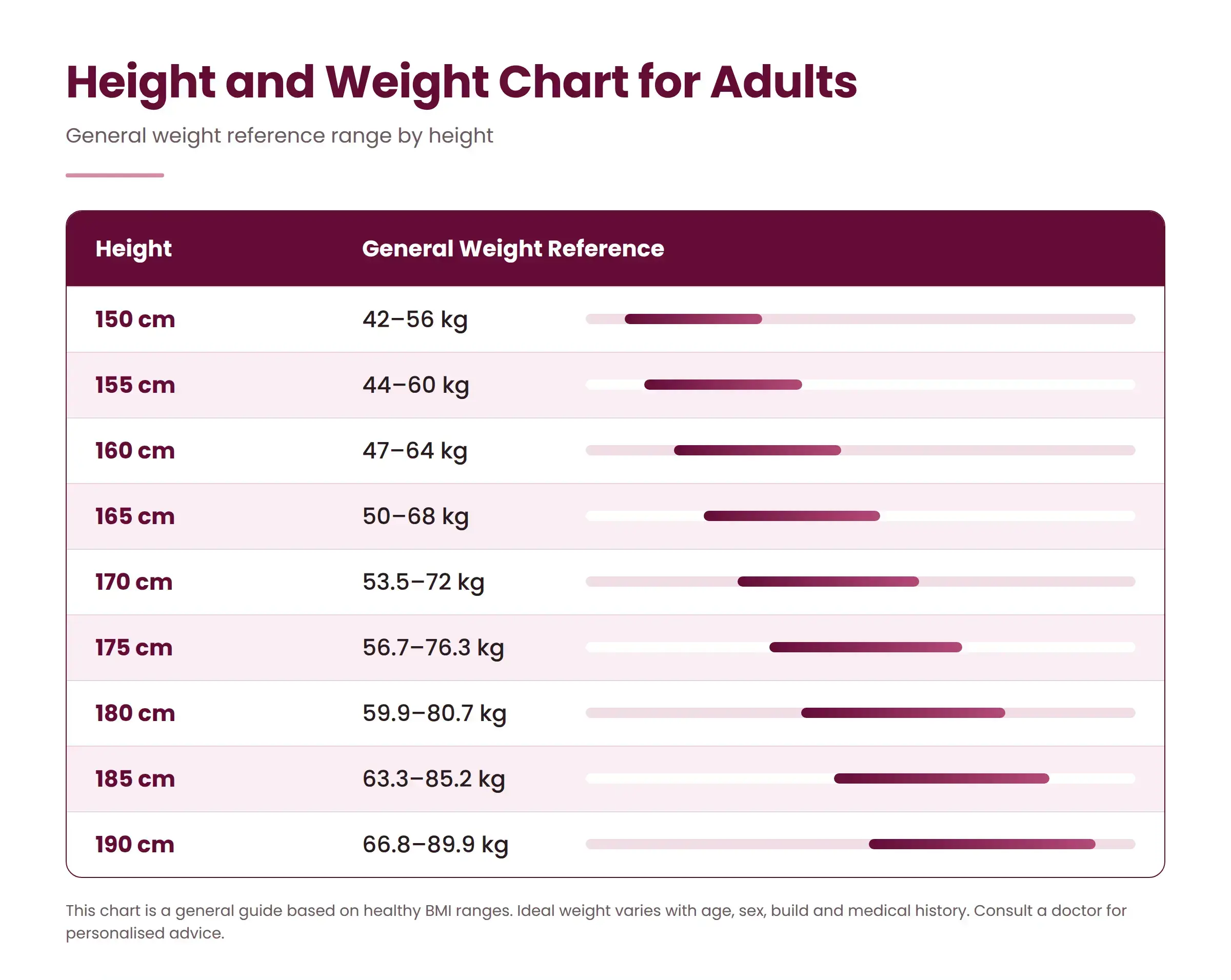
These approximate ranges correspond broadly to the conventional adult BMI range of 18.5–24.9. They are intended for general education and do not account for differences in muscle mass, body frame, pregnancy, medical conditions, or other factors.
Height and Weight Chart According to Age for Male
For adult men, a height weight chart can provide a useful starting point, but age alone does not determine the appropriate body weight.
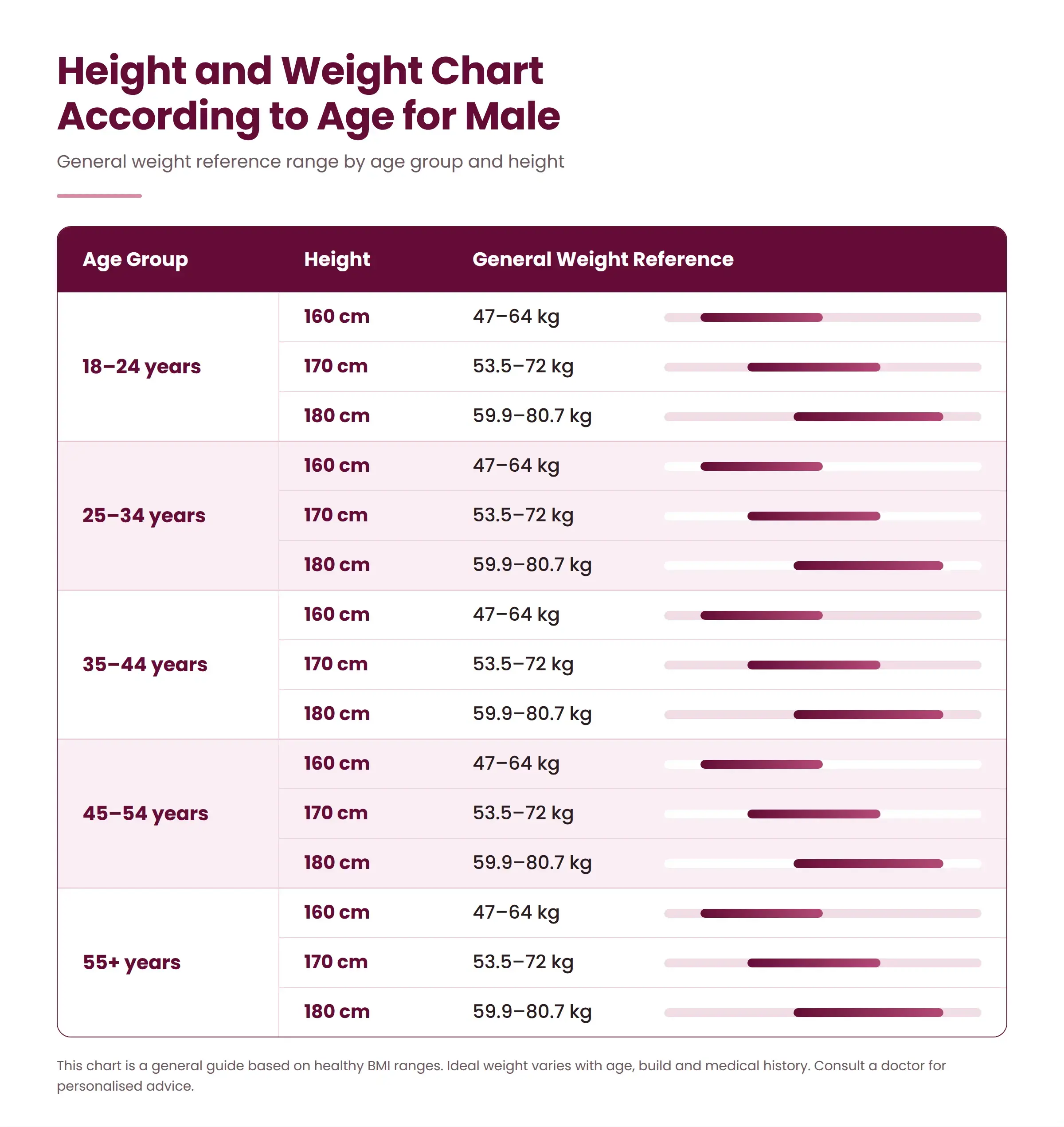
The same general BMI-based ranges may apply across adult age groups, but healthy body composition can change with age. Muscle mass may decrease while body fat increases, even when body weight changes very little.
Height and Weight Chart According to Age for Female
For adult women, height remains one of the primary factors used in calculating BMI, while age and hormonal changes can influence body composition.
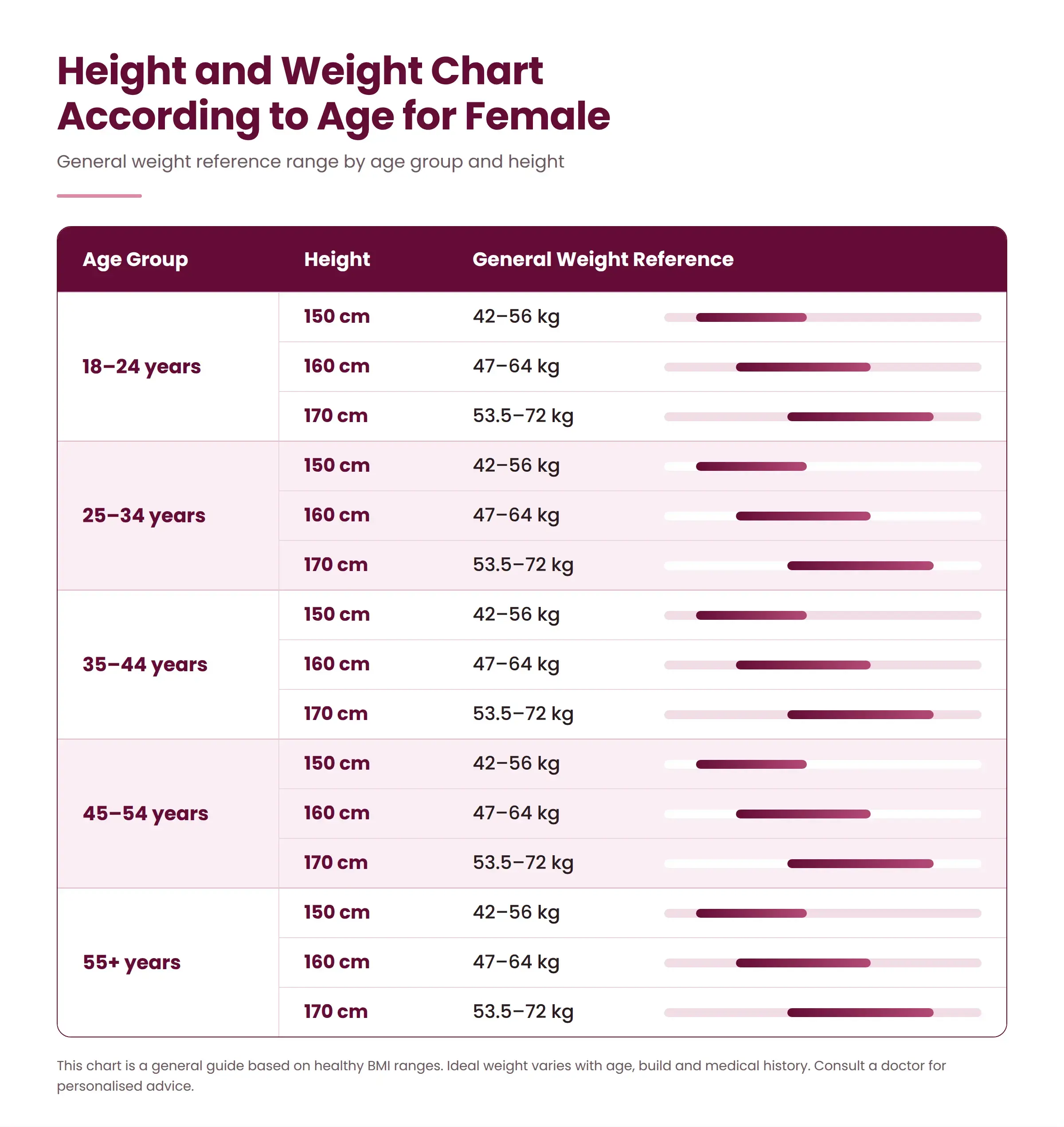
These figures are general references and should not be interpreted as target weights for every woman.
What Is the Ideal Weight According to Height and Age?
There is no single ideal weight according to height and age that is appropriate for everyone.
For adults, a healthy weight is better understood as a range rather than one exact number. Height has a major influence on body weight, while age, gender, muscle mass, fat distribution, lifestyle, and medical factors provide additional context.
For example, two people who are both 170 cm tall may have different healthy weights because one person may have considerably more muscle mass or a different body composition.
Does Ideal Weight Change With Age?
Your body composition can change as you get older even when your height remains relatively stable.
- 20s: Physical activity and muscle development can have a significant influence on body weight.
- 30s: Changes in activity, work routines, diet, and muscle mass may contribute to gradual weight changes.
- 40s: Hormonal and lifestyle changes can affect fat distribution and metabolism.
- 50s: Maintaining muscle mass and regular physical activity becomes increasingly important.
- 60s and beyond: Muscle loss, changes in activity, appetite, and medical conditions may influence body composition.
Rather than focusing only on the number on a weighing scale, it is useful to consider waist circumference, muscle mass, fitness, nutrition, and overall health.
What Is BMI and How Is It Calculated?
Body Mass Index (BMI) is a screening measurement calculated using weight and height.
The formula is:
BMI = Weight in kilograms ÷ Height in metres²
For example, if someone weighs 70 kg and is 1.70 metres tall:
BMI = 70 ÷ (1.70 × 1.70) = 24.2
Common adult BMI categories are:
| BMI | Category |
|---|---|
| Below 18.5 | Underweight |
| 18.5–24.9 | Healthy weight |
| 25.0–29.9 | Overweight |
| 30 or above | Obesity |
BMI is a screening tool rather than a complete assessment of health. It does not directly measure body fat or distinguish between muscle and fat.
For people with high muscle mass, BMI may overestimate body-fat-related risk. Healthcare professionals may therefore consider other measurements and clinical factors.
What Factors Affect a Healthy Weight?
A person’s healthy weight can be influenced by several factors.
Height and Body Frame
Taller individuals generally weigh more than shorter individuals because they have greater overall body size.
Muscle Mass
Muscle is denser than fat. People who participate in strength training or other athletic activities may have a higher body weight without having excess body fat.
Waist Circumference
Where body fat is stored can be important. Higher abdominal fat may be associated with increased metabolic and cardiovascular risk.
Diet and Nutrition
Overall calorie intake, protein, fibre, food quality, meal patterns, and dietary habits can affect body weight.
Physical Activity
Regular physical activity helps support energy balance, muscle mass, cardiovascular health, and weight management.
Hormonal and Medical Factors
Certain medical conditions, medications, hormonal changes, sleep problems, and other health factors can influence weight.
Can Children Use an Adult Height and Weight Chart?
No. Children and teenagers should not be assessed using adult height and weight charts.
Children are continuously growing, so their height, weight, and body composition change with age. Healthcare professionals generally use age- and gender-specific growth charts to assess growth patterns.
If you are concerned about a child’s growth or weight, a paediatrician or qualified healthcare professional can evaluate growth over time rather than relying on a single weight measurement.
How Can You Tell If You May Need to Lose Weight?
A single number on a weighing scale does not determine whether weight loss is necessary.
Some factors that may justify discussing weight management with a healthcare professional include:
- Persistent or rapid weight gain
- Increasing waist circumference
- Difficulty maintaining a healthy weight
- Reduced physical activity
- High blood pressure
- Abnormal blood sugar or cholesterol levels
- Weight-related sleep problems
- Reduced mobility or physical fitness
- Difficulty losing weight despite consistent lifestyle changes
A professional assessment can help determine whether weight loss is appropriate and identify possible contributing factors.
How to Maintain a Healthy Weight
Maintaining a healthy weight generally involves sustainable lifestyle habits rather than short-term restrictive diets.
Eat a Balanced Diet
Include vegetables, fruits, whole grains, adequate protein, healthy fats, and appropriate portions.
Stay Physically Active
Combine regular aerobic activity with strength training when appropriate for your fitness level and health status.
Prioritize Protein and Fibre
Protein and fibre can help support muscle maintenance and satiety when included as part of a balanced diet.
Get Adequate Sleep
Poor sleep can affect appetite, energy levels, activity, and eating patterns.
Track More Than Body Weight
Consider waist circumference, fitness, strength, energy levels, dietary habits, and other health markers along with weight.
Can Medical Weight Management Help With Weight Loss?
For people who have difficulty achieving or maintaining a healthy weight through lifestyle changes alone, a structured medical weight-management program may provide additional support.
A professional program may include:
- Dietary assessment
- Nutrition planning
- Physical activity guidance
- Behavioural strategies
- Progress monitoring
- Body-composition assessment
- Evaluation of relevant medical factors
- Individualized weight-management goals
The appropriate approach depends on the person’s health, medical history, lifestyle, weight-management goals, and underlying factors.
When Should You Consult a Weight-Management Specialist?
Consider professional guidance if you have persistent weight gain, difficulty losing weight, obesity-related health concerns, or uncertainty about what a healthy target weight should be.
A qualified healthcare professional can assess your height, weight, BMI, waist circumference, lifestyle, medical history, and other relevant factors before recommending an appropriate plan.
Height and Weight Chart FAQs
What is a healthy weight for my height?
A healthy weight depends on more than height alone. BMI can provide a general reference, but muscle mass, waist circumference, age, gender, lifestyle, and health conditions should also be considered.
What is the ideal weight for a 5-foot man?
There is no single ideal weight for every 5-foot man. A general adult BMI-based range can provide a reference, but individual body composition and health factors should also be considered.
What is the ideal weight for a 5-foot woman?
There is no universal ideal weight for every 5-foot woman. BMI, body composition, waist circumference, lifestyle, and overall health provide more useful context than one target number.
Does ideal weight change with age?
The basic adult BMI categories do not change simply because a person gets older. However, body composition, muscle mass, activity levels, and fat distribution can change with age.
How do I calculate my BMI?
Divide your weight in kilograms by your height in metres squared. For example, 70 kg divided by 1.70² gives a BMI of approximately 24.2.
Is BMI a good indicator of health?
BMI is useful as a screening measure but does not provide a complete picture of health. It should be considered alongside factors such as waist circumference, body composition, lifestyle, and medical history.
Is there a different height and weight chart for men and women?
The same general BMI categories are used for adult men and women, but body composition and fat distribution can differ. Therefore, height and weight should be interpreted in an individual context.
Can children use an adult height and weight chart?
No. Children and adolescents should be assessed using age- and gender-specific growth charts because they are still growing and developing.
When should I see a doctor about my weight?
Consider professional advice if you have unexplained or persistent weight changes, difficulty losing weight, increasing waist circumference, or health concerns associated with your weight.
Personalized Weight-Management Guidance at Layers Clinics
A height and weight chart can help you understand general weight ranges, but it cannot determine the right goal for every individual. A more complete assessment can consider body composition, lifestyle, medical factors, dietary habits, and personal weight-management goals.
At Layers Clinics, personalized guidance can help you understand your weight-management needs and explore appropriate options based on your individual assessment.
Book a consultation with Layers Clinics to discuss your weight-management goals and receive personalized guidance.
Bottom Line
A height and weight chart according to age is useful for general reference, but there is no single ideal weight that applies to everyone. For adults, BMI can provide an initial screening measure, while body composition, waist circumference, lifestyle, age, gender, and overall health provide additional context.
For children and teenagers, adult height and weight charts should not be used; age- and gender-specific growth charts are more appropriate. If you are concerned about your weight or are struggling to achieve sustainable weight loss, professional evaluation can help identify an appropriate and realistic approach.
Last updated: September 2026
