
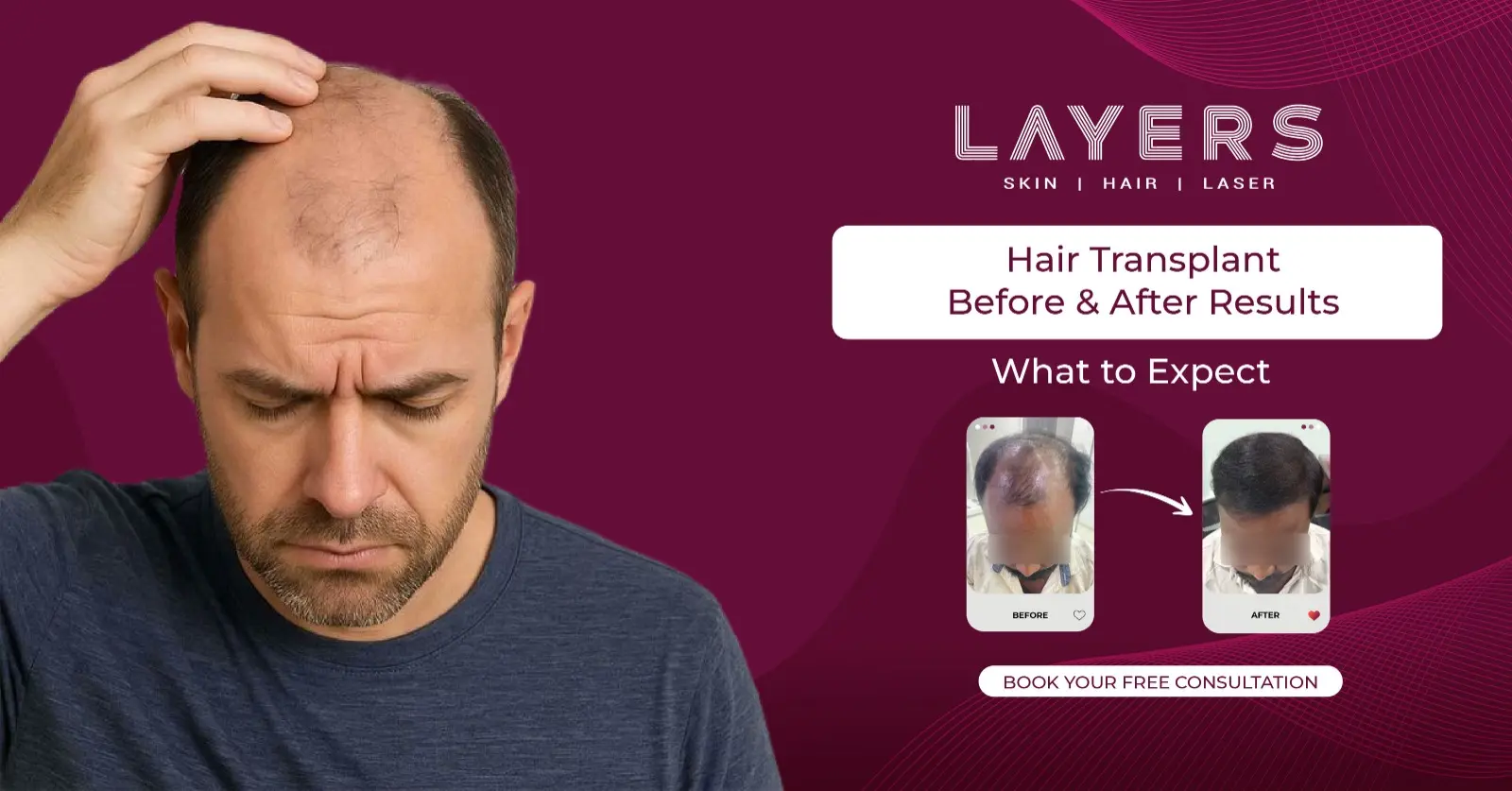
Hair transplant before and after results typically develop gradually over 6–12 months. Most patients experience early healing and shedding during the first few weeks, initial new growth around months 3–4, visible thickening by months 5–6, and more mature results around months 10–12. The final outcome depends on factors such as donor hair quality, hair-loss pattern, graft placement, hairline design, and post-transplant care.
Key Takeaway
Hair transplant results are gradual rather than immediate. Early redness and shedding are normal, new growth commonly begins around months 3–4, and noticeable density develops over the following months. By around 10–12 months, most patients can assess their mature result. Individual outcomes vary according to donor density, hair-loss pattern, graft characteristics, surgical planning, and aftercare.
Who Is This Hair Transplant Guide For?
This guide is for men and women considering hair transplantation, patients preparing for a hair transplant, and people who want to understand what realistic hair transplant before and after results can look like. It is particularly useful for people comparing hair restoration options, evaluating potential outcomes, or deciding whether to consult a qualified hair transplant specialist.
Layers Clinics is a skin and hair clinic providing dermatology, trichology, and hair restoration services, including hair transplantation. Hair transplant treatment is a surgical hair-restoration procedure used to restore hair in areas affected by pattern hair loss, receding hairlines, thinning, or baldness.
If you are comparing hair transplant clinics, techniques, expected results, recovery timelines, or before-and-after photographs, this guide can help you understand what to evaluate before making a treatment decision.
Quick Timeline: Hair Transplant Results at a Glance
| Timeframe | What to Expect |
|---|---|
| Day 1–7 | Redness, tiny scabs, mild swelling, normal healing |
| Week 2–4 | Scabs fall off; transplanted hair sheds (shock loss) expected, not failure |
| Month 2–3 | Scalp looks similar to pre-transplant; follicles are resting under the skin |
| Month 3–4 | New, fine hair growth begins to appear |
| Month 5–6 | Visible thickening; hair texture still maturing |
| Month 8–9 | Noticeable density improvement; hairline shape becomes clear |
| Month 10–12 | Full results, density, texture, and direction largely settled |
What Should You Expect Before a Hair Transplant?
Most patients arrive with one or a combination of these patterns:
- A receding frontal hairline
- Thinning or visible scalp at the crown
- Diffuse thinning across the mid-scalp
- Patchy or uneven bald areas
- Overall reduced hair density compared to their donor area
Before recommending a plan, a proper scalp evaluation looks at donor area strength, current hair loss stage, and just as importantly, how the hair loss is likely to progress over the next 10–15 years. Skipping this step is one of the most common reasons “before and after” photos don’t age well.
How Does Hairline Planning Affect Hair Transplant Results?
The single biggest difference between a result that looks obviously “done” and one that looks completely natural is hairline design not the transplant technique itself. A well-planned hairline accounts for:
- Facial proportions and forehead shape
- Age-appropriate positioning (a hairline set too low or too straight is the most common red flag in poor results)
- Natural asymmetry, real hairlines are never perfectly symmetrical
- Existing hair growth pattern and direction
- How the hairline should look not just at month 12, but years later as the face changes with age
This is planned before a single graft is placed, and it’s the step that determines whether “after” photos still look natural five or ten years down the line.
Weeks 1–4: The Healing Phase
In the first week, mild redness, tiny scabs around each graft, and slight forehead swelling are normal and temporary. None of this reflects the final look. Between weeks 2 and 4, most patients experience shedding of the transplanted hair, this is expected and doesn’t mean the graft failed. The follicle stays alive under the skin and re-enters its growth phase a few weeks later.
Months 3–12: The Growth Phase
This is where “after” results actually start forming:
- Month 3–4: Fine, thin new hair begins emerging from the transplanted follicles
- Month 5–6: Hair becomes visibly thicker, though texture and curl pattern are still maturing
- Month 8–9: Density and hairline shape become clearly visible in photos
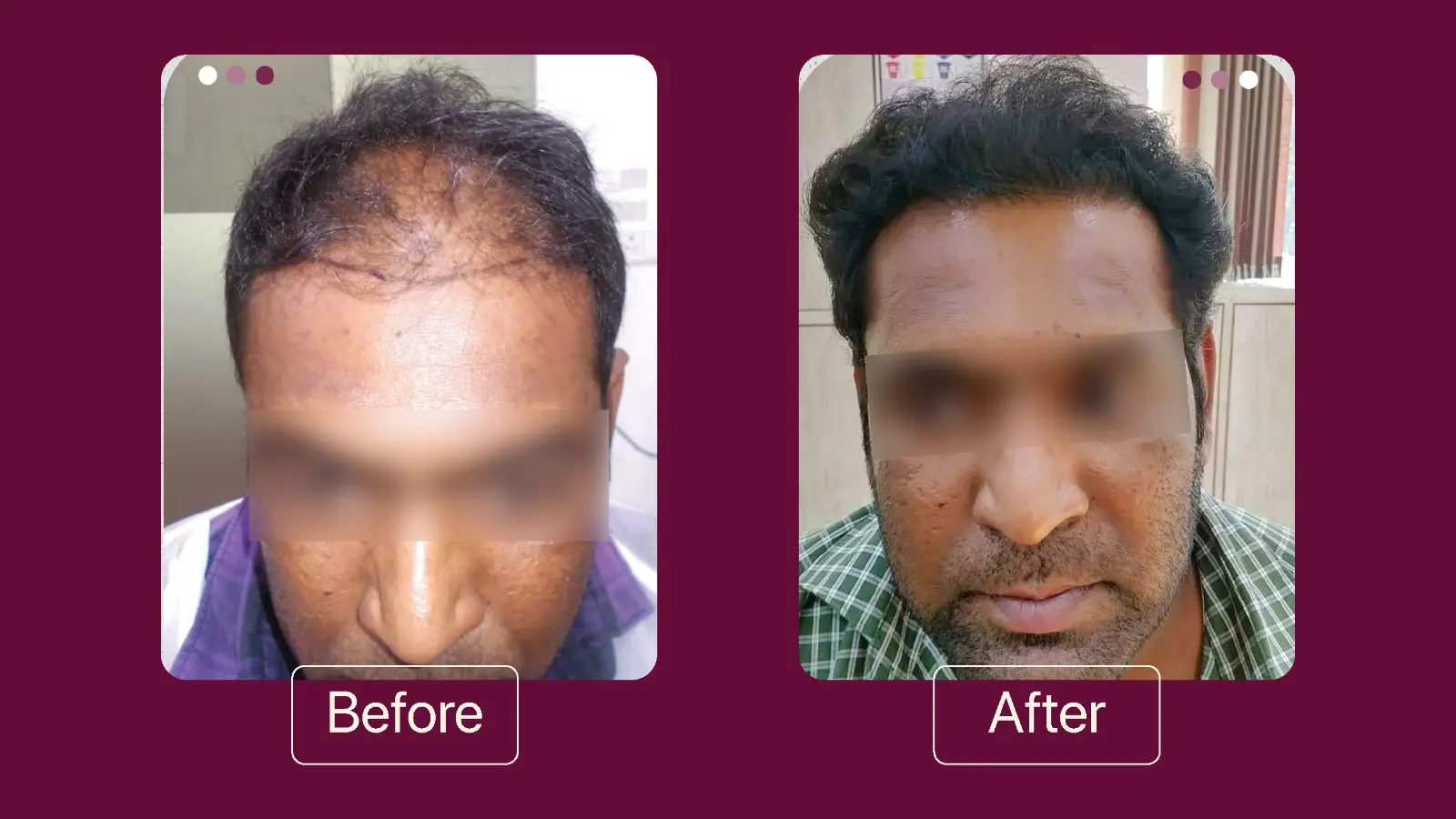
- Month 10–12: Results are considered largely final, this is the stage used for official before-and-after comparisons
Growth speed varies slightly by individual metabolism, scalp condition, and how well aftercare instructions were followed.
Before and After Results by Area
| Area | Before | After |
|---|---|---|
| Frontal hairline | Receded or uneven hairline | Structured, face-framing hairline |
| Crown | Thinning or bald spot | Improved density with natural spiral pattern |
| Mid-scalp | Reduced volume, visible scalp | Even density, balanced coverage |
| Extensive baldness | Large areas of visible scalp | Uniform restoration with strategically placed density |
Results for Men vs Women
Men typically see the most dramatic before-and-after change in hairline recession, crown balding, and temple restoration areas where pattern baldness is most visible.
Women, who more often experience diffuse thinning rather than a receding hairline, typically see the biggest improvement in overall density and hairline refinement rather than a single, isolated bald patch.
The planning approach differs by gender and hair loss pattern, but the goal is the same in both cases: density and a hairline that looks like it was never disturbed.
What Density Is Realistic? Setting the Right Expectations
A common misconception is that “more grafts equals better results.” In reality:
- Natural density is designed to mimic your existing hair pattern, not exceed it artificially
- Overpacking grafts too densely can actually reduce graft survival by restricting blood supply
- Visual fullness how full the area looks matters more than raw graft count, since hair styling, angle, and direction all affect perceived thickness
- Results continue to look fuller for 12–18 months as each hair thickens and gains natural texture
A good surgeon will tell you what’s realistic for your donor supply rather than promising maximum density regardless of your case.
What Actually Influences Your Before and After Outcome
- Donor hair quality and density — the raw material available to work with
- Extent and stage of baldness at the time of treatment
- Scalp condition, including blood supply and elasticity
- Surgical precision in graft handling and placement angle
- Aftercare compliance in the weeks following the procedure
These five factors matter more to your final result than which extraction method was used a point worth remembering if you’re also comparing techniques separately.
Aftercare: The Part That Determines Your Final Photos
Post-procedure care has a direct, measurable impact on how your results turn out:
- Following the prescribed gentle washing routine, starting only when advised
- Taking prescribed medication as directed, including anti-inflammatory or growth-supporting prescriptions
- Avoiding pressure, friction, or trauma to the scalp for the first 10–14 days
- Avoiding direct sun exposure and sweat-heavy activity during early healing
- Attending follow-up reviews so the clinic can catch and correct any issue early
Patients who skip aftercare instructions are the most common source of uneven or delayed results not a flaw in the procedure itself.
Tracking Your Own Before and After Progress
If you want to accurately monitor your own results:
- Take photos in the same lighting, angle, and hairstyle every 4 weeks
- Photograph the hairline, crown, and top-down crown view separately
- Avoid judging progress before month 3, the scalp needs to complete shedding and rest phases first
- Compare only against your own baseline photo, not generic online results, since donor density and hair type vary by individual
Common Myths About Before and After Results
“Results are instant.” Growth is a biological process meaningful change starts around month 3–4, not immediately.
“Transplanted hair looks fake.” With correct angle, direction, and density planning, transplanted hair is visually indistinguishable from natural hair.
“Transplanted hair eventually falls out again.” Transplanted follicles are taken from areas resistant to the hormone responsible for pattern baldness, so the results are permanent.
“Everyone gets the same result.” Donor density, scalp condition, and hair loss stage differ from person to person, which is why results are planned individually rather than templated.
What Can You Expect From Hair Transplant Results in the Long Term?
Beyond the 12-month mark, transplanted hair continues to behave exactly like the rest of your natural hair:
- Growth continues indefinitely, requiring only normal haircuts
- Density remains stable, since transplanted follicles don’t carry the balding gene
- The hairline retains its designed shape as you age
- Hair can be cut, colored, and styled without any special restriction
This long-term stability not just the month-12 photo is what actually defines a successful outcome.
Why Choose Layers Clinics for Hair Transplantation?
At Layers Clinic, outcomes are built on a repeatable process rather than guesswork:
- Detailed scalp and donor-area evaluation before any technique is recommended
- Artistic, age-appropriate hairline planning suited to your face and future hair loss pattern
- Protocols focused on maximizing graft survival during extraction and implantation
- Transparent, honest expectation-setting, no promises of density your donor area can’t support
- Structured follow-up through the full 12-month growth window, not just the day of surgery
Frequently Asked Questions
When will I start seeing hair transplant results?
Most patients notice the first fine, new hair growth around month 3–4. Visible thickening and shape typically appear by month 6, with full, mature results by month 10–12.
Is it normal for transplanted hair to fall out after the procedure?
Yes. Shedding between weeks 2 and 4 is a normal part of the growth cycle, known as shock loss. The follicle remains alive beneath the skin and regrows in the following months.
How long until a hair transplant looks completely natural?
Most results look natural in photos by month 8–9, with texture and density continuing to refine up to month 12 and slightly beyond.
Do hair transplant results look different for men and women?
The underlying biology is the same, but the pattern differs men typically see the biggest change in hairline and crown, while women often see the biggest improvement in overall density from diffuse thinning.
What’s a realistic density expectation from a hair transplant?
Density is planned to mimic your natural hair pattern rather than maximize graft count. Overpacking grafts can reduce survival rates, so a good surgeon prioritizes visual fullness over raw numbers.
Are hair transplant results permanent?
Yes. Transplanted follicles are taken from donor areas that are naturally resistant to the hormone responsible for pattern baldness, so results don’t reverse over time.
Can I speed up my hair transplant results?
Growth speed is largely biological, but strict adherence to aftercare gentle washing, prescribed medication, and avoiding scalp trauma supports healthy regrowth and can prevent avoidable delays.
How should I track my own before and after progress?
Take photos every 4 weeks in the same lighting, angle, and hairstyle, covering hairline, crown, and top-down views, and compare only against your own baseline rather than generic online photos.
Conclusion
Hair transplant before and after results are the outcome of a gradual, well-managed biological process not a single dramatic reveal. Understanding the real timeline, from early shedding through to month-12 maturity, helps you judge your own progress accurately and avoid unnecessary worry during the normal resting phase. With careful hairline planning, realistic density goals, and consistent aftercare, the transformation from thinning hair to natural, lasting coverage is entirely achievable and it’s a result that continues to look right for years, not just months.
