
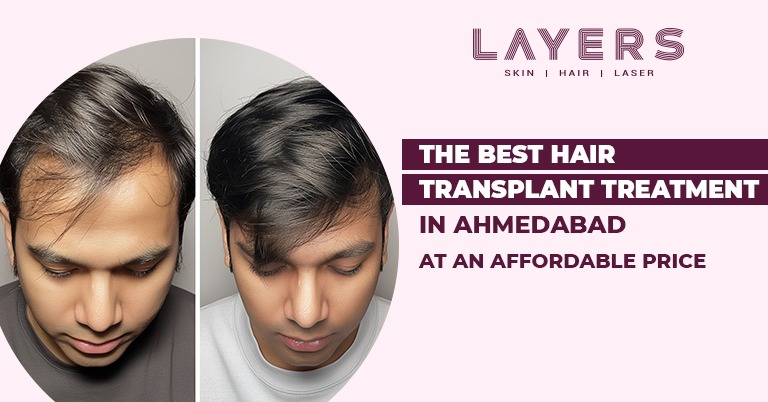
Hair loss can affect more than appearance. For many people, a receding hairline, thinning crown, or advanced baldness can influence confidence and everyday social interactions. With modern hair restoration techniques, it is possible to restore hair in a way that complements the individual’s natural hairline, facial features, and existing hair density.
For people searching for the best hair transplant in Ahmedabad, choosing the right clinic and hair restoration specialist is an important decision. A successful hair transplant is not simply about transferring a large number of grafts. It requires careful diagnosis, donor-area assessment, appropriate technique selection, precise graft placement, and long-term planning.
At Layers Clinics, the focus of hair restoration is on creating a natural-looking result based on each individual’s hair-loss pattern and available donor hair.
Why Choose Hair Transplantation for Hair Loss?
Hair transplantation is a surgical hair restoration procedure in which hair follicles are moved from a donor area, usually the back or sides of the scalp, to areas affected by hair loss. These follicles can subsequently grow hair in the recipient area.
The International Society of Hair Restoration Surgery (ISHRS) explains that hair transplantation can restore naturally growing hair to areas affected by thinning or baldness. The procedure may also be considered for selected cases involving eyebrows, facial hair, scars, and other areas.
Unlike temporary cosmetic solutions, a hair transplant aims to redistribute existing hair follicles to areas where additional coverage is needed. However, the suitability of surgery depends on factors such as the cause and progression of hair loss, donor density, scalp characteristics, age, expectations, and overall health.
What Makes a Hair Transplant Successful?
When searching for the best hair transplant clinic in Ahmedabad, it is important to look beyond promotional claims and focus on the fundamentals of hair restoration.
A successful procedure involves several important elements:
- Accurate diagnosis of hair loss
- Detailed donor-area evaluation
- Natural hairline planning
- Appropriate graft estimation
- Careful follicular-unit harvesting
- Proper graft handling
- Correct hair direction, angle, and placement
- Long-term planning for progressive hair loss
- Qualified medical supervision
- Appropriate post-operative care
The surgeon’s experience and decision-making can be particularly important because hair transplantation is surgery rather than simply a cosmetic procedure. The ISHRS recommends that patients investigate who will evaluate their hair loss, who will perform the surgical steps, and the qualifications and experience of the professionals involved.
Hair Transplant Techniques Available Today
Modern hair restoration includes different methods of harvesting and implanting follicular units. The appropriate approach depends on the individual rather than a one-size-fits-all formula.
FUE Hair Transplant
Follicular Unit Excision (FUE) involves harvesting individual follicular units from the donor area using small punches. These grafts are subsequently prepared and implanted into the recipient area.
FUE has become a widely used approach because it avoids the linear donor scar associated with strip harvesting. However, it is important to understand that FUE is still a surgical procedure and can leave small scars at the extraction sites.
The quality of an FUE procedure depends heavily on graft selection, extraction technique, donor management, graft handling, and recipient-site planning.
FUT Hair Transplant
Follicular Unit Transplantation (FUT), also known as strip harvesting, involves removing a strip of hair-bearing skin from the donor area. The strip is then dissected into individual follicular-unit grafts for transplantation.
FUT can leave a linear scar and therefore requires careful consideration of the patient’s hairstyle, donor characteristics, scalp laxity, and long-term goals.
Neither FUE nor FUT is automatically the best option for everyone. A qualified hair restoration specialist should assess the individual circumstances before recommending a surgical approach.
DHI and Implanter-Based Techniques
Patients often encounter the term DHI (Direct Hair Implantation) while researching hair transplantation. DHI is commonly used to describe an implantation approach involving an implanter device.
The ISHRS notes that DHI should be understood as an implantation technique rather than a completely separate hair transplant method. The terminology used by clinics can therefore vary, making it particularly important for patients to understand exactly which harvesting and implantation methods are being proposed.
How We Approach Hair Transplant Planning at Layers Clinics
At Layers Clinics, the foundation of a hair restoration plan should be the individual patient rather than simply selecting a popular technique.
A consultation typically begins with understanding the patient’s concerns and assessing the pattern of hair loss. The condition of the donor area is equally important because transplanted hair must come from available donor follicles.
1. Hair Loss Assessment
The first step is understanding the nature and progression of hair loss.
Hair thinning can have different causes, and not every type of hair loss should automatically be treated with transplantation. A proper evaluation helps determine whether surgery is appropriate and whether additional medical management may be required.
2. Donor Area Evaluation
The donor area plays a major role in determining what can realistically be achieved.
The density, quality, distribution, and characteristics of donor hair influence how many grafts can be safely harvested and how much coverage can be created.
A responsible hair restoration plan should protect the donor area rather than focusing only on maximizing the number of grafts transplanted in one session.
3. Natural Hairline Design
The hairline is one of the most visible aspects of a hair transplant.
An overly straight or artificially low hairline can appear unnatural. Instead, hairline planning should consider factors such as age, facial proportions, existing hair pattern, donor availability, and anticipated future hair loss.
The goal is not simply to create more hair but to create a natural-looking transition between the forehead and transplanted hair.
4. Graft Placement
Once the treatment plan has been established, graft placement needs to account for the natural direction and orientation of existing hair.
Hair follicles do not grow randomly. Their angle, direction, and distribution influence the final appearance. Strategic placement can help create a more natural transition and make the transplanted area blend with existing hair.
Who Can Consider a Hair Transplant?
Hair transplantation may be considered by men and women experiencing suitable patterns of hair loss when sufficient donor hair is available.
Potential candidates may include people experiencing:
- Receding hairlines
- Male or female pattern hair loss
- Crown thinning
- Localized scalp thinning
- Certain types of stable baldness
- Hair loss associated with selected scars or injuries
However, not everyone with hair loss is automatically a suitable candidate.
The underlying cause of hair loss, donor supply, age, progression of hair loss, medical history, expectations, and scalp condition should all be evaluated before surgery.
A qualified hair restoration specialist may also recommend medical treatment or stabilization before considering transplantation. The ISHRS specifically emphasizes the importance of understanding whether progressive hair loss needs to be addressed alongside surgical restoration.
Hair Transplant Procedure: What to Expect
Although the exact process varies according to the selected technique and individual treatment plan, hair transplantation generally involves several stages.
Consultation and Planning
The process starts with a detailed consultation. Hair loss is evaluated, the donor area is assessed, and the treatment goals are discussed.
Hairline and Recipient-Area Design
The planned recipient areas are mapped according to the patient’s hair-loss pattern and aesthetic requirements.
Graft Harvesting
Depending on the chosen technique, follicular units may be harvested individually through FUE or obtained through strip harvesting with FUT.
Graft Preparation
The harvested follicles are carefully prepared for transplantation.
Recipient-Area Preparation and Implantation
Grafts are placed into the areas requiring restoration. Placement must take into account the desired density, direction, angle, and distribution of hair.
Post-Procedure Care
After surgery, patients receive instructions regarding scalp care, activity, medications where appropriate, and follow-up appointments.
Following post-operative instructions is important because recovery and graft growth occur over time rather than immediately after the procedure.
How Long Does It Take to See Hair Transplant Results?
Hair transplantation is not an instant solution.
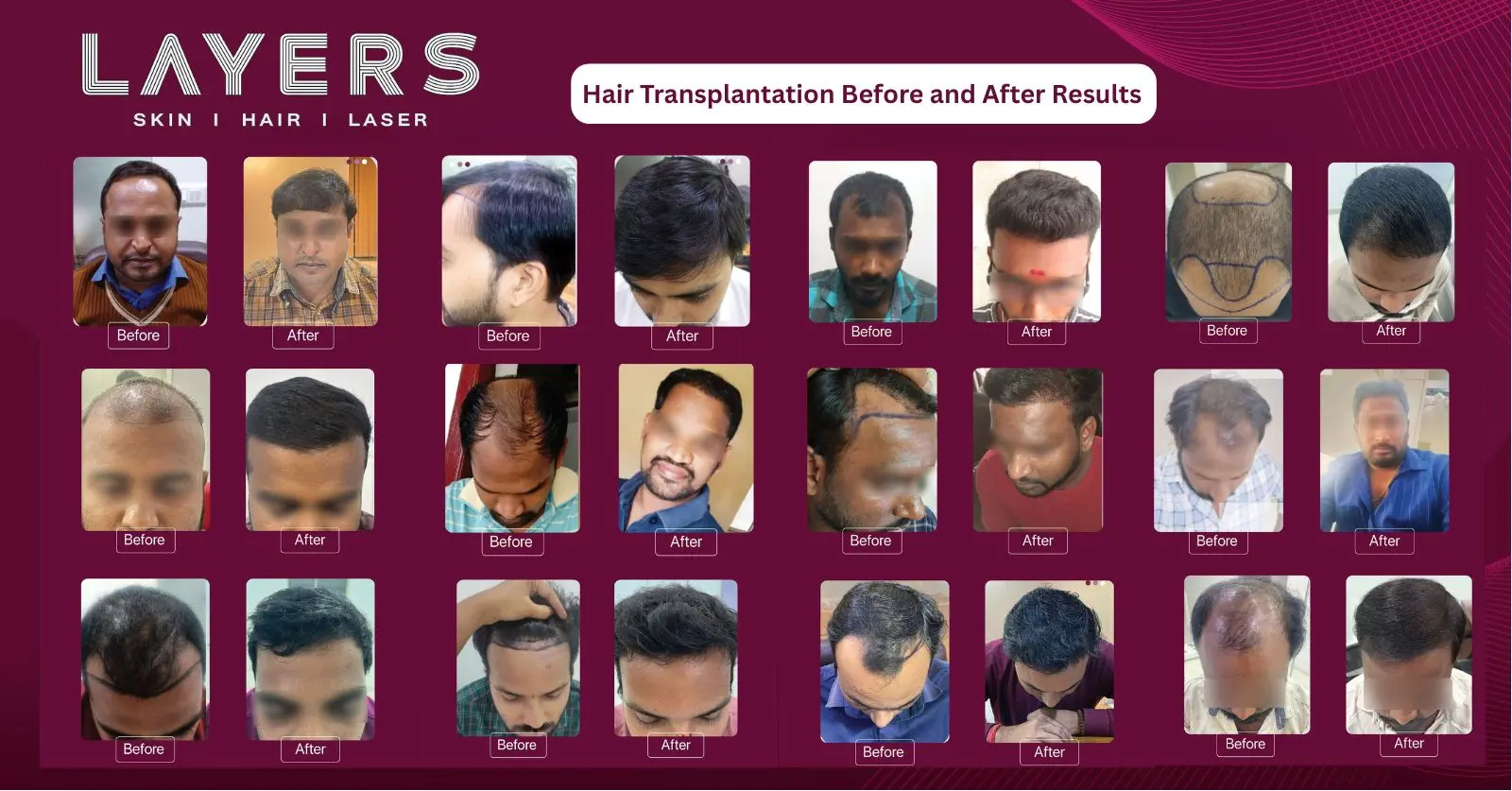
After transplantation, the newly placed follicles undergo a healing and growth cycle. Patients should therefore avoid judging the final outcome during the early recovery period.
The timeline can differ between individuals depending on factors such as the procedure performed, healing response, existing hair characteristics, and overall treatment plan.
Patience and appropriate follow-up are important parts of the hair restoration journey.
Is Hair Transplant Surgery Permanent?
Transplanted follicles are generally selected from areas considered more resistant to the pattern of hair loss being treated. However, the long-term outcome depends on individual factors and the underlying condition causing hair loss.
It is also important to remember that existing non-transplanted hair can continue to thin.
For this reason, a good hair restoration plan should consider future hair loss rather than concentrating only on the current bald area. Long-term planning can help preserve a balanced appearance as a person ages.
How Much Does a Hair Transplant Cost in Ahmedabad?
One of the most common questions patients ask is about hair transplant cost in Ahmedabad.
There is no single price that applies to every patient because the treatment requirements vary considerably.
The final cost may depend on:
- Number of grafts required
- Size of the recipient area
- Hair-loss stage
- Donor-area characteristics
- Technique selected
- Complexity of the procedure
- Surgeon and clinical expertise
- Additional treatment requirements
- Follow-up and post-operative care
A patient requiring treatment for a small receding hairline may have very different requirements from someone with extensive frontal and crown hair loss.
Therefore, an individualized consultation is a better way to understand the expected treatment requirements and associated cost than choosing a clinic solely on the basis of a promotional price.
Why Choose Layers Clinics for Hair Transplant in Ahmedabad?
Choosing the right clinic can make an important difference to your hair restoration journey. Layers Clinics focuses on personalised treatment planning, surgical safety, and structured post-transplant care.
- Experienced hair transplant surgeons with expertise in FUE, FUT, DHI, and BHT techniques
- Personalised treatment plans based on your hair-loss pattern, scalp condition, and donor hair availability
- Sterile, safety-focused environment with appropriate surgical protocols
- Dedicated post-transplant care to support healing and monitor progress
- Transparent pricing based on the treatment and graft requirements
- PRP therapy options to support the health of existing hair when clinically appropriate
FAQs About Hair Transplant in Ahmedabad
Is hair transplant safe?
Hair transplantation is a surgical procedure and, like other surgery, carries potential risks. A proper medical assessment and treatment by qualified professionals can help identify individual risk factors and determine whether transplantation is appropriate.
Which is better: FUE or FUT?
Neither technique is universally better for every patient. FUE and FUT are different donor-harvesting approaches, and the appropriate option depends on factors such as donor characteristics, hair-loss pattern, surgical goals, and the patient’s preferences.
Does FUE leave scars?
Yes. FUE generally avoids the single linear scar associated with FUT, but individual extraction sites can leave small scars. Claims that hair transplantation is completely “scarless” should therefore be treated cautiously.
How many grafts will I need?
The number of grafts cannot be accurately determined from a generic online estimate. It depends on the size and location of hair loss, desired density, donor availability, existing hair, and long-term treatment strategy.
Can women undergo hair transplantation?
Yes, selected women with suitable causes and patterns of hair loss may be candidates. However, the underlying cause of hair loss should be evaluated before surgery.
Can a hair transplant restore a completely bald scalp?
The answer depends on donor availability and the extent of baldness. A limited donor supply may restrict the amount of coverage that can be achieved. A realistic consultation is essential for understanding what is achievable.
Key Takeaway
Choosing the best hair transplant in Ahmedabad depends on your hair-loss pattern, donor hair, scalp condition, and restoration goals. FUE and FUT are established techniques, but the right option varies by patient. A professional consultation helps determine the suitable technique, graft requirement, hairline design, and expected results.
At Layers Clinics, personalized consultations help patients understand their hair-restoration options and make an informed treatment decision.
Take the Next Step Toward Hair Restoration
Choosing the best hair transplant in Ahmedabad involves more than cost or technique. Proper diagnosis, donor assessment, realistic expectations, and experienced medical care are essential for a successful outcome.
At Layers Clinics, patients receive personalized guidance to understand suitable hair restoration options. Book a consultation to take an informed step toward restoring your hair and confidence.
