
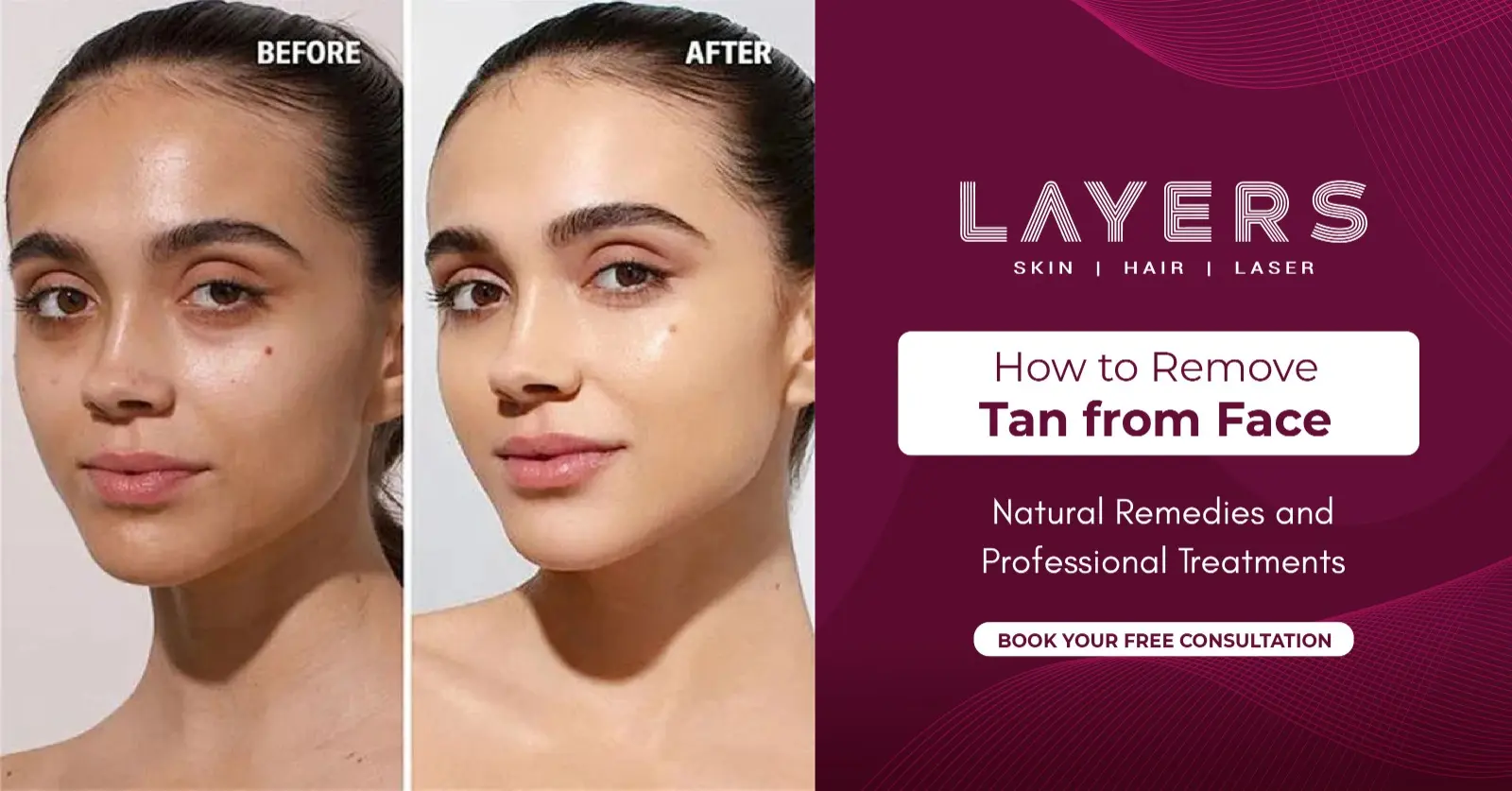
Spending time outdoors is part of a healthy, active life but constant sun exposure often leaves the face looking darker, patchy, and uneven, especially across the forehead, cheeks, nose, and neck. Tanning is your skin’s natural defense mechanism, not damage in itself, but the wrong approach to fixing it can do more harm than the tan itself.
This guide covers how to remove tan from face, what actually works to reduce facial tanning at home, the popular remedies dermatologists warn against, and the signs that tell you it’s time for professional care.
Why Sun Tan Happens
When skin is exposed to UV radiation, it produces extra melanin the pigment responsible for protecting deeper skin layers from damage. That’s what causes the temporary darkening we call a tan. Repeated exposure without protection can make this darkening linger and turn into visible, patchy pigmentation.
Common contributors to facial tanning:
- Sun exposure without sunscreen, especially during peak hours (11 AM–3 PM)
- Regular outdoor commuting or travel
- Pollution and dust buildup on the skin
- Dehydrated, poorly nourished skin
- Infrequent exfoliation, which lets dulling dead skin cells accumulate
Tan or Sunburn? Know the Difference
These get confused often, and the fix for one can worsen the other. Tanning is a gradual melanin response skin darkens but stays intact. Sunburn is actual skin damage from overexposure redness, heat, pain, and sometimes peeling. If your skin is sunburned, skip exfoliation and active ingredients entirely until it heals; treating sunburned skin like a simple tan can cause further irritation and pigmentation.
Home Remedies That May Help With Mild Tan
For mild, surface-level tanning, a few natural ingredients can gently support skin renewal:
Aloe Vera — Soothes UV-irritated skin and supports cell regeneration. Apply fresh gel before bed to calm inflammation and improve hydration over time.
Yogurt and Honey Mask — Yogurt’s lactic acid gently exfoliates dead skin cells, while honey hydrates. Use once or twice a week for a gradual brightening effect.
Tomato Pulp — Rich in antioxidants and mild natural acids that can help refresh dull, sun-exposed skin when applied a few times a week.
These remedies work best on mild tanning and won’t reverse deeper pigmentation that requires clinical treatment, covered further below.
Home Remedies to Avoid and Why
Not every “natural” fix is safe. A few widely shared remedies can actually worsen your skin:
- Raw lemon juice — A popular DIY tip, but undiluted lemon is highly acidic and photosensitizing. Applying it before sun exposure can trigger phytophotodermatitis a burning, blistering reaction that leaves dark patches lasting weeks or months. Dermatologists generally advise against direct application.
- Baking soda scrubs — Too alkaline for skin’s natural pH; frequent use can damage the skin barrier and worsen sensitivity.
- Aggressive DIY scrubbing — Vigorous exfoliation with sugar, salt, or coarse homemade scrubs can cause micro-tears, making pigmentation worse instead of better.
If you want a citrus-based brightening effect, use a gentle, dermatologist-formulated vitamin C serum instead it delivers the benefit without the sun-sensitivity risk.
Daily Skincare Habits That Help Tan Fade
Gentle exfoliation — 1–2 times a week using a mild chemical exfoliant (like a low-percentage AHA) rather than physical scrubs, to clear dead, tanned skin cells without irritation.
Consistent hydration — Moisturizers with hyaluronic acid and adequate water intake help skin repair itself faster.
Daily broad-spectrum sunscreen — SPF 30 or higher, reapplied every 2–3 hours, even indoors near windows or on cloudy days. This is the single most important step without it, any tan-reduction routine is working against a moving target.
Does Diet Affect Tanning and Skin Brightness?
What you eat plays a supporting role. Antioxidant-rich foods berries, leafy greens, tomatoes, and citrus fruits (eaten, not applied) help the skin manage oxidative stress from UV exposure. Adequate vitamin C and E intake supports collagen and skin repair, while staying hydrated helps skin recover its natural tone faster. Diet alone won’t remove a tan, but it makes every other step in your routine more effective.
How to Remove Tan from Face, Hands and Neck
These areas are exposed just as much as the face but often skipped in skincare routines, which is why they tan faster and recover slower:
- Hands and neck: Weekly exfoliation, antioxidant-rich moisturizer, and daily sunscreen these areas are frequently forgotten during SPF application
- Forehead: Receives the most direct, consistent sun exposure of any facial area; consistent cleansing, sunscreen, and brightening serums help prevent deeper, harder-to-treat pigmentation from setting in
Can Tan Be Removed Immediately?
Not safely. Skin renewal is a biological process, and while some treatments visibly brighten skin faster than others, there’s no legitimate way to erase a tan overnight. Be cautious of products or remedies promising instant, permanent results they’re either overstating a temporary effect or using something harsh enough to irritate skin.
When Home Remedies Aren’t Enough
Home care works well for mild, recent tanning. It’s time to consult a dermatologist if:
- Tanning persists for several weeks despite consistent sunscreen and skincare
- Dark patches appear uneven, spreading, or symmetrical (a possible sign of melasma rather than simple tan)
- Skin becomes irritated, inflamed, or blotchy after trying home remedies
- You want faster, more predictable results before an event
At this stage, clinical options like chemical peels, laser toning, and dermatologist-guided brightening treatments can address pigmentation more precisely than any home remedy. We cover the full breakdown of these treatments, costs, and session timelines in our Skin Tan Removal Treatment guide this article focuses specifically on safe at-home care and prevention.
Why Choose Layers Clinics for Tan Removal?
When home remedies plateau, having dermatology-backed guidance makes the difference between a quick fix and a lasting result. At Layers Clinics, you get:
- Personalized skin consultations before any treatment recommendation
- Experienced dermatology specialists, not generic aesthetic advice
- Honest guidance on whether your case needs a skincare adjustment or a clinical treatment
- Safe, hygienic clinical environment for any advanced procedures
Frequently Asked Questions
How Can I Remove Tan from My Face Quickly and Safely?
Mild facial tanning can gradually improve with consistent broad-spectrum sunscreen, gentle skincare, adequate hydration, and appropriate exfoliation. Persistent or deeper pigmentation may require dermatologist-guided treatment rather than aggressive home remedies.
Is Lemon Juice Safe for Removing Tan?
No. Raw lemon juice is not recommended for facial tan removal because its acidity and potential photosensitivity can irritate the skin and may contribute to reactions that leave darker patches. A dermatologist-formulated brightening product is a safer alternative.
How Long Does It Take for a Tan to Fade Naturally?
The time varies depending on the intensity and duration of sun exposure, skin type, and ongoing sun protection. Mild tanning may gradually fade over several weeks, while persistent pigmentation can take longer and may require professional assessment.
Can Tan Be Removed Permanently?
A tan can fade, but continued UV exposure can cause new tanning. Consistent broad-spectrum sunscreen, protective clothing, shade, and appropriate skincare are important for preventing the tan from returning. Persistent pigmentation may need professional treatment.
Can Home Remedies Remove Tan from the Face?
Some gentle home-care practices may support the gradual improvement of mild tanning, but home remedies cannot reliably remove deeper or persistent pigmentation. Avoid harsh ingredients and physical scrubbing, which can irritate the skin and potentially worsen pigmentation.
When Should I See a Dermatologist for Facial Tan?
Consider consulting a dermatologist if pigmentation persists despite consistent sun protection, becomes uneven or spreads, causes irritation, or does not respond to appropriate skincare. A dermatologist can determine whether it is simple tanning or another pigmentation concern and recommend suitable treatment.
Key Takeaway
The safest way to reduce facial tan is to combine consistent broad-spectrum sunscreen with gentle skincare and patience, rather than using harsh DIY remedies. Mild tanning may gradually fade as the skin naturally renews, while persistent or uneven pigmentation may require dermatologist-guided treatments such as chemical peels or laser-based procedures. Avoid raw lemon juice, baking soda, and aggressive scrubbing because irritation can worsen pigmentation. If dark patches persist, spread, or appear unevenly despite good sun protection, a dermatologist can determine whether the concern is tanning, melasma, or another pigmentation condition.
Restore Your Skin’s Natural Glow
Facial tanning is common and completely manageable with the right approach gentle skincare, consistent sun protection, and knowing when home remedies have reached their limit. If your tan isn’t responding to home care after a few weeks, or you notice uneven, spreading patches, Layers Clinics offers personalized dermatology guidance to get your skin tone back on track safely.
Book a consultation at Layers Clinics to find out whether your skin needs a routine adjustment or a targeted clinical treatment.
