
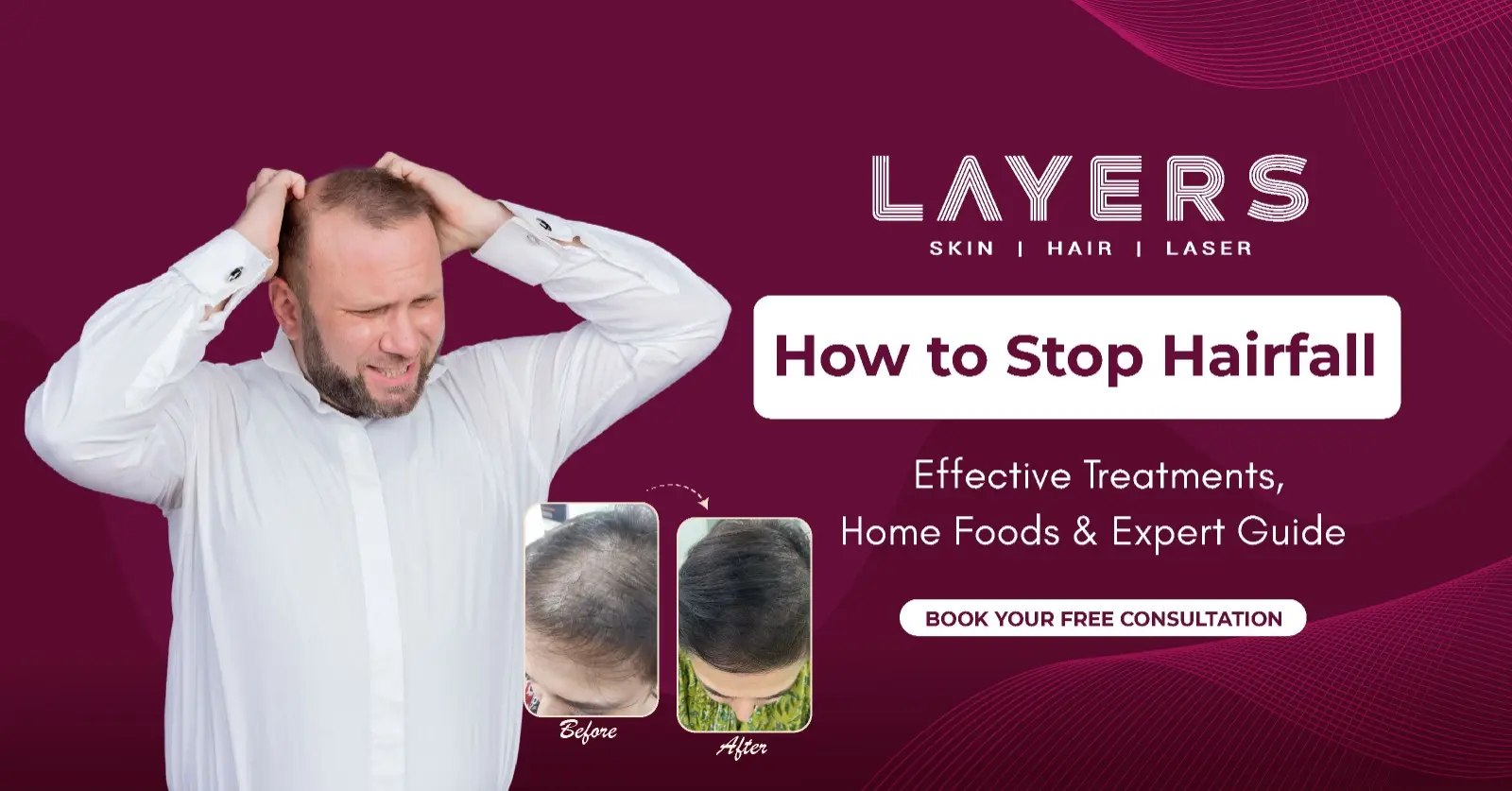
Hair fall can occur due to genetics, stress, nutritional deficiencies, hormonal changes, scalp conditions, or improper hair care. The most effective way to stop hair fall is to identify its underlying cause and follow a treatment plan suited to your scalp and hair condition.
For people experiencing hair thinning, excessive shedding, or early signs of balding, dermatologist-recommended treatments, a balanced diet, and appropriate hair care may help reduce further hair loss and support healthy hair growth. Results depend on the cause, severity, and response to treatment.
| Key Takeaway: To reduce hair fall, identify the trigger, correct nutritional deficiencies when present, manage scalp conditions, and consider evidence-based treatments such as minoxidil when appropriate. Persistent, sudden, or patchy hair loss should be evaluated by a dermatologist. |
Why Is Your Hair Falling Out?
Understanding why your hair is falling out is the first step toward choosing the right hair fall treatment. Losing some hair every day is normal, but increased shedding, a widening part, a receding hairline, or visible scalp thinning may indicate an underlying concern.
Common causes of hair fall include:
1. Genetic Hair Loss and Balding
Androgenetic alopecia, commonly known as pattern hair loss, is a frequent cause of gradual hair thinning in men and women. It is influenced by genetic and hormonal factors and may cause a receding hairline, thinning at the crown, or widening of the hair part.
Early assessment can help determine whether treatment may slow progression and preserve existing hair.
2. Stress-Related Hair Fall
Physical or emotional stress, major illness, surgery, rapid weight loss, or significant life changes can trigger a condition called telogen effluvium. This can cause increased shedding, often appearing a few months after the triggering event.
How to reduce hair fall caused by stress: Address the underlying stressor, maintain regular sleep, eat balanced meals, and avoid restrictive diets. Hair shedding often improves after the trigger resolves, although recovery can take several months.
3. Nutritional Deficiencies
Low iron levels, inadequate protein intake, and certain vitamin or mineral deficiencies may contribute to hair loss. However, not every case of hair fall is caused by a deficiency.
A healthcare professional may recommend blood tests based on your symptoms and medical history. Supplements should be used to correct identified deficiencies rather than taken indiscriminately.
4. Hormonal Changes and Medical Conditions
Thyroid disorders, hormonal changes after pregnancy, certain medications, and other medical conditions can contribute to excessive shedding or thinning.
Treating the underlying condition may help improve hair health. Do not stop prescribed medication without discussing potential side effects with your doctor.
5. Scalp Problems and Hair Damage
Dandruff, scalp inflammation, certain infections, tight hairstyles, chemical processing, and excessive heat styling may contribute to shedding, breakage, or both.
A dermatologist can distinguish hair breakage from hair loss originating at the follicle, as the management approaches differ.
How to Stop Hair Fall: 7 Effective Steps
If you are looking for ways to stop hair fall and hair thinning, start with a systematic approach rather than trying multiple products at once.
- Identify the cause: Note when the shedding started, whether it is diffuse or patchy, and whether other symptoms are present.
- Seek a scalp assessment: A dermatologist can examine your scalp and hair-loss pattern and recommend appropriate tests.
- Correct nutritional deficiencies: Address confirmed deficiencies and maintain adequate protein and calorie intake.
- Use suitable treatments: Consider evidence-based medication or procedures when recommended for your diagnosis.
- Improve hair care: Avoid tight hairstyles, excessive heat, harsh chemical treatments, and aggressive brushing.
- Manage stress and sleep: Maintain a consistent sleep schedule and use practical stress-management techniques.
- Track progress: Take photographs under consistent lighting and attend follow-up appointments to assess changes.
These steps can help you manage hair fall more effectively, but the appropriate combination depends on the underlying condition.
Dermatologist-Recommended Treatments for Hair Fall
There is no single treatment that works for every type of hair loss. The right option depends on whether the problem involves temporary shedding, genetic thinning, a scalp condition, or another medical cause.
1. Minoxidil for Hair Thinning
Minoxidil is a well-studied treatment used for certain types of pattern hair loss. Topical formulations may help support hair growth and slow further thinning in suitable candidates.
- Who may benefit? People with diagnosed pattern hair loss who are suitable candidates for treatment.
- What to expect: Improvement generally takes several months, and consistent use is important.
- Important considerations: Temporary increased shedding or scalp irritation can occur. Benefits may diminish after treatment is discontinued.
Use the appropriate formulation and follow medical guidance, particularly if you have other health conditions or experience scalp irritation.
2. Platelet-Rich Plasma (PRP) Therapy
PRP therapy involves processing a sample of your blood to concentrate platelets and injecting the preparation into selected areas of the scalp.
It may help improve hair density in some people with pattern hair loss. However, results vary, protocols differ, and multiple sessions may be required. It is not a guaranteed solution for every type of hair loss.
3. GFC Hair Treatment
Growth Factor Concentrate (GFC) is a treatment that uses growth-factor-rich preparations derived from a person’s blood. It is offered for selected hair-thinning concerns.
Evidence is still developing, and the degree of benefit can vary. Discuss the available evidence, expected outcomes, costs, and alternatives with a qualified doctor before proceeding.
4. Treatment for Nutritional or Hormonal Causes
When investigations identify an underlying deficiency or medical condition, targeted treatment may help reduce hair shedding. This could involve nutritional correction or management of a thyroid or hormonal disorder.
Certain prescription medications may also be appropriate for specific forms of hair loss. Their suitability, contraindications, and monitoring requirements should be discussed with a clinician.
5. Hair Transplantation for Selected Cases
Hair transplantation may be an option for suitable people with established pattern hair loss and adequate donor hair. It redistributes hair follicles from a donor area to areas affected by thinning.
It does not prevent future hair loss in untreated areas, so a long-term management plan may still be necessary. A specialist assessment is essential before deciding on surgery.
Which Hair Fall Treatment Is Right for You?
| Hair concern | Possible treatment approach |
| Gradual genetic thinning | Minoxidil or other appropriate medical treatments |
| Stress-related shedding | Address the trigger and correct contributing factors |
| Confirmed nutritional deficiency | Targeted nutritional correction |
| Selected cases of pattern hair loss | PRP or other adjunct procedures |
| Advanced pattern hair loss | Assessment for hair transplantation |
| Inflamed or unhealthy scalp | Diagnosis and treatment of the scalp condition |
The table provides general guidance, not a personal diagnosis. A dermatologist can help determine which treatment is appropriate.
Foods That Promote Healthy Hair Growth
A balanced diet supports normal hair growth and helps prevent nutritional deficiencies that can contribute to shedding. However, no individual food can stop genetic hair loss or guarantee faster regrowth.
Include these foods in your regular diet:
1. Protein-Rich Foods
Eggs, lentils, beans, dairy products, fish, chicken, tofu, and other protein-rich foods provide amino acids needed to produce keratin, a structural protein in hair.
2. Iron-Rich Foods
Leafy greens, lentils, beans, and meat provide iron in varying amounts. Pairing plant-based iron sources with vitamin C-rich foods can improve iron absorption.
3. Nuts and Seeds
Almonds, walnuts, pumpkin seeds, and other nuts and seeds provide healthy fats and nutrients such as zinc and vitamin E.
4. Fruits and Vegetables
Amla, guava, citrus fruits, berries, carrots, and leafy vegetables contribute vitamin C, carotenoids, and other nutrients that support overall health.
5. Foods Containing Vitamin B12 and Vitamin D
Eggs, dairy products, fish, and fortified foods can contribute these nutrients, depending on the food and dietary pattern. People following restrictive diets or with risk factors for deficiency may need professional assessment.
Diet tip: Focus on dietary variety, sufficient protein, and adequate overall nutrition. Avoid high-dose hair supplements unless a clinician identifies a need, as excessive intake of certain nutrients can itself cause harm or contribute to hair loss.
How to Stop Hair Fall Naturally at Home
Home care can reduce preventable hair damage and support scalp health, but it cannot treat every cause of hair loss.
- Use a gentle shampoo: Choose a product suited to your scalp and wash as often as needed to keep it comfortable and clean.
- Condition the hair: Conditioner can reduce friction, tangling, and breakage.
- Avoid excessive heat: Limit frequent use of straighteners, curling irons, and very hot blow-dry settings.
- Handle wet hair carefully: Use a wide-tooth comb and avoid forceful brushing.
- Avoid tight hairstyles: Repeated pulling from tight braids, ponytails, or extensions can cause traction alopecia.
- Manage stress: Walking, relaxation exercises, and consistent sleep may help you manage stress-related triggers.
- Avoid unproven remedies: Oils and home remedies may improve hair feel or reduce friction, but they do not reliably reverse genetic hair loss.
If hair fall continues despite these measures, professional evaluation is more useful than repeatedly switching shampoos or oils.
How Long Does It Take to Reduce Hair Fall?
The timeline depends on the cause and the treatment used.
| Time frame | What to expect |
| First few weeks | You may begin addressing triggers or correcting a confirmed deficiency. |
| Around 2–3 months | Some cases of temporary shedding may begin to improve after the trigger resolves. |
| Around 3–6 months or longer | Some treatments may begin showing noticeable changes in hair growth or density. |
| Longer-term follow-up | Ongoing assessment may be needed to maintain results and manage progressive hair loss. |
These are general estimates, not guaranteed milestones. Hair growth is gradual, and some conditions require longer treatment or may not be fully reversible.
When Should You See a Dermatologist for Hair Fall?
Arrange a medical assessment if you notice:
- Sudden or excessive hair shedding.
- Round or irregular bald patches.
- A rapidly receding hairline or widening hair part.
- Scalp pain, redness, scaling, or persistent itching.
- Hair loss accompanied by other unexplained symptoms.
- Continued thinning despite changes to your hair care routine.
A dermatologist may review your medical history, examine your scalp, and recommend targeted tests when appropriate. Early diagnosis can be especially important when hair loss is caused by inflammation or scarring that may damage follicles permanently.
Frequently Asked Questions
1. How can I stop hair fall immediately?
There is no reliable way to stop all hair fall immediately. Identify the likely cause, use gentle hair care, maintain adequate nutrition, and seek medical advice if shedding is sudden, severe, or persistent.
2. How can I reduce hair fall and hair thinning?
Hair fall and thinning may improve when the underlying cause is treated. Depending on the diagnosis, options may include minoxidil, correction of nutritional deficiencies, management of scalp conditions, or other dermatologist-recommended treatments.
3. How can I stop balding naturally?
Healthy nutrition and gentle hair care support hair health, but genetic balding generally cannot be reversed through diet or oils alone. Evidence-based treatments may help slow progression in suitable candidates.
4. Which deficiency causes hair fall?
Iron deficiency and inadequate protein intake can contribute to hair loss. Other nutritional deficiencies may also play a role in certain cases. Testing should be guided by symptoms, dietary history, and medical assessment.
5. How can I reduce hair fall caused by stress?
Identify and address the stressor, maintain regular sleep, eat adequately, and avoid crash diets. Stress-related shedding often improves after the trigger resolves, although recovery may take several months.
6. Does oiling stop hair fall?
Oiling may reduce friction and improve hair manageability, depending on the product and hair type. It does not reliably treat genetic hair loss, hormonal causes, or nutritional deficiencies.
7. Is PRP or GFC better for hair fall?
Neither treatment is universally better. Evidence, suitability, treatment protocols, cost, and individual response differ. Consult a qualified dermatologist to discuss the expected benefits and limitations of each option.
8. When should I seek professional hair fall treatment?
Seek an assessment for sudden, patchy, persistent, or progressive hair loss, especially when accompanied by scalp symptoms. Early evaluation can help identify treatable causes and guide an appropriate plan.
Conclusion
Learning how to stop hair fall begins with understanding why it is happening. A balanced diet, gentle hair care, and stress management can support healthy hair, while treatments such as minoxidil, PRP, or other medical options may be suitable for selected conditions.
At Layers Clinics, a personalized hair and scalp assessment can help identify the underlying concern and guide appropriate treatment options. If you are experiencing persistent hair fall, increasing hair thinning, or early balding, consult a qualified dermatologist to discuss a treatment plan tailored to your needs.
Book a Consultation to explore suitable hair fall management and hair restoration options.
