

Hair loss can have many causes, including androgenetic alopecia, hormonal changes, nutritional deficiencies, stress, certain medical conditions and scalp disorders. As regenerative hair treatments become more popular, two options that frequently come up are Exosomes and PRP for hair loss.
Both treatments are intended to support the hair follicles but they do so in different ways. PRP is concentrated platelets from your own blood. Exosome treatments are vesicles that contain signaling molecules that are purported to affect cellular activity.
So which treatment to choose when comparing Exosomes vs PRP for hair loss?
The answer depends on the cause and stage of your hair loss, the condition of your scalp and follicles, past treatments, medical history, and the specific product or protocol in question. Neither treatment should be seen as a cure-all for all types of hair loss.
The current research suggests that PRP has a larger clinical evidence base for pattern hair loss, while exosome therapy is an emerging treatment with promising but still limited clinical evidence. Recent reviews continue to emphasize the need for larger, standardized studies of exosome-based hair treatments.
Key Takeaway
PRP and exosome treatments are different approaches to hair loss, and neither is universally right for everyone. PRP currently has a larger clinical evidence base for pattern hair loss, while exosome therapy is an emerging option with promising but still limited evidence. The appropriate treatment depends on the cause and stage of hair loss, scalp condition, viable follicles and individual treatment needs.
What Is PRP Hair Treatment?
Platelet-rich plasma (PRP) therapy involves drawing a small amount of your blood and then processing it to concentrate the platelets in plasma.
Platelets contain many growth factors and signaling proteins. The prepared plasma is injected into the scalp in certain areas under the supervision of a dermatologist during the PRP treatment.
The aim is to develop a local environment that can help existing hair follicles and improve hair density or thickness in appropriate patients.
Clinical research has shown PRP to improve hair density in androgenetic alopecia, but the studies differ greatly in their preparation methods, treatment schedules, and outcome measures. A 2024 meta-analysis found increased hair density with PRP, but overall evidence was graded as low quality due to substantial heterogeneity and publication bias.
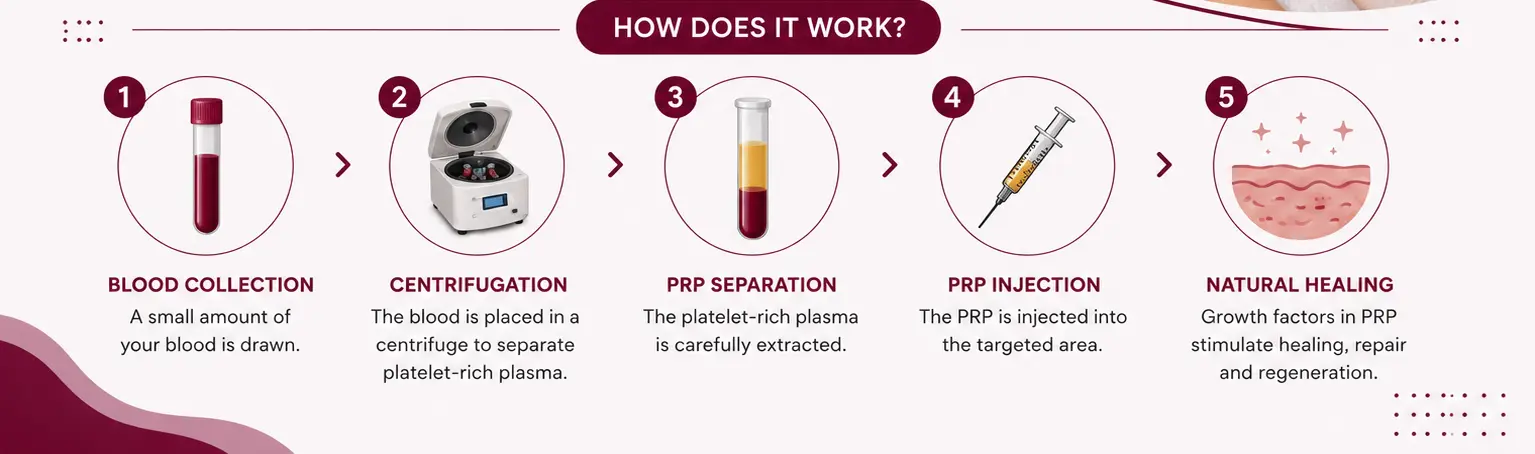
How PRP May Support Hair Growth
PRP may:
- Deliver concentrated platelets to the treatment area
- Release growth factors around the hair follicles
- Support the follicular microenvironment
- Potentially improve hair shaft thickness
- Support miniaturized follicles in suitable cases
PRP cannot make new hair follicles in areas where follicles have been permanently destroyed.
What Is Exosome Treatment for Hair Loss?
Exosomes are small extracellular vesicles that are involved in intercellular communication. Depending on their origin, they can contain proteins, lipids, messenger RNA and other biological signals.
Researchers in hair loss research are also looking at exosome-based treatments to see their effect on follicular cells, inflammation, vascular signaling and pathways involved in the hair-growth cycle.
Early clinical research has shown improvements in hair density and thickness in small studies using different sources, formulations, and methods of delivery. Standardized protocols and larger controlled trials have been highlighted as necessary in recent systematic reviews.
How Exosomes May Support Hair Growth
Research is investigating whether exosomes may:
- Influence signaling between cells
- Support dermal papilla cell activity
- Modulate inflammatory pathways
- Support the hair follicle environment
- Influence pathways involved in the hair-growth cycle
It is important not to confuse exosome therapy with a stem-cell transplant. Exosomes are extracellular vesicles; they are not stem cells themselves.
Exosomes vs PRP for Hair Loss: Key Differences
| Feature | PRP | Exosome-Based Treatment |
| Source | Patient’s own blood | Depends on the specific product/source |
| Main concept | Concentrated platelets and growth factors | Extracellular vesicles containing biological signaling molecules |
| Evidence for pattern hair loss | More established clinical research | Emerging clinical evidence |
| Preparation | Blood collection and processing | Product-specific preparation |
| Standardization | Protocols vary between clinics | Product source and formulation can vary substantially |
| Treatment approach | Scalp injections | Depends on the clinical protocol |
| Main consideration | Patient suitability and PRP preparation | Product quality, source, manufacturing and regulatory considerations |
| Research status | Investigated in multiple clinical trials | Promising but still developing |
The table clearly shows that PRP vs exosomes for hair loss is not just a matter of choosing the newer or more advanced-sounding treatment.
PRP vs Exosomes for Hair Loss: Which Has More Evidence?
Currently, PRP has a larger clinical research base for androgenetic or pattern hair loss.
Several systematic reviews have outlined potential improvements in hair density following PRP treatment. However, the evidence is not entirely uniform and differences in platelet concentration, preparation techniques, injection protocols and treatment schedules make direct comparisons difficult.
Exosome research is more recent. In 2025, a systematic review found 11 clinical trials of treatments for hair loss based on exosomes and reported improvements in at least one hair metric in the studies included in the review . However, the review also highlighted the differences in the study designs, sources of exosomes, treatment methods, and follow-up durations.
In 2026, a systematic review also indicated promising early clinical findings but noted limitations including small sample sizes, retrospective studies, inconsistent outcome measures and the need for larger randomized controlled trials.
Exosomes are not yet at a level of PRP to be used routinely for the treatment of hair loss and there needs to be more research.
How Effective Is PRP for Hair Loss?
One of the common searches around this topic is “how effective is PRP for hair loss?”
PRP may be helpful for selected people with pattern hair loss, particularly when viable but weakened or miniaturized follicles remain.
However, results can vary because of:
- Cause of hair loss
- Duration of hair loss
- Degree of follicle miniaturization
- Age and hormonal factors
- Scalp health
- PRP preparation method
- Number and spacing of sessions
- Individual response
- Other treatments being used
PRP should therefore be viewed as one component of a personalized hair-loss treatment plan rather than a guaranteed hair-regrowth procedure.
Do Exosomes Work for Hair Loss?
Another high-intent question is “do exosomes work for hair loss?”
Early research suggests that exosome-based approaches may have potential for supporting hair growth, particularly in androgenetic alopecia. However, the available human evidence remains limited compared with established hair-loss treatments.
A 2023 systematic review described the evidence as promising but limited and called for further studies addressing treatment mechanisms, delivery, efficacy and safety.
More recent reviews have continued to identify encouraging findings while emphasizing limitations in study quality, standardization and long-term evidence.
This means that exosome therapy should be discussed as an emerging treatment option rather than presented as a guaranteed or universally superior alternative to PRP.
What About Exosome vs PRP Hair Treatment Side Effects?
Both procedures can have treatment-related effects, although the risk profile depends on the specific technique and product used.
Possible PRP-related effects
PRP injections may cause temporary:
- Tenderness
- Redness
- Swelling
- Bruising
- Mild scalp discomfort
- Temporary sensitivity
Because PRP uses the patient’s own blood-derived material, concerns related to donor-derived biological material are different from those associated with externally sourced products.
Potential considerations with exosome treatment
Possible reactions can depend heavily on the product source, preparation, sterility, delivery technique and ingredients used.
Patients should ask exactly:
- What is the source of the exosomes?
- How is the product manufactured?
- What quality controls are used?
- Is the product intended for human use?
- What clinical evidence supports the specific product?
- What regulatory approvals or authorizations apply in the country where treatment is being offered?
This is particularly important because exosome products are not standardized as a single treatment category.
Are Exosomes Better Than PRP for Hair Loss?
There is currently not enough high-quality evidence to state that exosomes are universally better than PRP.
Exosome research is scientifically interesting and continues to develop, but the clinical evidence is still emerging. PRP has been studied more extensively in pattern hair loss, although PRP protocols and outcomes also vary.
The appropriate treatment should therefore be based on the diagnosis and individual treatment plan, rather than choosing a procedure solely because it is newer.
PRP vs Exosomes: Which May Be Considered for Different Situations?
Early or moderate pattern hair loss
A dermatologist may consider PRP as part of a treatment plan for appropriate patients with androgenetic alopecia.
Exosome-based approaches may also be discussed where clinically appropriate, but their evidence base remains less established.
Significant follicular miniaturization
When follicles have progressively become smaller, the treatment plan may need to address the underlying cause of hair loss and may include established medical therapies in addition to regenerative procedures.
Advanced baldness
Large areas of little or no viable hair should not be automatically considered as a substitution of hair transplantation with PRP or exosomes.
Prior to recommending regenerative treatment, a dermatologist should evaluate the presence of an adequate number of viable follicles.
Hair loss, sudden or unexplained
Sudden hair shedding does not mean that you should automatically jump to PRP or exosomes.
First, possible causes such as nutritional deficiencies, thyroid disorders, hormonal changes, infections, inflammatory scalp conditions or telogen effluvium may need to be explored.
Is there a possibility to combine PRP and exosomes?
Certain clinics may provide combination protocols that include PRP, exosomes or other hair regenerative procedures.
But combining treatments doesn’t necessarily mean better outcomes.
Can PRP and Exosomes Be Combined?
Some clinics may offer combination protocols involving PRP, exosomes or other hair-regenerative procedures.
However, combining treatments does not automatically mean better results.
A dermatologist should determine whether combining procedures is clinically appropriate.
How Many Sessions Are Needed?
There is no single session schedule that applies to everyone.
PRP protocols commonly involve multiple sessions followed by maintenance treatment when appropriate, but the exact schedule varies according to the patient’s condition and the clinic’s protocol.
Exosome treatment protocols are even less standardized because products and delivery methods differ between studies and clinical settings.
Patients should be cautious of claims promising a fixed number of sessions or guaranteed results.
PRP vs Exosomes Cost
The cost of PRP and exosome hair treatment can vary substantially depending on:
- Clinic and location
- Dermatologist’s experience
- Treatment protocol
- Number of sessions
- Product used
- Exosome source and formulation
- Additional scalp treatments
- Follow-up requirements
It is better to compare the complete treatment plan rather than comparing only the price of one session.
A lower price does not necessarily mean the same product, preparation method or level of clinical supervision.
An Important Consideration About Exosome Products
Patients should pay particular attention to the source and regulatory status of any exosome product being offered.
For example, the U.S. FDA states that there are currently no FDA-approved exosome products and has warned about unapproved exosome products marketed for medical conditions.
This does not mean that every exosome-related hair treatment offered in every country is identical or subject to the same regulatory framework. Regulations differ by jurisdiction.
However, it does mean patients should ask detailed questions about the specific product, its source, manufacturing standards, clinical evidence and applicable local regulatory requirements.
How a Dermatologist Determines the Right Hair-Loss Treatment
Before choosing between Exosomes vs PRP for hair loss, a dermatologist may assess:
- Pattern of hair loss – whether the loss resembles male or female pattern hair loss.
- Hair density – areas with reduced density and miniaturized hairs.
- Scalp condition – inflammation, scaling or other scalp disorders.
- Hair-pull or shedding history – particularly when shedding is sudden.
- Medical history – including medications and relevant health conditions.
- Hormonal or nutritional factors – when clinically indicated.
- Previous treatments – including topical or oral medications and procedures.
- Stage of hair loss – to determine whether regenerative treatment is appropriate.
A trichoscopy or other diagnostic assessment may also help evaluate follicular characteristics.
What Results Should You Expect?
Hair growth is gradual. Even when a treatment is appropriate, changes generally should not be judged immediately after a procedure.
Your dermatologist may monitor:
- Hair density
- Hair shaft thickness
- Hair shedding
- Scalp condition
- Photographic changes
- Patient-reported improvement
Standardized photographs taken under similar lighting and positioning can be useful for tracking progress.
Most importantly, results vary between individuals. No regenerative treatment can guarantee a particular amount of hair growth.
Frequently Asked Questions
1. Is PRP better than exosomes for hair loss?
There is not enough high-quality evidence to say that PRP is universally better than exosomes. PRP has a more established clinical evidence base, while exosome therapy is an emerging approach requiring further research.
2. Is there any evidence that exosomes are more effective in hair loss treatment than PRP?
The currently available literature fails to support the notion that exosomes are better than PRP in all circumstances. Although many studies on exosomes have delivered promising results, the evidence is still insufficient and the protocols vary considerably.
3. Is PRP effective in hair loss?
Based on current literature, PRP appears to increase hair density among certain people suffering from androgenetic alopecia. Still, there is a great variation between patients’ response and between study protocols.
4. Does exosomes help with hair loss?
Early clinical studies seem to show some positive effects, but again, the available evidence is far from being conclusive.
5. Can PRP and exosomes be combined in one therapy?
Some clinics might offer the treatment in combination, but whether it is a proper decision will depend on many factors, including the patient’s condition, treatment objectives and protocol used.
6. Can PRP be used for advanced baldness?
PRP is applicable in case there are viable follicles. However, PRP cannot regenerate lost follicles. The patients who have advanced hair loss require a checkup in connection with the possibility of hair transplant.
7. What is the timeline of hair treatment?
It takes some time for the hair to grow. To define how much time will be required to evaluate the effectiveness of the treatment, the reason for hair loss, the treatment protocol, and the way your body responds to it should be considered. A dermatologist can set up a follow-up.
8. Which should I choose PRP or exosomes?
The choice between the two treatment methods should be not only guided by the popularity and marketing campaigns but be made after defining the cause and the stage of hair loss. In case of such problems, a dermatologist can suggest the appropriate evidence-based and emerging hair treatments.
Final Thoughts
Comparison of Exosomes vs PRP for hair loss is becoming increasingly relevant as hair regenerative treatment is developing further.
PRP has more extensive clinical evidence of its possible effect on pattern hair loss despite the fact that there are various results and protocols. Exosome treatment is relatively new technology that shows promising results; however, there are no long-term studies to prove their effectiveness because of the lack of big clinical trials with standardized procedures and protocols.
Instead of thinking which treatment method is better in general, it is better to find out the cause and the stage of hair loss. With the help of the dermatologist’s consultation at Layers Clinics, you will be able to figure out which treatment would be appropriate for you – PRP, exosome treatment, medicines, hair transplantation or something else.
Book a Hair Loss Consultation at Layers Clinics
If you have any problems with your hair like thinning, hair shedding or hair loss, then it is highly recommended to visit a specialist for consultation before choosing any regenerative treatment.
Published Date: September 2026
