
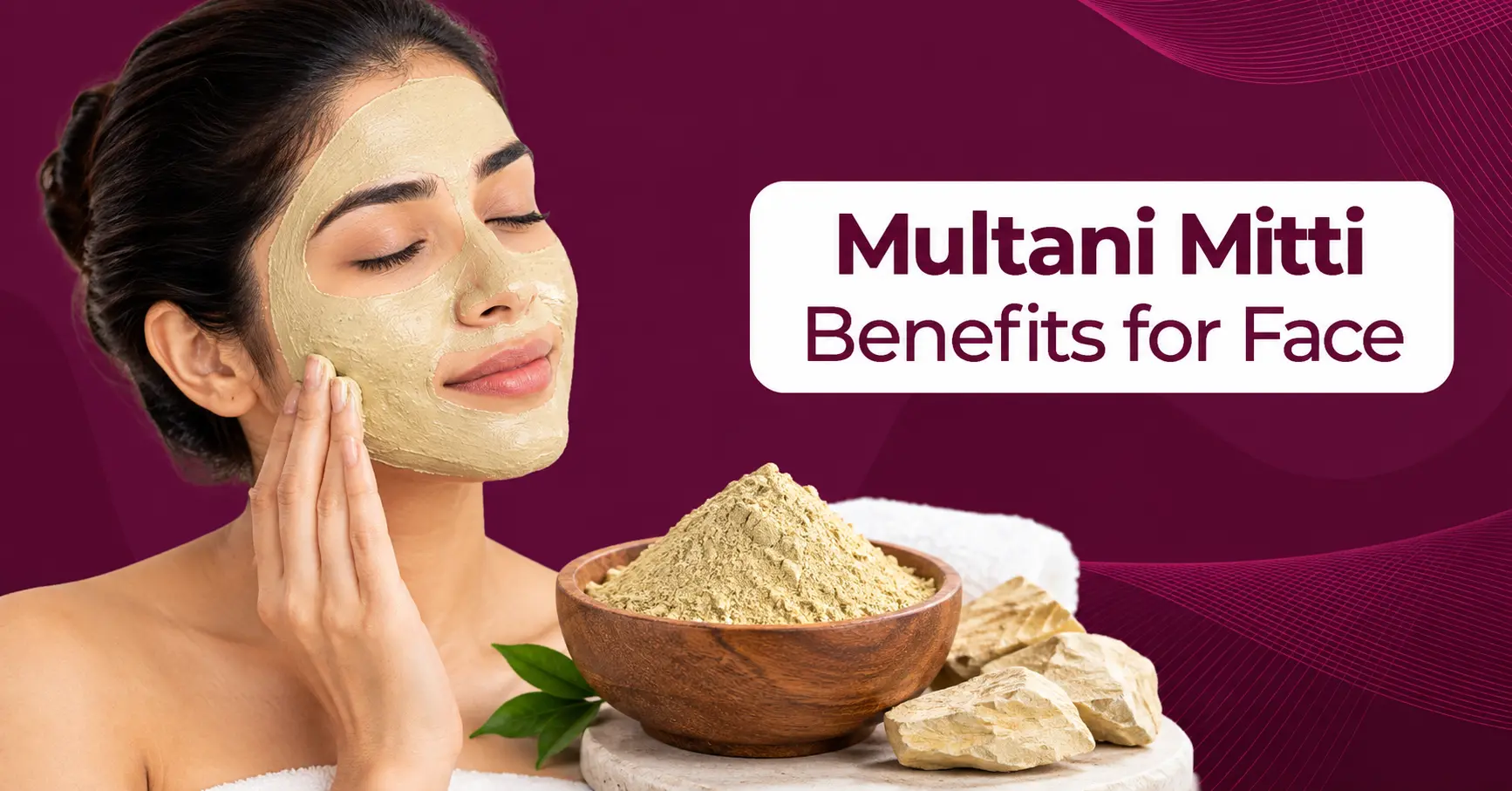
Multani mitti benefits for the face mainly include absorbing excess oil, providing a basic cleansing effect and giving skin a temporarily fresher appearance. It may be useful for oily or combination skin, but overuse can cause dryness and irritation.
If you’ve spent any time around Indian skincare whether it’s a grandmother’s home remedy or a shelf full of clay-based face packs you’ve almost certainly come across Multani mitti. Also known as Fuller’s earth, this naturally occurring clay has been a staple in skincare for generations, prized mainly for one thing: pulling excess oil off the skin and leaving it feeling clean and refreshed.
Its popularity isn’t hard to understand. But like most traditional remedies, it’s worth separating what it can genuinely do from what’s been exaggerated over the years because it’s not a fix-all for every skin type or every concern.
This guide walks through what Multani mitti actually does for oily and acne-prone skin, how to use it properly, what side effects to watch for, and when it’s time to bring in a dermatologist instead of another homemade mask.
What Exactly Is Multani Mitti?
Multani mitti is a naturally occurring clay that’s been used for centuries as a cleansing, oil-absorbing material. In skincare, it’s typically mixed with something else water, rose water, aloe vera, yoghurt to form a paste that’s applied as a face pack.
Its main strength lies in its absorbency. It pulls excess oil and surface impurities off the skin, which is where most of its reputation comes from. That said, it’s worth being clear upfront: Multani mitti isn’t a substitute for medically proven treatments when you’re dealing with acne, pigmentation, or other dermatological issues.
What Multani Mitti Actually Does for Your Skin
1. Soaks Up Excess Oil
This is really the headline benefit, and it’s the one most people are after. A clay mask can genuinely make oily skin feel cleaner, less greasy, fresher, and temporarily more matte.
If you deal with oily skin, using a clay mask occasionally can help take the edge off that shine. Just know that overdoing it works against you strip away too much oil, and you can end up with skin that’s dry or irritated instead.
2. Offers a Basic Cleansing Effect
Because it absorbs oil and surface debris, Multani mitti can double as a light, occasional cleanse. It’s not meant to replace your everyday facial cleanser, though think of it as an extra step, not a swap.
3. Can Leave Skin Feeling Smoother
Right after rinsing off a clay mask, skin often feels smoother and cleaner. It’s a nice sensation, but it’s largely cosmetic the clay hasn’t changed your skin’s actual texture on any lasting level.
4. Gives a Temporary Fresh Look
Strip away surface oil and your face tends to look less shiny and more refreshed handy before an event, or after a day out in heat and humidity. Just don’t mistake this for permanent brightening. It fades as oil naturally returns.
5. Works Best for Oily Skin Types
People with oily skin generally tolerate clay masks better than those with dry or sensitive skin, simply because there’s more oil for the clay to absorb. Even so, restraint matters too much, too often, and you risk dryness and irritation regardless of your skin type.
6. Mixes Well Into Homemade Face Packs
Multani mitti pairs with a range of ingredients depending on what your skin needs:
- Multani mitti and plain water
- Multani mitti and aloe vera
- Multani mitti and yoghurt
- Multani mitti and rose water
Which combination works best really comes down to your skin type and how sensitive it tends to be.
Multani Mitti for Oily Skin
This is where Multani mitti earns most of its reputation oily skin and absorbent clay are a natural pairing. A simple face pack can cut down on shine and leave skin feeling noticeably cleaner for a while.
But even oily skin needs hydration, and that’s easy to forget. Reach for a harsh or overly drying mask too often, and you can end up fighting your own skincare routine instead of supporting it. A gentle cleanser, a non-comedogenic moisturizer, and daily sunscreen should still be doing the heavy lifting in your routine Multani mitti is a bonus, not the foundation.
Multani Mitti for Acne-Prone Skin
It’s common to see Multani mitti recommended as a home remedy for acne, mostly because of its oil-absorbing reputation. But acne is rarely just about oil clogged pores, inflammation, hormones, and bacteria all play a role too, often at the same time.
So while Multani mitti might help manage surface oil, it shouldn’t be treated as an acne treatment on its own. If you’re dealing with persistent or moderate-to-severe acne, a dermatologist can point you toward treatments that are actually backed by evidence for your specific type and severity. And if a homemade mixture is causing burning, irritation, or noticeable dryness on active acne, that’s your cue to stop.
Multani Mitti for “Glowing” Skin
A lot of the “glow” people associate with Multani mitti comes down to simple mechanics: removing oil and surface impurities makes skin look cleaner and more refreshed in the moment. That’s real, but it’s not the same as a lasting change in your skin’s brightness or tone.
Genuinely healthy-looking skin comes from a mix of things sun protection, hydration, nutrition, sleep, your broader skincare routine, genetics, age, and any underlying skin conditions. If dullness keeps showing up despite a solid routine, that’s worth bringing to a dermatologist rather than reaching for another mask they can help pin down whether dryness, pigmentation, acne, sun exposure, or something else is behind it.
Multani Mitti for Pigmentation and Dark Spots
Multani mitti is sometimes promoted online as a remedy for pigmentation and dark spots.
There is a major difference between temporarily making skin look cleaner and actually treating hyperpigmentation.
Persistent pigmentation can have several causes, including:
- Sun exposure
- Post-acne marks
- Melasma
- Hormonal changes
- Inflammation
- Certain medications
- Other skin conditions
A clay mask cannot reliably address all of these causes.
If pigmentation is persistent, professional evaluation is more appropriate than repeatedly applying home remedies.
Multani Mitti for Tanned Skin
It might make tanned skin feel cleaner after a day outdoors, but that’s not the same as reversing a tan. Tanning happens as your skin responds to UV exposure — and the real fix is preventing further exposure with proper sun protection, not relying on a face pack after the fact.
If uneven tone or pigmentation sticks around, dermatological treatment options exist depending on what’s actually causing it.
How to Use Multani Mitti on Your Face
If your skin tolerates it well, keep the process simple.
Step 1: Cleanse first. Wash your face with a gentle cleanser and pat dry.
Step 2: Mix your pack. Combine a small amount of Multani mitti with water or another suitable ingredient until it forms a smooth paste. Stick to one or two ingredients piling on multiple actives at once isn’t necessary and raises your risk of irritation.
Step 3: Apply thinly. A thin, even layer is all you need. Keep it away from your eyes, lips, cuts, or any already-irritated skin.
Step 4: Don’t wait for it to crack. There’s no benefit to leaving it on until it’s bone-dry and tight that’s actually when it starts pulling more moisture than you want it to.
Step 5: Rinse gently. Lukewarm water, no aggressive scrubbing.
Step 6: Moisturize. Especially if your skin feels tight or dry afterward. During the day, follow up with sunscreen.
How Often Should You Actually Use It?
There’s no single “right” frequency it depends entirely on your skin. Oily skin might handle an occasional mask just fine, while dry, sensitive, or eczema-prone skin tends to react faster and more noticeably.
If you notice your skin turning tight, red, itchy, burning, excessively dry, or flaky, that’s your signal to stop and let it recover before trying again.
Matching Multani Mitti to Your Skin Type
Oily skin: Generally the best fit, thanks to its oil-absorbing nature just don’t overdo it.
Combination skin: Consider applying it only to the oilier zones rather than your whole face if other areas run dry.
Dry skin: This is where Multani mitti can backfire its absorbency can pull out moisture you don’t have to spare. A hydration-focused routine is usually a better call.
Sensitive skin: Proceed carefully. A patch test on a small area before applying it more broadly can catch obvious irritation, though it won’t guarantee a reaction won’t show up later.
Possible Side Effects
“Natural” doesn’t automatically mean risk-free, and Multani mitti is no exception. Possible issues include:
- Dryness
- Tightness
- Redness
- Irritation
- Itching
- Flaking
- Worsened sensitivity
These tend to show up more when the mask is used too often, left on too long, or layered with other irritating ingredients.
Who Should Steer Clear
You may want to skip Multani mitti, or at least check with a professional first, if you have:
- Very dry skin
- Highly sensitive skin
- Active eczema
- Noticeable skin irritation
- Open wounds
- Sunburn
- A compromised skin barrier
- A known reaction to clay-based products
If you’re currently under dermatological treatment for anything, it’s worth checking with your dermatologist before folding a homemade face pack into your routine.
Multani Mitti vs. Dermatological Treatment
Multani mitti can absolutely have a place in your skincare routine as an optional, occasional step but it’s not a replacement for professional treatment when there’s an actual medical skin condition involved. Persistent acne, pigmentation, acne scars, or melasma often call for more targeted options, such as:
- Prescription skincare
- Chemical peels
- Laser-based procedures
- Microneedling or similar procedures
- Medical acne treatment
Which option makes sense depends on the diagnosis, your skin type, how severe the concern is, and your individual circumstances all things a dermatologist is better positioned to assess than a home remedy.
Tips for Using It Safely
- Choose a clean, reputable product
- Patch test before applying it broadly
- Avoid broken or irritated skin
- Skip the aggressive scrubbing
- Don’t combine it with multiple strong actives
- Don’t overuse it
- Moisturize afterward
- Wear sunscreen during the day
- Stop immediately if you notice real irritation
The Bottom Line
The real value of Multani mitti lies in its traditional role as an oil-absorbing, cleansing clay it can genuinely help some people, especially those with oily or combination skin, feel fresher and less greasy for a while.
What it isn’t, though, is a universal fix for acne, pigmentation, tanning, or skin brightening, and using it too often can leave your skin drier and more irritated than when you started.
If acne, pigmentation, sensitivity, or other skin concerns keep coming back despite a solid routine, that’s the point to bring in a dermatologist rather than another home remedy. At Layers Clinics, dermatology professionals can assess your skin directly and recommend a treatment plan built around what’s actually going on not a one-size-fits-all approach.
Frequently Asked Questions
What are the main benefits of Multani mitti for the face?
It absorbs excess surface oil and offers a temporary cleansing, refreshed feeling particularly useful for some people with oily or combination skin.
Is Multani mitti good for oily skin?
It can help temporarily reduce oil, yes. Overuse, though, can cause dryness and irritation, so it’s about using it appropriately for your skin, not constantly
Can Multani mitti get rid of pimples?
Not on its own it’s not a proven standalone acne treatment. It may absorb surface oil, but persistent acne generally needs a more evidence-based dermatological approach.
Can Multani mitti make skin fairer?
No, it shouldn’t be treated as a skin-whitening product. It can make skin look temporarily cleaner or less oily, but it doesn’t reliably change your natural skin tone.
Can I use it every day?
Probably not a good idea for most people daily use tends to be too drying or irritating. Frequency really depends on how your specific skin responds.
Is it good for dry skin?
Not typically. Its absorbent nature can pull out moisture dry skin can’t spare. A hydration-first routine tends to work better here
Does it remove tanning?
No, it’s not a proven tan-removal method. Consistent sun protection matters far more for preventing further UV-related pigmentation
Can sensitive skin use Multani mitti?
With caution. Sensitive skin tends to react more easily to clay masks and homemade ingredients, so patch testing and professional advice if reactions keep happening is a good idea.
