

Vitamin C is an essential nutrient that plays an important role in maintaining overall health. Since the human body cannot produce vitamin C on its own, it needs to be obtained through food or, when appropriate, supplements.
Including vitamin C rich foods in your everyday diet can help provide this important nutrient while also adding fibre, antioxidants, vitamins, and minerals to your meals.
Vitamin C is particularly well known for its role in normal collagen formation and antioxidant protection. This makes vitamin C-rich foods relevant to people interested in healthy skin, glowing skin, immunity, and overall nutrition.
From amla and guava to oranges, bell peppers, tomatoes, and broccoli, many easily available Indian foods can help increase your vitamin C intake naturally.
Key Takeaway
Amla, guava, oranges, kiwi, papaya, strawberries, bell peppers, broccoli and tomatoes are useful dietary sources of vitamin C. A varied diet can help you meet your vitamin C needs, but no single food can guarantee glowing skin or change your natural skin colour.
What Is Vitamin C?
Vitamin C, also known as ascorbic acid, is a water-soluble vitamin and antioxidant.
It contributes to several normal functions in the body, including:
- Supporting normal collagen formation
- Supporting normal immune function
- Helping protect cells from oxidative stress
- Improving absorption of iron from plant-based foods
- Supporting normal wound healing and tissue maintenance
Because vitamin C is water-soluble, the body does not store large amounts of it. Regular dietary intake is therefore important.
Top Vitamin C Rich Foods
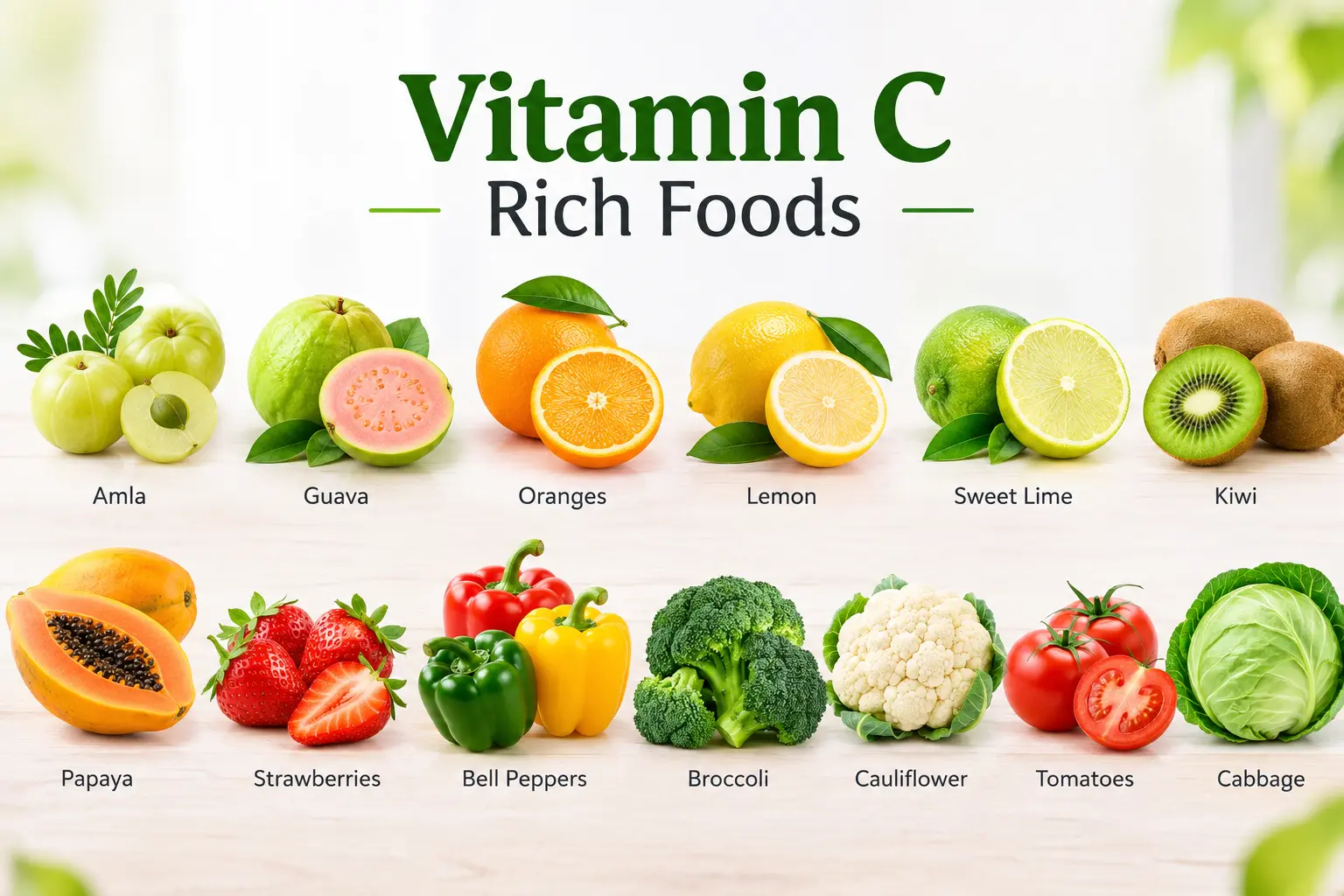
Here are some of the best food sources of vitamin C that can be included in a balanced diet.
1. Amla
Indian gooseberry, commonly known as amla, is one of the most popular vitamin C-rich foods in Indian diets.
It can be consumed as:
- Fresh amla
- Amla chutney
- Amla added to salads
- Unsweetened amla preparations
Amla can be a convenient addition to a varied diet, although preparation and processing can affect nutrient content.
2. Guava
Guava is an excellent fruit choice for people looking to increase their vitamin C intake.
It can be eaten whole as a snack or added to fruit bowls and salads.
Guava also provides fibre and other nutrients, making it a useful addition to an overall healthy diet.
3. Oranges
Oranges are among the most familiar fruits rich in vitamin C.
They can be eaten whole or added to fruit salads.
Whenever possible, eating whole fruit rather than drinking fruit juice provides the additional benefit of dietary fibre.
4. Lemon
Lemon is another convenient source of vitamin C.
Although people generally consume smaller amounts of lemon compared with fruits such as guava or oranges, adding lemon to meals can contribute to overall vitamin C intake.
Try adding fresh lemon to:
- Salads
- Dal
- Vegetable dishes
- Soups
- Water
5. Sweet Lime
Sweet lime, also called mosambi, can be included as part of a varied fruit intake.
Whole fruit is generally preferable to sweetened or packaged juice because it provides more fibre and can be more filling.
6. Kiwi
Kiwi is a nutrient-dense fruit containing vitamin C along with fibre and other nutrients.
It can be eaten on its own or added to:
- Oats
- Yoghurt
- Fruit bowls
- Smoothies
7. Papaya
Papaya provides vitamin C along with carotenoids, fibre, and other nutrients.
It can be a convenient breakfast or snack option.
8. Strawberries
Strawberries are another fruit that provides vitamin C and antioxidant plant compounds.
They can be eaten fresh or added to yoghurt, oats, and fruit bowls.
9. Bell Peppers
Bell peppers, particularly red and yellow varieties, can provide substantial amounts of vitamin C.
They can be eaten raw in salads or lightly cooked in:
- Stir-fries
- Sandwiches
- Wraps
- Vegetable dishes
10. Broccoli
Broccoli is a useful vegetable high in vitamin C and also provides fibre and several other nutrients.
Steaming or lightly cooking broccoli can be an easy way to include it in meals.
11. Cauliflower
Cauliflower contains vitamin C and can be used in a variety of Indian and international dishes.
It can be roasted, steamed, stir-fried, or incorporated into curries.
12. Tomatoes
Tomatoes contribute vitamin C along with other plant compounds.
They are easy to incorporate into everyday meals through:
- Salads
- Curries
- Soups
- Chutneys
- Sandwiches
13. Cabbage
Cabbage is another vegetable that can contribute vitamin C to the diet.
Use it in salads, stir-fries, soups, or traditional vegetable preparations.
Vitamin C Rich Fruits
If you specifically want to increase vitamin C through fruits, consider including a variety of options rather than relying on only one food.
Some vitamin C rich fruits include:
| Fruit | Vitamin C Contribution |
| Amla | Very high |
| Guava | Very high |
| Orange | High |
| Kiwi | High |
| Papaya | Moderate to high |
| Strawberries | Moderate to high |
| Sweet lime | Good source |
| Lemon | Good source |
| Grapefruit | Good source |
| Mango | Provides vitamin C |
The exact vitamin C content varies according to fruit variety, ripeness, portion size, storage, and preparation.
Vitamin C Rich Vegetables
Vegetables can also make an important contribution to daily vitamin C intake.
Good options include:
- Bell peppers
- Broccoli
- Cauliflower
- Cabbage
- Tomatoes
- Green leafy vegetables
- Green peas
- Brussels sprouts
Including different coloured vegetables in your meals is a simple way to increase dietary variety.
Vitamin C Rich Indian Foods
You do not need imported or expensive foods to obtain vitamin C.
Common Indian foods that can contribute vitamin C include:
- Amla
- Guava
- Lemon
- Oranges
- Sweet lime
- Papaya
- Tomatoes
- Green chillies
- Capsicum
- Cabbage
- Cauliflower
- Coriander leaves
A traditional Indian diet can provide vitamin C through a combination of fruits, vegetables, herbs, and other plant foods.
Vitamin C Rich Foods for Glowing Skin
Vitamin C is particularly important in discussions about vitamin C rich foods for glowing skin because it contributes to normal collagen formation and antioxidant protection.
Foods such as:
- Amla
- Guava
- Oranges
- Papaya
- Strawberries
- Bell peppers
- Broccoli
- Tomatoes
can be included in a balanced diet that supports overall skin health.
However, eating more vitamin C does not automatically guarantee brighter or flawless skin.
Skin appearance is influenced by many factors, including:
- Genetics
- Sun exposure
- Age
- Hormones
- Sleep
- Nutrition
- Skincare
- Hydration
- Existing skin conditions
If you have persistent pigmentation, acne, melasma, or uneven skin tone, dietary changes alone may not address the underlying cause.
How Does Vitamin C Benefit the Skin?
Vitamin C contributes to normal collagen formation. Collagen is an important structural protein found in skin and other connective tissues.
Vitamin C also has antioxidant properties that help protect cells from oxidative stress.
This is why adequate vitamin C intake is an important part of overall nutrition and skin health.
However, there is a difference between getting vitamin C through food and applying a formulated vitamin C skincare product. They are not interchangeable, and each has a different role.
Does Vitamin C Make Skin Fair?
Vitamin C should not be viewed as a guaranteed skin-whitening ingredient when consumed through food.
Eating vitamin C-rich foods can support normal skin health, but it does not reliably change your natural skin colour.
If you are concerned about:
- Dark spots
- Hyperpigmentation
- Melasma
- Sun tanning
- Uneven skin tone
- Post-acne marks
a dermatologist can identify the underlying cause and recommend an appropriate treatment plan.
How Much Vitamin C Do You Need?
Vitamin C requirements vary according to age, sex, life stage, and other individual factors.
For healthy adults, commonly used nutrition guidelines recommend approximately:
- Men: 90 mg per day
- Women: 75 mg per day
- Pregnancy: 85 mg per day
- Breastfeeding: 120 mg per day
People who smoke generally require additional vitamin C because smoking increases oxidative stress and can reduce vitamin C levels.
Individual nutritional requirements can differ, so people with specific health conditions should seek personalized dietary advice.
How to Add More Vitamin C to Your Diet
Increasing vitamin C intake does not require major changes to your diet.
Start Your Day With Fruit
Add guava, papaya, orange, kiwi, or strawberries to breakfast.
Add Vegetables to Lunch and Dinner
Include tomatoes, capsicum, broccoli, cabbage, or cauliflower in your meals.
Use Lemon With Meals
Fresh lemon can add flavour while contributing vitamin C.
Choose Whole Fruits
Whole fruits generally provide fibre in addition to vitamins and plant compounds.
Eat a Variety of Foods
Rather than relying on a single “superfood,” include several different fruits and vegetables throughout the week.
Does Cooking Reduce Vitamin C?
Vitamin C is sensitive to heat and can be lost during some cooking and storage methods.
To help retain vitamin C:
- Avoid unnecessarily prolonged cooking.
- Prefer steaming or quick cooking where appropriate.
- Eat some fruits and vegetables fresh.
- Avoid repeatedly reheating vegetables.
- Store produce appropriately.
The effect depends on the food, cooking method, temperature, and cooking duration.
Vitamin C From Food vs Supplements
For most people, a balanced diet can provide vitamin C through fruits and vegetables.
Vitamin C supplements may be useful in specific circumstances, but taking more is not necessarily better.
High doses of vitamin C supplements can cause gastrointestinal symptoms in some people and may be inappropriate for individuals with certain health conditions.
If you think you may have a nutritional deficiency or need supplementation, discuss it with a qualified healthcare professional.
Signs of Vitamin C Deficiency
Severe vitamin C deficiency is uncommon in people who consume a varied diet, but inadequate intake over a prolonged period can cause health problems.
Possible symptoms of significant deficiency can include:
- Fatigue
- Weakness
- Poor wound healing
- Swollen or bleeding gums
- Easy bruising
- Joint or muscle discomfort
These symptoms can have many possible causes, so they should not be used to self-diagnose vitamin C deficiency.
If you suspect a nutritional deficiency, consult a healthcare professional.
Sample Indian Diet With Vitamin C Rich Foods
Here is a simple example of how vitamin C-rich foods can fit into an Indian diet.
Breakfast:
Vegetable poha with guava or papaya.
Mid-morning:
Orange or sweet lime.
Lunch:
Dal, roti or rice, mixed vegetables, salad with tomato and lemon, and yoghurt.
Evening snack:
A fruit bowl containing papaya or strawberries.
Dinner:
Roti with vegetable curry, dal or another protein source, and a side salad.
This is only an example. Individual dietary requirements vary according to age, activity, health status, food preferences, and nutritional needs.
When Should You See a Dermatologist?
A nutrient-rich diet can support healthy skin, but persistent skin concerns may require professional evaluation.
Consider seeing a dermatologist if you experience:
- Persistent pigmentation
- Uneven skin tone
- Acne or acne scars
- Melasma
- Excessive tanning
- Dry or irritated skin
- Sudden changes in skin appearance
At Layers Clinics, a dermatologist can assess your skin concern and recommend suitable evidence-based skincare or treatment options.
Frequently Asked Questions About Vitamin C Rich Foods
1. Which food is highest in vitamin C?
Amla and guava are among the commonly available foods particularly rich in vitamin C. However, the exact amount varies depending on the variety, portion size, ripeness, storage and preparation.
2. Which fruit is rich in vitamin C?
Fruits such as amla, guava, oranges, kiwi, papaya, and strawberries provide vitamin C. Including a variety of fruits can help improve overall nutrient intake.
3. What are the best vitamin C rich foods for glowing skin?
Amla, guava, oranges, papaya, strawberries, bell peppers, broccoli, and tomatoes are useful vitamin C-containing foods that can be part of a balanced diet for overall skin health.
4. Can vitamin C make skin glow?
Adequate nutrition, including sufficient vitamin C, supports normal skin function. However, no single food can guarantee glowing skin. Sun protection, skincare, sleep, hydration, and overall health also influence skin appearance.
5. Can I get enough vitamin C from food?
Many people can obtain sufficient vitamin C through a varied diet containing fruits and vegetables. Individual needs vary depending on age, sex, life stage, and health factors.
6. Is amla good for vitamin C?
Yes. Amla is a well-known dietary source of vitamin C and can be included in a balanced diet in a variety of forms.
7. Does cooking destroy vitamin C?
Some vitamin C can be lost during cooking, particularly with prolonged exposure to heat and water. Cooking methods and duration influence nutrient retention.
8. Are vitamin C supplements necessary for glowing skin?
Not necessarily. Supplements are not a substitute for a balanced diet and should not be taken simply to achieve a cosmetic change in skin colour. If supplementation is being considered, professional guidance is advisable.
Conclusion
Adding vitamin C rich foods to your diet is a simple way to support adequate intake of an essential nutrient. Amla, guava, oranges, papaya, kiwi, strawberries, bell peppers, broccoli, tomatoes, and other fruits and vegetables can all contribute to a varied, nutrient-rich eating pattern.
Vitamin C supports normal collagen formation and antioxidant protection, making adequate intake relevant to overall skin health. However, diet alone cannot guarantee a particular skin tone or eliminate pigmentation.
For healthier-looking skin, combine balanced nutrition with sun protection, appropriate skincare, adequate sleep, physical activity, and professional dermatological care when needed.
At Layers Clinics, dermatology professionals can evaluate persistent skin concerns and help you understand suitable options based on your individual skin needs.
