
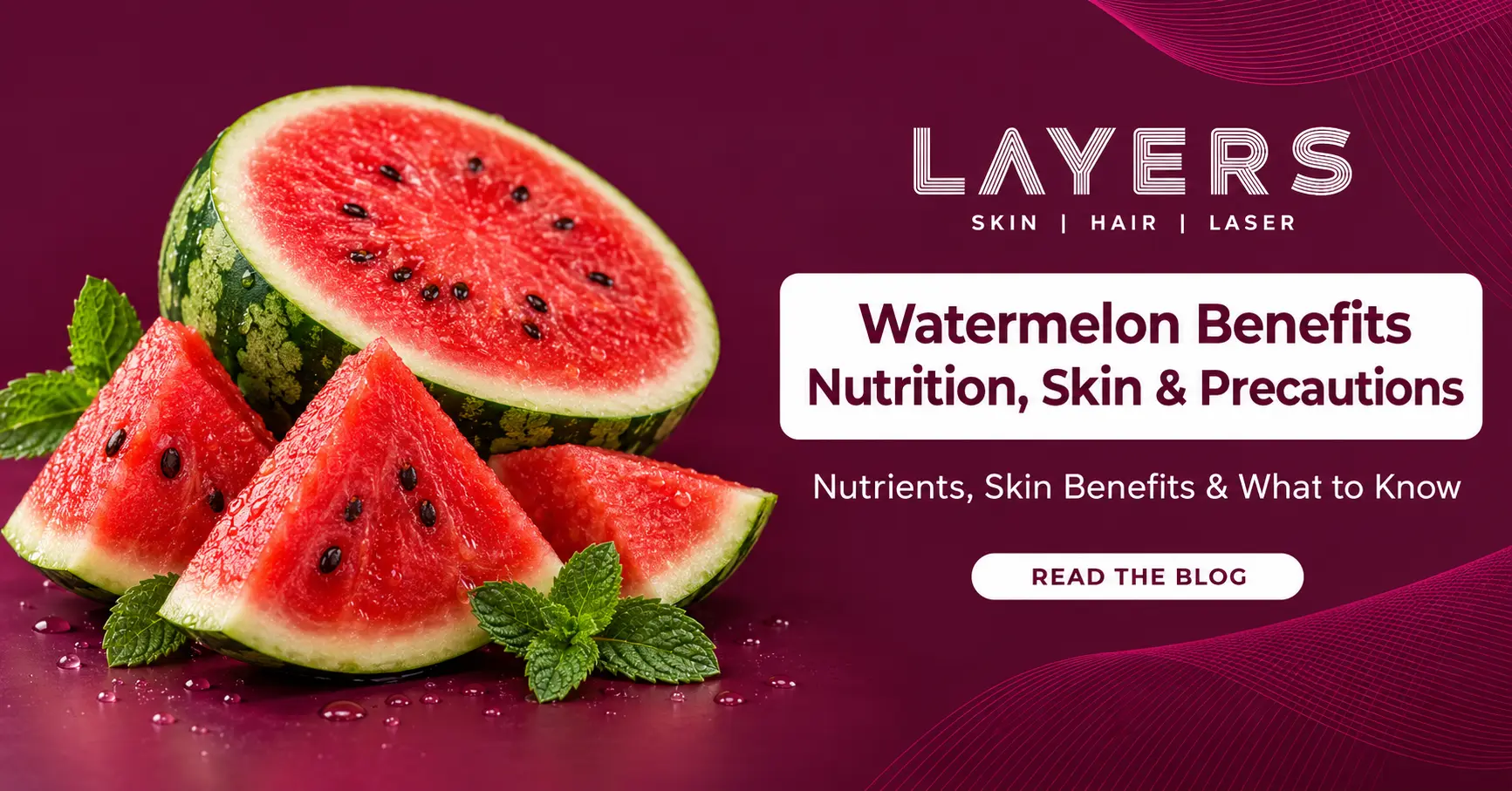
Watermelon benefits include supporting hydration and providing essential nutrients that contribute to overall health. This juicy summer fruit contains plenty of water, vitamin C and lycopene, making it a refreshing addition to a balanced diet. Its nutrients can also support normal skin function when combined with healthy lifestyle habits and a suitable skincare routine.
What makes watermelon nutritious? Can eating watermelon support healthy-looking skin? How much is appropriate to eat daily, and what precautions should you know about?
In this article, we explore the nutritional value of watermelon, its potential health and skin benefits, simple ways to include it in your diet, and important considerations for enjoying it safely.
Key Takeaways
Watermelon contains approximately 91–92% water, making it a refreshing food that contributes to daily fluid intake.
It provides vitamin C, potassium and plant compounds such as lycopene.
Vitamin C supports normal collagen formation, which is important for skin structure.
Watermelon is relatively low in calories and can be enjoyed as part of a balanced diet.
Eating watermelon does not independently treat acne, pigmentation, wrinkles or other skin conditions.
People managing blood glucose, digestive sensitivities or certain medical dietary restrictions may need to consider their portion sizes.
Who Should Read This Guide to Watermelon Benefits?
This guide is for people who want to understand watermelon’s nutritional value, its role in a balanced diet and what its nutrients may mean for general skin health. It is especially relevant during hot weather, when water-rich foods can contribute to everyday fluid intake.
- For everyday hydration: Watermelon can complement drinking water and other sources of fluids.
- For people interested in skin health: Its vitamin C contributes to normal collagen formation, but eating watermelon alone is not a treatment for acne, pigmentation or wrinkles.
- For people choosing snacks: Fresh watermelon is a relatively low-calorie fruit that can fit into a varied eating pattern.
- For people monitoring carbohydrate intake: Watermelon contains naturally occurring sugars, so portion size and individual dietary advice may be relevant.
Watermelon is not a complete source of nutrition, and its benefits depend on the overall diet rather than one food alone. People with specific medical or dietary requirements should follow advice suited to their circumstances.
Watermelon Nutritional Value
Watermelon is a water-rich fruit that provides carbohydrates, small amounts of vitamins and minerals, and naturally occurring plant compounds. Its refreshing taste and relatively low calorie content make it a convenient addition to everyday meals and snacks.
Approximate nutritional values per 100 grams of raw watermelon include:
| Nutrient | Approximate amount |
| Calories | 30 kcal |
| Water | 91–92 g |
| Carbohydrates | 7.6 g |
| Natural sugars | 6.2 g |
| Fibre | 0.4 g |
| Protein | 0.6 g |
| Vitamin C | 8.1 mg |
| Potassium | 112 mg |
Note: These values are approximate and may vary depending on the variety and ripeness of the fruit. Verify the figures against a reliable food-composition database before publication.
Watermelon also contains lycopene, a plant pigment that gives many red varieties their characteristic colour. It provides citrulline as well, a naturally occurring amino acid involved in processes related to nitric oxide production in the body.
Although watermelon supplies several useful nutrients, it is not a complete source of nutrition. Eating a variety of fruits, vegetables, whole grains and protein-rich foods helps provide a broader range of nutrients.
Top 7 Benefits of Eating Watermelon
1. Helps Support Hydration
One of the most notable benefits of watermelon is its high water content. Eating water-rich foods can contribute to your daily fluid intake, especially during hot weather when maintaining hydration is important.
Adequate hydration supports normal body functions, including temperature regulation and digestion. Watermelon can complement the water you drink throughout the day, but it should not replace regular fluid intake.
Enjoying a bowl of fresh watermelon as a snack is a simple way to add more fluid-rich food to your diet.
2. Provides Antioxidants
Watermelon contains lycopene and vitamin C, which contribute to the body’s antioxidant defences. Antioxidants help protect cells from oxidative damage as part of normal biological processes.
The amount of lycopene in watermelon can vary according to its variety and ripeness. Including different colourful fruits and vegetables in your meals is a practical way to obtain a broader range of plant compounds.
However, the presence of antioxidants does not mean that watermelon can prevent or cure a particular disease.
3. Supports Normal Skin Health
Watermelon has vitamin C in it, which the body needs to produce collagen. Collagen is an essential protein that ensures good skin health and facilitates healing of wounds.
The high water content of this fruit also contributes to general hydration. However, consuming watermelon alone is not effective for the treatment of acne, pigmentation, wrinkles or continuous dryness of the skin. Healthy skin requires certain factors such as genes, sun protection, proper nutrition, and skincare routine.
4. Contributes to Normal Immune Function
Watermelon contains vitamin C, a nutrient that contributes to the normal functioning of the immune system. However, watermelon provides only part of the vitamin C needed through the diet. Including a variety of fruits and vegetables, such as guava, citrus fruits and berries, can help provide a broader range of nutrients.
Eating watermelon alone does not prevent infections or replace appropriate medical care.
5. Provides Nutrients Relevant to Cardiovascular Health
Watermelon provides potassium, a mineral involved in normal muscle function and the maintenance of normal blood pressure. It also contains lycopene, a plant compound studied for its antioxidant properties.
These nutrients contribute to watermelon’s nutritional profile, but eating watermelon has not been established as a standalone way to prevent or treat cardiovascular disease. Overall dietary patterns, physical activity and individual health factors remain important.
6. Can Be a Refreshing, Lower-Calorie Snack
Fresh watermelon contains approximately 30 calories per 100 grams, making it a relatively low-calorie option when you want something sweet and refreshing.
Its water content adds volume, while its natural sugars provide sweetness without the need for added sugar. You can enjoy watermelon between meals or serve it alongside plain yoghurt or another suitable protein source for a more balanced snack.
Remember that overall dietary patterns and portion sizes matter more than the calorie content of any single food.
7. Contributes to Everyday Nutrient Intake
Eating a range of fruits helps provide different vitamins, minerals and plant compounds. Watermelon can contribute to this variety alongside fruits such as papaya, guava, oranges and berries.
You can serve it at breakfast, add it to a fruit salad or enjoy it as a refreshing afternoon snack. Rotating different fruits throughout the week helps keep your meals varied and enjoyable.
Watermelon Benefits for Skin
Many people are interested in watermelon benefits for skin because the fruit contains water, vitamin C and antioxidant compounds. These nutrients can contribute to general nutritional health, but their effects should not be confused with the results of a targeted skincare treatment.
Provides Vitamin C for Collagen Formation
Vitamin C is essential for the body’s production of collagen, which helps maintain normal skin structure. Watermelon provides some vitamin C, although it should not be your only source of this nutrient.
A varied diet that includes other vitamin C-rich foods can help you meet your nutritional requirements. Eating watermelon by itself is not a proven way to reduce wrinkles or reverse visible signs of ageing.
Contains Lycopene and Other Plant Compounds
Lycopene gives red watermelon much of its colour and is one of its notable plant compounds. It has been studied for its antioxidant properties and possible relationship with skin and general health.
Nevertheless, eating watermelon does not provide reliable protection against sunburn or UV damage. Daily sun protection remains important, including the use of broad-spectrum sunscreen, protective clothing and shade.
Can Be Part of a Balanced Diet for Healthy-Looking Skin
Healthy-looking skin depends on more than a single food. Nutritional balance, sleep, hydration, sun exposure, genetics and appropriate skincare all contribute to skin health.
Watermelon can be included in a balanced eating plan, but it should not be considered a standalone solution for skin concerns. If you experience persistent acne, pigmentation, unusual skin changes or ongoing dryness, a qualified dermatologist can help assess the possible causes and discuss appropriate care.
Is Watermelon Good for Glowing Skin?
Watermelon provides water, vitamin C and plant compounds that can contribute to general health and normal skin function. These nutrients make it a useful addition to a balanced diet, but there is limited evidence that eating watermelon alone produces visibly glowing skin.
If your skin appears dull, several factors may be involved, including dehydration, sun exposure, sleep habits or an underlying skin condition. Improving your diet may support overall wellbeing, but it will not necessarily resolve every skin concern.
For a healthy-looking complexion, focus on:
- Eating a varied diet that includes fruits and vegetables.
- Drinking enough fluids to meet your needs.
- Getting adequate sleep.
- Using sunscreen and following sensible sun-protection practices.
- Choosing skincare products suited to your skin type.
- Seeking professional advice for persistent or unexplained skin concerns.
A consistent routine is more reliable than expecting a particular fruit to transform your skin.
Frequently Asked Questions About Watermelon Benefits
1. What are the main benefits of watermelon?
Watermelon contributes to daily fluid intake and provides nutrients such as vitamin C and potassium, along with plant compounds including lycopene. It can be enjoyed as part of a varied, balanced diet.
2. Is watermelon good for the skin?
Watermelon contains water and vitamin C, which contribute to hydration and normal collagen formation. However, eating watermelon alone does not treat acne, pigmentation, wrinkles or other skin conditions.
3. Can eating watermelon help make your skin glow?
Watermelon can contribute to a nutritious diet, but there is insufficient evidence that eating it alone produces visibly glowing skin. Sun protection, appropriate skincare, sleep and overall nutrition are also important.
4. Is it okay to eat watermelon every day?
Many people can enjoy watermelon regularly in moderate portions as part of a balanced diet. The appropriate amount depends on individual nutritional needs, medical conditions and dietary recommendations.
5. Is watermelon good for weight management?
Watermelon is relatively low in calories per 100 grams and can be a refreshing snack. However, weight management depends on overall food intake, activity levels and other individual factors, not on eating one particular fruit.
6. Is whole watermelon better than watermelon juice?
Whole watermelon retains its natural structure and is generally a practical choice for eating fruit. Juice can be consumed more quickly and in larger quantities, so portion size matters. Choose drinks without added sugar when possible.
7. Can watermelon cause digestive problems?
Some people may experience bloating or digestive discomfort after eating watermelon, particularly if they are sensitive to its fermentable carbohydrates. Smaller portions may be better tolerated, but persistent symptoms should be discussed with a healthcare professional.
8. Can watermelon protect the skin from the sun?
No. Although watermelon contains lycopene and other plant compounds, eating it is not a substitute for sun protection. Use broad-spectrum sunscreen, wear protective clothing and seek shade when appropriate.
9. Does watermelon contain vitamin C?
Yes. Watermelon contains vitamin C, although the amount is modest compared with some other fruits. It can contribute to your daily intake alongside foods such as guava, citrus fruits and berries.
10. Is applying watermelon juice to the face safe?
Homemade watermelon juice is not a proven treatment for skin concerns and may irritate some people’s skin. Products formulated for your skin type or advice from a qualified dermatologist are more appropriate for persistent concerns.
Conclusion
Watermelon is a refreshing, water-rich fruit that provides vitamin C, potassium and plant compounds such as lycopene. Its nutritional profile makes it a useful addition to a varied diet, particularly when you want a refreshing snack during warm weather.
The potential watermelon benefits for skin should be understood realistically. Its nutrients can contribute to normal skin function, but watermelon alone cannot eliminate acne, pigmentation, wrinkles or other skin concerns.
For healthier-looking skin, combine balanced nutrition with adequate hydration, good sleep, suitable skincare and regular sun protection. If you have persistent acne, pigmentation, unusual skin changes or other dermatological concerns, consult a qualified dermatologist to discuss appropriate care.
Medical disclaimer: This article is intended for general educational purposes only. It does not replace personalised medical or nutritional advice, diagnosis or treatment.
