
Most people feel little to no pain during a hair transplant because the scalp is fully numbed with local anesthesia. Mild soreness, tightness, or itching in the days after the procedure is common, but it’s usually manageable with over-the-counter medication and resolves within a week.
If you’re considering a hair transplant, pain is almost always the first concern and a fair one. This guide breaks down exactly what you’ll feel during the procedure, is hair transplant painful, what recovery actually looks like day by day, which techniques are the least uncomfortable, and how to minimize any discomfort.
What Is a Hair Transplant?
A hair transplant is a cosmetic procedure that moves healthy hair follicles from a donor area usually the back or sides of the scalp, where hair is genetically resistant to thinning to areas affected by hair loss or baldness. It’s one of the most effective long-term treatments for pattern hair loss and various types of alopecia, and modern techniques have made the procedure far more comfortable than older methods.
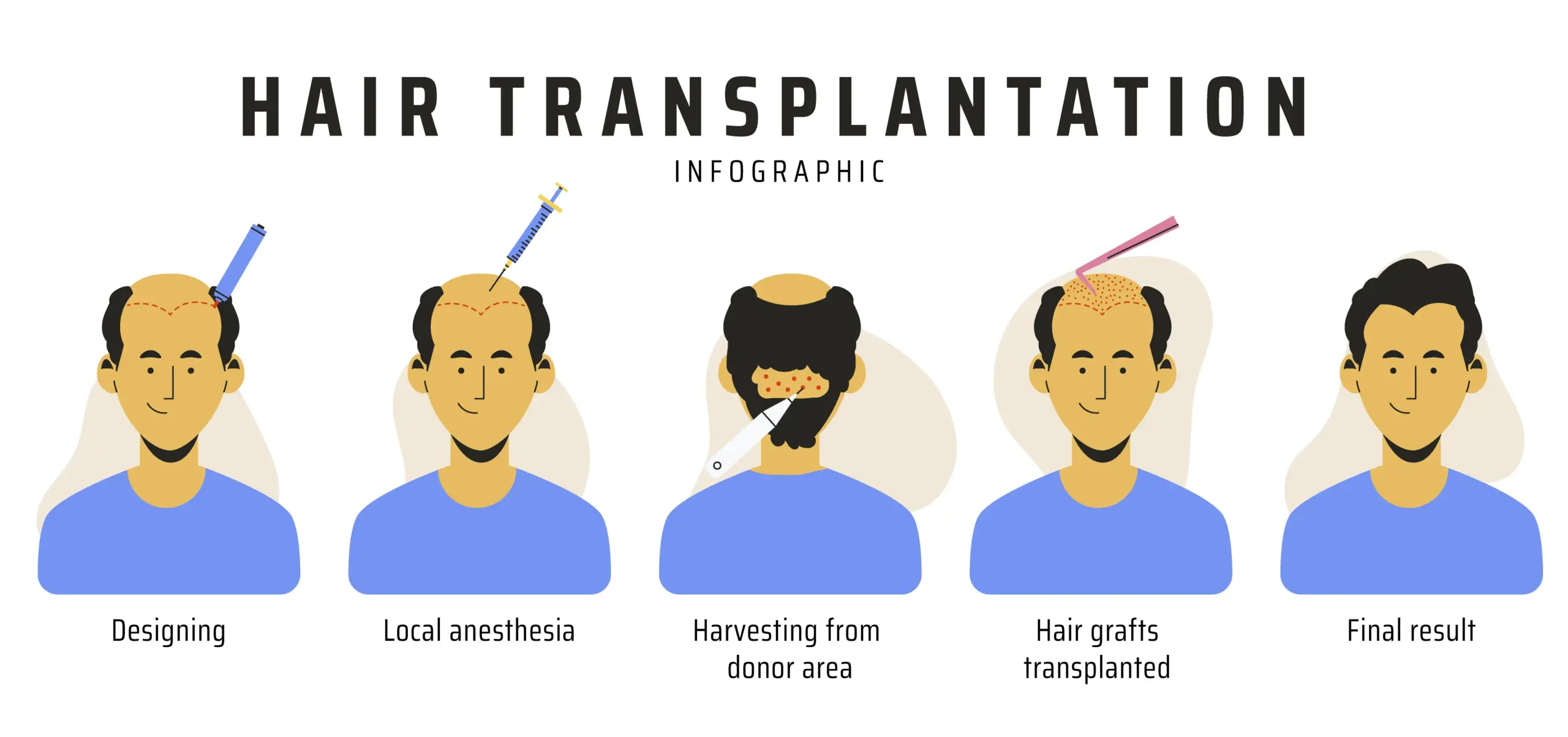
How a Hair Transplant Works
The surgeon extracts small grafts clusters of hair follicles from the donor area and implants them into the thinning or bald region. Once transplanted, these follicles behave like natural hair: they grow, shed, and regrow in the same cycle as the surrounding hair. This is why hair transplant results look permanent and natural rather than artificial.
Does a Hair Transplant Hurt During the Procedure?
This is the question most people actually want answered: does a hair transplant hurt?
During the procedure itself, the answer is generally no. The scalp is numbed using local anesthesia before any extraction or implantation begins, so patients typically feel pressure or vibration rather than sharp pain. Most people describe the experience as tedious and long (procedures can take several hours) rather than painful.
The only moment of mild discomfort is usually the anesthetic injection itself, which feels similar to a small pinch and fades within seconds.
Pain After Hair Transplant: Day-by-Day Recovery
Once the anesthesia wears off, some soreness is normal. Here’s a general timeline:
- Day 1–2: Mild tenderness, tightness, and swelling around the donor and recipient areas. Over-the-counter painkillers usually manage this well.
- Day 3–5: Discomfort decreases significantly. Itching often begins as the scalp starts healing, which is a normal sign of recovery, not infection.
- Day 6–7: Most patients return to regular daily activities. Scabbing may still be visible but is minimal with modern techniques.
- Week 2 onward: Residual tightness fades, and the scalp continues healing quietly in the background while new hair growth begins under the surface.
Full aesthetic results take several months to appear, but the pain and downtime window is short compared to what many people expect.
Which Hair Transplant Technique Hurts the Least?
Pain levels vary depending on which method is used:
FUT (Follicular Unit Transplantation / “strip method”) Involves removing a strip of scalp tissue, which leaves a linear scar and typically causes more post-procedure soreness and a longer recovery than newer techniques.
FUE (Follicular Unit Extraction) Uses a tiny punch tool to remove individual follicles, avoiding stitches and large incisions. This results in significantly less post-operative pain, minimal scarring, and a faster return to daily activity.
DHI (Direct Hair Implantation) An advanced form of FUE that implants follicles directly using a pen-like tool, skipping the incision step entirely. This further reduces scalp trauma, swelling, and discomfort compared to both FUT and standard FUE.
In short: FUE and DHI are considered the least painful hair transplant techniques, which is why they’ve become the preferred choice for most patients today.
Advanced Techniques That Improve Comfort
Robotic Hair Transplantation uses robotic arms with imaging software to extract and place grafts with high precision, often reducing procedure time and scalp trauma compared to fully manual techniques.
Platelet-Rich Plasma (PRP) Therapy uses the patient’s own concentrated platelets to stimulate healing and hair growth, and is commonly used alongside a transplant to support faster, stronger recovery.
Stem Cell-Assisted Techniques are an emerging option for patients with limited donor area, aiming to improve graft density and healing quality, though this approach is still developing compared to established methods like FUE and DHI.
Tips to Reduce Pain and Speed Up Recovery
- Take prescribed or OTC pain relief exactly as advised by your surgeon
- Avoid touching, scratching, or picking at the scalp, even when itching begins
- Sleep with your head slightly elevated for the first few nights to reduce swelling
- Avoid strenuous exercise or heavy sweating for at least a week
- Follow your clinic’s washing instructions precisely, early over-washing or under-washing can both cause irritation
- Stay hydrated and avoid alcohol or smoking during initial recovery, as both can slow healing
Benefits of Modern Hair Transplant Methods
- Higher graft survival: FUE techniques report graft survival rates of 90–95%, compared to under 75% with older strip methods
- Minimally invasive: No large incisions, less scalp trauma, and less post-procedure pain
- Lower infection risk: Less than 1% of FUE patients experience post-procedure infection
- Fast recovery: Most patients resume normal activity within a week
- Virtually scarless results: Extraction points are under 1mm and heal without stitches, leaving minimal visible scarring
Possible Side Effects to Know About
While generally safe, hair transplants can carry some temporary side effects:
- Scarring — minor, especially with FUE/DHI, and fades over time
- Folliculitis — mild inflammation of hair follicles during healing
- Itching — common as scabs form and heal
- Infection — rare, but possible if aftercare isn’t followed
- Uneven growth — occasionally requires touch-up treatments like PRP
- Minor bleeding — brief and self-resolving
- Graft failure — a small percentage of grafts may not take
Hair Transplant Cost and What Affects It
Hair transplant cost varies based on the technique used (FUE, DHI, or robotic), the number of grafts required, and the clinic’s expertise. Layers Clinics offers hair transplant procedures at accessible pricing without compromising on graft survival rates or natural-looking results, ask for a personalized quote based on your hair loss pattern.
Why Choose Layers Clinics
Layers Clinics specializes in minimally invasive, low-pain hair restoration techniques, including FUE and DHI, designed to reduce discomfort and scarring compared to traditional methods.
- Precision-focused techniques that minimize scalp trauma and post-procedure pain
- Virtually scarless results with extraction sites under 1mm
- Personalized treatment plans based on your hair loss pattern and goals
- Transparent, affordable hair transplant cost without compromising quality
Frequently Asked Questions
Is hair transplant painful during the procedure?
No, not significantly. Local anesthesia numbs the scalp before the procedure, so most patients feel pressure rather than pain.
How much pain is normal after a hair transplant?
Mild soreness, tightness, and itching for the first few days is normal and typically manageable with over-the-counter pain relief.
Which hair transplant technique is the least painful?
FUE and DHI are generally considered the least painful, since they avoid stitches and large incisions used in the older FUT method.
How long does hair transplant pain last?
Most discomfort resolves within 3–7 days, though minor tightness or itching can continue for a couple of weeks during healing.
Can I go back to work after a hair transplant?
Most patients return to normal daily activities within a week, depending on the technique used and how strictly aftercare instructions are followed.
Conclusion
Hair transplant pain is far less severe than most people expect, especially with modern techniques like FUE and DHI, which minimize scalp trauma and speed up recovery. The key to a comfortable experience is choosing the right technique and following proper aftercare.
At Layers Clinics, our specialists help you choose the least invasive, most effective option for your hair loss pattern, with transparent guidance on comfort, recovery, and cost.
Ready to explore your options? Book a consultation with Layers Clinics today.
