
The most effective anti dandruff treatment in Hyderabad depends on the root cause, fungal overgrowth, oily scalp, or dryness. While mild dandruff may improve with medicated shampoos, recurring dandruff requires dermatologist-guided treatment such as antifungal therapy, scalp detox procedures, and inflammation control. At Layers Clinics, treatment is personalized using scalp analysis to stop recurrence and reduce dandruff-related hair fall.
Best for: Persistent flakes, itching, oily scalp, or dandruff with hair fall
When to see a doctor: If dandruff returns within 2–3 weeks or doesn’t improve after 4–6 weeks
Who Is This Treatment For?
This guide is designed for:
- Men and women with recurring dandruff
- People experiencing dandruff with hair fall
- Individuals not responding to anti-dandruff shampoos
- Those with itchy, oily, or flaky scalp conditions
- Anyone unsure whether they have dandruff, dry scalp, or psoriasis
What Is Dandruff and Why Does It Keep Coming Back?
Dandruff is a chronic scalp condition where dead skin sheds excessively due to imbalance in scalp health.
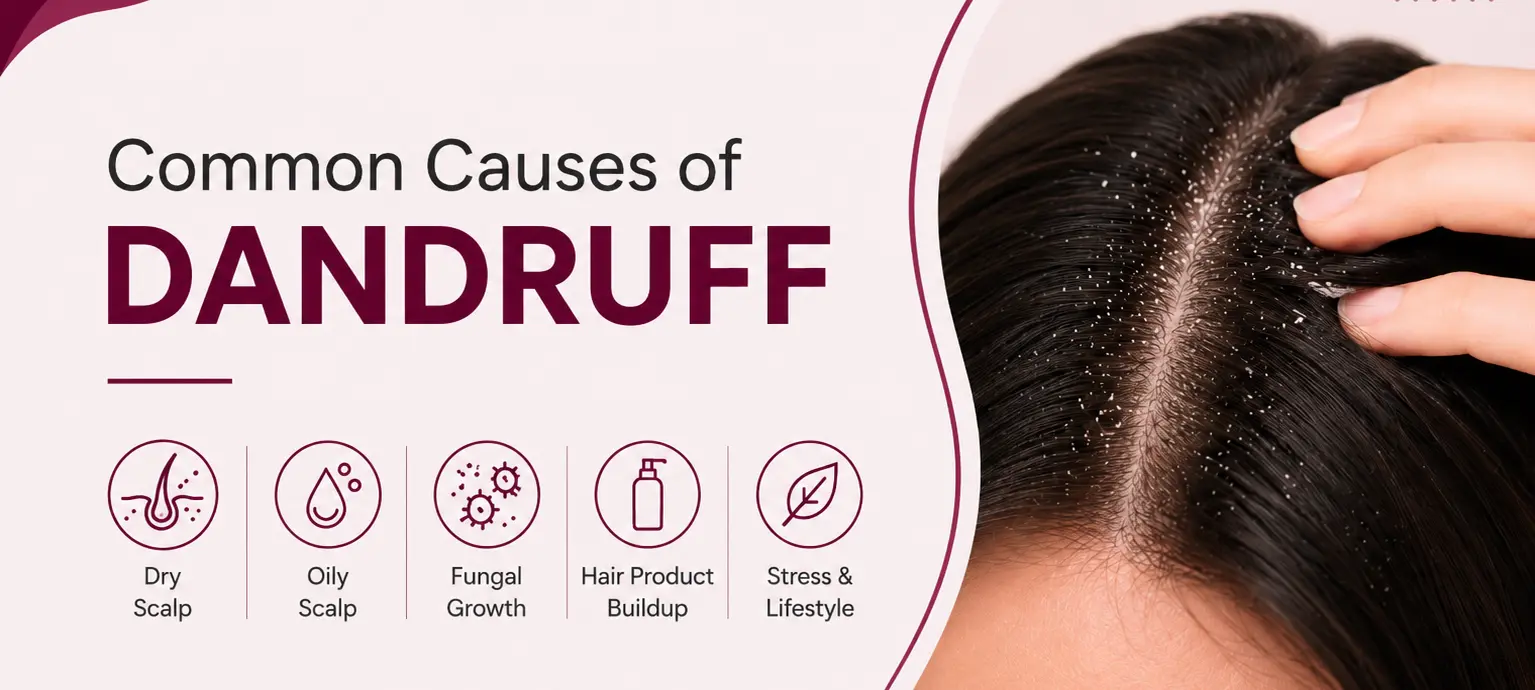
The most common cause is Malassezia, a yeast-like fungus naturally present on the scalp. When it overgrows, it leads to:
- Inflammation
- Excess oil production
- Visible white or yellow flakes
- Persistent itching
Why dandruff keeps returning:
- Shampoos treat only surface flakes
- The root cause (fungal or oil imbalance) remains untreated
- Scalp barrier remains weak
- Environmental triggers (humidity, sweat, stress) reactivate it
This is why many people cycle through products before seeking professional anti dandruff treatment in Hyderabad.
Types of Dandruff: Dry, Oily, or Fungal?
Not all dandruff looks or behaves the same way, and the type largely determines the treatment:
- Dry scalp dandruff – small, white, powdery flakes with a scalp that feels tight and itchy, common in low-humidity seasons or with over-washing.
- Oily (seborrheic) dandruff – larger, yellowish, greasy flakes, often linked to seborrheic dermatitis and excess sebum production.
- Fungal dandruff – caused by Malassezia overgrowth, usually accompanied by redness, intense itching, and flaking that worsens with heat and sweat.
A scalp analysis is the only reliable way to confirm which type you have, which is why home remedies alone often fall short for recurring cases.
Dandruff vs. Dry Scalp vs. Scalp Psoriasis: Know the Difference
| Condition | Flakes | Oiliness | Redness | Key Difference |
|---|---|---|---|---|
| Dry Scalp | Small | No | Minimal | Caused by lack of moisture |
| Dandruff | Medium–Large | Yes | Mild | Linked to fungus + oil |
| Psoriasis | Thick scales | Variable | Severe | Autoimmune condition |
If flakes extend beyond the scalp or bleed when scratched, consult a dermatologist immediately.
Can Dandruff Cause Hair Fall?
Yes. persistent dandruff can lead to noticeable hair fall if left untreated. Continuous itching leads to scratching, which damages the scalp surface, weakens hair roots, and inflames hair follicles. Over time, this unhealthy scalp environment disrupts normal hair growth and causes excessive shedding.
Dandruff doesn’t usually destroy hair follicles permanently, but chronic scalp inflammation can significantly increase hair fall and slow down regrowth, especially when fungal overgrowth clogs follicles and reduces oxygen supply to the roots. This is why early, targeted dandruff and hair fall treatment matters the longer the scalp stays inflamed, the harder regrowth becomes.
Explore related solutions:
Symptoms That Mean It’s Time to See a Dermatologist
Consider professional anti dandruff treatment in Hyderabad if you notice:
- Flaking that returns within 2–3 weeks despite regular shampooing
- Redness, burning, or soreness on the scalp
- Visible hair thinning or increased strands on your pillow/comb
- Flakes spreading to eyebrows, ears, or the hairline
- No improvement after using medicated anti-dandruff shampoos for 4–6 weeks
Dandruff Treatment Options: What Actually Works?
The right treatment depends on the diagnosis and severity.
| Treatment | Best suited for | Main purpose |
| Anti-dandruff shampoo | Mild dandruff | Control flakes and scalp buildup |
| Medicated shampoo | Recurrent dandruff | Address fungal or inflammatory factors |
| Prescription treatment | Persistent or severe cases | Control inflammation and recurrence |
| Dermatologist-guided scalp care | Chronic scalp problems | Individualized scalp management |
Common anti-dandruff ingredients may include ketoconazole, selenium sulfide, salicylic acid, or other clinically appropriate ingredients. The most suitable product and frequency depend on the individual’s scalp condition.
Home Remedies for Dandruff and What Actually Helps
Mild, occasional dandruff can sometimes improve with home care:
- Washing hair 2–3 times a week to prevent oil and product buildup
- Diluted tea tree oil or aloe vera gel for mild antifungal and soothing effects
- Reducing hot water exposure, which strips natural scalp oils
- Managing stress, which is a known trigger for flare-ups
These measures help with mild, short-term flaking, but they rarely resolve chronic or fungal dandruff, since they don’t address the underlying microbial or inflammatory cause. If flakes persist beyond a month, it’s time to move from home care to medical treatment.
Professional Anti Dandruff Treatment in Hyderabad at Layers Clinics
At Layers Clinics, treatment begins with evaluating the scalp and understanding the symptoms and likely underlying condition.
- Scalp Assessment
The scalp is assessed for flaking, oiliness, redness, irritation, and other visible signs. - Dermatologist-Guided Treatment
Depending on the condition, the dermatologist may recommend appropriate medicated shampoos, topical treatments, or other clinically suitable therapies. - Scalp Care and Flake Management
Where appropriate, professional scalp-care procedures may be used as part of the overall treatment plan to improve scalp cleanliness and manage stubborn buildup. - Hair Fall Evaluation
If significant shedding is present, the dermatologist can assess whether the hair fall is related to scalp inflammation or another underlying hair-loss condition.
The treatment plan is adjusted according to the individual’s scalp condition, severity, and response to treatment.
What to Expect During a Dandruff Consultation
A typical consultation focuses on identifying the cause rather than simply treating visible flakes.
Step 1: Discuss symptoms, duration, recurrence, and previous treatments.
Step 2: Examine the scalp for flaking, redness, oiliness, and irritation.
Step 3: Determine whether symptoms are consistent with dandruff or another scalp condition.
Step 4: Recommend an appropriate treatment and scalp-care routine.
Step 5: Review progress and modify treatment when necessary.
Why Choose Layers Clinics for Dandruff and Hair Fall Treatment?
- Experienced dermatologists and trichologists
- Detailed scalp and hair analysis before treatment begins
- Advanced, medical-grade technologies
- Focus on treating the root cause, not just surface symptoms
- Proven track record of long-term scalp health outcomes
This root-cause approach is what separates a dermatology-led dandruff treatment from generic over-the-counter fixes.
How to Prevent Dandruff From Coming Back
- Wash hair regularly with dermatologist-approved, sulfate-free products
- Avoid excessive oiling if you have oily or fungal-prone dandruff
- Manage stress and maintain a balanced, nutrient-rich diet
- Avoid harsh, chemical-heavy hair products
- Keep combs, towels, and pillowcases clean
- Schedule periodic scalp check-ups, even after flakes clear up
Frequently Asked Questions
Is dandruff contagious?
No, dandruff is not contagious. It’s caused by an individual’s scalp biology, oil production, and Malassezia overgrowth, not by contact with another person.
How long does professional dandruff treatment take to show results?
Most patients notice reduced flaking and itching within 2–4 weeks of starting a personalized treatment plan, though full scalp recovery can take 6–8 weeks depending on severity.
Can stress cause dandruff?
Yes. Stress doesn’t directly cause dandruff but can worsen it by triggering hormonal changes and weakening the skin’s barrier function, making the scalp more reactive to Malassezia.
Does dandruff go away permanently?
Dandruff can be effectively controlled and kept in remission with the right treatment and maintenance routine, but it tends to be a recurring condition, especially for those genetically prone to it ongoing scalp care helps prevent flare-ups.
Should I stop oiling my hair if I have dandruff?
If you have oily or fungal dandruff, excessive oiling can worsen flaking by feeding Malassezia. A dermatologist can advise whether light, medicated oils are suitable for your scalp type.
Key Takeaway
- Dandruff is caused by fungal overgrowth or scalp imbalance
- Recurring dandruff needs medical treatment
- It can lead to hair fall if untreated
- Dermatologist care provides long-term control
- Early treatment prevents complications
Book Your Anti Dandruff Treatment in Hyderabad
If dandruff, itching, or dandruff-related hair fall is affecting your confidence, professional treatment can make a real difference. At Layers Clinics, dermatologist-guided anti dandruff treatment in hyderabad is designed for long-lasting scalp comfort and healthier hair not just temporary flake control.
Book your consultation today and take the first step toward a healthy, dandruff-free scalp.
