
Can Dandruff Cause Hair Fall ?
Yes, dandruff can cause hair fall but the shedding is almost always temporary. Dandruff itself doesn’t destroy hair follicles. Instead, the flaking, itching, and inflammation it triggers create an unhealthy scalp environment, and the constant scratching that follows weakens hair at the root. Once the scalp condition is treated, most people see their hair return to a normal growth cycle within two to three months.
That said, if you’re losing noticeably more hair than usual alongside stubborn dandruff, don’t wait it out. A dermatologist can confirm whether dandruff is really the culprit or whether something else, like a fungal infection or early-stage alopecia, is hiding behind those flakes.
How Does Dandruff Lead to Hair Fall?
Here’s the thing most people miss: dandruff is a scalp problem, not a hair problem. Your hair strands aren’t being damaged by the flakes themselves. What actually happens is a chain reaction:
- Dandruff irritates the scalp. Excess oil, flakes, and (often) an overgrowth of the naturally occurring yeast Malassezia inflame the skin.
- The scalp becomes itchy. Inflammation triggers that maddening, can’t-stop-scratching sensation.
- Scratching stresses the hair roots. Repeated friction and small scratches physically loosen strands and injure follicles.
- Hair shifts into its shedding phase early. Inflammation can push follicles out of the growth (anagen) phase prematurely a process similar to telogen effluvium.
- You notice more hair everywhere. On your pillow, in your comb, in the shower drain.
The follicles survive this process. But leave dandruff untreated for months, and the ongoing inflammation keeps that shedding cycle going far longer than it needs to.
Signs Dandruff Is Behind Your Hair Fall
Not sure whether dandruff is the reason for your shedding? Look for these signs appearing together:
Noticeably more shedding right after scratching
Persistent white or yellow flakes on the scalp
Near-constant itching, especially after a day or two without washing
More hair than usual in your comb or shower drain
Hair on your pillow and clothes
A red, tender, or irritated scalp
Greasy, sticky flakes that cling to the scalp (a sign of seborrheic dermatitis)
If these symptoms persist even after several weeks of using an over-the-counter anti-dandruff shampoo, it’s time for a professional scalp evaluation rather than another trip down the shampoo aisle.
Types of Dandruff and How Each Affects Your Hair
Not all dandruff behaves the same way and the type you have determines both the treatment and how much shedding you can expect.
| Type | What It Looks Like | Effect on Hair |
| Dry dandruff | Fine, loose white flakes; tight, dry scalp | Mild, temporary shedding |
| Oily dandruff | Yellowish, greasy flakes stuck to the scalp | Moderate hair fall driven by inflammation |
| Seborrheic dermatitis | Red, itchy scalp with oily scales | Increased shedding if left untreated |
| Fungal-related dandruff | Stubborn flakes with intense itching | Usually needs prescription antifungal treatment |
This is exactly why trial-and-error with store-bought products so often fails. A shampoo formulated for dry flakes can actually make an oily, yeast-driven scalp worse. A dermatologist can pinpoint the type in a single consultation and match the treatment to the cause.
Does Scratching Your Scalp Make Hair Fall Worse?
Yes, scratching is often the biggest single contributor to dandruff-related hair fall. Every time you scratch, you’re doing four things at once: putting physical stress on hair follicles, creating tiny injuries on the scalp, loosening hair strands that would otherwise have stayed anchored, and fuelling more inflammation (which triggers more itching a frustrating loop).
Breaking the itch-scratch cycle early is one of the most protective things you can do for your hair. Medicated shampoos that calm the scalp usually reduce itching within the first one to two weeks.
Can Severe Dandruff Cause Permanent Hair Loss?
We often recommend in clinic treatments like gentle exfoliation or laser therapy. These approaches remove dead skin buildup, improve circulation, and help maintain a healthier scalp environment. Unlike generic over-the-counter solutions, these treatments are customized to your scalp type and the severity of dandruff.
In the vast majority of cases, no. Dandruff does not scar or permanently destroy hair follicles, which means the hair you shed can grow back once the scalp recovers.
There are two important caveats, though:
- Long-standing, untreated inflammation degrades overall scalp health and can prolong shedding well beyond what’s necessary.
- Some conditions mimic dandruff. Scalp psoriasis, fungal infections (tinea capitis), and certain forms of alopecia can all produce flaking and hair loss — but they require entirely different treatments, and some can cause lasting damage if ignored.
If your hair keeps thinning even after your dandruff is under control, that’s a clear signal to have a dermatologist rule out other causes.
What Causes Dandruff in the First Place?
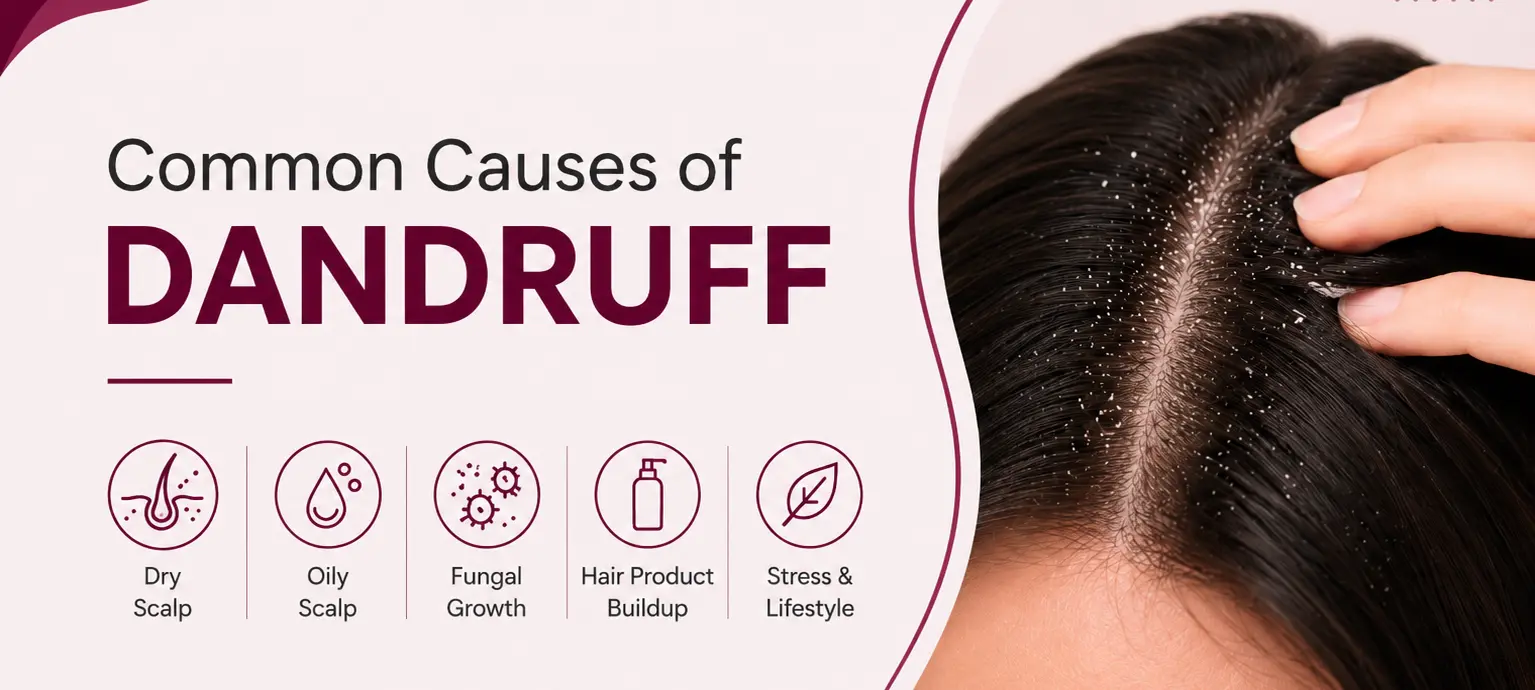
Dandruff rarely has a single cause. The most common contributors include:
- Excess oil (sebum) production
- Overgrowth of Malassezia, a yeast that lives on everyone’s scalp
- Dry skin, especially in winter
- Styling product buildup
- Weather changes and humidity swings
- Stress
- Hormonal fluctuations
- Washing hair too infrequently
- A naturally sensitive scalp
- Underlying skin conditions such as eczema or psoriasis
Identifying which of these applies to you is the first step toward a treatment that actually works and stays working.roving scalp health can preserve the hair you have and allow weak strands to recover.
Hair Fall vs. Hair Breakage: Know the Difference
People often confuse the two, but they’re separate problems needing separate solutions. Here’s a quick way to tell them apart:
| Hair Fall | Hair Breakage |
| Hair detaches from the root | Hair snaps along the shaft |
| Usually linked to scalp conditions like dandruff | Usually caused by heat, chemicals, or rough handling |
| A small white bulb is visible at the end of the strand | No bulb the strand ends abruptly |
| Needs scalp-focused treatment | Needs hair-care and conditioning changes |
Simple test: pick up a fallen strand and check the end. A tiny white bulb means it shed from the root a scalp issue. No bulb means it broke mid-shaft a hair-care issue.
How to Reduce Hair Fall Caused by Dandruff
Treating the dandruff early is the single most effective way to stop the associated shedding. Depending on your scalp type and severity, a dermatologist may recommend:
- Medicated anti-dandruff shampoos: with ingredients like ketoconazole, zinc pyrithione, or selenium sulfide
- Professional scalp treatments: to remove buildup and calm inflammation
- A consistent cleansing routine: matched to your scalp’s oil production
- Anti-inflammatory medication: for severe or persistent irritation
- Lifestyle adjustments: stress management, sleep, and diet all influence scalp health
- Nutritional support: where deficiencies are contributing
- Hair growth therapies: if shedding has progressed to visible thinning
One caution: resist the urge to stack multiple products at once. Layering several actives can irritate the scalp further and make it impossible to tell what’s actually helping. optional in-clinic therapies rather than a generic one-size-fits-all approach. This ensures results that last.
When Should You See a Dermatologist?
Book a consultation if you notice any of the following:
- Hair fall persisting longer than two months
- Severe or worsening scalp itching
- Thick yellow or greasy flakes
- Redness, pain, or tenderness on the scalp
- Bald patches of any size
- Bleeding or scabs from scratching
- No improvement after 4–6 weeks of anti-dandruff shampoo
Early diagnosis almost always means simpler treatment and faster recovery. Bald patches in particular should never be dismissed as “just dandruff.”
Everyday Habits for a Healthier Scalp
Healthy hair starts with a healthy scalp and small, consistent habits matter more than expensive products:
- Wash your hair regularly with a product suited to your scalp type
- Keep your hands off the itch (treat it instead of scratching it)
- Minimise styling product buildup, and clarify occasionally
- Eat a balanced diet with adequate protein, iron, and vitamins
- Stay hydrated
- Manage stress with regular exercise and 7–8 hours of sleep
- If dandruff keeps returning, schedule periodic scalp check-ups instead of restarting the same shampoo cycle
Myths vs. Facts: Dandruff and Hair Fall
| Myth | Fact |
| Dandruff always leads to baldness. | Dandruff causes temporary shedding, not permanent baldness. |
| Oiling the scalp cures dandruff. | Excess oil can feed Malassezia yeast and worsen oily dandruff. |
| Only dry scalps get dandruff. | Oily scalps develop dandruff too often the more stubborn kind. |
| Hair fall stops the moment treatment starts. | Hair follows its own growth cycle; expect gradual improvement over weeks, not days. |
What Recovery Looks Like After Dandruff Treatment
Everyone responds a little differently, but most patients follow a fairly predictable timeline once treatment begins:
- Weeks 1–2: Itching and irritation ease noticeably.
- Weeks 3–4: Flakes reduce visibly; the scalp looks and feels calmer.
- Month 2: Daily hair shedding begins dropping back toward normal.
- Month 3 onward: The growth cycle stabilises, and new growth becomes noticeable.
Consistency is what separates people who recover fully from those who relapse. Stopping treatment, the moment flakes disappear is the most common reason dandruff and the shedding comes back.
Conclusion
Dandruff can absolutely contribute to hair fall, but the damage is temporary in nearly every case. The real risk lies in ignoring it: the longer the itching, inflammation, and scratching continue, the longer the shedding drags on. Treat the scalp, and the hair takes care of itself.
If your dandruff isn’t responding to routine care or the hair fall feels excessive a professional evaluation can identify the exact cause and get you on the right treatment quickly.
At Layers Clinics, our dermatologists provide comprehensive scalp assessments and personalised treatment plans to manage dandruff, restore scalp health, and support stronger, healthier hair growth. Book a consultation today.

Medically reviewed by Dr.Jagan
OMFS & Hair Transplant Surgeon
Published: March 12, 2026
updated: July 14, 2026
Frequently Asked Questions
Shedding 50–100 hairs a day is completely normal. Consistently losing more than that especially with visible flakes or scalp irritation suggests an underlying issue worth checking.
Yes, in almost all cases. Because dandruff doesn’t scar the follicles, hair typically regrows once the scalp heals usually within two to three months of effective treatment.
Yes. Stress can worsen dandruff by affecting oil production and immunity, and it can independently trigger shedding (telogen effluvium) so managing stress helps on both fronts.
