
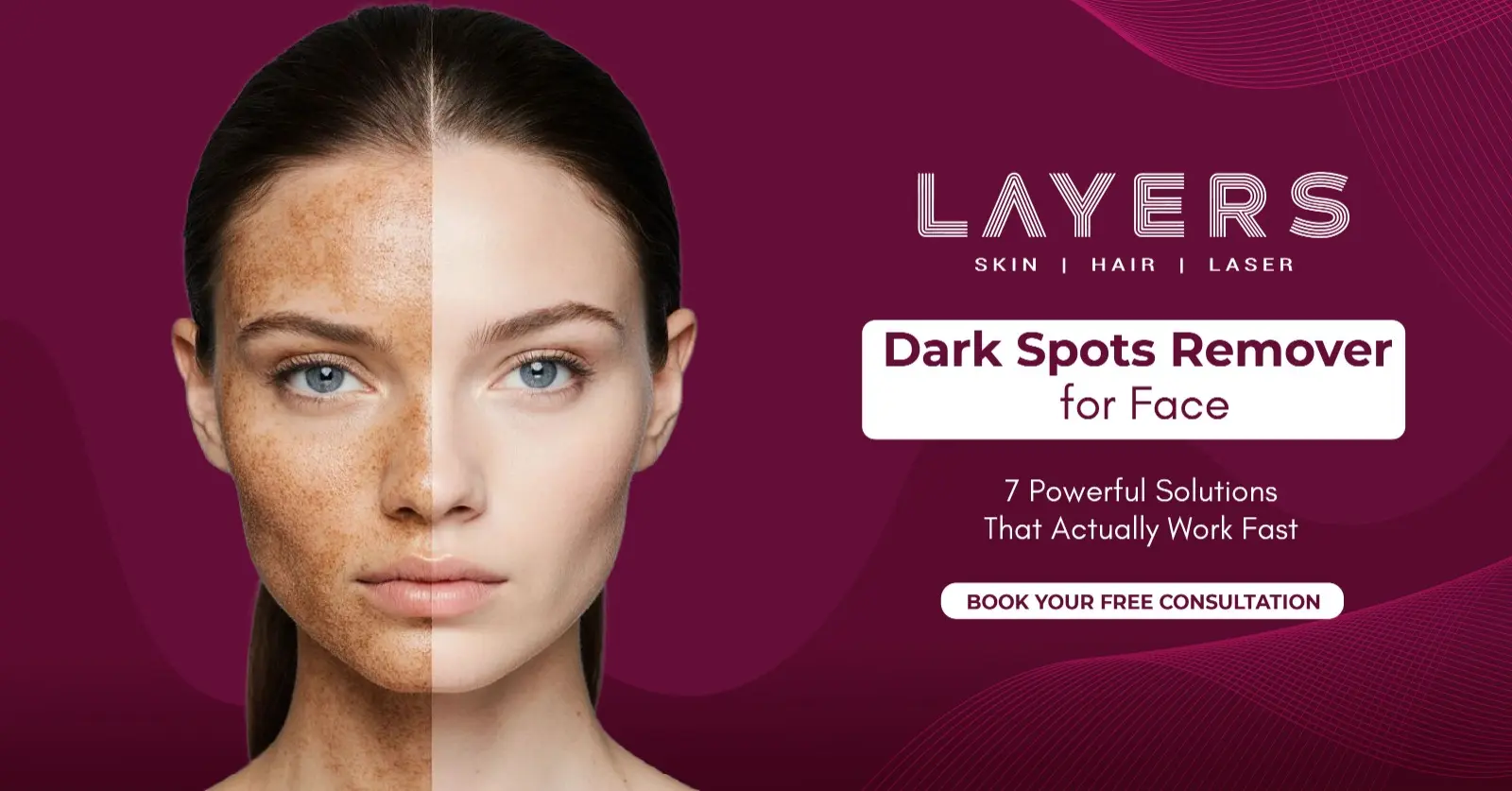
If dark spots, acne marks, or uneven pigmentation are making your skin look dull, choosing the right treatment can make a significant difference. The best approach depends on the cause and severity of the pigmentation, from daily skincare to dermatologist-guided laser and peel treatments. This guide explains the most effective options and what you can realistically expect from each.
What Is a Dark Spot Remover for the Face?
A dark spot remover for face refers to a skincare product or dermatologist-guided treatment designed to reduce the appearance of hyperpigmentation, acne marks, sunspots, and other areas of uneven skin tone. Depending on the cause and severity, options may include topical skincare, chemical peels, Q-Switch laser, carbon laser peel, or prescription treatments.
Who Is This Guide For?
This guide is useful for men and women with dark spots, acne marks, sun pigmentation, or uneven skin tone who want to understand their treatment options. It can help you decide when home skincare may be sufficient and when professional pigmentation treatment may be more appropriate.
Consider a dermatologist consultation if:
- Dark spots persist despite consistent skincare.
- Pigmentation is spreading or repeatedly returning.
- Acne marks are not fading over time.
- You have stubborn sunspots or melasma.
- You are considering laser or chemical peel treatment.
Key point: The right treatment depends on the type, cause, and depth of pigmentation, so identifying the underlying cause should come before choosing a dark spot remover.
What Causes Dark Spots on the Face?
Dark spots, sometimes called black spots or hyperpigmentation, form when the skin produces excess melanin in specific areas. Melanin is the pigment responsible for skin color, and when its production goes into overdrive, it clusters and shows up as visible patches.
Sun Exposure Repeated UV exposure is the single biggest trigger for sunspots and age spots.
Acne Marks (Post-Inflammatory Hyperpigmentation) Pimples often leave behind brown or dark marks once they heal, especially if picked or squeezed.
Hormonal Changes (Melasma) Pregnancy, birth control, and hormonal fluctuations can trigger melasma, patchy pigmentation that usually appears on the cheeks and forehead.
Skin Injury or Inflammation Burns, cuts, allergic reactions, or aggressive treatments can all leave pigmented marks behind.
Ageing As skin ages, melanin production becomes less even, which is why pigmentation tends to increase over time.
Identifying the actual cause matters more than picking a product off the shelf a treatment that works well for sun damage may do very little for melasma, and vice versa.
How to Get Rid of Dark Spots on Face
There’s no single universal fix, but most effective approaches to dark spots on face removal combine three things: identifying the trigger, treating existing pigmentation, and preventing new spots from forming.
For mild, surface-level marks, consistent sunscreen use and brightening actives like vitamin C can make a visible difference over a few months. For deeper or stubborn pigmentation, in-clinic treatments tend to work faster and more reliably, since they target melanin at a level topical products can’t reach on their own. In most cases, a dermatologist will recommend a combination a clinical treatment to break down existing pigmentation, paired with a home routine to maintain results and prevent recurrence.
7 Dark Spot Treatments That Actually Work
At Layers Clinics, treatment plans are built around evidence-based options rather than one-size-fits-all packages.
Q-Switch Laser Treatment
This laser targets excess melanin directly, breaking pigment into tiny particles that the body clears naturally. It’s one of the fastest-acting options and works well for acne marks, sunspots, and melasma alike, with minimal discomfort.
Chemical Peels
Medical-grade peels exfoliate the outer layer of skin to reveal a brighter, more even tone underneath. They’re best suited to mild-to-moderate pigmentation, acne scarring, and general dullness, and are often paired with other treatments for faster results.
Skin Brightening Medi-Facials
These facials use active ingredients like vitamin C, glutathione, and kojic acid to hydrate and brighten skin. They work well for early-stage pigmentation and as maintenance between laser sessions.
Prescription Pigmentation Creams
Under medical supervision, creams containing ingredients like hydroquinone, retinoids, azelaic acid, or tranexamic acid can reduce melanin production safely. These are typically combined with in-clinic treatments rather than used alone.
Microneedling with Skin Boosters
Microneedling stimulates collagen while improving how well brightening ingredients absorb into the skin, making it a strong option for both pigmentation and overall texture.
Carbon Laser Peel
Often called the “Hollywood Peel,” this treatment clears dead skin cells, reduces oiliness, and lightens pigmentation, particularly effective for oily skin, enlarged pores, and acne marks.
Sun Protection and Daily Skincare
No treatment holds up without consistent sun protection. Broad-spectrum SPF 50, paired with antioxidants and brightening serums, is what keeps results from fading and prevents new spots from forming.
How to Choose the Right Dark Spot Treatment
The right treatment depends on what is causing the pigmentation, how deep it is, your skin type, and how long the spots have been present. A dermatologist can assess the pigmentation and recommend a suitable combination of skincare, peels, or laser-based treatments.
For Acne Marks
Dark marks left after acne, known as post-inflammatory hyperpigmentation (PIH), often respond to consistent sunscreen, topical brightening ingredients, chemical peels, or selected laser treatments. Avoid picking or squeezing pimples, as repeated inflammation can lead to darker and longer-lasting marks.
For Sunspots and Tanning
Sun exposure can increase melanin production and make existing pigmentation more noticeable. Daily broad-spectrum sunscreen is essential. Depending on the type and depth of pigmentation, treatments such as chemical peels or Q-Switch laser may be considered by a dermatologist.
For Melasma and Hormonal Pigmentation
Melasma commonly appears as brown or greyish patches, particularly on the cheeks, forehead, nose, or upper lip. Because it can recur with sun exposure and hormonal triggers, treatment usually focuses on long-term pigmentation control, combining sun protection, prescribed skincare, and selected in-clinic treatments when appropriate.
For Persistent or Stubborn Dark Spots
If dark spots remain despite a consistent skincare routine, professional assessment can help identify the underlying cause. Depending on the diagnosis, a dermatologist may recommend Q-Switch laser, chemical peels, prescription treatments, or a combination approach rather than relying on a single dark spot remover.
Are Dark Spot Treatments Safe? What to Expect
Most in-clinic pigmentation treatments are considered safe when performed by a qualified dermatologist, but they do come with mild, temporary side effects worth knowing about beforehand:
- Slight redness or warmth after laser or peel treatments, usually settling within a day
- Temporary dryness or light flaking as skin renews itself
- Mild sensitivity to sun for a short period post-treatment, which is why aftercare and SPF matter
Treatments that aren’t suited to your skin type particularly darker Indian skin tones carry a higher risk of post-inflammatory pigmentation if done incorrectly. This is why a proper skin assessment before treatment matters as much as the treatment itself.
How Many Sessions Are Needed for Dark Spot Treatment?
Most laser and peel treatments require 3–6 sessions, spaced roughly 3–4 weeks apart. Mild, superficial pigmentation often responds faster, while deeper melasma or long-standing marks may need a longer course. Your dermatologist will typically reassess progress every few sessions and adjust the plan accordingly.
What Does Dark Spot Treatment Cost?
Cost varies depending on the treatment type, the number of sessions required, and the size of the area being treated. Laser and peel treatments are usually priced per session, while combination plans (laser plus medi-facials, for instance) are quoted as a full course. At Layers Clinics, pricing is discussed transparently after your skin assessment, so there are no surprises once treatment begins.
Why Choose Layers Clinics for Dark Spot Treatment
Pigmentation responds differently depending on skin type, depth of the spots, and what’s causing them, which is why generic treatment plans rarely hold up long-term. At Layers Clinics, every plan starts with a proper skin analysis, using FDA-approved laser technology and protocols suited specifically for Indian skin tones. The goal isn’t a temporary lightening effect it’s clearer, more even-toned skin that actually holds up over time.
Frequently Asked Questions
What is the best dark spot remover for face?
It depends on the cause and depth of pigmentation. Q-Switch laser tends to deliver the fastest visible results, while chemical peels and prescription creams work well for milder, surface-level spots.
How do I get rid of dark spots on my face naturally?
Consistent sunscreen use, antioxidant serums like vitamin C, and avoiding sun exposure during peak hours can help with mild pigmentation, though results are usually slower and less dramatic than clinical treatments.
Do home remedies work for dark spots?
Some natural ingredients can slightly lighten mild pigmentation over time, but they rarely match the speed or consistency of clinical treatments for deeper spots.
Can dark spots come back after treatment?
Yes, especially without consistent sun protection. Maintaining a proper skincare routine after treatment is what keeps results lasting.
Is laser treatment for dark spots painful?
Most patients report a mild tingling or snapping sensation, and topical numbing is used to keep the procedure comfortable.
Which works better, creams or laser treatment?
Creams are effective for mild pigmentation, while laser treatments handle deeper or more stubborn spots more reliably. Many dermatologists recommend combining both for the best outcome.
Key Takeaway
The best dark spot remover for the face depends on the cause, depth, and type of pigmentation. Treatments such as Q-Switch laser, chemical peels, prescription creams, and carbon laser peels can help reduce stubborn dark spots, while daily broad-spectrum SPF 50+ is essential to prevent pigmentation from returning. A dermatologist-led assessment helps determine the safest and most effective treatment plan for your skin.
Conclusion
Dark spots don’t have to be a permanent part of your reflection. With the right diagnosis and a treatment plan suited to your skin, visible improvement is very achievable. If you’re looking for a dark spot remover for face backed by real clinical results, the team at Layers Clinics can help you find the right approach for your skin.
