
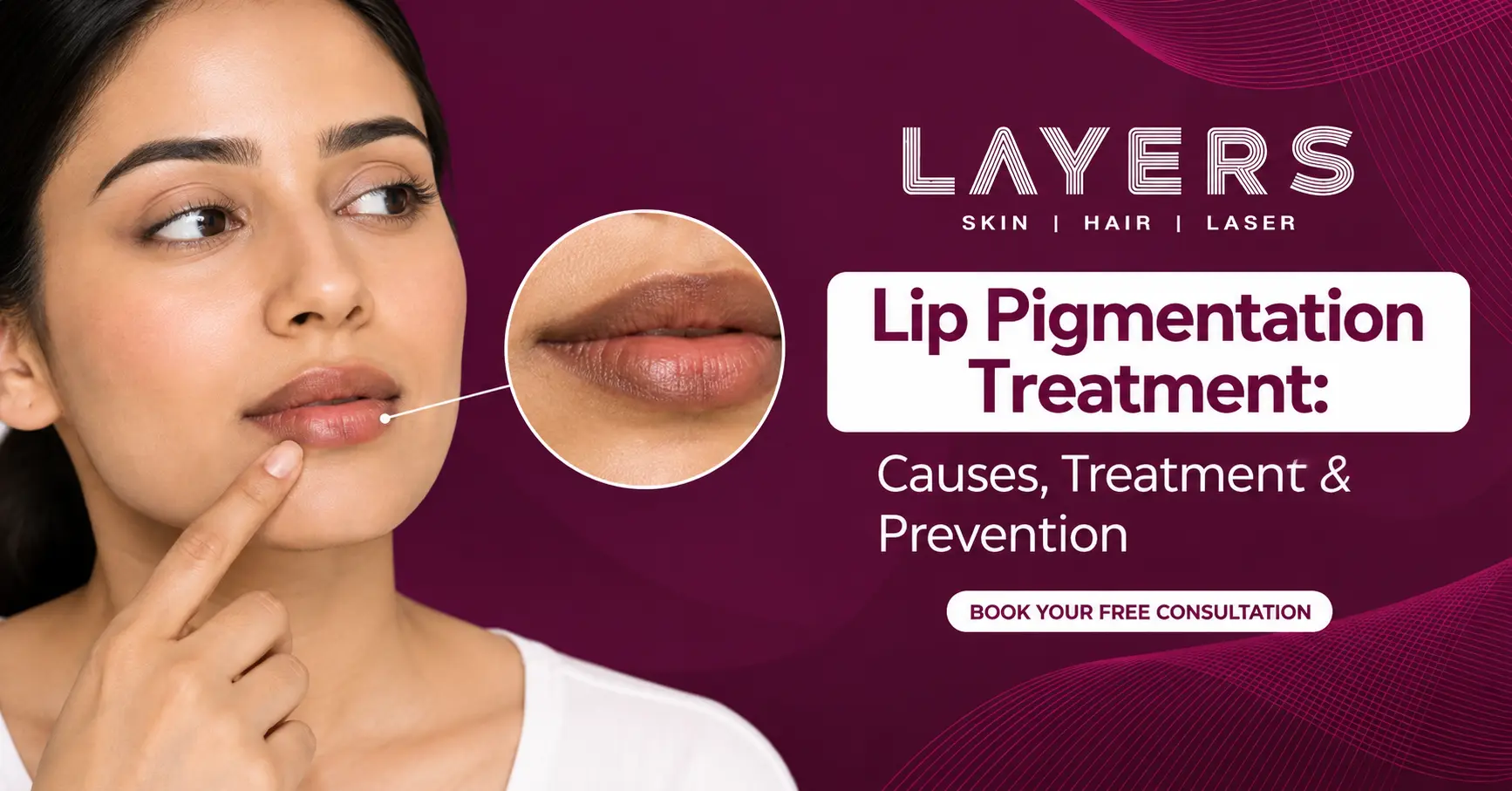
Most of us notice our lips before we notice almost anything else on our face. So when they start turning darker, patchy or dull, it can chip away at your confidence pretty quickly. If that sounds familiar, you are far from alone. Lip pigmentation is a very common concern, and in most cases it is harmless and manageable.
This guide explains why lips darken, which approaches actually help, and how to keep your lips even-toned once you have improved them. Whether you are looking for lip pigmentation at home or want to know what a dermatologist can offer, you will find a practical starting point below.
Key Takeaways
Lip pigmentation is common and usually harmless. It happens when the lips produce extra melanin in response to sun, irritation or other triggers.
The most frequent causes of dark lips are sun exposure, smoking, lip licking or biting, dehydration, product allergies, certain medicines and nutritional gaps.
Treating the cause matters more than treating the colour. Without that, the darkness tends to return.
Daily SPF lip balm, gentle exfoliation and steady moisturising are the foundation of any home care routine.
Expect to wait six to twelve weeks before judging results, and avoid harsh scrubs or straight lemon juice.
Stubborn pigmentation can be treated by a dermatologist with prescription creams, mild peels or laser therapy.
See a doctor if dark patches appear suddenly, spread quickly, or come with spots in the mouth or on the fingers.
What Is Lip Pigmentation?
Lip pigmentation simply means the skin of the lips has more melanin than usual in some areas, or all over. Melanin is the pigment that gives skin its colour. When your skin is irritated, inflamed or exposed to the sun, melanocytes (the cells that make melanin) can go into overdrive and produce more of it than needed.
Lip skin is also much thinner than the skin on the rest of your face. It has no oil glands and very little protective melanin, which means it dries out, gets irritated and reacts to its environment more easily. That is one reason colour changes show up on the lips so quickly.
Lip Pigmentation Treatment Causes: Why Do Lips Turn Dark?
Understanding the lip pigmentation causes in your own case is the most important step, because treating a symptom without fixing the trigger usually brings the darkness back. Here are the causes of dark lips that dermatologists see most often.
Sun exposure
The lips are exposed to sunlight every day, yet most people forget to protect them. Repeated UV exposure stimulates melanin production and can leave lips uneven or darker over time.
Smoking
Smoking is one of the best-known culprits. The heat and chemicals in tobacco smoke irritate lip tissue and trigger extra pigment. Many long-term smokers notice a brownish or greyish tone that gradually builds up.
Habitual lip licking or biting
It feels harmless, but constantly licking or biting your lips strips away moisture and causes low-level irritation. Over time, that chronic irritation can lead to post-inflammatory hyperpigmentation, which is a fancy way of saying the skin darkens after being inflamed.
Dehydration and dryness
When you do not drink enough water, or live in a dry climate, lips get chapped and flaky. Dry, damaged skin tends to look darker and duller.
Allergic or irritant reactions
Some lipsticks, lip balms, toothpastes and even certain foods contain ingredients that irritate sensitive lips. Fragrances, dyes and flavouring agents are common triggers. The reaction may be subtle, so the darkening can appear without any obvious rash.
Caffeine and diet
Very high caffeine intake and a diet low in fruits and vegetables are often mentioned as contributors. The evidence is mixed, but staying hydrated and eating well is good for lip skin regardless.
Nutritional deficiencies
Low levels of iron, vitamin B12 or folate can sometimes show up as dull, pale or discoloured lips. A simple blood test can tell you if this applies to you.
Medications and hormonal changes
Certain drugs, including some antimalarials, chemotherapy agents and antibiotics, may darken the lips. Hormonal shifts during pregnancy or while using hormonal contraceptives can also play a role.
Genetics
Some people simply have naturally darker lips because of their skin tone and family background. This is completely normal and not a medical problem.
Underlying medical conditions
In rare cases, sudden or unusual dark patches on the lips can point to a health condition, such as Laugier-Hunziker syndrome, Peutz-Jeghers syndrome or an adrenal disorder. This is uncommon, but it is the reason a new, fast-changing or spotty discolouration deserves a professional look.
Dark Lips Pigmentation Treatment: Home Care That Can Help
If your pigmentation is mild and linked to everyday habits, gentle home care is a sensible place to begin. Here are some approaches that are generally safe. Keep in mind that most natural remedies have limited scientific proof, so patience and realistic expectations matter.
- Protect before you correct. Use a lip balm with SPF 30 or higher every morning and reapply after eating or drinking. Without sun protection, nothing else will hold up for long.
- Exfoliate gently. Once or twice a week, massage a soft toothbrush or a mix of a little sugar and honey over damp lips for 30 seconds. Never scrub hard, because rough handling can make pigmentation worse.
- Moisturise constantly. Look for fragrance-free balms with ingredients like shea butter, petroleum jelly, ceramides or squalane. Apply a thicker layer before bed.
- Drink enough water. Hydrated lips recover faster and look healthier.
- Try a mild brightening ingredient. Some people use a dab of fresh aloe vera gel or a thin application of lemon-free options like rose water. Avoid straight lemon juice, as it can irritate the skin and cause dark patches after sun exposure.
A patch test on your inner arm is wise before trying any new ingredient, particularly if your lips are already sensitive.
How to Lighten Lip Pigmentation Safely
Wondering how to lighten lip pigmentation treatment without damaging the delicate skin? The key is consistency and a gentle hand. Here is a simple routine many dermatologists would be comfortable with:
- Morning: Rinse lips with lukewarm water, apply a hydrating balm, then finish with an SPF lip product.
- Evening: Remove lipstick completely, apply a nourishing balm or ointment.
- Twice a week: Exfoliate softly, followed by a heavy moisturiser.
- Always: Stop licking, biting or peeling your lips, and switch off any product that stings.
Most people need at least six to twelve weeks of steady care before noticing a clear difference. If nothing changes after that, it is time to talk to a skin specialist.
Lip Pigmentation Removal: Professional Options
For stubborn or deeper pigmentation, lip pigmentation removal by a qualified dermatologist can speed things up. The right option depends on the cause, your skin type and how dark the lips are.
- Prescription topical creams: Ingredients such as hydroquinone, azelaic acid, kojic acid or tretinoin may be prescribed for short courses. They should be used only under medical supervision, because lip skin is thin and easily irritated.
- Chemical peels: Very mild peels can help remove the top layer of pigmented cells and encourage fresh skin.
- Laser therapy: Certain lasers target melanin directly and can be effective for deeper or more resistant pigmentation. Several sessions are usually needed.
- Cryotherapy: In select cases, controlled cold treatment is used on isolated dark spots.
- Treating the underlying issue: If the darkness comes from an allergy, nutritional gap or medication, addressing that cause is often the most effective step.
As with any procedure, results vary. A good clinician will explain the risks, including temporary redness, dryness or, in some cases, further darkening if the skin is not cared for properly afterward.
How to Prevent Lip Pigmentation
Prevention is easier than correction, and the habits are pretty simple:
- Wear SPF lip balm daily, even on cloudy days.
- Quit or cut back on smoking.
- Avoid licking, biting and picking at your lips.
- Choose gentle, fragrance-free lip products, and replace old lipstick and balm.
- Stay hydrated and eat a balanced diet with iron, B12 and vitamin C.
- Take off lipstick before sleeping so pigments do not sit on your lips overnight.
- Check ingredient labels if you suspect a product is irritating you.
When Should You See a Doctor?
Make an appointment with a dermatologist if you notice:
- Sudden dark patches or spots that appear without any clear reason
- Pigmentation that spreads quickly or has an irregular shape
- Dark spots on the lips along with spots inside the mouth or on the fingers
- Pain, bleeding, swelling or sores that do not heal
- No improvement after two to three months of consistent home care
Your doctor can find the real cause and suggest a plan that suits your skin.
Final Thoughts
Dark lips are rarely a sign of anything serious, and most cases improve once you identify the trigger and treat your lips with care. Protect them from the sun, keep them moisturised, drop the habits that irritate them, and give your routine enough time to work. If the colour does not budge or looks unusual, a dermatologist can guide you toward safe and effective dark lip Pigmentation treatment.
Lip Pigmentation Care at Layers Clinics
At Layers Clinics, we offer personalized skin-care guidance to help address concerns such as lip pigmentation. Our experts assess your skin and recommend suitable care options based on your needs. With the right treatment guidance and preventive care, you can work towards healthier-looking lips.
This article is for general information only and is not a substitute for professional medical advice.
Frequently Asked Questions
1. What causes lip pigmentation?
Lip pigmentation can occur due to sun exposure, genetics, hormonal changes, smoking, irritation from lip products or certain medications. Identifying the underlying cause helps determine the right approach.
2. How can I reduce lip pigmentation naturally?
Using a lip balm with SPF, keeping your lips moisturized, avoiding lip licking and limiting exposure to irritants may help prevent further darkening. Natural remedies may not effectively treat existing pigmentation.
3. Which treatment is best for lip pigmentation?
The most suitable treatment depends on the cause and severity of pigmentation. A dermatologist may recommend appropriate topical care or selected clinical procedures after assessing your lips.
4. Can lip pigmentation be removed permanently?
Results depend on the underlying cause. Some pigmentation may improve with suitable care, but recurrence is possible, particularly with continued sun exposure, irritation or genetic factors.
5. Does sunscreen help prevent lip pigmentation?
Yes. A broad-spectrum lip balm with SPF 30 or higher can help protect your lips from UV exposure. Reapply regularly, especially after eating, drinking or spending time outdoors.
6. How long does lip pigmentation treatment take to show results?
The timeline varies depending on the cause, treatment and individual response. Some concerns may improve over several weeks or months, while others require ongoing management.
7. Can smoking cause dark lips?
Smoking may contribute to lip discoloration. Avoiding tobacco can help reduce further exposure to irritants, although existing pigmentation may not disappear completely.
8. When should I consult a dermatologist for lip pigmentation?
Consult a dermatologist if pigmentation persists, changes unexpectedly, develops uneven patches or is accompanied by pain, sores or bleeding. A professional assessment can help identify the cause and guide suitable care.
9. Can lip pigmentation return after treatment?
Yes. Pigmentation may recur if the underlying cause continues. Sun protection, avoiding irritating products and following your dermatologist’s aftercare advice can help manage the risk.
10. Does Layers Clinics provide guidance for lip pigmentation?
Layers Clinics offers skin-care consultations to help assess individual concerns and discuss suitable care options. A qualified clinician can advise whether further evaluation or a specific treatment approach is appropriate.
