
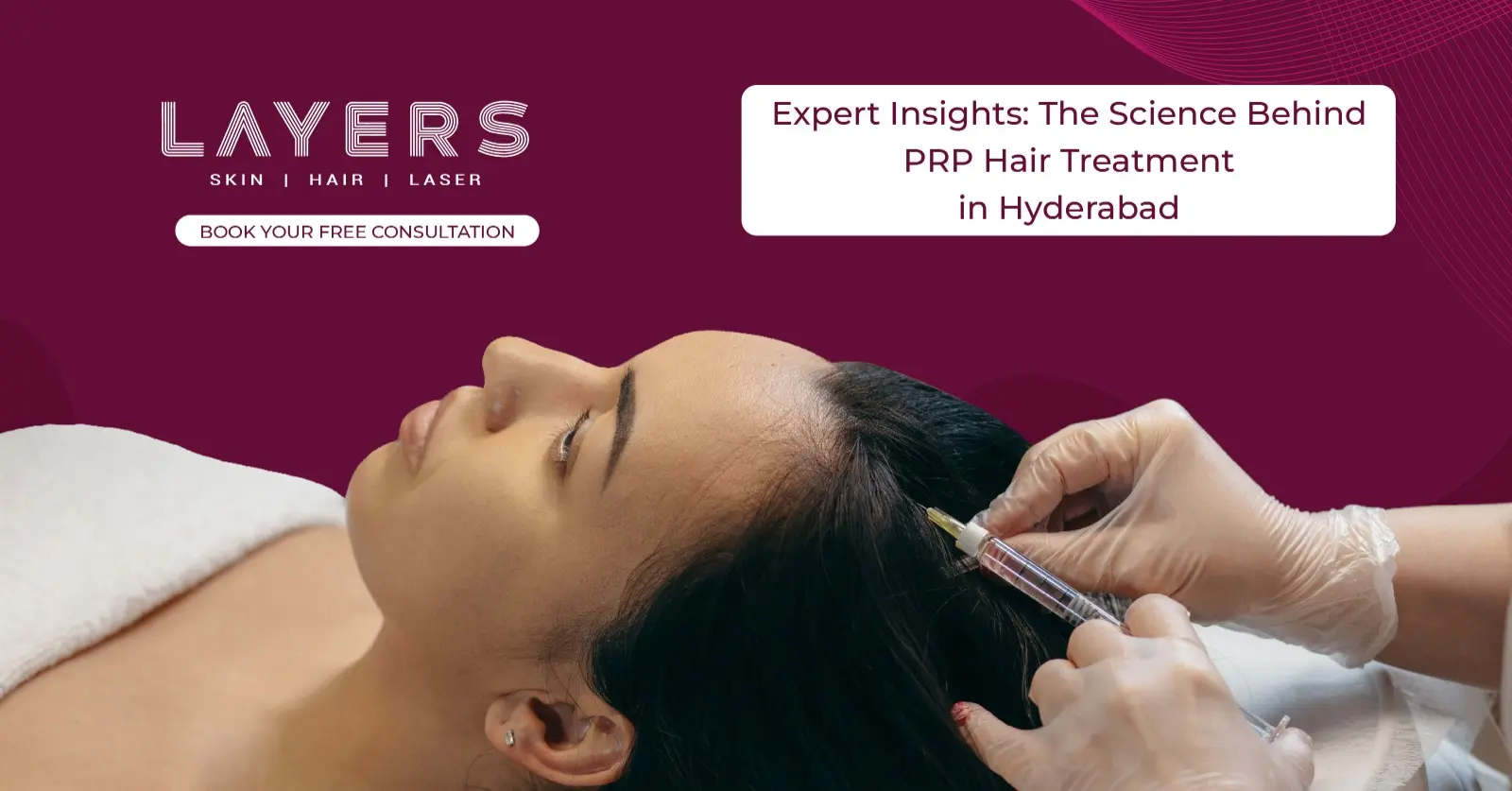
PRP hair treatment in Hyderabad is a minimally invasive procedure that uses platelet-rich plasma prepared from a patient’s own blood. It may help improve hair density in selected people experiencing pattern hair loss, particularly when weakened hair follicles are still present. The treatment involves collecting a small blood sample, separating the platelet-rich plasma and administering it into selected areas of the scalp.
At Layers Clinics, PRP treatment is considered after assessing the patient’s hair-loss pattern, scalp condition, medical history and treatment goals. The number of sessions and follow-up plan depend on individual requirements. PRP is not a guaranteed solution for every type of hair loss, so an accurate diagnosis is important before starting treatment.
What Is PRP Hair Treatment and How Does It Work?
PRP stands for Platelet-Rich Plasma. It is prepared from a sample of the patient’s own blood and contains a higher concentration of platelets than ordinary blood plasma.
Platelets are best known for their role in blood clotting. They also release growth factors and other signalling proteins involved in tissue repair and cellular processes. In hair treatment, PRP is administered into selected areas of the scalp with the aim of supporting the activity of existing hair follicles.
How Does PRP Support Hair Growth?
PRP is being studied as a treatment for androgenetic alopecia, also known as male or female pattern hair loss. Its proposed effects include:
- Supporting follicle activity: Growth factors released by platelets may influence the activity of existing hair follicles.
- Supporting the scalp environment: PRP may affect biological processes involved in tissue repair and the local environment around hair follicles.
- Potentially improving hair density: Some clinical studies report an increase in hair density among people treated with PRP for pattern hair loss.
- Supporting hair thickness: Some patients may experience improvements in the appearance or thickness of existing hair, although results are variable.
PRP does not create new hair follicles in areas where follicles have been permanently lost. It is therefore important to assess the extent and cause of hair loss before recommending treatment.
What Happens During PRP Hair Treatment at Layers Clinics?
At Layers Clinics, the treatment plan is based on an individual scalp assessment rather than a fixed protocol for every patient.
A typical appointment may involve:
- Scalp assessment: The dermatologist evaluates the pattern of hair loss, scalp condition and areas of thinning.
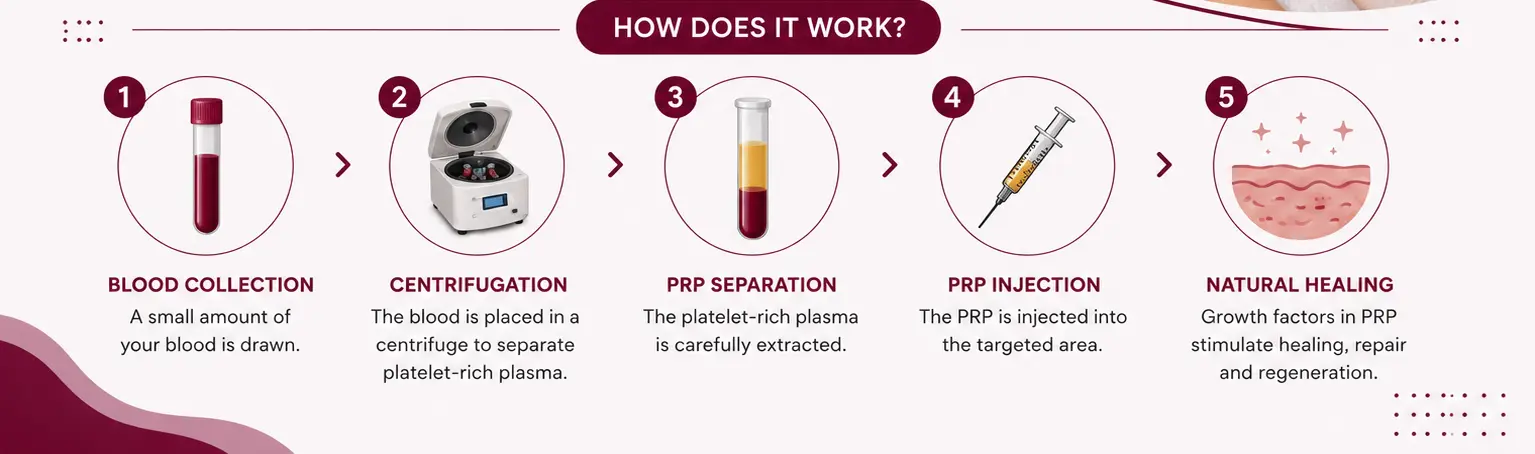
- Blood collection: A small amount of blood is collected from the patient.
- PRP preparation: The sample is processed using a centrifuge to separate the platelet-rich plasma from other blood components.
- Scalp administration: The prepared PRP is administered into selected areas of the scalp using an appropriate injection technique.
- Aftercare and follow-up: The patient receives post-treatment instructions and guidance on the next appointment.
PRP Hair Treatment: Step-by-Step Procedure
Step 1: Consultation and scalp examination
The dermatologist reviews the patient’s medical history, hair-loss pattern and scalp condition. Additional tests may be advised if the underlying cause of hair loss is unclear.
Step 2: Blood collection
A small blood sample is collected using a sterile procedure. The sample is used to prepare the patient’s own platelet-rich plasma.
Step 3: PRP separation
The blood sample is processed in a centrifuge. This separates its components and allows the platelet-rich plasma to be collected according to the clinic’s preparation protocol.
Step 4: PRP administration
The prepared PRP is administered into selected areas of the scalp using fine needles. The treatment area and technique depend on the patient’s hair-loss pattern and the dermatologist’s assessment.
Step 5: Aftercare and review
The patient receives instructions about scalp care, washing, physical activity and follow-up. Progress is reviewed over subsequent months.
The appointment duration and comfort measures may vary according to the treatment protocol and individual needs.
What Are the Benefits of PRP Hair Treatment?
PRP may be considered as part of a treatment plan for selected types of hair thinning. Potential benefits include:
- Minimally invasive treatment: PRP is administered through scalp injections and does not involve hair transplant surgery.
- Uses the patient’s own blood: The plasma is prepared from the patient’s blood rather than donor material.
- Potential improvement in hair density: Clinical studies have reported increased hair density in some people with androgenetic alopecia.
- Can be considered for men and women: PRP may be assessed for suitable male and female pattern hair loss cases.
- Can be incorporated into an individualised plan: A dermatologist may consider PRP alongside other suitable hair-loss treatments.
The degree of improvement varies. PRP should not be presented as a guaranteed way to stop hair fall or restore a full head of hair.
Who Is a Suitable Candidate for PRP Hair Treatment?
PRP may be considered for people with certain types of hair thinning, particularly when hair follicles are still present.
A dermatologist may assess PRP as an option for:
- Men experiencing early or moderate male pattern hair loss.
- Women with diagnosed female pattern hair loss.
- People with reduced hair density in selected scalp areas.
- Patients seeking a non-surgical option as part of a broader hair-restoration plan.
- Selected patients who have undergone hair transplantation and need a follow-up treatment plan.
PRP may not be suitable for everyone. People with active scalp infections, certain blood or platelet disorders, significant medical conditions or other treatment-related risk factors may need additional evaluation. People with extensive, long-standing bald areas may have limited benefit if viable follicles are no longer present.
A consultation is necessary to determine whether PRP is appropriate or whether another treatment or investigation is more suitable.
When Can You Expect PRP Hair Treatment Results?
PRP results develop gradually and vary between individuals. The timeline depends on the cause of hair loss, the extent of thinning, the treatment protocol and the patient’s response.
A general way to understand the follow-up process is:
| Period | What may be assessed |
| First few weeks | Scalp recovery and any immediate treatment effects |
| Around 2–3 months | Early changes in shedding or hair appearance may be reviewed |
| Around 3–6 months | Hair density and thickness may be assessed |
| Beyond 6 months | Longer-term response and the need for further treatment may be discussed |
These are general review periods, not guaranteed result milestones. Standardised photographs and clinical assessments can help compare progress over time.
How Many PRP Sessions Are Needed for Hair Growth?
The number of PRP sessions depends on the diagnosis, degree of hair thinning, treatment response and the dermatologist’s protocol.
Some clinical recommendations describe an initial course of approximately three to five sessions, often spaced around one month apart. However, this is not a universal schedule. Your dermatologist will determine the appropriate interval and whether maintenance sessions should be considered.
Do not assume that more sessions will necessarily produce better results. Treatment frequency should be based on clinical assessment and response.
How Much Does PRP Hair Treatment Cost in Hyderabad?
The cost of PRP hair treatment in Hyderabad varies according to the patient’s condition and the recommended treatment plan. There is no single price that applies to every patient.
Factors that may influence the cost include:
- Number of sessions recommended.
- Extent and pattern of hair thinning.
- PRP preparation method and treatment protocol.
- Equipment and consumables used.
- Whether additional hair-loss treatments are recommended.
- Follow-up and maintenance requirements.
At Layers Clinics, the treatment plan and cost should be discussed after a dermatologist-led scalp assessment. This helps patients understand the proposed number of sessions, the purpose of treatment and any additional recommendations before proceeding.
PRP Hair Treatment vs Other Hair-Loss Treatments
Different hair-loss treatments work in different ways. The appropriate option depends on the diagnosis, stage of hair loss, medical history and treatment goals.
| Treatment | How it is used | Important consideration |
| PRP | Uses platelet-rich plasma prepared from the patient’s blood | May improve hair density in selected people; response varies |
| Minoxidil | A topical or prescribed treatment used for certain types of hair loss | Requires consistent use; suitability and possible side effects should be discussed with a clinician |
| Hair transplant | Surgically relocates hair follicles from a donor area to areas of thinning | Requires assessment of donor hair, hair-loss pattern and surgical suitability |
| Nutritional treatment | Addresses nutritional deficiencies when they contribute to hair loss | Supplements are not a substitute for diagnosing the underlying cause |
PRP and medication may sometimes be considered as part of a combined plan. A hair transplant may be discussed for suitable patients with more advanced hair loss. These treatments are not interchangeable, and a dermatologist can explain their respective roles.
Are There Any Side Effects of PRP Hair Treatment?
PRP is generally a minimally invasive procedure, but side effects can occur. Possible short-term effects include:
- Tenderness or discomfort at the injection sites.
- Temporary redness or swelling.
- Mild bruising.
- Scalp sensitivity.
- Temporary soreness after treatment.
Less common complications can include infection or an inflammatory reaction. Proper sterile technique and medical assessment are important.
Tell your dermatologist about your medical conditions, medicines, history of bleeding problems and any previous reactions to injections before treatment.
Why Choose Layers Clinics for PRP Hair Treatment in Hyderabad?
Choosing a clinic for hair-loss treatment involves more than selecting a procedure. It is important to understand the diagnosis, treatment options, expected outcomes and follow-up requirements.
At Layers Clinics, patients can discuss:
- Dermatologist-led assessment: Hair loss and scalp condition are evaluated before treatment recommendations are made.
- Individualised treatment planning: The treatment plan is based on the patient’s condition and goals.
- PRP procedure guidance: Patients are informed about blood collection, preparation, administration and aftercare.
- Follow-up assessment: Progress can be reviewed over time to understand the treatment response.
- Discussion of alternatives: Other medical or surgical options can be considered when PRP is not suitable.
The aim is to help patients make informed decisions about hair-loss treatment with appropriate clinical guidance.
What Does Research Say About PRP for Hair Loss?
Clinical research suggests that PRP may improve hair density in some people with androgenetic alopecia. However, results are not consistent across all studies.
Research findings vary because studies use different PRP preparation methods, platelet concentrations, injection techniques, treatment intervals and follow-up periods. Some reviews have also identified limitations in study quality and differences in research methods.
For this reason, PRP should be considered a potential treatment option for selected patients rather than a guaranteed cure for hair loss. A dermatologist can explain the available evidence and whether it applies to your condition.
FAQs About PRP Hair Treatment in Hyderabad
What is PRP hair treatment and how does it work?
PRP hair treatment uses platelet-rich plasma prepared from a patient’s own blood. The plasma is administered into selected scalp areas to support follicle activity. It may help improve hair density in some people with pattern hair loss.
Who is a good candidate for PRP hair treatment in Hyderabad?
People with early or moderate pattern hair thinning may be considered for PRP. A dermatologist will assess the hair-loss pattern, scalp condition, medical history and follicle status before recommending treatment.
How many PRP sessions are required for hair growth?
The number of sessions depends on the individual’s condition and response. Some treatment recommendations involve an initial course of three to five sessions at approximately monthly intervals, but the schedule should be decided by the treating dermatologist.
How long does PRP take to show results?
PRP results develop gradually. Changes may be assessed over several months, with hair density and thickness often reviewed around the three- to six-month period. Individual outcomes vary.
Is PRP hair treatment safe?
PRP is a minimally invasive procedure that uses plasma prepared from the patient’s own blood. Temporary tenderness, redness, swelling or bruising may occur. A medical assessment is important to identify individual risks and suitability.
Is PRP hair treatment painful?
Some discomfort may occur during scalp injections. The level of discomfort varies between patients. The clinic may discuss appropriate comfort measures before the procedure.
How much does PRP hair treatment cost in Hyderabad?
The cost depends on the number of sessions, extent of hair thinning, preparation method and overall treatment plan. A personalised estimate can be discussed after a scalp assessment at Layers Clinics.
Can PRP completely regrow lost hair?
PRP cannot guarantee complete hair regrowth. It may support hair density in selected patients who still have viable follicles, but it is unlikely to restore hair in every area of extensive or long-standing baldness.
Can PRP be combined with other hair-loss treatments?
A dermatologist may consider PRP alongside other treatments depending on the diagnosis and medical history. The combination should be planned by a qualified clinician rather than started without medical advice.
Key Takeaway
PRP hair treatment in Hyderabad is a minimally invasive option that uses platelet-rich plasma prepared from the patient’s own blood. Research suggests it may improve hair density in selected people with pattern hair loss, but results vary and it is not suitable for every cause or stage of hair loss. A dermatologist-led assessment can help determine whether PRP or another treatment is appropriate.
Book a PRP Hair Treatment Consultation at Layers Clinics
If you are experiencing hair thinning or increased hair fall, start with an assessment to understand the underlying cause. The dermatology team at Layers Clinics can evaluate your scalp condition, discuss suitable treatment options and explain the expected treatment plan.
Call: +91-9000572727, Website: https://www.layersclinics.com/
Last updated: September 2026
