
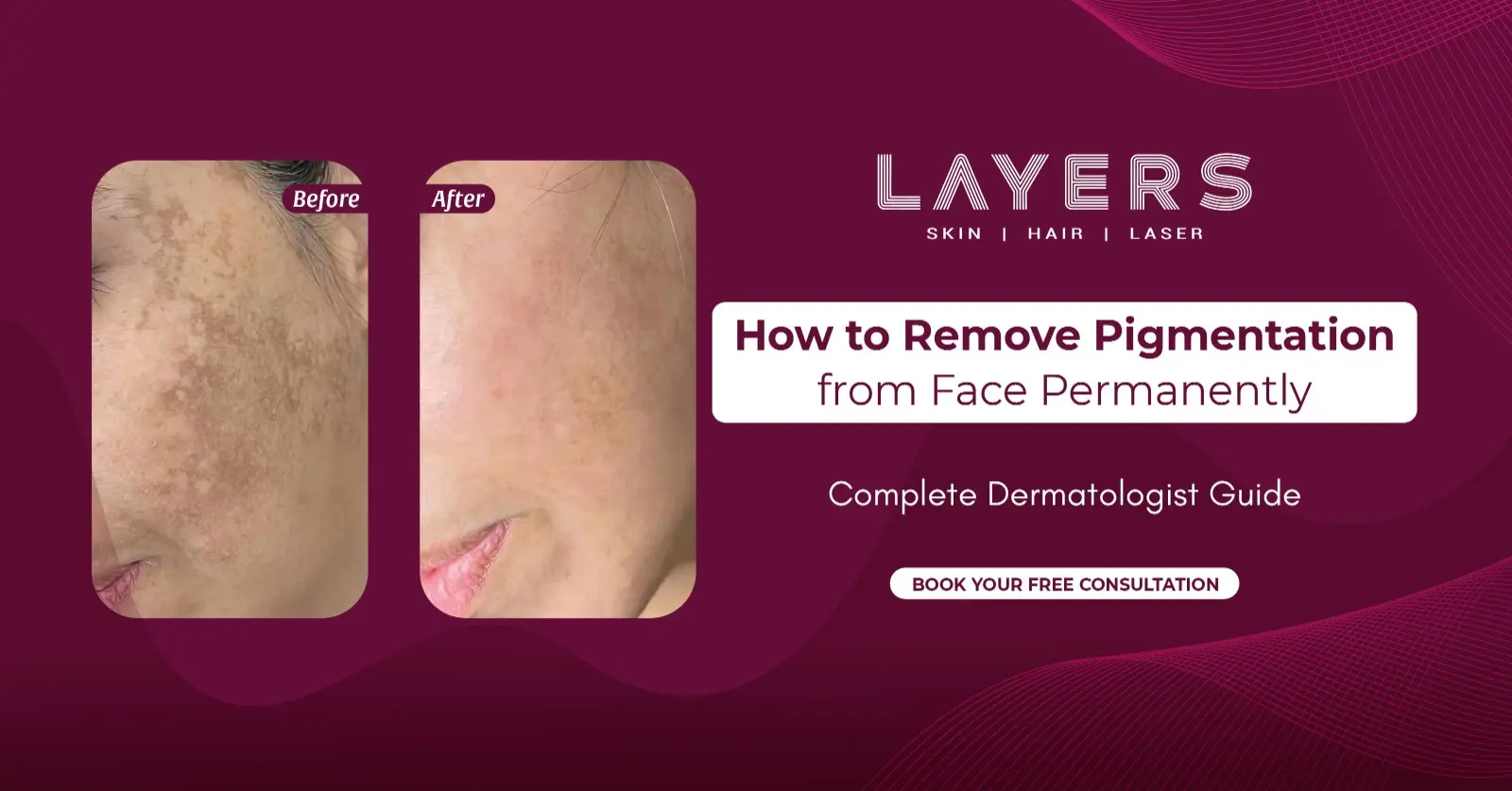
Facial pigmentation is one of the most common reasons people look for clearer, more even-toned skin. If you have dark patches, brown spots, or uneven skin tone, you may be searching for how to remove pigmentation from face permanently, how to get rid of pigmentation on the face, or even whether pigmentation can be completely cured.
The most important thing to understand is that pigmentation is not one single skin condition. Melasma, post-inflammatory hyperpigmentation, sunspots, acne marks, and other forms of pigmentation have different causes and may require different treatments.
So, can pigmentation be removed permanently? Pigmentation can often be significantly reduced and controlled with the right diagnosis, dermatologist-guided treatment, sun protection, and maintenance care. However, no responsible dermatologist can guarantee that pigmentation will never return. Some types, particularly melasma, can recur when triggers such as sunlight, hormones, or inflammation are present.
This guide explains how to remove pigmentation from face permanently or, more accurately, how to achieve long-term pigmentation control using evidence-based skincare and professional dermatological treatments.
What Is Facial Pigmentation?
Facial pigmentation refers to areas of skin that appear darker than the surrounding skin because of increased or uneven melanin production.
Melanin is the natural pigment responsible for skin, hair, and eye colour. When melanocytes produce excess melanin or when pigment becomes unevenly distributed, dark spots or patches can develop.
Common causes include:
- Sun and ultraviolet exposure
- Melasma and hormonal changes
- Acne and other skin inflammation
- Post-inflammatory hyperpigmentation
- Certain medications
- Skin irritation or injury
- Genetic or individual skin characteristics
The appearance of pigmentation can vary considerably. It may affect the cheeks, forehead, nose, upper lip, chin, or other sun-exposed areas.
Common Types of Pigmentation on the Face
Melasma
Melasma usually appears as brown, grey-brown, or darker patches, often symmetrically on the cheeks, forehead, nose, and upper lip.
Sun exposure is a major aggravating factor, while hormonal influences can also contribute. Because melasma can recur, treatment usually focuses on long-term control rather than promising permanent removal.
Post-Inflammatory Hyperpigmentation
Post-inflammatory hyperpigmentation, or PIH, can develop after acne, pimples, eczema, irritation, burns, or other inflammation.
The original skin problem may disappear while a dark mark remains behind. PIH can gradually fade, but the process may take months, particularly when the skin continues to experience inflammation or UV exposure.
Sunspots and Age Spots
Sunspots, also called solar lentigines, are associated with cumulative ultraviolet exposure. They commonly appear on areas such as the face, forehead, hands, and shoulders.
Unlike melasma, individual sunspots generally do not fluctuate because of hormonal changes.
Acne Marks
Dark marks left after acne are another common reason people search for face pigmentation removal. These marks are usually a form of post-inflammatory hyperpigmentation rather than permanent scars.
Correctly identifying the type of pigmentation is the first step toward choosing an appropriate treatment.
Can Pigmentation Be Removed Permanently?
One of the most common questions dermatologists receive is: Can pigmentation be removed permanently?
The realistic answer is that pigmentation can often be greatly improved and kept under control, but permanent removal cannot be guaranteed for every person.
The outcome depends on:
- The type of pigmentation
- Its underlying cause
- Skin tone
- Duration of pigmentation
- Sun exposure
- Hormonal factors
- Previous treatments
- Skin sensitivity
- Adherence to treatment and maintenance
For example, a superficial sunspot may respond very well to a targeted procedure, while melasma may require ongoing treatment and prevention.
Therefore, instead of looking for a one-time permanent cure, the better goal is:
Diagnose the cause → reduce existing pigmentation → prevent new pigment formation → maintain the improvement.
This approach provides a much more realistic path toward long-term results.
How to Remove Pigmentation from Face Permanently: What Actually Works?
If you are researching how to remove pigmentation from face permanently, treatment should begin with identifying what is causing the pigmentation.
A dermatologist may recommend a combination of topical skincare, sun protection, chemical peels, laser-based procedures, or other treatments depending on your diagnosis.
1. Daily Sunscreen Is the Foundation
No pigmentation treatment can work optimally if the skin continues to receive significant UV exposure.
Broad-spectrum sunscreen helps protect the skin from UVA and UVB radiation and can reduce the factors that contribute to worsening pigmentation.
For pigmentation-prone skin, dermatologists commonly recommend:
- Broad-spectrum SPF 30 or higher
- Adequate application
- Reapplication when spending prolonged periods outdoors
- Hats and other physical sun protection
- Avoiding unnecessary intense sun exposure
For people with melasma, visible light may also contribute to pigmentation. A dermatologist may therefore recommend a tinted sunscreen containing iron oxides as part of the overall strategy.
Sunscreen is not simply an aftercare product. It is an essential part of pigmentation treatment and recurrence prevention.
2. Dermatologist-Prescribed Topical Treatments
Topical treatments may help reduce excess pigmentation and prevent new pigment formation.
Depending on the diagnosis, a dermatologist may consider ingredients such as:
- Vitamin C
- Niacinamide
- Azelaic acid
- Retinoids
- Hydroquinone where medically appropriate
- Tranexamic acid
- Other dermatologist-selected depigmenting ingredients
The right ingredient depends on the type of pigmentation and your skin’s tolerance.
Using several strong products simultaneously does not necessarily produce faster results. Excessive irritation can worsen inflammation and potentially lead to more pigmentation.
That is why a dermatologist-guided pigmentation routine is often safer and more effective than continuously changing products.
3. Chemical Peels for Pigmentation
Chemical peels use carefully selected chemical solutions to exfoliate the skin and encourage renewal.
Depending on the pigmentation and skin type, a dermatologist may consider peels containing ingredients such as:
- Glycolic acid
- Lactic acid
- Mandelic acid
- Salicylic acid
- Other professionally selected peeling agents
Chemical peels can be useful for certain types of superficial pigmentation and acne-related marks.
However, stronger is not always better.
Incorrect acid selection, excessive concentration, or aggressive treatment can irritate the skin and potentially worsen post-inflammatory pigmentation, particularly in individuals who are prone to PIH.
A professional assessment is therefore important before choosing a pigmentation peel.
4. Laser Treatment for Pigmentation
Laser and light-based treatments can be useful for selected pigmentation concerns.
Depending on the diagnosis, dermatologists may consider technologies such as Q-switched or other pigment-targeting laser systems.
The objective is to target excess pigment while minimizing unnecessary injury to the surrounding skin.
However, laser treatment is not automatically the best solution for every type of pigmentation.
For example, melasma can be particularly challenging because heat and inflammation may sometimes aggravate the condition. Laser treatment should therefore be selected carefully and performed according to the patient’s diagnosis and skin characteristics.
A dermatologist should determine:
- Whether laser treatment is appropriate
- Which technology is suitable
- The treatment settings
- The number of sessions
- Whether topical treatment should be combined with the procedure
- How recurrence will be prevented
5. Microneedling for Selected Pigmentation Concerns
Microneedling creates controlled micro-injuries in the skin to stimulate the skin’s natural repair response.
In selected patients, microneedling may be incorporated into a treatment plan for pigmentation, particularly when it is combined with appropriate topical therapy.
However, microneedling is not suitable for everyone.
Performing aggressive microneedling on actively inflamed or pigmentation-prone skin without professional guidance can increase irritation and potentially worsen pigmentation.
The procedure should therefore be customized according to the skin condition.
6. Other Dermatologist-Guided Treatments
Depending on the diagnosis, severity, and previous treatment history, a dermatologist may consider additional approaches or combinations.
The treatment plan may involve:
- Prescription skincare
- Chemical peels
- Laser-based treatment
- Microneedling
- Combination therapy
- Maintenance treatment
- Strict photoprotection
Treatments should not be selected simply because they are popular online. The best pigmentation treatment is the one that matches the actual cause of your pigmentation.
How to Remove Forehead Pigmentation
The forehead is a common location for pigmentation and can be affected by melasma, sun exposure, acne-related marks, irritation, and other causes.
If you are searching for how to remove pigmentation on forehead, the first step is determining what type of pigmentation is present.
A dermatologist may assess:
- Whether the pigmentation is symmetrical
- Whether it extends to the temples or cheeks
- Whether there is a history of acne or inflammation
- Your sun exposure
- Your current skincare products
- Whether hormonal factors may be involved
Treatment may include sunscreen, topical depigmenting agents, chemical peels, or carefully selected procedures.
Avoid repeatedly scrubbing or using harsh home remedies on forehead pigmentation. Irritation can trigger additional inflammation and make darkening more difficult to control.
How to Remove Pigmentation from Nose
The nose receives considerable sun exposure and can develop pigmentation due to UV damage, melasma, acne-related inflammation, or irritation.
If you are searching for how to remove pigmentation from nose, do not assume that every dark patch is a sunspot.
A dermatologist can determine whether the pigmentation is:
- Melasma
- Sun-induced pigmentation
- Post-inflammatory pigmentation
- Another skin condition
Treatment is then selected accordingly.
Consistent sunscreen application is particularly important because the nose is continuously exposed to daylight.
How to Remove Dark Spots Permanently
Dark spots can have different causes, so there is no single permanent treatment for every spot.
If dark spots appeared after acne, controlling acne and reducing inflammation is important.
If they are associated with sun exposure, photoprotection becomes essential.
If they are melasma-related, the focus is usually long-term control.
If a spot is new, changing, bleeding, itching, rapidly growing, or otherwise unusual, it should be examined by a dermatologist rather than treated as ordinary pigmentation.
Therefore, the safest answer to how to remove dark spots permanently is to identify their cause before starting treatment.
Can Pigmentation Be Removed Permanently Without Treatment?
Mild pigmentation may sometimes fade naturally, particularly when it develops after inflammation and the original trigger has been controlled.
However, persistent or extensive pigmentation may require professional treatment.
Home care can support improvement, but it cannot reliably diagnose the cause or guarantee permanent removal.
Be especially cautious about home remedies involving:
- Lemon juice
- Baking soda
- Undiluted vinegar
- Harsh scrubs
- Strong DIY acids
These approaches can irritate the skin and potentially worsen pigmentation.
Can Pigmentation Be Removed Permanently in a Week?
If you are searching for how to remove pigmentation from face permanently in a week, it is important to set realistic expectations.
Permanent removal of established pigmentation in seven days is not a realistic or medically responsible promise.
Some treatments may produce early improvement in skin brightness or the appearance of superficial pigmentation, but pigment clearance generally takes longer.
Depending on the condition, visible improvement may take several weeks, while more significant improvement can require several months.
Your dermatologist can provide a more realistic timeline after examining the pigmentation.
How Long Does It Take to Remove Pigmentation?
There is no single timeline that applies to everyone.
The duration depends on the cause, depth, duration, treatment, and individual skin response.
As a general expectation:
- Early improvement: may become noticeable over several weeks
- More visible improvement: often requires several treatment cycles
- Persistent pigmentation: may require several months of treatment
- Melasma: often requires long-term maintenance
- Post-inflammatory pigmentation: can gradually fade after the underlying inflammation is controlled
A dermatologist can give you a more individualized timeline after evaluating your skin.
Be cautious about advertisements promising complete pigmentation removal within a few days.
Why Pigmentation Comes Back
Even after successful treatment, pigmentation can recur.
Common triggers include:
- Sun exposure
- Visible light in melasma-prone individuals
- Hormonal changes
- Acne and inflammation
- Skin irritation
- Inconsistent sunscreen use
- Stopping maintenance treatment too early
This is why long-term pigmentation management is more effective than thinking about pigmentation as a problem that can always be permanently erased with one procedure.
When Should You See a Dermatologist?
Consider consulting a dermatologist if:
- Pigmentation has persisted despite skincare.
- Dark patches are becoming more noticeable.
- Pigmentation keeps returning.
- You are unsure whether it is melasma, PIH, or sunspots.
- You have pigmentation on the forehead, cheeks, nose, or upper lip.
- You have tried several products without improvement.
- Your skin becomes irritated after using pigmentation products.
- You want professional treatment such as a chemical peel or laser.
- A dark spot is changing in appearance or behaving unusually.
A dermatologist can identify the likely cause and create a treatment plan based on your skin type, pigmentation pattern, triggers, and previous treatments.
Why Choose Layers Clinics for Pigmentation Treatment?
At Layers Clinics, pigmentation treatment is approached as a skin-condition management process rather than a one-size-fits-all procedure.
Detailed Skin Assessment
The first step is understanding the type, pattern, severity, and possible triggers of your pigmentation.
Personalized Treatment Planning
Your treatment plan can be tailored according to your skin type, pigmentation, lifestyle, previous treatments, and response to skincare.
Advanced Dermatology Treatments
Depending on the diagnosis, treatment may include professionally selected chemical peels, laser-based procedures, microneedling, prescription skincare, or combination approaches.
Combination Approach When Appropriate
Pigmentation often requires more than one strategy. Treatment may combine professional procedures with a dermatologist-recommended home-care routine and strict photoprotection.
Focus on Long-Term Control
The goal is not simply to make pigmentation look lighter temporarily. Preventing recurrence and maintaining healthier, more even-looking skin are important parts of treatment.
Dermatologist-Guided Care
Professional assessment helps reduce the risk of inappropriate treatments, excessive irritation, and procedures that may worsen pigmentation.
If you are looking for pigmentation treatment and want to understand which option is appropriate for your skin, a consultation can help you make an informed decision.
Frequently Asked Questions About Removing Facial Pigmentation
Can pigmentation be removed permanently from the face?
Pigmentation can often be significantly reduced and controlled, but permanent removal cannot be guaranteed. The likelihood of recurrence depends on the type of pigmentation and triggers such as UV exposure, hormones, and inflammation.
What is the best treatment for facial pigmentation?
There is no single best treatment for every person. Depending on the diagnosis, a dermatologist may recommend topical treatments, chemical peels, laser-based procedures, microneedling, or a combination approach.
How can I remove pigmentation from my face naturally?
Gentle skincare, sun protection, avoiding skin irritation, and controlling the underlying cause can support improvement. Harsh remedies such as lemon juice or abrasive scrubs should be avoided because they may irritate the skin and worsen pigmentation.
How can I remove forehead pigmentation?
Forehead pigmentation should first be diagnosed because it can result from melasma, sun exposure, acne-related inflammation, or other causes. Treatment may involve sunscreen, topical medication, chemical peels, or dermatologist-selected procedures.
How can I remove pigmentation from my nose?
Pigmentation on the nose may be caused by sun exposure, melasma, inflammation, or other factors. Consistent sunscreen is important, while the appropriate professional treatment depends on the diagnosis.
Can pigmentation be removed in one week?
Complete or permanent removal of established pigmentation in one week is not a realistic expectation. Some treatments may produce early improvement, but meaningful pigment reduction generally requires several weeks or months.
Can pigmentation come back after treatment?
Yes. Pigmentation can recur, particularly melasma. Consistent sun protection, appropriate skincare, and maintenance treatment can help reduce the risk of recurrence.
What is the fastest way to remove pigmentation?
The fastest safe approach is not necessarily the most aggressive procedure. A dermatologist can identify the cause and select an appropriate combination of treatment and skincare without unnecessarily irritating the skin.
Should I use home remedies for pigmentation?
It is better to avoid unproven or irritating home remedies. Ingredients such as lemon juice and abrasive scrubs can damage the skin barrier and potentially worsen pigmentation.
Key Takeaway
Pigmentation can often be significantly reduced and controlled, but permanent removal cannot be guaranteed. The right treatment depends on the cause, such as melasma, sun damage, acne-related pigmentation, or post-inflammatory hyperpigmentation. This guide is for people looking for safe, dermatologist-guided ways to reduce facial pigmentation and prevent recurrence. Treatment may include sun protection, prescription skincare, chemical peels, laser-based procedures, microneedling, or combination therapy, depending on individual skin needs. For persistent, worsening, or recurring pigmentation, consult a qualified dermatologist for an accurate diagnosis and personalized treatment plan.
Conclusion
Pigmentation can often be significantly reduced with the right diagnosis, consistent sun protection, and dermatologist-guided treatment. Since the cause and response vary from person to person, a personalized approach is important for long-term results. If you have persistent or recurring pigmentation, consult a dermatologist to identify the cause and choose the most suitable treatment.
