
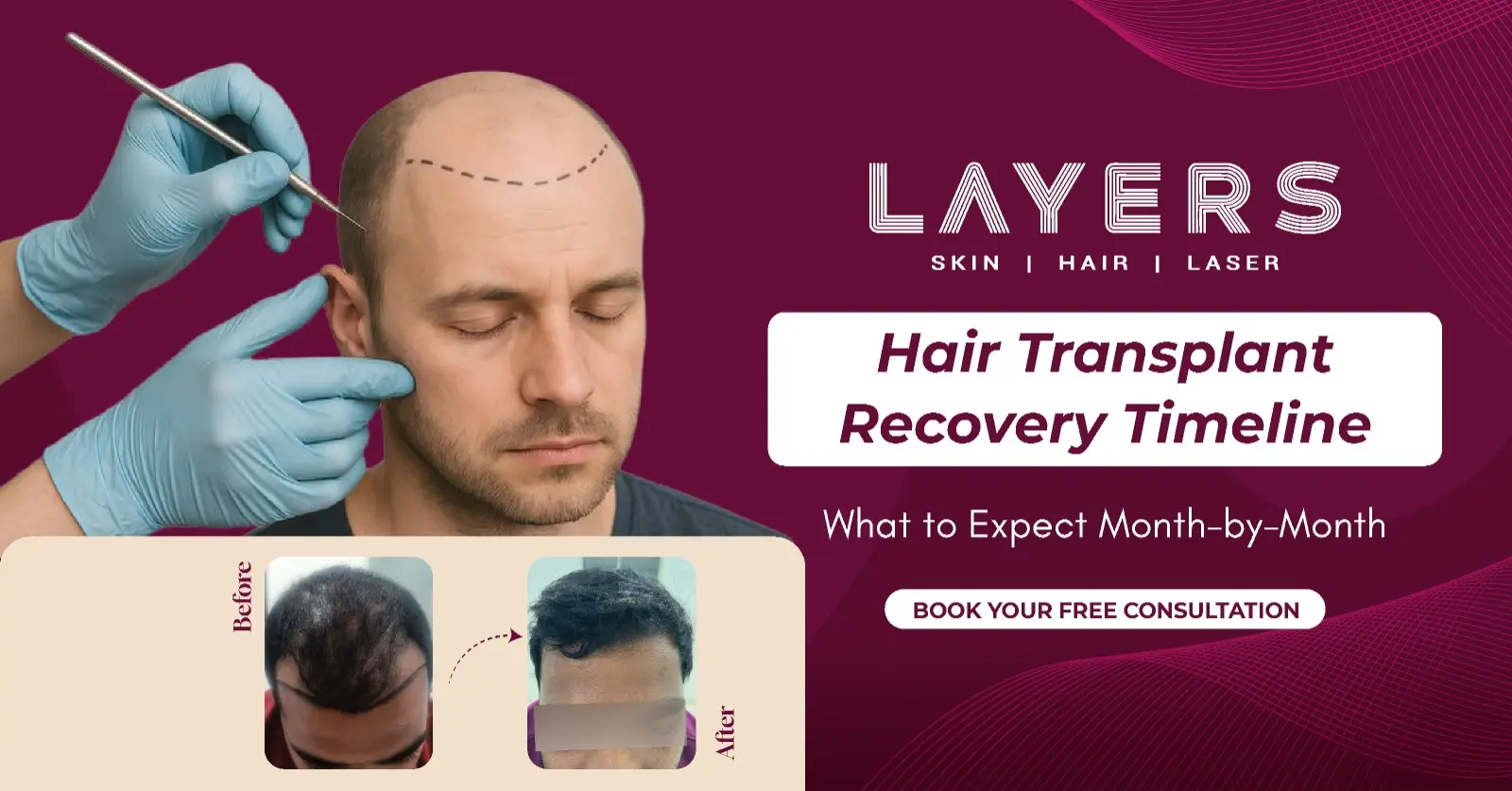
Hair loss affects millions, and choosing a permanent solution often leads to one critical question—what is the hair transplant recovery timeline? Understanding the hair transplant healing stages, recovery time, and hair regrowth after hair transplant helps set realistic expectations and ensures better results. This guide explains every phase from surgery to final outcome.
- How long does it take to return to daily work?
- When will the new hair regrowth happen?
- What does each phase look like?
- What is the level of discomfort to face?
Understanding the hair transplant recovery timeline is a way to remove fear, work on realistic expectations, and help to plan the daily routine in the most effective ways possible rather than worrying.
Why Understanding the Hair Transplant Recovery Timeline Matters
Hair transplantation is a surgical procedure to relocate healthy hair follicles from a donor area. The donor areas are usually the back and sides of the scalp so that they are injected into the places where thinning and baldness happens. The transplanted follicles are resistant to the hormone dihydrotestosterone (DHT) that leads to pattern baldness.
In this procedure, you can expect permanent and self-sustaining results. Modern techniques have evolved so greatly that hair transplantation became minimally invasive, scar-free, and naturally looking procedure. This is performed under local-anaesthecia, and patients remain comfortable as long as the transplantation happens.
What Happens During a Hair Transplant Procedure?
Hair transplantation is an advanced permanent hair restoration treatment where healthy follicles are extracted and implanted into thinning areas. Techniques like FUE hair transplant recovery time and DHI hair transplant recovery timeline are designed for minimal downtime, faster healing, and higher graft survival rate.
How Hair Follicles Are Extracted and Implanted
Healthy follicles are harvested from the donor area and strategically implanted into thinning or bald regions, ensuring natural alignment with your existing hair pattern.
Role of Donor Area and DHT-Resistant Hair
The back and sides of the scalp contain DHT-resistant follicles, which ensures that transplanted hair remains permanent and continues to grow naturally over time.
Modern Techniques: FUE vs DHI Explained
FUE involves extracting individual grafts, while DHI uses an implanter pen for precise placement. Both techniques are minimally invasive and offer natural-looking results when performed by experts.
Advantages of Hair Transplantation
Hair transplantation outweighs the challenges you face by offering the compelling benefits. Before understanding the hair transplant recovery timeline, reflecting the advantages creates the essence in your mind for treating yourself with an expert involvement.
- Permanent and offers natural looks because the transplanted hair has higher regrowth rate similar to original hair
- No external medication is needed once you’re healed
- Restores hair in parallel to confidence, self-image, addressing your worry as well
- Minimal scarring even when you prefer short hairstyles
- Hair transplant recovery timeline is short when compared to other surgical procedures
- Customized placement of every graft matches to your natural hair growth pattern, angle, and density
Types of Hair Transplant Treatments
Layers Clinics, being the trusted partner for patients around, offers primary treatments for your permanent hair growth:
- Follicular Unit Extraction (FUT) – involves removing a thin strip of scalp from the donor area, dissected into individual follicular units under a microscope, and implanted them into recipient areas. Idea for patients with a large number of grafts in a single session. Individual follicular units are directly extracted from the scalp with a micro-punch tool, leaving small dot scars. Preferred for short hairstyles or people with limited donor supply.
- Direct Hair Implantation (DHI) – an advanced treatment or version of FUE that uses a Choi Implanter pen to create the recipient sites and grafts are placed in a motion. This offers greater precision, control over angle and depth, and higher density.
The most suitable treatment is recommended by our expert based on your degree, donor supply, scalp laxity, and lifestyle preferences of your hair.
Hair Transplant Recovery Timeline: Week by Week
Here’s how the hair transplant recovery timeline looks like for you to expect the reality and adjust the lifestyle accordingly.
Days 1 to 3: Immediate Post-Operative Phase
- Swelling, redness, and mild discomfort are normal in this initial stage
- Scalp is felt tight with tiny crusts around each graft site
- Pain medication, antibiotics are common to prevent infection, and anti-inflammatory drugs to reduce swelling
- Sleep with your head elevated at a 45-degree angle
- Avoid touching, scratching or rubbing the grafts
- Delicate stage of the hair transplant recovery timeline and also creates the meaningful difference in survival rate of the grafts
Days 4 to 7: Scabbing and Early Healing
- Crusts and scabs become visible as the skin around each graft heals
- Gentle washing with a recommended shampoo after 3-4 days
- Swelling is more after 4 days, sometimes shifting to the forehead or around the eyes
- Comfortable return to clinician is a promise after a week during this phase of the hair transplant recovery timeline
Weeks 2 to 3: Shedding Phase
- Completely normal phase and expected part of the hair transplant recovery timeline
- Transplanted hairs shed as the follicles reach a resting (telogen) phase
- Shedding doesn’t mean failing or losing the grafts. Follicles remain alive beneath the skin surface and will re-enter an active growth phase as months pass by
Months 1 to 3: The Dormant Phase
- During this quiet phase, very minimal visible growth happens
- Scalp heals, redness fades, and scabs disappear, making your look normal
- Hardest stage for patients on an emotional level because there’s no visibility of hair regrowth here
- Follow-up appointments during this phase to monitor healing, scalp assessments, and reassurance help individuals to cope up with the hair transplant recovery timeline
Months 4 to 6: Early Growth
- New hair takes birth from the transplanted follicles
- During the initial phase, hair transplants look simple, wispy, and lighter in color
- Growth is uneven at first with some areas having a sprout – a natural growth cycle indeed
- After 6 months, meaningful coverage happens and genuine excitement kicks-in as transformation takes the shape.
This face is the turning point in the hair transplant recovery timeline
Months 7 to 9: Visible Transformation
- Hair thickens, darkens, and takes the permanent texture and the pattern as promised
- Coverage improves rapidly
- Density starts to become visible
- Healthy and refreshing hair looks create an atmosphere of new shine within you
- Confidence boosts as the hair transplant recovery timeline delivers its promise in uncompromised ways
Months 10 to 12: Final Results
- In an year, 8-0-90% of hair grows completely
- Minor improvements in density are seen and texture might take 18 months post surgery as follicles complete their initial growth cycle
- Treat the hair just like the way you need it because it’s natural now
By this phase, hair transplant recovery timeline is essentially covered, and results are seen for a lifetime.
Tips to Speed Up Hair Transplant Recovery
Essential Aftercare Instructions to Follow
Follow your surgeon’s instructions strictly, including medication, washing routine, and sleeping posture.
Diet & Nutrition for Faster Hair Growth
A protein-rich diet with vitamins like Biotin, Zinc, and Iron supports faster healing and healthier regrowth.
Mistakes That Can Affect Your Results
Smoking, alcohol consumption, sun exposure, and touching grafts can negatively impact recovery and final outcomes.
When Can You Return to Work, Gym & Daily Life?
Safe Timeline for Work & Social Activities
Most patients can return to non-strenuous work within 5–7 days. Visible signs like redness and scabbing subside within 10–14 days.
Exercise, Sweating & Physical Activity Guidelines
Light activities can resume after 2 weeks, while intense workouts should be avoided for at least 3–4 weeks to protect grafts.
Hair Washing & Grooming Do’s and Don’ts
Gentle washing starts after 3–4 days using prescribed shampoo. Avoid harsh rubbing, styling products, and heat tools during early recovery.
Final Results – What to Expect After 12 Months
By 12 months, your hair transplant shows full, final results.
- Hair Density: Noticeably thicker and fuller coverage with most grafts fully grown
- Natural Look: Hair blends seamlessly with existing hair and looks completely natural
- Permanent Results: Transplanted hair is DHT-resistant and lasts long-term
At this stage, you can cut, style, and treat your hair normally, with results that significantly improve your overall appearance and confidence.
Why Choose Layers Clinics for Your Hair Transplant
We, at Layers Clinics, combine the certified surgeons and the best-in-class facilities with a patient-first philosophy because we treat every case as unique. Our every hair transplant recovery timeline is supported through follow-ups and dedicated patient consultation programs. When you choose us, you have chosen clarity, care, and results that speak for themselves.
FAQs About Hair Transplant Recovery Timeline
How long is the hair transplant recovery time?
The initial hair transplant recovery time is about 7–10 days, during which scabs heal and redness reduces. However, complete recovery—including full hair growth—takes 9 to 12 months, as transplanted follicles go through natural shedding and regrowth cycles before delivering final results.
When does hair regrowth after hair transplant start?
Hair regrowth after hair transplant typically begins around 3 to 4 months post-procedure. Initially, the new hair appears thin and soft, but it gradually thickens over time. Significant visible improvement occurs between 6 to 9 months, with full density achieved by 12 months.
Is shock loss after hair transplant permanent?
No, shock loss after hair transplant is temporary. It usually occurs within the first 2–3 weeks, where transplanted hairs shed as part of the natural cycle. The follicles remain healthy beneath the scalp and begin producing new hair within a few months.
What is the FUE hair transplant recovery time?
The FUE hair transplant recovery time is relatively quick compared to other methods. Most patients recover within 7–10 days, with minimal scarring and faster healing of the donor area. Normal activities can typically resume within a week, while full results develop over several months.
How to improve graft survival rate after hair transplant?
To improve the graft survival rate after hair transplant, follow strict aftercare guidelines:
- Avoid touching or scratching the grafts
- Follow proper post hair transplant care instructions
- Stay hydrated and maintain a nutrient-rich diet
- Avoid smoking and alcohol for at least 2 weeks
- Protect your scalp from sun exposure
Conclusion
The hair transplant recovery timeline is a gradual yet highly rewarding journey that unfolds over 12 months. From initial healing and temporary shedding to visible regrowth and final density, each phase plays a crucial role in achieving natural, permanent results. Understanding this timeline eliminates fear, sets realistic expectations, and ensures better compliance with aftercare. With expert guidance and proper care, a hair transplant not only restores your hair but also rebuilds confidence and transforms your overall appearance for the long term.
