
GFC treatment for hair growth is an advanced, non-surgical solution that uses concentrated growth factors from your own blood to reduce hair fall, stimulate dormant follicles, and improve hair density. It is best suited for people with early to moderate hair loss looking for safe, natural, and long-term results with minimal downtime.
Who Is GFC Treatment for Hair Suitable For:
- Men and women facing hair thinning or excessive shedding
- Individuals not seeing results from oils, shampoos, or PRP alone
- Anyone looking for a scientifically advanced, minimally invasive hair regrowth treatment
Why Does Hair Fall Need the Right Treatment?
Hair fall can result from genetics, stress, hormonal changes, nutritional deficiencies, or scalp conditions. Identifying the underlying cause helps determine the most suitable treatment. Early diagnosis can also improve the chances of controlling hair loss and preserving existing follicles.
What Is GFC Treatment for Hair?
GFC (Growth Factor Concentrate) is a next-generation hair restoration therapy that uses your body’s natural healing ability.
In simple terms:
It extracts powerful growth factors from your blood and delivers them directly to your scalp to:
- Reactivate weak follicles
- Boost blood circulation
- Promote thicker, healthier hair growth
How Does GFC Treatment for Hair Work?
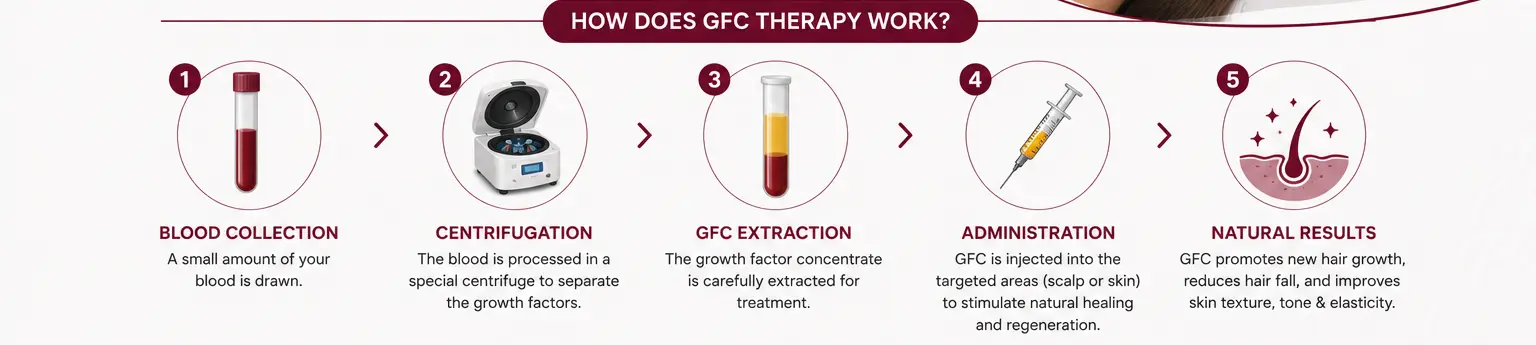
The next healing step begins. A sample of your blood is derived, ranging from a few milliliters, and is processed with a specialized kit. It separates and concentrates the growth factors. Unlike traditional PRP, GFC treatment for hair isolates a purer, more stimulating concentration of growth factors without the inflammatory white blood cells and red blood cells. The result would be a golden serum packed with the same level of proteins your hair follicles need to become proactive and function effectively.
This concentrated serum is then injected into the scalp at the targeted areas where thinning or hair loss is most visible. The growth factors trigger dormant follicles, improve blood supply to the scalp, and strengthen existing hair shafts, thus promoting new growth with healthier hair. The whole process takes about 45 minutes, and to your surprise, you can go back to your routine on the same day itself.
GFC vs PRP: What Is the Difference?
| Feature | PRP Therapy | GFC Treatment |
|---|---|---|
| Composition | Platelets + RBC + WBC | Pure growth factors |
| Inflammation | Higher | Minimal |
| Pain level | Moderate | Low |
| Results | Moderate | Faster & more effective |
| Purity | Lower | Highly purified |
GFC is a refined and more advanced version of PRP, offering better comfort and results.
Who Can Benefit from GFC Treatment for Hair?
The honest answer is that anyone experiencing hair thinning or early-to-moderate hair loss can go for this treatment. GFC treatment for hair functions at its best for androgenetic alopecia – the most common type of hair loss in both men and women. Telogen effluvium (stress-based shedding), and even as a catalyst after a hair transplantation. It is also highly recommended for people who want to strengthen their existing hair before any thinning sets in on the scalp. This can be a proactive approach and care that dermatologists recommend and encourage.
However, GFC treatment for hair may not be the right fit for advanced baldness where follicles have remained dormant for years. In these cases, we recommend combining GFC with a hair transplant to see the best possible outcomes. You can receive an honest review of your hair when you approach the right expert you can trust.
GFC Treatment Procedure at Layers Clinics
We begin with a detailed scalp assessment. The trichologist at Layers Clinics will understand your hair density, check for miniaturization under a dermatoscope, know your medical history, and suggest the best possible approaches by understanding your goals. Once GFC treatment for hair is chosen as the right-fit solution, the following process happens:
- A sample of blood is derived in the clinic
- In 30 minutes, the growth factor concentrate is extracted and made ready
- A topical numbing cream is applied to your scalp
- GFC serum is carefully injected with the help of fine needles
Most of our patients describe the sensation as tolerable. This standard protocol involves 3-4 sessions in the span of one month, followed by maintenance sessions every 4-6 months. Most patients notice reduced hair fall in the first month itself, with visible growth after 3-4 sessions.
Is GFC Treatment Painful? Side Effects & Recovery
The numbing cream does most of the job so that you face less pain and discomfort. However, there will be a slight pinch, but nothing severe. Since GFC treatment for hair uses your own blood, the risk of allergic reactions is nil. Some patients see mild scalp tenderness or tiny pinpoint marks at injection sites that will be resolved in a day. The team at Layers monitors you throughout to ensure the process is smooth.
How to Maximize Your GFC Treatment Results?
GFC treatment for hair promises the best results when you back it with healthy habits. A protein-rich diet that’s high in iron, biotin, and zinc provides your hair with the necessary natural vitamins and minerals. Eliminate stress through exercise, proper sleep, and other mindfulness practices because cortisol is known as a hair-loss accelerator. Skip harsh chemical treatments and excessive heat styling while undergoing GFC treatment for hair. On top of all these, strictly follow the aftercare instructions recommended by our dermatologists.
GFC Treatment vs Hair Transplant: Which Is Right for You?
GFC treatment and hair transplantation are designed for different stages of hair loss. GFC supports existing hair follicles, while a hair transplant moves healthy follicles from a donor area to areas with significant thinning or baldness.
| Feature | GFC Treatment | Hair Transplant |
|---|---|---|
| Type | Minimally invasive | Surgical |
| Best for | Early-to-moderate thinning | Advanced hair loss |
| Main goal | Support existing follicles | Restore hair in thinning/bald areas |
| Downtime | Minimal | Requires recovery |
| Uses existing follicles | Yes | Uses transplanted donor follicles |
GFC may be suitable when follicles are still active but weakened. A hair transplant may be considered when follicles in specific areas have been significantly lost. In some cases, both treatments can be combined as part of a comprehensive hair-restoration plan.
Why Choose Layers Clinics for GFC Treatment?
At Layers Clinics, GFC treatment starts with a detailed assessment of your hair and scalp. Our specialists create a personalised treatment plan based on your hair-loss pattern, follicle health, and goals, with appropriate follow-up to monitor your progress.
Frequently Asked Questions
What is GFC treatment for hair growth?
GFC treatment is a non-surgical procedure that uses growth factors from your blood to stimulate hair follicles and promote natural hair growth.
Is GFC better than PRP?
Yes, GFC is more advanced as it delivers pure growth factors without inflammatory components, leading to better results and less discomfort.
How many sessions are required?
Typically, 3–4 sessions are needed initially, followed by maintenance every 4–6 months.
Does GFC really work?
Yes, it is highly effective for early to moderate hair loss, improving hair density and reducing shedding.
Is GFC treatment painful?
No. A numbing cream is applied, and the procedure involves only mild, tolerable discomfort.
Key Takeaway
GFC treatment can help reduce hair fall and support hair growth, particularly when started at an early stage. Results are best supported by a balanced diet, proper scalp care, stress management, and following your dermatologist’s aftercare advice. A personalised assessment helps determine whether GFC is the right treatment for your hair-loss concerns.
Conclusion
GFC treatment for hair offers a minimally invasive approach to reducing hair fall and supporting existing hair follicles. It can be particularly useful for early-to-moderate hair thinning when combined with proper nutrition, scalp care, and healthy lifestyle habits. Since every case of hair loss is different, a professional assessment is important to determine whether GFC is suitable and to create a personalised treatment plan.
