Unwanted hair can make shaving, waxing and threading a repetitive part of your routine. Laser treatment offers a longer-lasting alternative, but an important question remains: is laser hair removal permanent?
Laser hair removal can significantly reduce unwanted hair growth for an extended period, but it does not guarantee that every hair will be removed forever. Some hair may grow back, often finer or less noticeable, and maintenance sessions may be needed.
At Layers Clinics, a personalised consultation can help determine whether laser hair removal is suitable for your skin tone, hair type and treatment area. This guide explains how the treatment works, how long results may last, what affects the cost and what to consider before choosing a clinic.
How Does Laser Hair Removal Work?
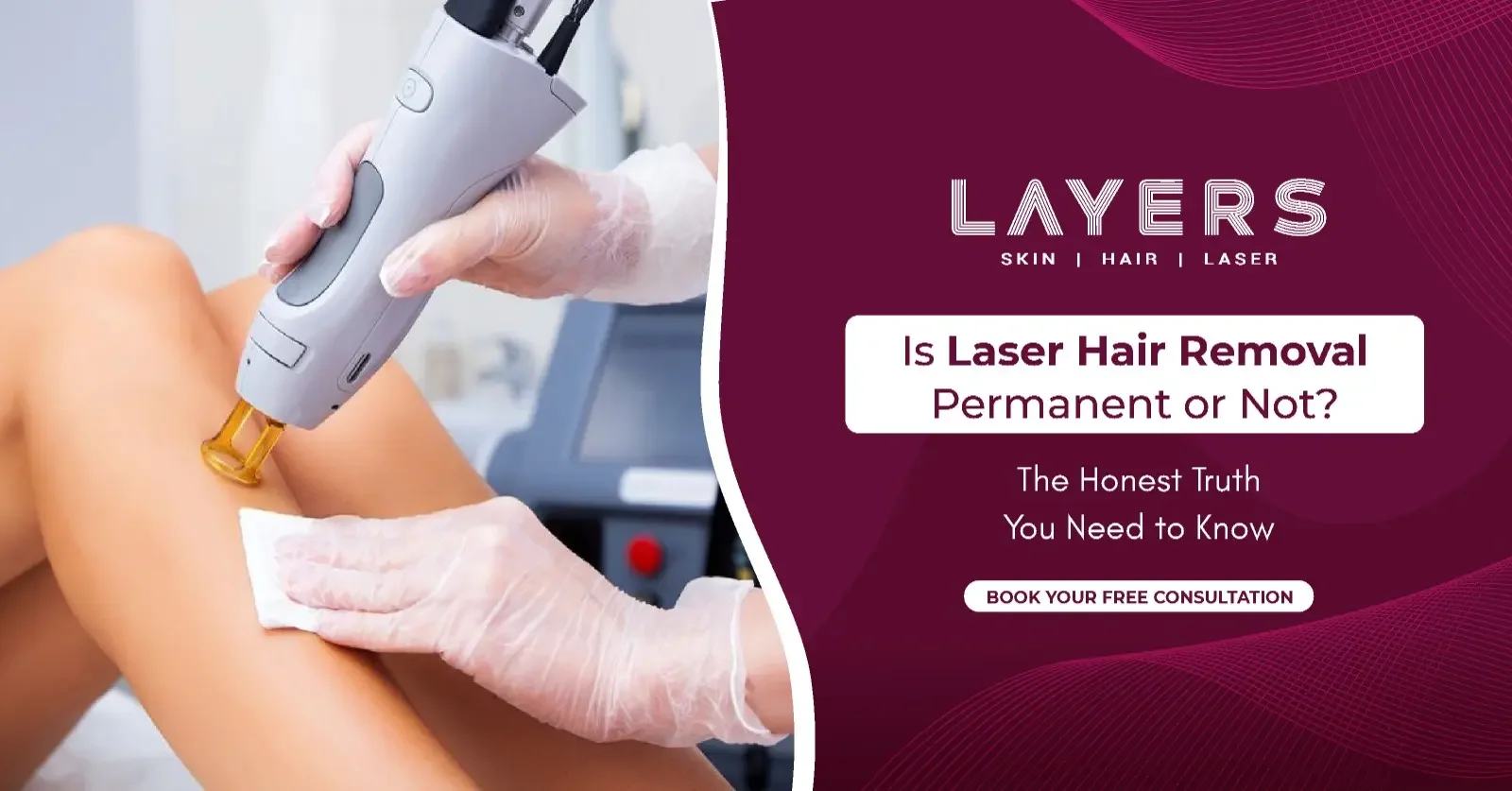
Laser hair removal uses concentrated light energy absorbed by pigment in the hair. The energy converts into heat, damaging structures involved in hair growth while limiting injury to surrounding skin when the treatment is correctly performed.
Hair grows in different phases, and laser treatment is most effective when hairs are in the active growth phase. Not every follicle is in that phase during the same appointment, which is why a series of sessions is generally necessary.
The laser, settings and treatment schedule should be selected according to your skin tone, hair thickness, medical history and treatment area. Dark, coarse hair often responds better than white, grey, blonde or very fine hair.
Is Laser Hair Removal Permanent?
The most accurate answer is that laser hair removal provides long-term hair reduction, but permanent removal of every hair cannot be guaranteed.
After completing a recommended course, many people experience less hair growth and longer periods between grooming sessions. Any hair that returns may be finer, lighter or more widely spaced. Results differ from person to person, and some people need occasional maintenance treatments.
This distinction matters when comparing a permanent hair removal treatment with temporary methods. Shaving cuts hair at the skin’s surface, while waxing removes hair from the root but does not prevent future growth. Laser treatment targets the hair follicle to reduce future growth over time.
When researching the best permanent hair removal option, look for realistic treatment plans rather than promises of 100% permanent results.
What Results Should You Expect, and How Long Do They Last?
Results depend on the treated area, hair and skin characteristics, hormonal influences, the laser used and the number of completed sessions. Hair reduction can last for months or years, but the duration is not identical for everyone.
Some treated follicles may stop producing visible hair, while others may recover or produce new growth. Hormonal changes can also stimulate previously less active follicles. Maintenance sessions may help manage regrowth when recommended by your treating professional.
A useful treatment goal is a meaningful reduction in hair density and grooming frequency—not a promise that hair will never return.
How Many Laser Treatments Are Needed for Lasting Results?
There is no single session count that works for everyone. Many treatment plans begin with approximately six to eight sessions, but the number and spacing should be personalised. Facial hair may need a different schedule from hair on the legs, underarms or body.
Your provider may recommend sessions several weeks apart to target hairs as they enter the appropriate growth phase. After the initial course, follow-up appointments may be considered if noticeable regrowth develops.
For the best outcome, attend appointments as scheduled and follow pre- and post-treatment instructions. Avoid waxing or plucking between sessions when advised, because these methods remove the hair that the laser needs to target.
Can Facial Hair Be Removed Permanently?
A common question is, can facial hair be removed permanently? Laser treatment can reduce unwanted facial hair over time, but it cannot promise complete, lifelong removal.
The upper lip, chin and sideburn area may be treated after a professional assessment. Facial hair can be influenced by hormonal conditions, including polycystic ovary syndrome (PCOS), so new growth may continue even after a successful course.
If you are exploring how to get rid of facial hair permanently, discuss your goals and medical history with a qualified professional. Laser treatment may help reduce coarse, dark hair, while electrolysis may be considered for certain hair types that do not respond well to laser. The right option depends on your individual circumstances.
People asking whether they can get facial hair permanently removed should understand that results vary and that maintenance or alternative methods may still be necessary.
What Affects the Cost of Laser Hair Removal?
The permanent hair removal treatment cost depends on several factors, so a personalised quote is more useful than a single advertised price.
-
Treatment area: Upper lip, underarms, full face, arms, legs and full body require different amounts of time and resources.
-
Number of sessions: Your total cost depends on the recommended course and any additional sessions.
-
Hair and skin characteristics: Hair density, thickness and the suitability of a particular laser can affect the treatment plan.
-
Technology and cooling: The equipment used, treatment protocols and cooling features may influence pricing.
-
Maintenance: Some people require occasional appointments to manage regrowth.
When comparing packages, check how many sessions are included, which areas are covered, whether consultations or patch tests are charged separately and what the maintenance policy involves. Do not choose a clinic based on price alone; appropriate assessment, equipment and treatment expertise matter.
To explore treatment options, visit Laser Hair Removal at Layers Clinics or review the Best Laser Hair Removal Clinic in Hyderabad page.
Is There Laser Hair Removal That Combines Advanced Cooling With Permanent Results?
Cooling systems can help protect the skin’s surface and improve comfort during laser hair removal. Depending on the device, cooling may be delivered through contact cooling, chilled air or another integrated mechanism.
However, advanced cooling does not guarantee permanent hair removal. It is one part of treatment safety and comfort, alongside the appropriate wavelength, settings, operator expertise, skin assessment and aftercare.
Ask your provider which device is suitable for your skin tone, how cooling works during treatment and whether a patch test is recommended. A qualified professional should explain possible side effects, expected results and the limitations of the technology before treatment begins.
Choosing the Right Laser Technology for Your Skin
Different laser systems have different strengths. The best choice depends on your skin tone, hair characteristics and clinical assessment.
-
Diode laser: Commonly used for hair reduction across a range of skin tones when the device and settings are appropriate.
-
Alexandrite laser: Often effective for suitable lighter skin tones and dark hair; careful assessment is important for darker skin.
-
Nd laser: Often considered for darker skin tones because its longer wavelength can reduce certain pigment-related risks when used correctly.
-
Intense pulsed light (IPL): Uses broad-spectrum light rather than a single laser wavelength and may provide hair reduction, but its performance differs from laser systems.
No technology is automatically best for every person. The wrong device or settings can cause burns, blistering or changes in skin pigmentation. Ask for a professional assessment rather than choosing a device based on marketing claims alone.
Is Laser Hair Removal Safe for Indian Skin?
Laser hair removal can be suitable for many Indian skin tones, provided the device and settings are chosen carefully. Because skin pigmentation varies, the risk of burns or dark or light patches may increase if the treatment is unsuitable or performed incorrectly.
Before treatment, tell your provider about recent tanning, skin conditions, medicines and any history of pigmentation problems. A patch test may be recommended. Treatment may need to be postponed if the area is sunburned, infected or irritated, and certain medicines require medical review.
Temporary redness, swelling or sensitivity can occur. Less common complications include blistering, burns, scarring or pigment changes. Seek medical advice if you experience severe pain, blistering or a reaction that does not improve as expected.
Pre-Treatment and Aftercare Tips
Before your appointment:
-
Avoid tanning and excessive sun exposure; follow your provider’s sun-protection advice.
-
Avoid waxing, threading or plucking for the period advised, because the follicle needs to remain present.
-
Shave the treatment area when instructed, often shortly before the session.
-
Share your medical history, medication list and relevant skin concerns.
After treatment:
-
Use gentle skincare and cool compresses if recommended.
-
Protect treated skin from the sun and apply suitable sunscreen to exposed areas.
-
Avoid excessive heat, harsh exfoliation and intense exercise for the period advised by your provider.
-
Do not pick or scrub treated skin; follow instructions if irritation occurs.
Follow the specific aftercare plan provided for your treatment and contact the clinic if you notice an unexpected reaction.
How to Choose the Best Permanent Hair Removal Clinic
If you are searching for the best permanent hair removal in Vijayawada or the best permanent hair removal in Vizag, evaluate clinics on safety and suitability rather than guaranteed results.
Look for a clinic that offers a proper skin and hair assessment, explains the device being used, discusses possible side effects, recommends a realistic session schedule and provides clear pricing. Ask who performs the treatment and what medical supervision is available.
You can explore the Laser Hair Removal service at Layers Clinics and book a consultation through the appointment page. The consultation can help you understand which treatment approach may suit your needs.
Frequently Asked Questions
1. Is laser hair removal permanent?
Laser hair removal can provide long-term hair reduction, but it does not guarantee that all hair will be removed permanently. Some hair may regrow, and maintenance sessions may be needed.
2. How many laser treatments are needed for permanent hair removal?
Many people need around six to eight initial sessions, although the number varies by treatment area, hair growth cycle, skin characteristics and individual response. Follow-up sessions may be recommended.
3. Can facial hair be removed permanently with laser treatment?
Laser treatment can reduce facial hair for an extended period, particularly when the hair is dark and coarse. Complete, lifelong removal is not guaranteed, and hormonal factors may cause new growth.
4. What is the permanent hair removal treatment cost?
The cost depends on the area being treated, the number of sessions, the technology used and maintenance requirements. Request a personalised quote that clearly explains what the package includes.
5. Is laser hair removal safe for Indian skin tones?
It can be suitable when the laser and settings are selected for the person’s skin tone and hair type. Professional assessment, appropriate precautions and a patch test when indicated help reduce risks.
6. Is there laser hair removal that combines advanced cooling with permanent results?
Some laser systems use cooling to improve comfort and protect the skin’s surface. Cooling does not guarantee permanent removal; results depend on several factors, including the laser, settings and individual hair growth.
7. How do I choose the best permanent hair removal clinic in Vijayawada or Vizag?
Choose a clinic that provides an individual assessment, explains expected results and risks, uses appropriate technology, offers clear pricing and avoids promising 100% permanent removal.
Conclusion
Laser hair removal can be an effective option for reducing unwanted hair over the long term, but results vary and complete permanent removal is not guaranteed. The number of sessions, hair and skin characteristics, hormonal factors, device selection and aftercare all influence the outcome.
If you are considering a permanent hair removal treatment, start with a professional consultation to understand the likely results, risks and total cost. Layers Clinics can help you explore suitable laser hair reduction options and build a plan around your skin and hair needs.