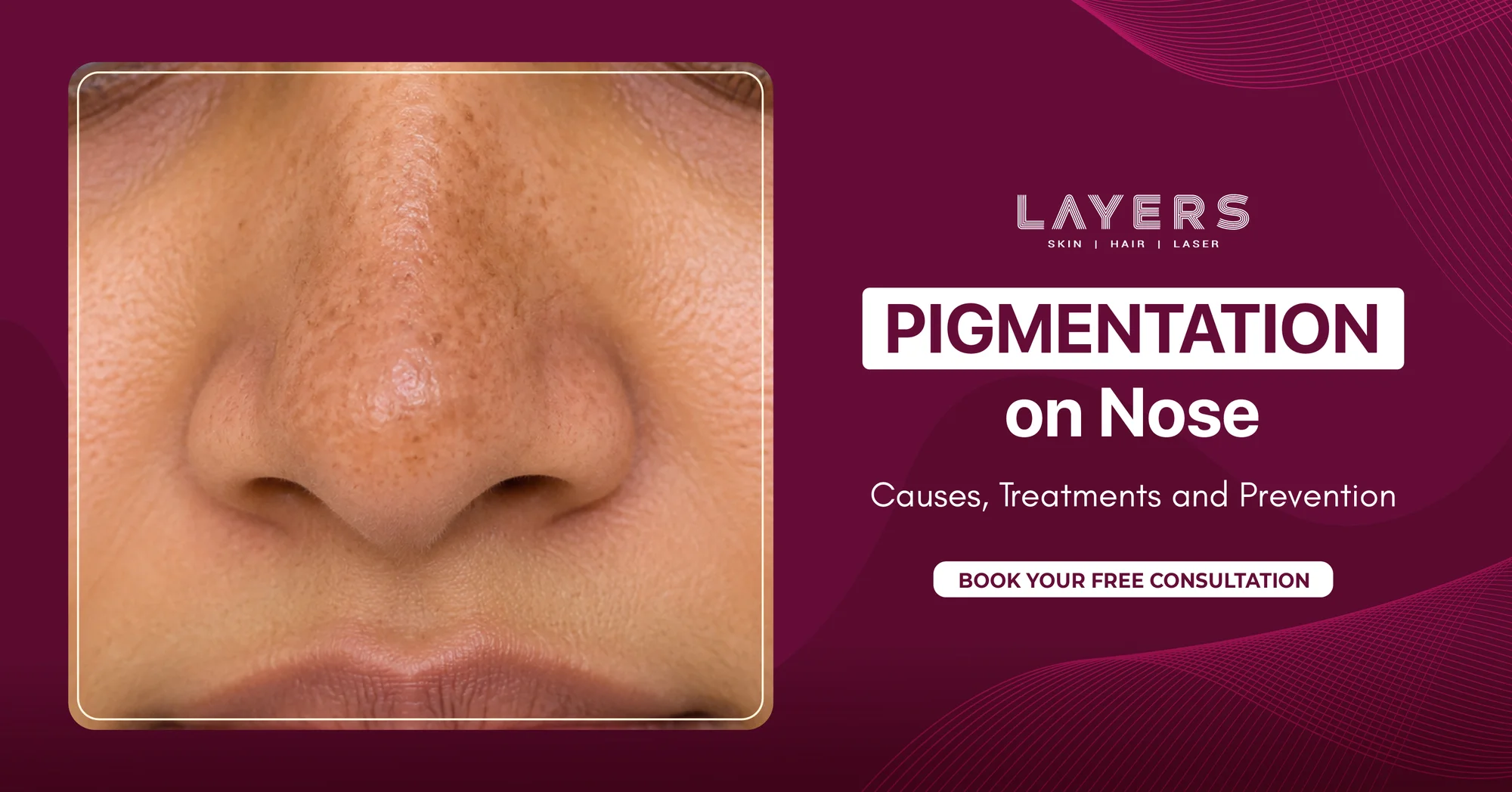
Pigmentation on the nose is a common skin concern that appears as brown patches, dark spots or uneven skin tone. It can develop due to sun exposure, hormonal changes, acne, skin irritation and other factors. The right treatment depends on the underlying cause and may include dermatologist-recommended creams, chemical peels or laser procedures. Daily sun protection is essential to prevent pigmentation from becoming darker.
What Is Pigmentation on the Nose?
Pigmentation on the nose refers to areas of skin that appear darker than the surrounding skin because of increased melanin production or uneven pigment distribution.
Melanin is the natural pigment responsible for your skin, hair and eye colour. When certain areas produce excess melanin, dark spots or patches may develop.
Nose pigmentation can appear in different forms, including:
-
Small brown or black spots on the nose.
-
Dark patches across the nose bridge.
-
Uneven skin tone around the nostrils.
-
Brown discoloration on the sides of the nose.
-
Persistent dark marks following acne or skin irritation.
Although nose pigmentation is often harmless, its appearance can affect overall skin tone and confidence. Identifying the cause is the first step towards choosing an appropriate treatment.
What Causes Pigmentation on the Nose?
Several factors can contribute to pigmentation on the nose. Some are related to environmental exposure, while others involve hormonal changes or previous skin inflammation.
1. Sun Exposure and UV Damage
Sun exposure is one of the common contributors to facial pigmentation. Ultraviolet (UV) radiation stimulates melanocytes, the cells responsible for producing melanin.
Because the nose is a prominent and frequently exposed part of the face, it receives considerable sunlight during everyday activities.
Repeated exposure without adequate sun protection may contribute to:
-
Dark spots on the nose.
-
Sunspots and uneven skin tone.
-
Worsening of existing pigmentation.
-
Increased visibility of melasma.
Using broad-spectrum sunscreen with SPF 30 or higher can help protect the skin and reduce further darkening.
2. Hormonal Changes and Melasma
Melasma is a pigmentation condition that causes brown or grey-brown patches, commonly on the cheeks, forehead, upper lip and nose.
It is associated with several factors, including hormonal changes, genetic predisposition and sun exposure.
Melasma may become more noticeable during pregnancy or with certain hormonal medications. Sunlight and visible light can also worsen existing patches.
Unlike individual dark spots, melasma often appears as larger, irregular patches. A dermatologist can examine the affected area and recommend suitable treatment.
3. Acne and Post-Inflammatory Hyperpigmentation
Acne, pimples and other inflammatory skin conditions can leave dark marks after the original inflammation heals.
This is known as post-inflammatory hyperpigmentation (PIH).
When the skin becomes inflamed, pigment-producing cells may become more active, resulting in darker areas.
Common triggers include:
-
Pimples around the nose.
-
Inflamed acne lesions.
-
Picking or squeezing blackheads.
-
Skin injuries and minor burns.
-
Irritation caused by unsuitable skincare products.
Post-inflammatory pigmentation may gradually fade, but persistent marks can require dermatologist-guided treatment.
4. Skin Irritation and Harsh Skincare Products
Using unsuitable skincare products can irritate the delicate skin around the nose.
Strong exfoliants, fragranced products, excessive scrubbing and incorrectly used active ingredients may cause inflammation. In some individuals, this inflammation can lead to pigmentation.
If a skincare product causes persistent burning, redness or itching, discontinue its use and seek professional advice if symptoms continue.
Choose gentle cleansers and moisturisers suitable for your skin type.
5. Genetics and Natural Skin Characteristics
Some individuals are naturally more prone to developing pigmentation due to genetic factors and their skin’s response to sunlight.
People with medium to darker skin tones may experience more noticeable post-inflammatory pigmentation.
A family history of melasma or other pigmentation conditions may also increase susceptibility.
Genetics cannot always be changed, but appropriate skincare and sun protection can help manage pigmentation.
What Does Nose Pigmentation Look Like?
Nose pigmentation does not look the same in everyone. Its appearance depends on the underlying condition, depth of pigment and individual skin characteristics.
Appearance | Possible cause |
Small brown spots | Sun-related pigmentation or freckles |
Larger brown patches | Melasma |
Dark marks after pimples | Post-inflammatory hyperpigmentation |
Uneven darkness around nostrils | Irritation or previous inflammation |
Persistent grey-brown patches | Deeper pigmentation disorders |
These appearances are not enough to confirm a diagnosis. A dermatologist may need to examine the skin to distinguish pigmentation from other skin conditions.
How to Remove Pigmentation on the Nose
The treatment for pigmentation on the nose depends on its cause, depth and severity. A dermatologist may recommend topical skincare, prescription treatments or professional procedures.
Here are some commonly considered treatment options.
1. Topical Creams and Serums
Topical products can help reduce excess pigmentation and improve uneven skin tone.
Depending on the condition, dermatologists may recommend ingredients such as:
-
Vitamin C: An antioxidant that helps improve the appearance of uneven skin tone.
-
Azelaic Acid: Can help manage acne-related pigmentation and inflammation.
-
Niacinamide: Supports the skin barrier and may help reduce the appearance of dark spots.
-
Kojic Acid: Helps regulate melanin production.
-
Retinoids: Support skin cell turnover and may improve certain forms of pigmentation.
-
Hydroquinone: A prescription-strength skin-lightening ingredient used for selected pigmentation conditions under medical supervision.
Not every ingredient is suitable for everyone. Using multiple active products without guidance may irritate the skin and worsen pigmentation.
2. Chemical Peels
Chemical peels are professional skin treatments that use carefully selected chemical solutions to exfoliate the skin.
Depending on the type and depth of pigmentation, a dermatologist may consider ingredients such as glycolic acid, lactic acid or salicylic acid.
Potential benefits include:
-
Improving uneven skin tone.
-
Reducing the appearance of certain superficial dark spots.
-
Improving skin texture.
-
Supporting treatment of selected acne-related pigmentation.
The strength and type of peel should be selected according to the individual’s skin type and pigmentation condition.
People prone to post-inflammatory hyperpigmentation need particular care because aggressive peels may cause additional irritation and darkening.
3. Laser Pigmentation Treatment
Laser pigmentation treatment uses selected wavelengths of light energy to target pigment in the skin.
Depending on the diagnosis, a dermatologist may consider technologies such as Q-switched Nd:YAG lasers or other suitable pigment-targeting devices.
Laser treatment may be considered for selected conditions, including certain superficial pigmented spots.
Possible benefits include:
-
Targeting specific pigmented areas.
-
Improving the appearance of selected dark spots.
-
Supporting more even-looking skin tone.
However, laser treatment is not suitable for every type of pigmentation. Melasma, in particular, can recur or worsen after certain procedures.
The dermatologist should assess the pigment depth, skin tone, medical history and risk of post-treatment pigmentation before recommending a procedure.
4. Medical Treatments for Melasma
Melasma requires a carefully planned treatment approach because it can be persistent and may recur.
A dermatologist may recommend a combination of:
-
Prescription topical medications.
-
Sun protection.
-
Ingredients that help regulate melanin production.
-
Selected chemical peels.
-
Carefully chosen laser procedures in suitable cases.
Treatment is generally aimed at reducing pigmentation, preventing further darkening and maintaining improvement over time.
Patients should avoid using unprescribed skin-lightening combinations or strong steroid creams.
Home Remedies for Nose Pigmentation: What Works?
Many people search for home remedies to remove pigmentation on the nose. However, natural ingredients do not always have proven effectiveness, and some can irritate the skin.
Here are safer approaches to consider.
1. Use sunscreen daily
Apply a broad-spectrum sunscreen with SPF 30 or higher to the entire face, including the nose. Reapply approximately every two hours when outdoors and after swimming or excessive sweating.
2. Follow a gentle skincare routine
Use a mild cleanser and a suitable moisturiser. Avoid harsh scrubs and excessive exfoliation.
3. Avoid picking pimples
Squeezing pimples and blackheads can increase inflammation and raise the risk of post-inflammatory pigmentation.
4. Choose suitable skincare products
Look for products formulated for your skin type. Introduce active ingredients gradually and stop products that cause irritation.
5. Be consistent
Pigmentation often takes time to improve. Consistent sun protection and appropriate treatment are more useful than frequently changing skincare products.
Avoid applying lemon juice, baking soda, toothpaste or undiluted essential oils to pigmented areas. These substances may irritate the skin and potentially make discoloration worse.
How to Prevent Pigmentation on the Nose
Preventing additional pigmentation is an important part of maintaining an even-looking complexion.
Follow these practical skincare habits:
-
Apply broad-spectrum SPF 30 or higher sunscreen every morning.
-
Reapply sunscreen when spending extended periods outdoors.
-
Wear a wide-brimmed hat for additional sun protection.
-
Avoid picking or squeezing pimples around the nose.
-
Use gentle, fragrance-free skincare products if your skin is sensitive.
-
Avoid excessive exfoliation.
-
Follow your dermatologist’s instructions for prescribed treatments.
-
Maintain a consistent skincare routine.
For people with melasma, a dermatologist may also recommend tinted sunscreen containing iron oxides to provide additional protection against visible light.
When Should You Consult a Dermatologist?
You should consider consulting a dermatologist if:
-
Pigmentation on your nose persists despite regular skincare.
-
Dark patches are gradually becoming more noticeable.
-
Pigmentation returns after treatment.
-
You experience itching, redness or irritation along with discoloration.
-
You develop a new dark spot that changes in size, shape or colour.
-
You are unsure whether the discoloration is pigmentation or another skin condition.
A dermatologist can assess your skin, identify possible triggers and recommend a suitable treatment plan.
A new or changing pigmented spot should not automatically be assumed to be ordinary hyperpigmentation. Some pigmented skin lesions require medical evaluation.
Frequently Asked Questions About Pigmentation on the Nose
1. Why is my nose darker than the rest of my face?
Your nose may appear darker due to sun exposure, tanning, melasma, acne marks or skin irritation. A dermatologist can identify the underlying cause and recommend suitable treatment.
2. How can I remove pigmentation on my nose naturally?
Use sunscreen daily, follow a gentle skincare routine and avoid picking pimples. Avoid harsh home remedies such as lemon juice and baking soda because they can irritate your skin.
3. Which cream is best for pigmentation on the nose?
The best cream depends on the type of pigmentation. Dermatologists may recommend azelaic acid, vitamin C, niacinamide, retinoids or other prescription treatments based on your skin condition.
4. Can sunscreen reduce nose pigmentation?
Sunscreen helps prevent UV-related darkening and protects existing pigmentation from becoming more noticeable. Choose broad-spectrum SPF 30 or higher and apply it consistently.
5. Is laser treatment effective for nose pigmentation?
Laser treatment may help selected types of pigmentation, including certain superficial dark spots. However, it is not suitable for every condition. A dermatologist should assess your skin before recommending laser treatment.
6. How long does it take to remove pigmentation on the nose?
Improvement depends on the cause, depth of pigmentation and treatment method. Some superficial marks may gradually fade over several months, while deeper pigmentation and melasma may require longer-term management.
7. Can pigmentation on the nose come back after treatment?
Yes. Pigmentation can return, especially when triggers such as sunlight, hormonal changes or skin inflammation continue. Consistent sun protection and maintenance skincare can help reduce recurrence.
8. Which dermatologist treatment is best for dark spots on the nose?
Depending on the diagnosis, a dermatologist may recommend medical skincare, chemical peels, Q-switched laser treatment or other suitable procedures. There is no single treatment that works for every type of pigmentation.
9. Is pigmentation around the nose permanent?
Not necessarily. Many forms of pigmentation can improve with appropriate treatment and prevention. However, some conditions may persist or recur and require ongoing management.
10. Can home remedies make nose pigmentation worse?
Yes. Lemon juice, baking soda, harsh scrubs and other irritating ingredients may cause inflammation and worsen pigmentation. Dermatologist-recommended skincare is a safer approach.
Conclusion:
Get the Right Treatment for Pigmentation on the Nose
Pigmentation on the nose can develop due to sun exposure, hormonal changes, acne, inflammation and unsuitable skincare products. Although it is often a cosmetic concern, identifying its underlying cause is important before starting treatment.
A consistent skincare routine, daily sunscreen and dermatologist-guided treatment can help improve uneven skin tone and manage dark spots.
At Layers Clinics, dermatologists assess individual skin concerns and recommend personalised pigmentation treatments based on skin type, pigmentation depth and treatment requirements. Options may include medical skincare, chemical peels and selected laser procedures.
If you are concerned about dark spots or uneven skin tone on your nose, consider consulting a dermatologist to understand which treatment is appropriate for your skin.