Q-Switch laser treatment is a popular dermatological procedure used to address selected pigmentation concerns, dark spots, uneven skin tone and certain types of tattoos. While the treatment can help improve the appearance of unwanted pigmentation, it may also cause temporary skin reactions or, occasionally, complications.
The most common Q-Switch laser treatment side effects include temporary redness, mild swelling, skin sensitivity and pigmentation changes. Less common risks include burns, blisters, prolonged dark patches, lighter patches and scarring. These reactions depend on individual skin type, laser settings, treatment intensity and aftercare.
Understanding the possible side effects before undergoing Q-Switch laser treatment can help you make an informed decision. Whether you are considering laser toning for pigmentation, dark spots or uneven skin tone, knowing what to expect is an important part of your treatment journey.
What Is Q-Switch Laser Treatment?
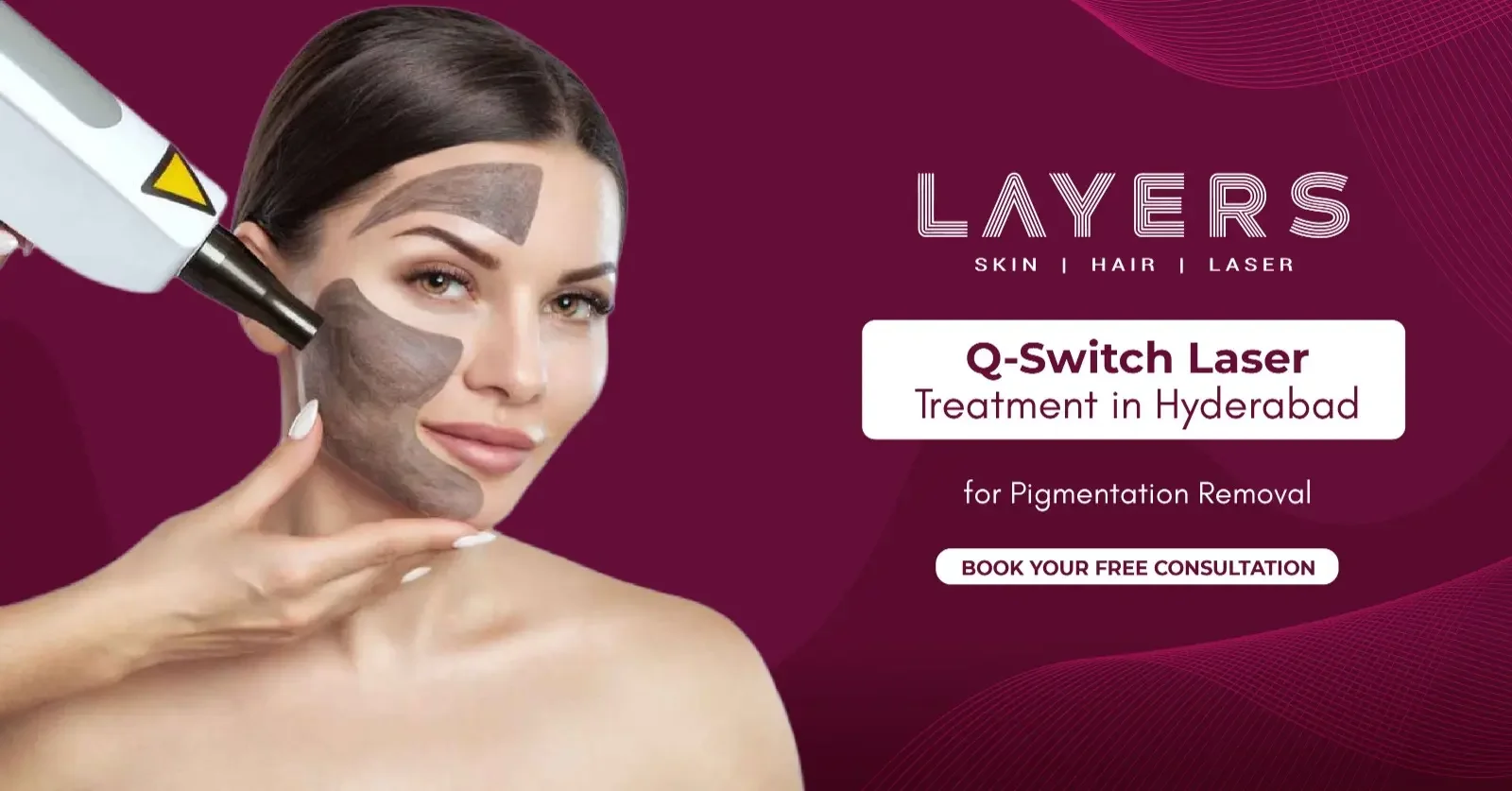
Q-Switch laser treatment is a dermatological procedure that uses short, high-energy pulses of laser light to target specific pigments in the skin. The laser energy is absorbed by pigment particles, breaking them into smaller fragments that the body gradually clears.
Q-Switch Nd:YAG lasers are commonly used for selected pigmentation concerns and laser toning procedures.
Depending on the diagnosis, dermatologists may recommend this treatment for:
-
Sunspots and selected dark spots
-
Freckles and certain pigmented lesions
-
Post-inflammatory hyperpigmentation
-
Selected cases of melasma
-
Uneven skin tone
-
Certain types of tattoo pigmentation
However, not every pigmentation concern responds to laser treatment in the same way. A dermatologist should examine the skin and identify the underlying cause before recommending the procedure.
How Does Q-Switch Laser Work?
Q-Switch laser technology delivers controlled pulses of light at specific wavelengths. These pulses target selected pigment particles while aiming to minimise unnecessary injury to surrounding skin.
The treatment generally involves five steps:
-
Skin assessment: The dermatologist evaluates skin type, pigmentation, medical history and previous treatments.
-
Preparation: The treatment area is cleansed, and appropriate protective eyewear is provided.
-
Laser application: Controlled laser pulses are directed towards the selected pigmentation.
-
Post-treatment care: The skin is assessed, and suitable moisturising and sun-protection instructions are provided.
-
Follow-up: The dermatologist evaluates the response before recommending additional sessions.
Although the procedure is designed to target specific pigments, inappropriate laser settings or excessive treatment intensity may increase the risk of unwanted skin reactions.
What Are the Common Q-Switch Laser Treatment Side Effects?
Most side effects are temporary, but their intensity and duration vary depending on the individual and the treatment performed.
1. Redness and Skin Sensitivity
Mild redness is one of the commonly reported reactions after Q-Switch laser treatment. The treated area may appear pink or feel warm, similar to mild sun exposure.
Some individuals may also experience temporary sensitivity when washing their face or applying skincare products. This usually improves as the skin recovers.
Persistent or worsening redness should be evaluated by a dermatologist.
2. Mild Swelling
Some patients experience mild swelling after laser toning, particularly around sensitive areas such as the cheeks and under-eye region.
Swelling can occur as part of the skin’s inflammatory response to laser energy. Avoid rubbing, massaging or applying unnecessary pressure to the treated area while it recovers.
3. Temporary Skin Darkening
Post-inflammatory hyperpigmentation (PIH) is an important possible side effect of laser treatment.
It occurs when inflammation stimulates increased melanin production, making the treated area appear darker than the surrounding skin.
People with darker skin tones may have a higher risk of pigmentation changes after certain laser procedures. Recent tanning, inappropriate laser settings and inadequate sun protection can also contribute.
The darkening may gradually improve, but persistent pigmentation requires dermatological assessment.
4. Dryness and Mild Peeling
After Q-Switch laser treatment, some people notice dryness, tightness or mild peeling.
These changes can occur as the skin recovers from the procedure. A gentle cleanser and dermatologist-recommended moisturiser can help maintain skin comfort.
Avoid scrubbing or pulling at peeling skin because this may increase irritation.
5. Temporary Acne-Like Breakouts
Small acne-like bumps may occasionally develop following laser treatment. They can be associated with temporary irritation or skincare products used during recovery.
Avoid introducing strong acne treatments or exfoliating products immediately after the procedure unless your dermatologist recommends them.
Less Common but Serious Side Effects of Q-Switch Laser
Although less common, certain complications require medical attention.
1. Laser Burns and Blisters
Excessive laser energy or unsuitable treatment settings can cause thermal injury to the skin.
Possible symptoms include:
-
Persistent burning sensation
-
Significant redness
-
Fluid-filled blisters
-
Skin tenderness
-
Crusting or erosions
Do not puncture blisters or remove crusts yourself. Contact your treating dermatologist if these symptoms develop.
2. Hypopigmentation or Light Patches
Hypopigmentation refers to a reduction or loss of normal skin colour in the treated area.
It can happen when laser treatment affects pigment-producing cells. Repeated or aggressive laser toning has been associated with mottled hypopigmentation, where irregular lighter patches develop.
These changes can sometimes be prolonged or difficult to reverse. This is why treatment frequency should be determined by the dermatologist after evaluating the skin’s response.
3. Scarring
Scarring is uncommon with appropriately selected non-ablative Q-Switch procedures. However, it may occur following severe burns, infection, deeper skin injury or poor wound healing.
Following post-treatment instructions and seeking medical attention for unexpected reactions can help reduce further complications.
4. Worsening of Melasma
Melasma is a complex pigmentation condition influenced by sunlight, hormonal changes and individual skin characteristics.
Although Q-Switch laser treatment may be considered in selected cases, it does not guarantee permanent improvement. Pigmentation can return, and aggressive or repeated treatments may sometimes worsen melasma.
A dermatologist should develop a comprehensive treatment plan rather than relying on laser treatment alone.
Is Q-Switch Laser Safe for Indian Skin Types?
Q-Switch laser treatment can be considered for selected Indian skin types when the appropriate wavelength, device and treatment settings are chosen by a qualified dermatologist.
Indian skin includes a wide range of medium to deeper skin tones, which may be more susceptible to post-inflammatory hyperpigmentation following certain laser procedures.
This does not mean Q-Switch laser is unsuitable for Indian skin. It means individual assessment and careful treatment planning are especially important.
Before undergoing treatment, discuss your skin tone, pigmentation condition, previous laser procedures, recent tanning and history of post-treatment darkening with your dermatologist.
A test spot may help assess how the skin responds to a particular laser setting, although it cannot guarantee that complications will not occur.
Q-Switch Laser vs Laser Toning: What Is the Difference?
Q-Switch and laser toning are related terms, but they do not mean exactly the same thing.
Q-Switch refers to the laser pulse-generation technology, whereas laser toning describes a treatment approach that often uses low-fluence Q-Switched Nd:YAG laser pulses for selected pigmentation concerns.
Feature | Q-Switch Laser | Laser Toning |
Meaning | Laser technology | Treatment technique |
Applications | Selected pigmentation and tattoo treatments | Selected pigmentation and uneven skin tone |
Settings | Depend on the condition | Commonly uses lower-energy settings |
Objective | Targets selected pigment | Aims to gradually improve pigmentation |
Possible side effects | Redness, burns and pigment changes | Sensitivity and pigmentation changes |
Both procedures require proper patient selection and professionally determined treatment settings.
How Can You Reduce Q-Switch Laser Treatment Side Effects?
You cannot eliminate every possible risk, but appropriate preparation and aftercare can reduce avoidable complications.
Before Treatment
-
Consult a dermatologist: Have your pigmentation examined before choosing a laser procedure.
-
Share your medical history: Inform the doctor about medications, previous laser treatments and skin reactions.
-
Avoid unnecessary sun exposure: Follow advice about tanning and sun protection before treatment.
-
Discuss skincare products: Ask whether retinoids, exfoliating acids or other active ingredients should be temporarily paused.
-
Understand the treatment plan: Discuss the expected recovery, possible risks and follow-up schedule.
After Treatment
-
Apply sunscreen: Use broad-spectrum sunscreen, preferably SPF 30 or higher, as advised by your dermatologist.
-
Keep skincare gentle: Use a mild cleanser and suitable moisturiser.
-
Avoid harsh products: Temporarily avoid scrubs, exfoliating acids and strong active ingredients until your skin recovers.
-
Avoid excessive heat: Follow advice about steam, saunas and strenuous activities during initial recovery.
-
Do not pick the skin: Avoid scratching, rubbing or removing peeling skin and scabs.
-
Attend follow-ups: Allow the dermatologist to assess your response before scheduling another session.
The appropriate aftercare routine depends on the treatment area, laser settings and individual skin response.
When Should You Contact a Dermatologist?
Mild redness and temporary sensitivity can occur after Q-Switch laser treatment. However, certain symptoms should not be ignored.
Contact your dermatologist if you experience severe or increasing pain, large blisters, persistent burning, pus, worsening swelling, unexpected white or dark patches or changes in skin texture.
Seek prompt medical assessment rather than trying home remedies or unapproved creams.
Q-Switch Laser Treatment at Layers Clinics
At Layers Clinics, laser toning and Q-Switch laser treatment are considered as part of an individualised approach to selected pigmentation concerns.
Treatment planning begins with an assessment of the skin, pigmentation type and previous treatment history. Based on this evaluation, a suitable plan may involve laser procedures, topical skincare or other dermatological options.
A consultation can help you understand whether Q-Switch laser treatment is appropriate for your skin, the possible side effects, the expected recovery and the aftercare required.
Book a dermatological consultation at Layers Clinics to discuss your pigmentation concerns and understand suitable treatment options.
Frequently Asked Questions
1. What are the most common side effects of Q-Switch laser treatment?
Common side effects include temporary redness, mild swelling, skin sensitivity, dryness and occasional peeling. Some people may also experience temporary darkening or lightening of the treated skin.
2. Can Q-Switch laser cause pigmentation?
Yes. Q-Switch laser treatment can sometimes cause post-inflammatory hyperpigmentation, which appears as darker patches, or hypopigmentation, which appears as lighter patches. The risk depends on skin type, laser settings and aftercare.
3. Is Q-Switch laser safe for Indian skin?
It can be suitable for selected Indian skin types when the wavelength and treatment settings are carefully chosen. A dermatologist should assess the skin tone and pigmentation condition before treatment.
4. Can Q-Switch laser cause permanent skin damage?
Permanent damage is uncommon with appropriately selected treatments, but severe burns, scarring and persistent pigment loss are possible complications.
5. How long does redness last after Q-Switch laser treatment?
Mild redness may settle within a few hours or over the next few days. Recovery depends on treatment intensity, skin sensitivity and the treated area.
6. Can Q-Switch laser make melasma worse?
Yes. In some individuals, laser treatment may trigger inflammation and worsen melasma or cause rebound pigmentation. Careful diagnosis and long-term management are important.
7. Can I use vitamin C or retinol after Q-Switch laser treatment?
It depends on the skin’s recovery and the intensity of the procedure. Strong active ingredients may irritate recently treated skin. Ask your dermatologist when you can safely restart them.
8. How many Q-Switch laser sessions are safe?
There is no universal number of safe sessions. The appropriate number and interval depend on the pigmentation condition, laser settings and response to previous treatments.
9. Can I go outside after Q-Switch laser treatment?
Normal activities may be possible depending on your skin’s response. However, minimise direct sun exposure and use suitable broad-spectrum sunscreen and physical sun protection.
10. What should I avoid after Q-Switch laser treatment?
Avoid direct sun exposure, harsh exfoliants, scrubbing, picking at the treated area and unapproved active skincare products. Follow your dermatologist’s aftercare instructions.
Conclusion
Q-Switch laser treatment can help address selected pigmentation concerns, but understanding its possible side effects is important before starting treatment. Temporary redness and sensitivity are possible, while burns, hyperpigmentation, hypopigmentation and scarring are less common but important risks.
The safest approach involves an accurate skin assessment, appropriate laser settings, suitable treatment intervals and consistent aftercare. If you are considering laser toning or Q-Switch laser treatment, consult a qualified dermatologist to understand the benefits, limitations and potential risks for your skin.
Medical disclaimer: This article is intended for general educational purposes and does not replace professional medical advice, diagnosis or treatment. Individual results and recovery experiences vary.